
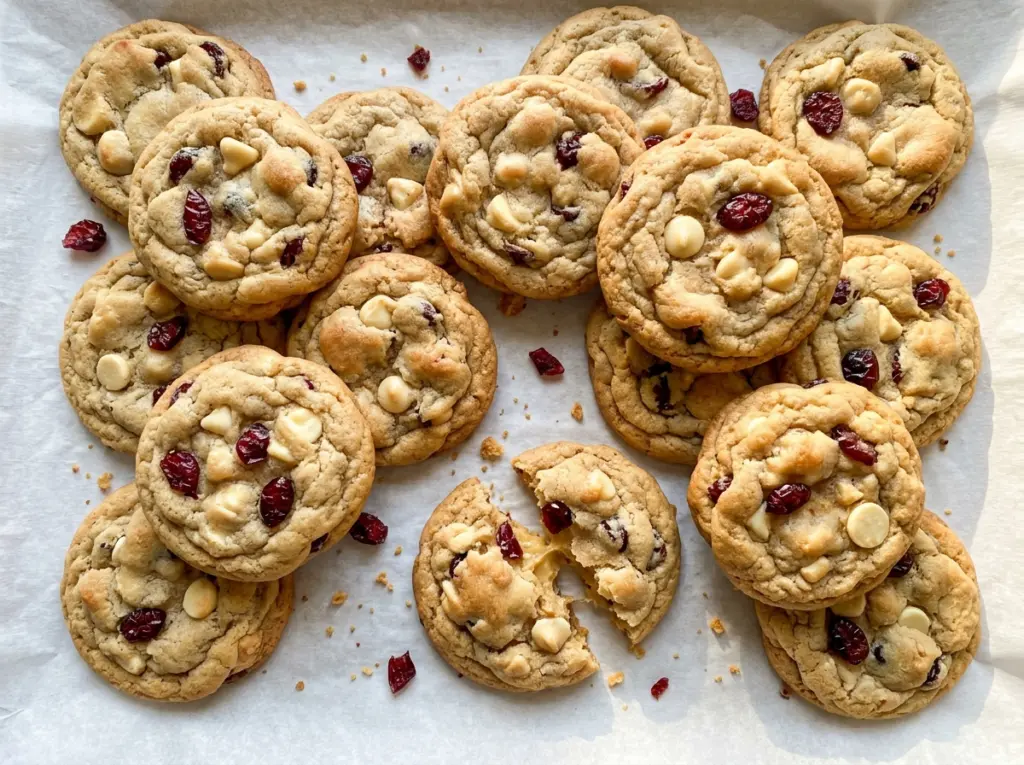
The edges should be just turning gold when you take these out, even though the centers still look soft. That can feel early if you’re used to waiting for a cookie to look fully baked, but these white chocolate cranberry cookies keep setting on the hot pan. Give them a few minutes before moving them and you’ll get a tender center instead of a dry, crisp middle.
I keep the dough straightforward: cream the butter with both sugars, add a whole egg and an extra yolk, then mix in the dry ingredients just until the flour disappears. The extra yolk gives the cookies a pleasantly chewy bite, while white chocolate and tart dried cranberries keep each mouthful from tasting too sweet. Scooped into even portions, they bake into soft-centered cookies with lightly golden edges and plenty of mix-ins.
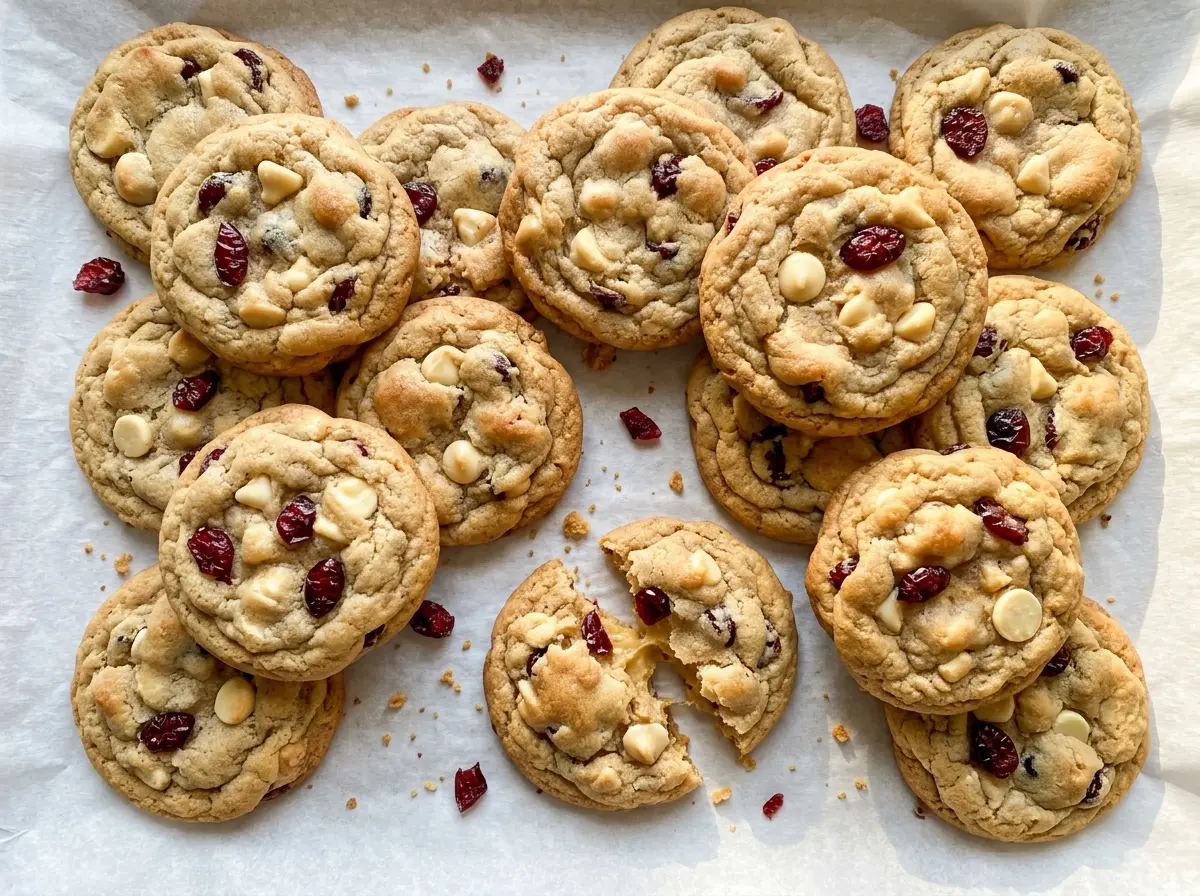
Kitchen Note
Keep the portions close to two tablespoons each. Oversized cookies can look ready at the edges before the middle has had time to set.
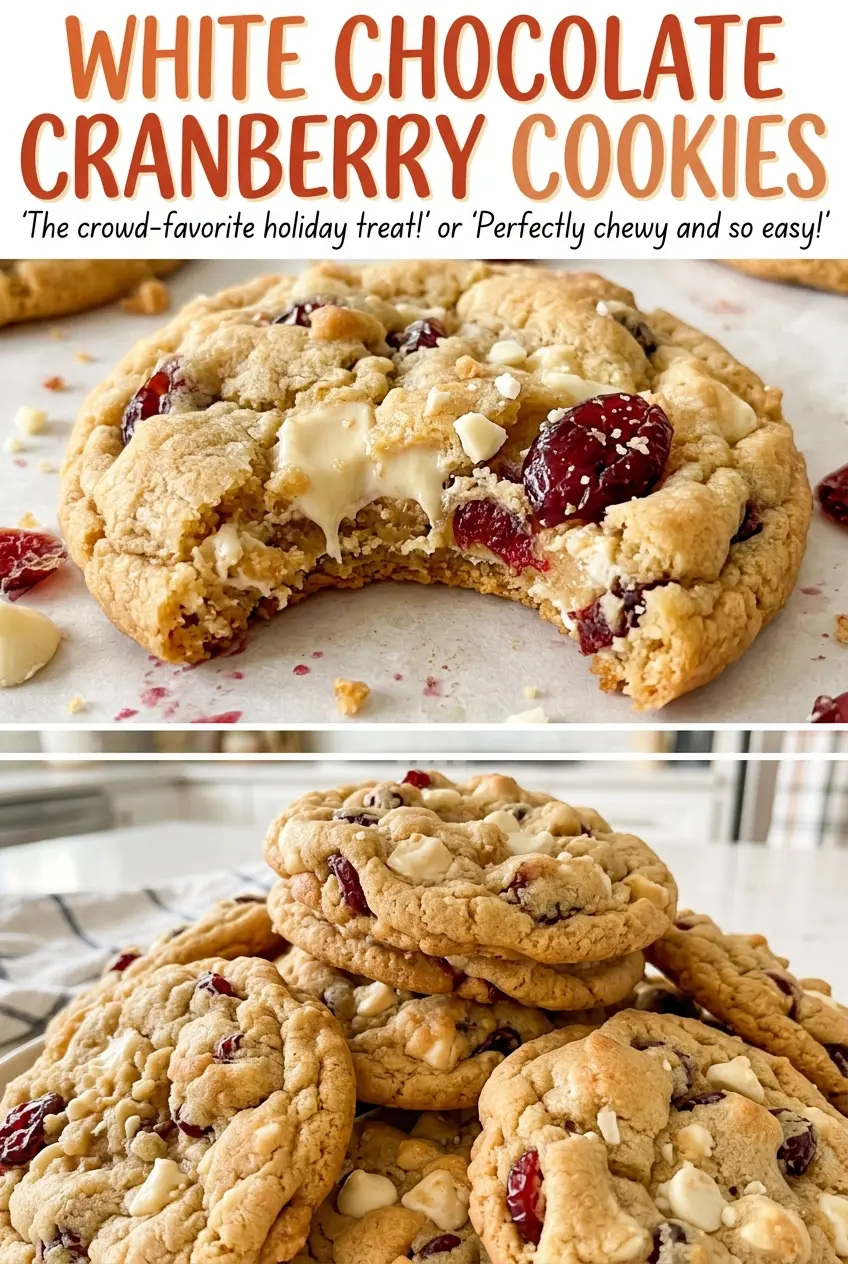
Save these white chocolate cranberry cookies for a bake with chewy centers, lightly golden edges, and sweet-tart bites in every cookie.
Why the Extra Yolk Gives These Cookies a Chewy Center
A whole egg brings moisture and structure, while the additional yolk adds richness without bringing in another white. That balance helps these cookies stay tender and chewy rather than turning cakey. The brown sugar supports that soft texture, and the granulated sugar helps the cookies spread and gives the edges a little definition.
That texture depends on keeping the dough in balance. Cream the softened butter and sugars until creamy, then stop mixing the flour as soon as no dry patches remain. Working the dough longer than necessary develops more gluten, which can make a cookie firm instead of tender. The recipe doesn’t need a complicated technique; the useful part is stopping at the right moment.
How the Sugars, Mix-Ins, and Flour Shape Each Cookie
- Unsalted butter — Softened butter creams evenly with the sugars. It should give when pressed but still hold its shape; melted or greasy butter won’t create the same dough texture. If salted butter is what you have, leave out the kosher salt, since the salt level varies by brand.
- Granulated and light brown sugars — The two sugars do different jobs: granulated sugar helps the cookies spread, while brown sugar brings moisture and a deeper, mellow sweetness. Pack the brown sugar when measuring it. Dark brown sugar works in its place, though the cookies will have a more pronounced molasses note.
- Egg and egg yolk — Use a large egg and a separate large yolk for the intended dough balance. Room-temperature eggs blend more smoothly into the creamed butter, but avoid warming them enough to make the butter greasy. There isn’t a simple one-for-one egg substitute that keeps the same texture.
- All-purpose flour — Flour gives the dough its structure, so measure it without packing it into the cup. Too much flour can make the cookies dry and thick. For a gluten-free batch, use a cup-for-cup baking blend formulated for cookies; the texture may be a little more delicate.
- Baking soda and kosher salt — Baking soda helps the cookies spread and brown, while salt balances the sweetness of the white chocolate. Baking soda isn’t interchangeable with baking powder in the same amount, so use the listed leavener for the expected result.
- White chocolate chips — Chips hold their shape in the oven and leave creamy pockets in the baked cookies. Chopped white chocolate can stand in; it tends to melt into larger, less uniform patches. Choose a white chocolate you enjoy eating, since its sweetness comes through clearly.
- Dried cranberries — Their tartness cuts through the sweet chips, and dried fruit won’t add the extra moisture that fresh cranberries would. Dried cherries can replace them for a softer, deeper fruit flavor; keep the pieces similar in size so they distribute evenly.
- Vanilla extract — Vanilla rounds out the butter and white chocolate. Pure extract has a fuller aroma, though the amount used is small enough that standard vanilla extract works well here.
Creaming and Mixing Without Tough Cookies
Cream the butter and sugars until creamy
Beat the softened butter with both sugars on medium speed for about two minutes. Stop when the mixture looks creamy and the sugars are worked through the butter; you don’t need to beat until it’s dramatically pale or fluffy. If butter is clinging to the sides or bottom, scrape the bowl so it creams evenly.
Add the egg, yolk, and vanilla
Beat in the egg, extra yolk, and vanilla until the mixture looks combined. Scrape down the bowl as needed, especially if you see streaks of butter around the sides. A little unevenness at first is normal; keep mixing just until the egg disappears into the mixture.
Mix in the dry ingredients gently
Whisk the flour, baking soda, and kosher salt together in a separate bowl so the leavener and salt aren’t concentrated in one spot. Add this mixture to the butter mixture and mix on low. Stop as soon as the last dry flour disappears; a few extra turns can make the finished cookies less tender.
Fold in the chips and cranberries
Stir in the white chocolate chips and dried cranberries until they’re spread throughout the dough. Check the bottom of the bowl for any mix-ins that haven’t been incorporated. The dough should hold together, with fruit and chips visible across the whole batch rather than clumped in one area.
Bake one sheet at a time, then let the cookies settle
Heat the oven to 350°F and line two large baking sheets with parchment. Place two-tablespoon portions about two inches apart, and bake one sheet at a time for 10–12 minutes, until the edges are lightly golden and the centers still look soft. Leave each batch on its baking sheet for five minutes before transferring the cookies to a wire rack to cool completely.
Easy Swaps for a Different White Chocolate Cranberry Cookie
Make a gluten-free batch
Replace the all-purpose flour with a cup-for-cup gluten-free baking blend formulated for cookies, ideally one that includes xanthan gum. The cookies may be a little more delicate, so let them rest on the baking sheet before moving them.
Trade cranberries for dried cherries
Use dried cherries instead of the cranberries for a rounder, less tart fruit note alongside the white chocolate. Chop large cherries so they’re closer in size to the chips and distribute easily through the dough.
Storage and Reheating
- Refrigerator: Store the cooled cookies in an airtight container for up to 5 days. Chilling firms them up, so let them sit at room temperature before serving.
- Freezer: Freeze fully cooled cookies in an airtight freezer-safe container for up to 2 months, separating layers with parchment. Thaw at room temperature.
- Reheating: For a warm cookie, microwave one for about 5 seconds, then add a few seconds only if needed. Longer heating can make the white chocolate very hot and the cookie tough.
Questions That Come Up While Baking These Cookies
White Chocolate Cranberry Cookies
Ingredients
Equipment
Method
- Preheat the oven to 350°F.
- Line two large baking sheets with parchment paper.
- In a large bowl, beat the softened butter, granulated sugar, and packed light brown sugar with an electric mixer on medium speed until creamy, about 2 minutes.
- Beat in the egg, egg yolk, and vanilla extract until combined, scraping down the bowl as needed.
- In a medium bowl, whisk together the all-purpose flour, baking soda, and kosher salt.
- Add the flour mixture to the butter mixture and mix on low just until no dry flour remains.
- Stir in the white chocolate chips and dried cranberries until evenly distributed.
- Scoop the dough into 2-tablespoon portions and place them about 2 inches apart on the prepared baking sheets.
- Bake one sheet at a time for 10–12 minutes, until the edges are lightly golden and the centers still look soft.
- Let the cookies cool on the baking sheet for 5 minutes.
- Transfer the cookies to a wire rack to cool completely.