
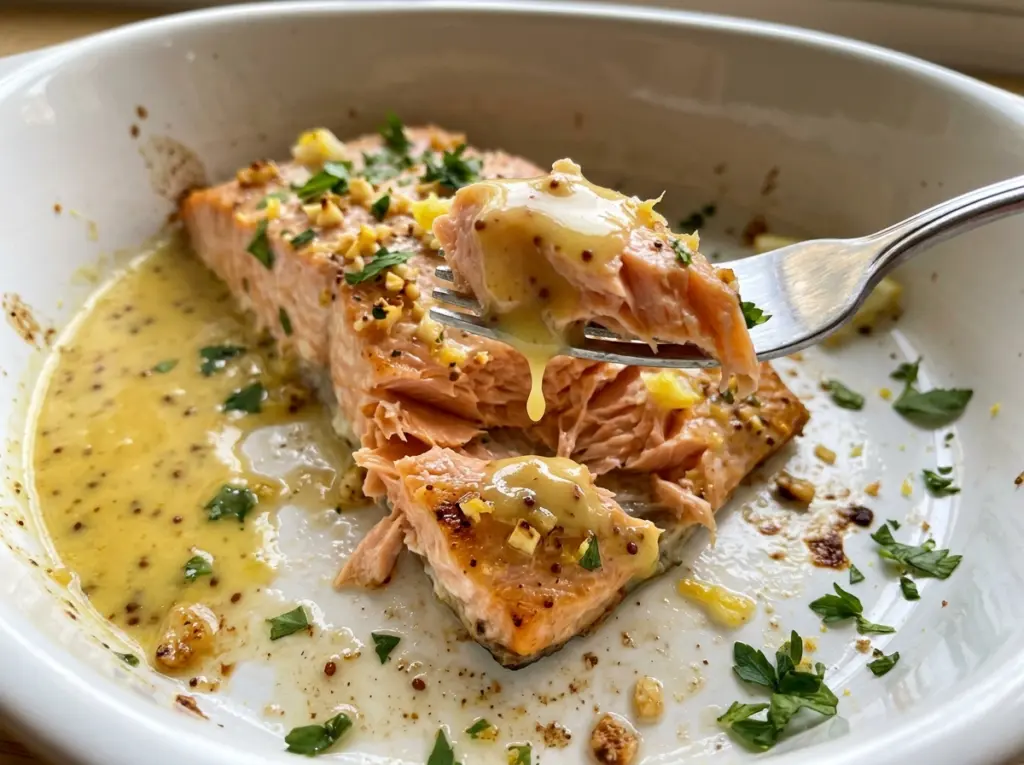
The mustard mixture turns glossy as it hits the warm salmon, and the lemon gives it a sharp, fresh smell before the pan even reaches the oven. I like this baked Dijon salmon because the topping brings plenty of flavor without needing a separate sauce or a long list of ingredients.
Stirring the mustard with olive oil and lemon juice makes a coating that spreads across the fillets instead of sitting in one thick blob. I spoon it over the tops, leave the salmon skin-side down if the fillets have skin, and let the oven do the work. The finished fish is flaky beneath its tangy, garlicky top.
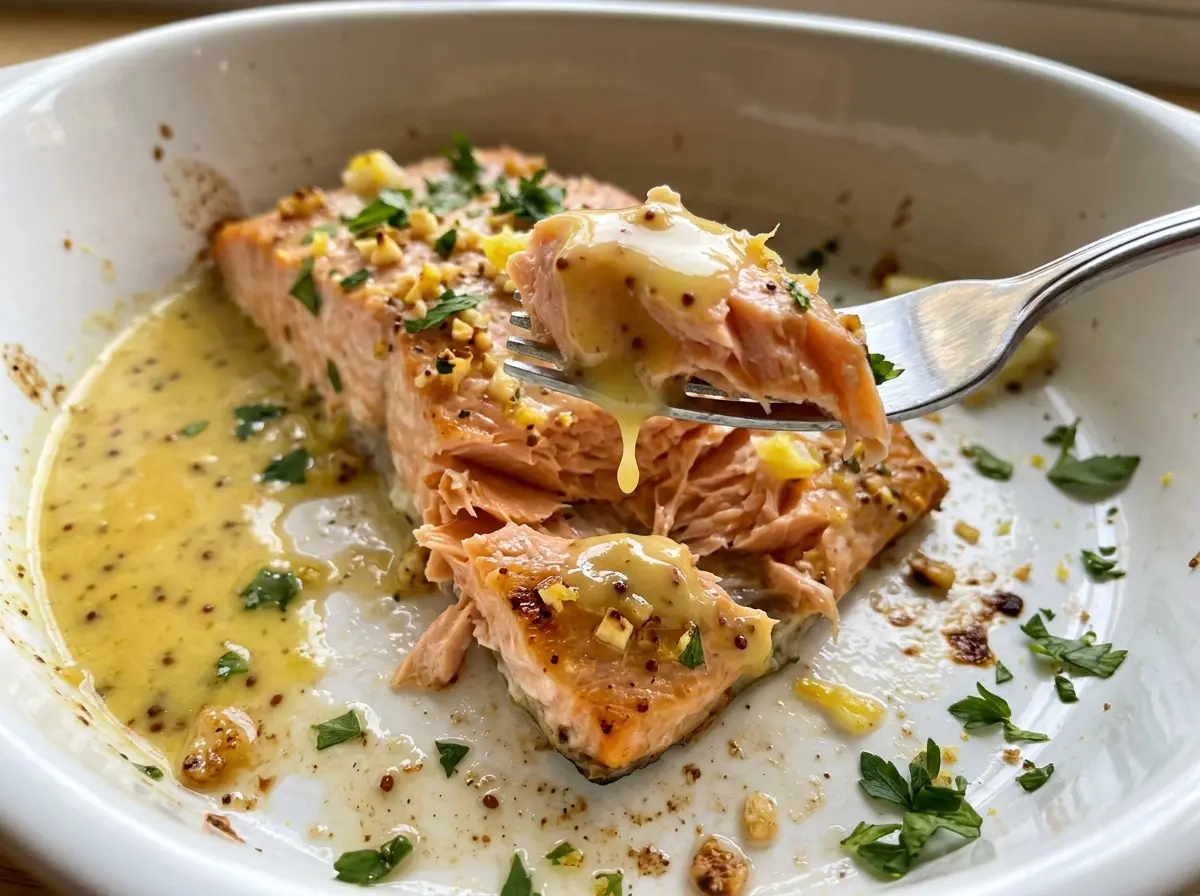
Kitchen Note
Keep the fillets skin-side down when they have skin, and spread the Dijon mixture over the top rather than turning them partway through. The topping stays where you put it, and you can check the fish without disturbing that mustardy surface.
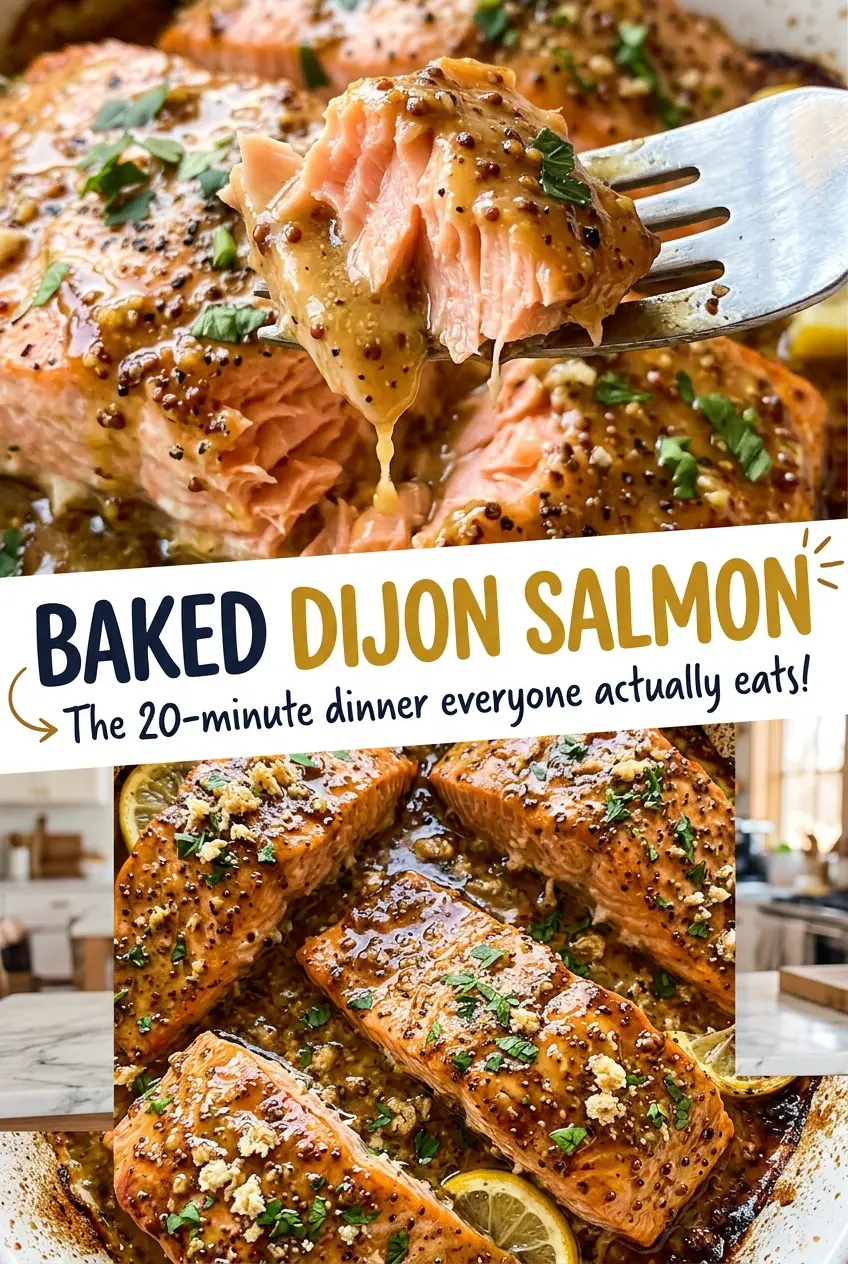
Save this Baked Dijon Salmon for an easy oven dinner with a tangy mustard topping and tender, flaky fish.
Why This Dijon Topping Belongs on the Salmon Before It Bakes
A mustard sauce served on the side tastes different from a coating baked directly onto the fish. Here, Dijon, lemon juice, olive oil, and garlic sit together on the salmon through the full bake, so each forkful gets a little of that bright, peppery seasoning. You also avoid having to make a second sauce while the fish cooks.
The texture of the mixture matters. Stir it until the oil and lemon juice are distributed through the mustard, then spread it over the top in a thin, even layer. A heavy mound in the middle can leave some bites sharply mustardy while the edges have very little. Covering the top evenly gives the fillets a consistent tang without burying the salmon’s own flavor.
This is a straightforward oven method, not a sear-and-finish recipe. The salmon goes onto parchment on a rimmed baking sheet, and the coating stays exposed as it bakes. That keeps the preparation simple while still giving the fish a distinctly seasoned top.
What Dijon, Lemon, and Olive Oil Each Bring to the Salmon
- Salmon fillets — Six-ounce portions give you a practical individual serving and fit the timing for this bake. Skin-on and skinless both work; choose fillets of similar thickness so they finish at roughly the same time. If using frozen salmon, thaw it fully before baking so the timing and doneness cues apply evenly.
- Dijon mustard — Dijon supplies the coating’s sharp, savory backbone and its smooth texture helps the other ingredients spread. A familiar grocery-store Dijon works well; this is a place where you don’t need a specialty jar. Whole-grain or yellow mustard changes both the texture and the balance, so stick with Dijon for the intended result.
- Olive oil and lemon juice — Olive oil softens the mustard’s intensity and gives the mixture a looser consistency; lemon juice cuts through the richness with a clean, tart note. Fresh lemon juice has a brighter aroma, while bottled lemon juice works as a practical substitute in the same quantity.
- Garlic — Minced garlic spreads its savory flavor through the coating. Mince it finely so it’s distributed instead of landing in a few strong bites. Freshly minced garlic gives the mixture a more pronounced aroma than a jarred version.
The Four Stages for Moist, Flaky Dijon Salmon
Prepare the Oven and Lined Pan
Heat the oven to 400°F and line a rimmed baking sheet with parchment paper. The rim keeps the baking sheet practical to handle, while parchment gives you a lined surface for the fish. Set up the pan before mixing the coating so the salmon can go straight into the oven once it’s dressed.
Stir the Mustard Mixture Until Even
Combine the Dijon mustard, olive oil, lemon juice, minced garlic, kosher salt, and black pepper in a small bowl. Stir until you no longer see streaks of oil or concentrated pockets of seasoning. If the mixture separates while you work, give it another stir before spreading it over the fish.
Arrange and Coat the Fillets
Set the salmon on the prepared baking sheet, placing it skin-side down when the fillets have skin. Spread the mustard mixture over the tops rather than underneath the fish. Aim for an even coating from end to end; a bare patch won’t get the same tangy finish as the rest of the fillet.
Bake Until the Thickest Part Is Ready
Bake for 12 to 15 minutes, until the salmon is opaque, flakes easily, and the thickest part reaches 145°F. The exact point within that range depends on the thickness of the fillets, so look at the fish rather than relying on the clock alone. Check the thickest part of a fillet with an instant-read thermometer, and avoid leaving the salmon in the oven after it has reached the doneness cues.
Two Useful Ways to Adapt the Fillets
Use skin-on fillets
Leave the skin on and arrange each fillet skin-side down on the lined pan. The mustard coating goes on the exposed top, just as it does with skinless salmon. This option keeps the skin with the portion; it isn’t necessary to remove it before baking.
Choose skinless fillets
Skinless portions work with the same mustard mixture and oven method, which is handy if you prefer not to serve fish with skin. Keep the fillets on parchment and coat their tops evenly. Their thickness matters more to doneness than whether the skin is attached.
Storage and Reheating
- Refrigerator: Refrigerate leftovers in a covered container within 2 hours and use them within 3 to 4 days. The salmon will be firmer after chilling.
- Freezer: Cooked salmon can be frozen in an airtight freezer-safe container for up to 3 months, though thawing softens its texture. Thaw it in the refrigerator before using.
- Reheating: Warm gently in a covered baking dish in a 275°F oven until heated through, or enjoy the cold leftovers flaked into a salad. High heat and prolonged reheating dry out salmon quickly.
Questions That Come Up When Baking Dijon Salmon
Baked Dijon Salmon
Ingredients
Equipment
Method
- Heat the oven to 400°F.
- Line a rimmed baking sheet with parchment paper.
- Stir together the Dijon mustard, olive oil, lemon juice, garlic, salt, and pepper in a small bowl.
- Place the salmon fillets skin-side down, if skin-on, on the prepared baking sheet.
- Spread the mustard mixture over the tops.
- Bake for 12 to 15 minutes, until the salmon is opaque and flakes easily and its thickest part reaches 145°F.




