
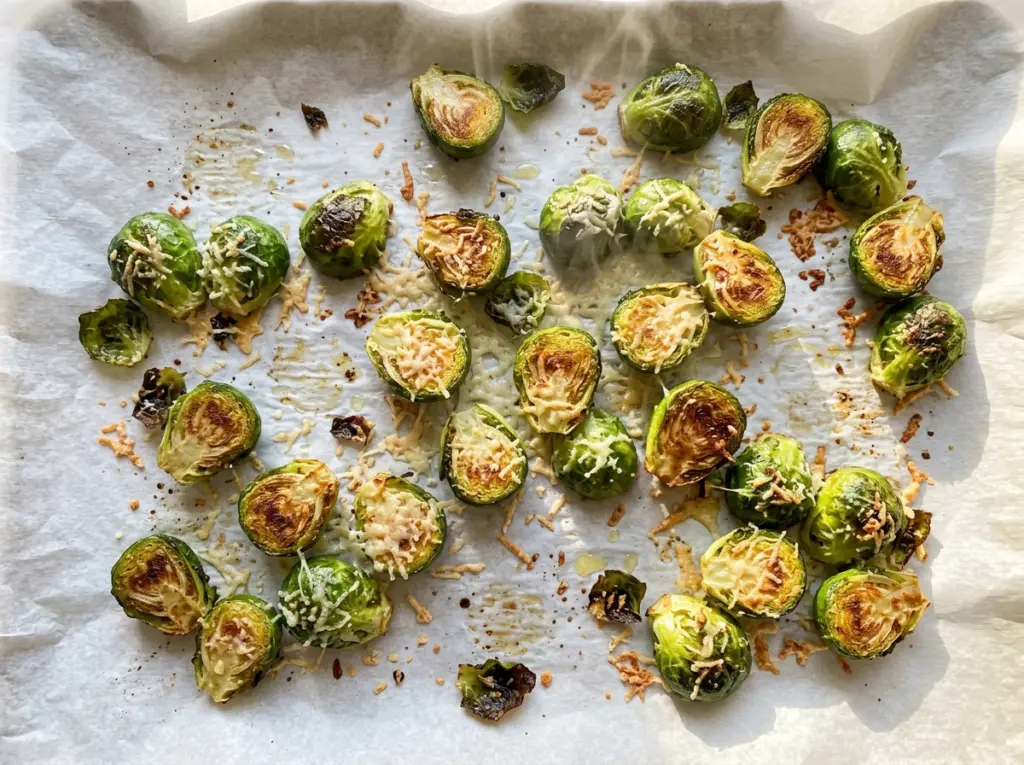
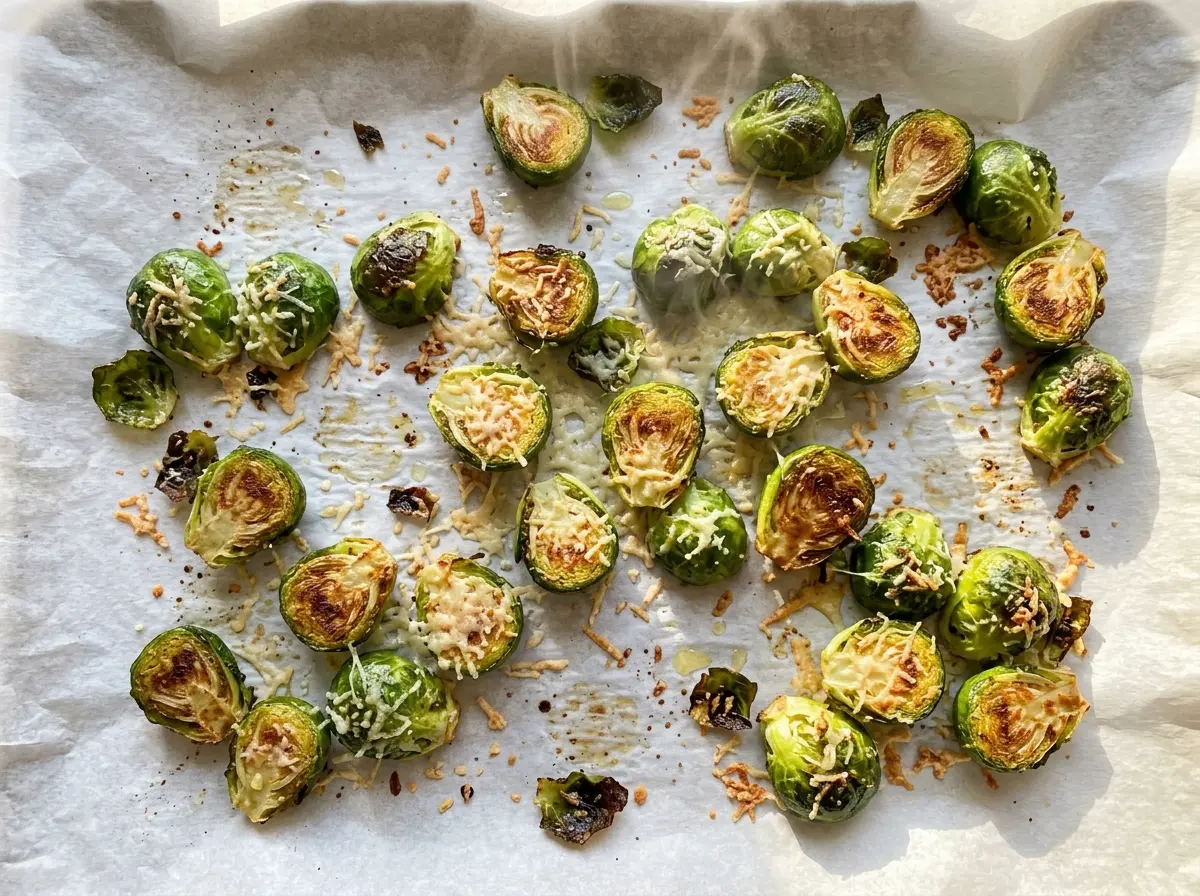
The baking sheet comes out with one side of each sprout deeply browned, and that’s the moment I know the oven has done its job. The cut faces should have real color, not just a pale tan, while the centers still give a little when pierced. Parmesan roasted Brussels sprouts don’t need a long ingredient list to get there; the way the sprouts sit on the pan matters more than any extra seasoning.
I toss the halved sprouts right on a large rimmed baking sheet, then turn them cut side down before they go into the oven. That direct contact helps the flat sides brown while the inside turns tender. I add the finely grated Parmesan only at the end, so it melts and turns lightly golden instead of staying in the oven for the whole roast.
This is a straightforward side dish for four, but it’s also a good reminder that Brussels sprouts can be crisp-edged and tender without complicated prep. The olive oil coats each piece, the pepper keeps the flavor from feeling heavy, and a thin layer of Parmesan clings to the warm leaves. Bring the pan to the table while the cheese is still soft and fragrant.
Kitchen Note
Use finely grated Parmesan for the finishing roast. The smaller shreds melt over the sprouts in just a few minutes, so the cheese turns lightly golden without needing extra oven time.
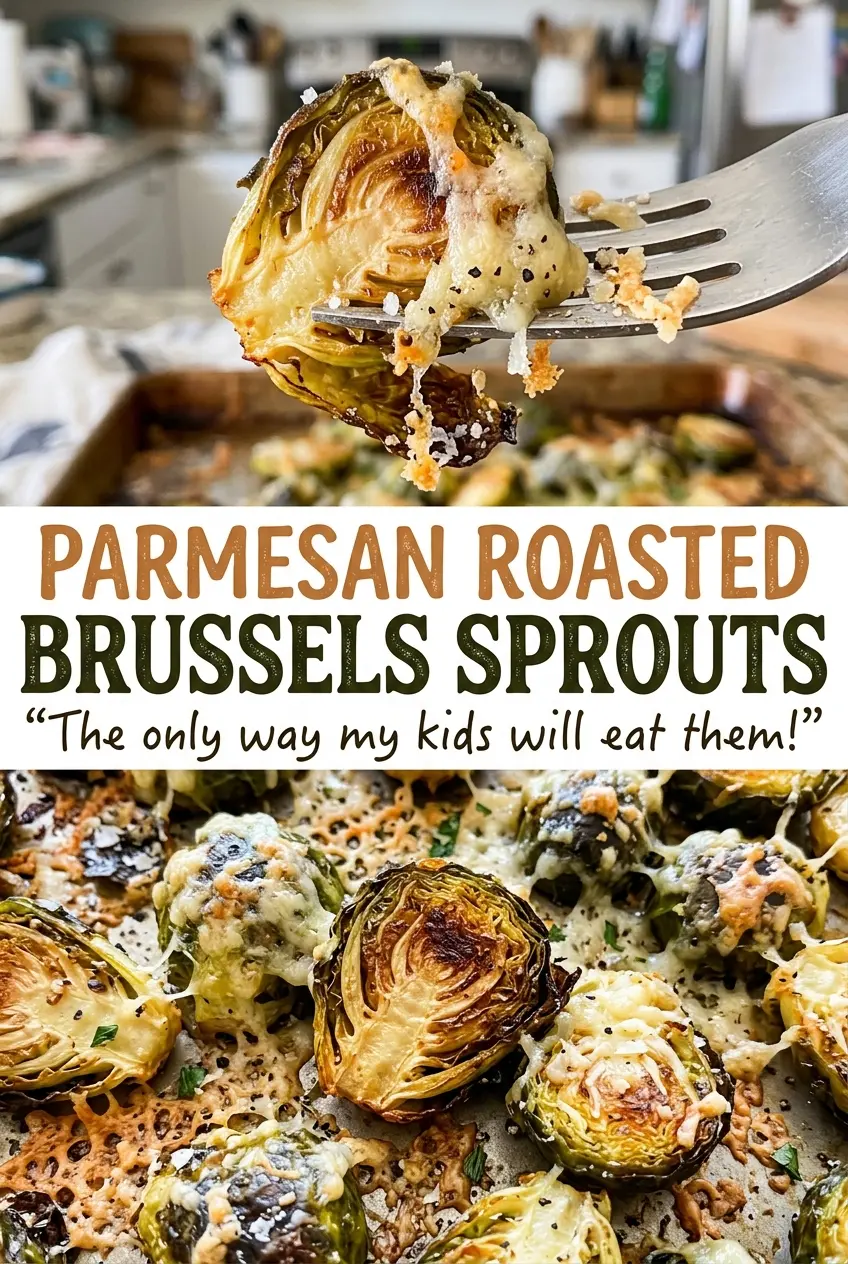
Save these Parmesan roasted Brussels sprouts for a browned, tender side with a lightly golden cheese finish.
Why the Parmesan Goes On After the Sprouts Brown
Brussels sprouts need most of their oven time to soften all the way through and develop color on the flat sides. Parmesan doesn’t need that same long roast. If it goes on at the beginning, the fine cheese can get too dark or dry before the sprouts are tender, especially around the edges of the pan where heat is strongest.
Adding the cheese after the sprouts have roasted gives each part of the dish the time it needs. The sprouts finish cooking first; then the Parmesan gets a short turn in the oven to melt and take on a little color. Look for melted cheese with light golden spots, not a dark crust. That brief finish also keeps the roasted sprouts easy to turn out of the pan instead of leaving a layer of overcooked cheese behind.
This timing is useful when you’re juggling the rest of dinner, too. The sprouts can do their main roast while you prepare another part of the meal, and the cheese finish happens right before serving. Keep the last few minutes focused on the pan, since the change from melted to deeply browned happens faster than the long roast.
What the Sprouts, Oil, and Parmesan Each Bring
- Brussels sprouts — Choose firm sprouts with compact leaves and no wilted, yellowing outer layers. Fresh sprouts are the right choice here because they roast up with browned surfaces and tender centers; frozen sprouts release more moisture and don’t brown in the same way. Trim the ends and halve them so each piece has a flat side for the pan.
- Olive oil — A standard olive oil works well because it coats the cut surfaces and carries the salt and pepper across the sprouts. There’s no need to use an expensive finishing oil; its more delicate flavor gets lost during roasting. Toss until the surfaces look lightly glossy rather than leaving a pool of oil on the sheet.
- Finely grated Parmesan — The fine texture spreads over more of the sprouts and melts in the short final roast. A block grated at home has a fresh, savory flavor, but a good-quality finely grated Parmesan is convenient and works here. Coarse shreds won’t cover the sprouts as evenly, so grate them finer if that’s what you have.
- Black pepper — Pepper gives the sweet, browned edges a little warmth without covering the cheese. Freshly ground pepper has a stronger aroma, though pre-ground pepper is perfectly usable for a quick side dish. Add it with the oil so it’s distributed instead of collecting on a few pieces.
Roasting the Sprouts Before the Parmesan Finish
Halve and season on the baking sheet
Trim the Brussels sprouts and cut them in half, then toss them with the olive oil, kosher salt, and black pepper right on a large rimmed baking sheet. Check that the seasoning and oil are spread across the pieces rather than sitting in one spot. Turn each half so its cut face rests against the pan, and spread the sprouts in a single layer. If they’re piled on top of one another, some pieces won’t have the same contact with the hot sheet.
Roast until browned and fork-tender
Heat the oven to 425°F with a rack in the center, then roast the sprouts for 20 to 25 minutes. The cut sides should be browned, and a fork should slide into the thickest part without meeting a hard center. Check a larger sprout rather than judging only by the smallest pieces. If the centers are still firm, they need more time in the oven within the roasting range.
Melt the Parmesan lightly
Once the sprouts are browned and tender, sprinkle the finely grated Parmesan over them. Return the pan to the oven for 3 to 5 minutes, watching for the cheese to melt and turn lightly golden. The cheese should soften over the hot vegetables, with a few pale-gold patches rather than a uniformly dark top. Serve soon after this finish while the Parmesan is still soft.
Three Ways to Change the Parmesan Finish
Make it dairy-free with nutritional yeast
Leave out the Parmesan and scatter nutritional yeast over the sprouts after roasting. It brings a savory, nutty note, though it won’t melt or form the same golden coating as cheese. Add it at the end so it stays fragrant rather than darkening in the oven.
Use Pecorino Romano for a sharper top
Swap finely grated Pecorino Romano for the Parmesan if you want a more assertive, salty cheese finish. Use a lighter hand with the kosher salt when seasoning the sprouts, since Pecorino tends to taste saltier. Keep the same short finishing roast and look for melted, lightly golden cheese.
Add lemon and a little heat
For a brighter, spicier version, finish the roasted sprouts with lemon zest and a pinch of red pepper flakes. Add both after the cheese has melted so the citrus stays fresh and the pepper doesn’t scorch. The sharp lemon cuts through the savory Parmesan, while the flakes add a gentle lingering warmth.
Storage and Reheating
- Refrigerator: Refrigerate leftovers in an airtight container within 2 hours and use them within 3 to 4 days. The sprouts soften in storage, and the browned cut sides won’t stay crisp.
- Freezer: Freezing isn’t recommended; thawed Brussels sprouts become soft and lose their roasted texture.
- Reheating: Warm leftovers in a skillet over medium heat until hot. A microwave works in a pinch, but it softens the sprouts further instead of bringing back browned edges.
Questions That Come Up When Roasting Brussels Sprouts
Parmesan Roasted Brussels Sprouts
Ingredients
Equipment
Method
- Heat the oven to 425°F.
- Arrange a rack in the center.
- Toss the Brussels sprouts with the olive oil, kosher salt, and black pepper on a large rimmed baking sheet.
- Spread the sprouts cut side down in a single layer.
- Roast for 20 to 25 minutes, until the sprouts are browned on the cut sides and tender when pierced with a fork.
- Sprinkle the Parmesan over the sprouts.
- Roast for 3 to 5 minutes, until the cheese is melted and lightly golden.




