
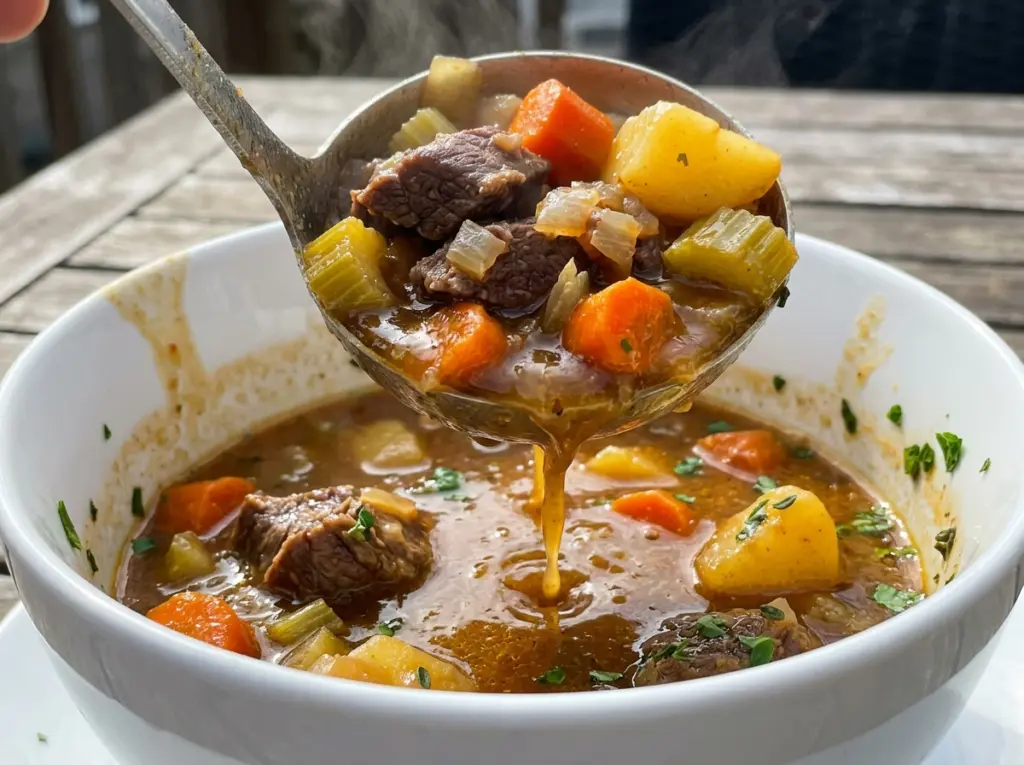
The first sizzle is the part that tells me whether this stew is off to a good start. Dry beef browns in the hot Dutch oven; damp beef releases water and turns gray before it gets a chance to color. I take the extra minute to pat the cubes dry, then brown them in batches so those flavorful browned bits have room to build on the bottom of the pot.
That foundation gives Whole30 Beef Stew its deep, savory flavor without asking for a complicated sauce. Chuck gets a long, gentle simmer, while the carrots and Yukon Gold potatoes go in later so they soften without spending the entire cook in the pot. The broth stays simple: beef broth, tomato paste, thyme, and bay leaves, all pulled together in one Dutch oven.
At the end, a few mashed potato pieces thicken the broth naturally. After a short rest, you get tender beef, soft vegetables, and a spoon-coating broth that still feels like stew—not a pot of gravy.
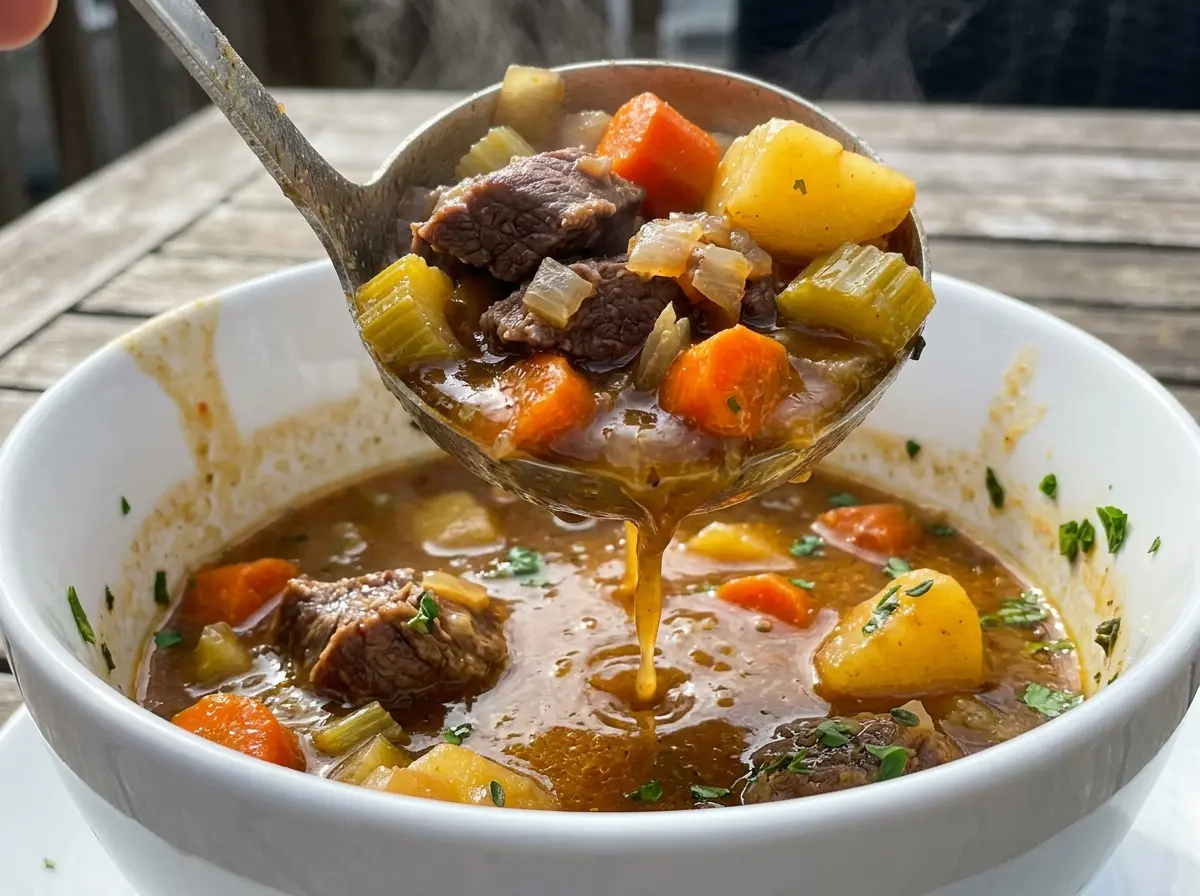
Kitchen Note
Give the stew its full 10-minute rest after you remove the bay leaves and mash the potatoes. The broth settles into a more cohesive sauce instead of feeling loose the moment it comes off the burner.
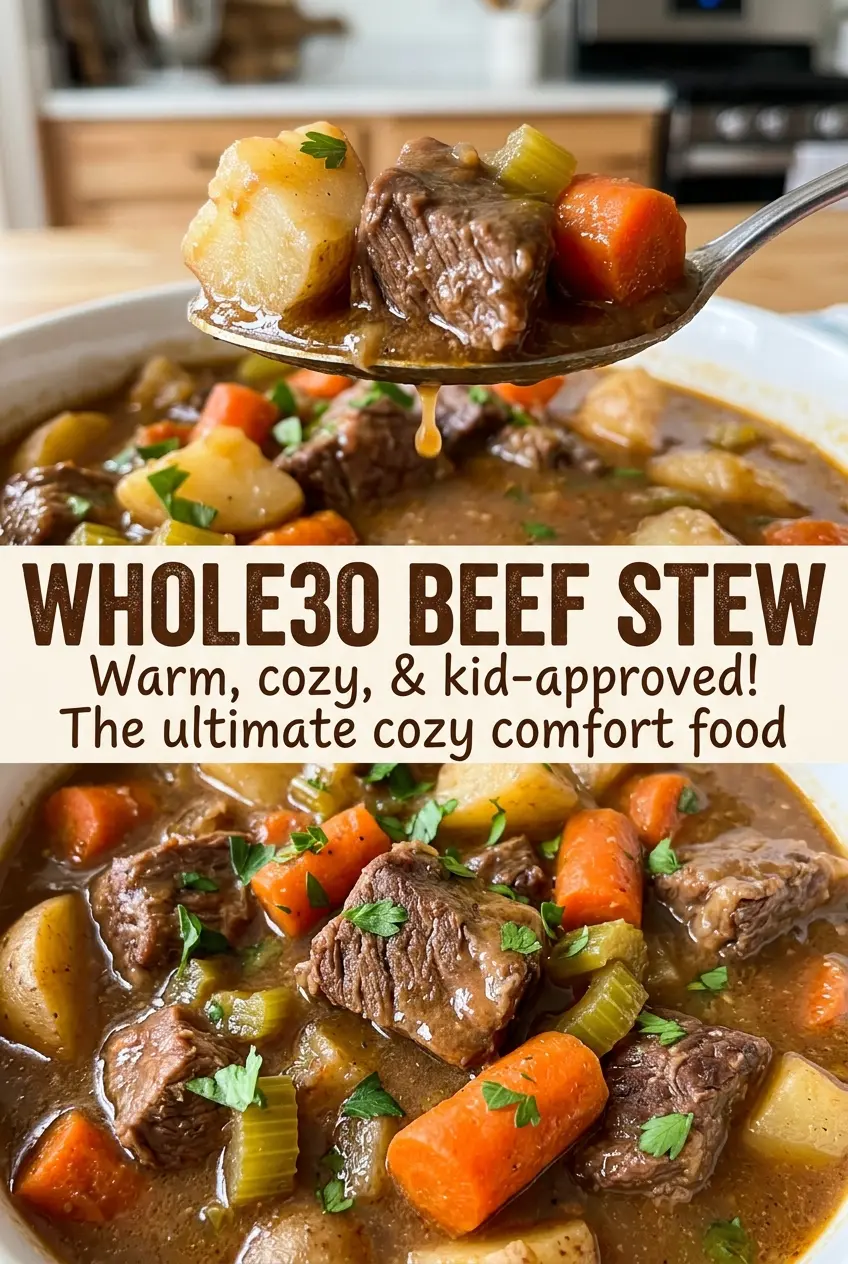
Save this Whole30 beef stew for a cozy, one-pot dinner with fork-tender chuck and a naturally thickened broth.
Why This Whole30 Stew Gets Its Body From Potatoes, Not Flour
A flour-thickened stew can turn heavy, and many convenient thickeners aren’t a fit for a Whole30 meal. Here, the potatoes do double duty: the Yukon Gold pieces cook in the broth, then a few get mashed against the side of the pot and stirred back in. Their starch gives the liquid a little more body without a separate roux or another ingredient.
It’s a small finish, but it changes the feel of the whole bowl. The broth stays savory and spoonable rather than turning into a paste, and the beef and vegetables remain the focus. Mash just a few pieces first; you can always press another potato piece into the broth if you want it thicker. Mashing every potato would take away the distinct chunks that make a stew satisfying.
This also means the potatoes need to be tender enough to mash easily before you finish the pot. Yukon Golds are a good fit because their centers soften into a creamy texture while the larger pieces still hold their shape through the simmer.
What the Chuck, Broth, and Yukon Golds Bring to the Pot
- Beef chuck — Chuck has enough connective tissue to become tender during a long, gentle simmer. Look for pieces with some marbling rather than very lean cubes; cut them into evenly sized pieces so they cook at a similar pace. Pre-cut stew beef can vary in cut and size, so chuck you cut yourself gives you more control.
- Whole30-compliant beef broth — Broth carries the stew’s savory flavor, so choose one you like the taste of and check that it meets your Whole30 requirements. A basic, lower-cost broth works well here; there’s no need for a specialty stock if its ingredients are compliant and its flavor is pleasant.
- Tomato paste and aromatics — Onion, celery, and garlic build a familiar savory base, while tomato paste adds depth and a little richness to the broth. A tube or small can of tomato paste is equally useful; the paste should taste concentrated, not sweetened or seasoned with additions that don’t fit your plan.
- Dried thyme and bay leaves — These give the broth a quiet herbal note that suits slow-cooked beef. Fresh, aromatic dried thyme matters more than buying an expensive brand; bay leaves are there to infuse the pot, then come out before serving.
- Yukon Gold potatoes and carrots — Yukon Golds bring a creamy, buttery texture that works both in intact pieces and mashed into the broth. Choose firm potatoes without soft spots and cut the vegetables to the sizes listed on the recipe card so they soften together. The carrots bring sweetness without needing a separate garnish or finishing ingredient.
From a Dark Sear to Fork-Tender Beef: The Stovetop Sequence
Build Browning in Batches
Pat the beef dry, season it with the salt and pepper, and heat the oil in a 6-quart Dutch oven over medium-high heat. Brown the cubes in batches for 2 to 3 minutes per side, moving each browned batch to a plate. Look for deep brown patches on the meat and browned bits forming on the pot’s bottom. If you crowd the pot, the beef releases moisture and steams instead of browning.
Soften the Aromatics and Toast the Paste
Add the chopped onion and celery, then cook over medium heat for 5 minutes, stirring occasionally. They should soften and pick up some of the browned flavor from the pot. Stir in the garlic and tomato paste and cook for 1 minute; keep stirring so the garlic doesn’t scorch on the hot surface. The paste will darken slightly and smell savory.
Make the Broth and Tenderize the Chuck
Stir in the thyme, bay leaves, and beef broth, scraping the bottom well to loosen the browned bits. Return the beef and any juices from the plate to the pot, then bring the broth to a boil. Cover the Dutch oven and reduce the heat to low for a gentle simmer for 1 1/2 hours. Aim for occasional small bubbles, not a hard boil, which can make the meat cook unevenly.
Add the Vegetables and Finish the Broth
Stir in the carrots and potatoes, cover the pot, and simmer for 45 to 60 minutes. The beef should be fork-tender and the vegetables soft; check both before taking the pot off the heat. Remove the bay leaves, then press a few potato pieces against the side of the pot and stir them into the broth. If the potato pieces resist mashing, they need more time to soften.
Two Small Changes That Shift the Stew’s Texture
Use Olive Oil Instead of Avocado Oil
Both oils work for browning the beef in this Dutch oven. Olive oil brings a slightly more noticeable flavor, while avocado oil stays more neutral; choose whichever you have on hand and keep the same amount and cooking method.
Mash a Few More Potato Pieces for a Thicker Broth
For a more substantial, less brothy texture, mash a few additional soft potato pieces into the liquid at the finish. The stew will be thicker and creamier, though you’ll have fewer intact potato chunks in each bowl.
Storage and Reheating
- Refrigerator: Refrigerate the stew within 2 hours in a covered container and keep it for 3 to 4 days. The potatoes may soften a little more as they sit.
- Freezer: Freeze cooled portions in airtight, freezer-safe containers for up to 2 to 3 months. The potatoes can turn softer after thawing, but the stew still freezes well.
- Reheating: Warm it gently in a covered saucepan over medium-low heat, stirring occasionally, until it reaches 165°F. Avoid a hard boil, which can break up the softened vegetables.
Questions That Come Up While the Stew Simmer
Whole30 Beef Stew
Ingredients
Equipment
Method
- Pat the beef dry and season it with the salt and pepper.
- Heat the oil in a 6-quart Dutch oven over medium-high heat.
- Brown the beef in batches for 2 to 3 minutes per side, then transfer each batch to a plate.
- Add the onion and celery to the pot and cook over medium heat for 5 minutes, stirring occasionally.
- Stir in the garlic and tomato paste and cook for 1 minute.
- Stir in the thyme, bay leaves, and broth, scraping up the browned bits from the bottom of the pot.
- Return the beef and any accumulated juices to the pot.
- Bring the broth to a boil.
- Cover, reduce the heat to low, and simmer gently for 1 1/2 hours.
- Stir in the carrots and potatoes.
- Cover and simmer for 45 to 60 minutes, until the beef is fork-tender and the vegetables are soft.
- Remove the bay leaves.
- Mash a few potato pieces against the side of the pot and stir them into the broth to thicken it.
- Let the stew rest for 10 minutes before serving.




