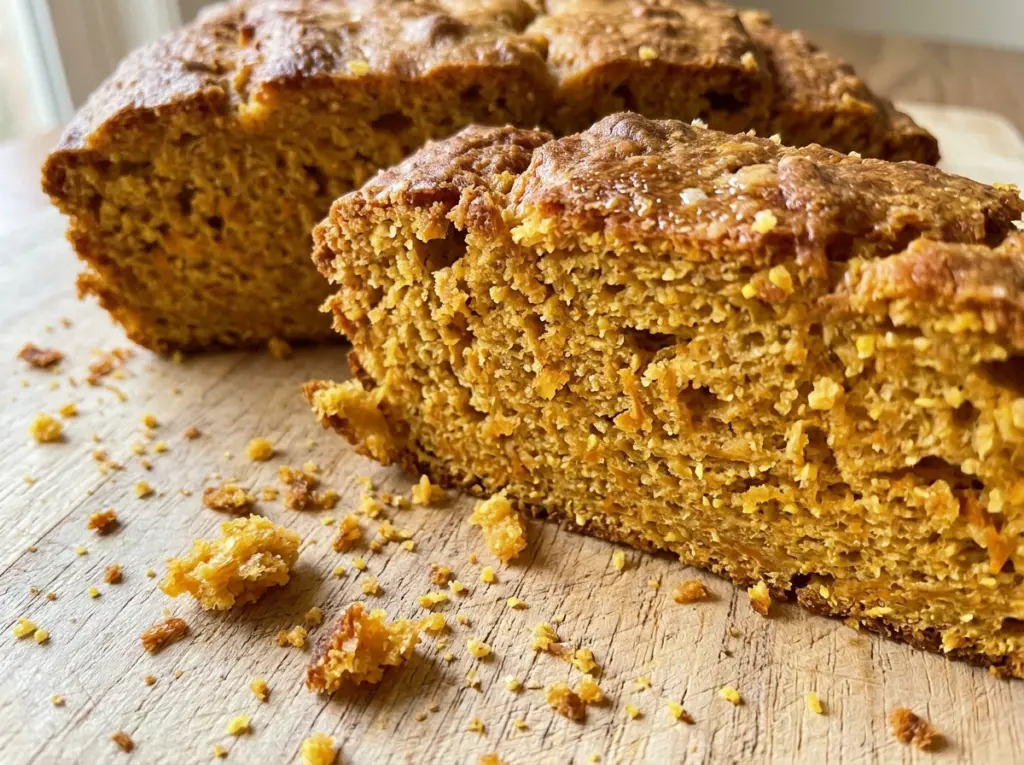
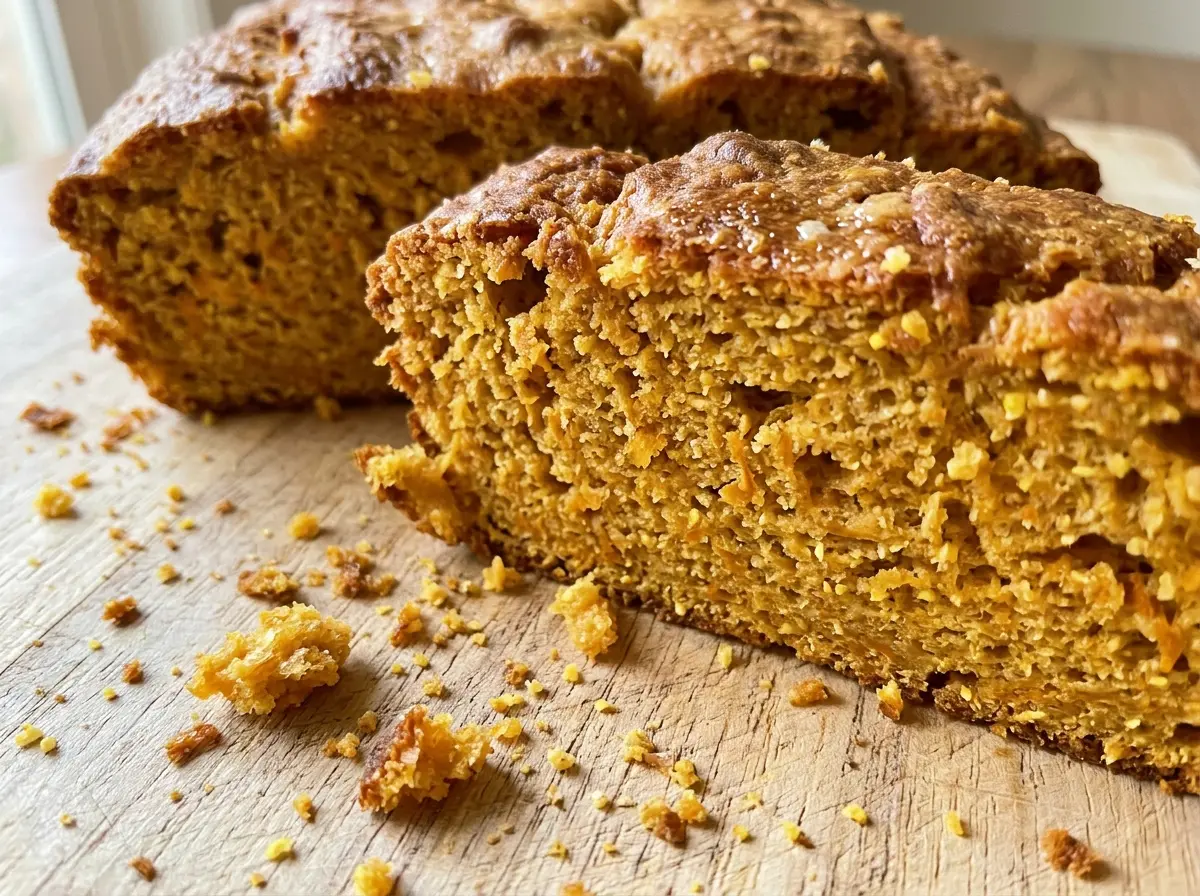
As the cornbread nears the end of its bake, the edges turn golden first and the pumpkin-scented center stays soft. That contrast is what I want from pumpkin cornbread: a tender middle with enough cornmeal texture to keep it firmly in cornbread territory, not a slice of cake. The first time I stirred a pumpkin batter, I expected it to pour like regular cornbread batter. It doesn’t. This one is thick, and that’s exactly what helps it bake up with a close, moist crumb.
Pumpkin puree brings moisture and a mellow sweetness, while yellow cornmeal gives each bite its familiar grainy character. I balance those with all-purpose flour, a little brown sugar, cinnamon, and buttermilk rather than loading the batter with extra spices or sweetness. Stir just until the dry patches disappear, spread the batter into the pan, and let the oven do the rest. You’ll get a golden square that’s tender enough to eat warm but sturdy enough to cut cleanly after a short rest.
Kitchen Note
This batter should look thick, not pourable. Stir only until you can’t see dry flour or cornmeal; a few turns too many can make the finished crumb tight.
Save this pumpkin cornbread for its tender pumpkin crumb, golden edges, and gentle cinnamon warmth.
Why Pumpkin Cornbread Needs Both Cornmeal and Flour
Pumpkin changes the structure of cornbread as much as it changes the flavor. Puree adds moisture and body, and the cornmeal absorbs some of that moisture as the batter sits and bakes. If the batter relied on cornmeal alone, the finished squares would be heavier and more crumbly. All-purpose flour helps hold the crumb together, so the pieces lift from the pan without losing the pleasantly coarse cornmeal feel.
The other balance is sweetness. Pumpkin has an earthy, mild flavor, so a modest amount of light brown sugar rounds it out without making the cornbread taste like dessert. Cinnamon supports the pumpkin rather than taking over, and buttermilk gives the batter a gentle tang. Baking powder and baking soda provide the lift; the soda also works with the acidity in the buttermilk. The result lands between savory cornbread and a sweet quick bread, with a warm pumpkin flavor and a texture that stays soft without turning gummy.
What Each Ingredient Brings to Pumpkin Cornbread
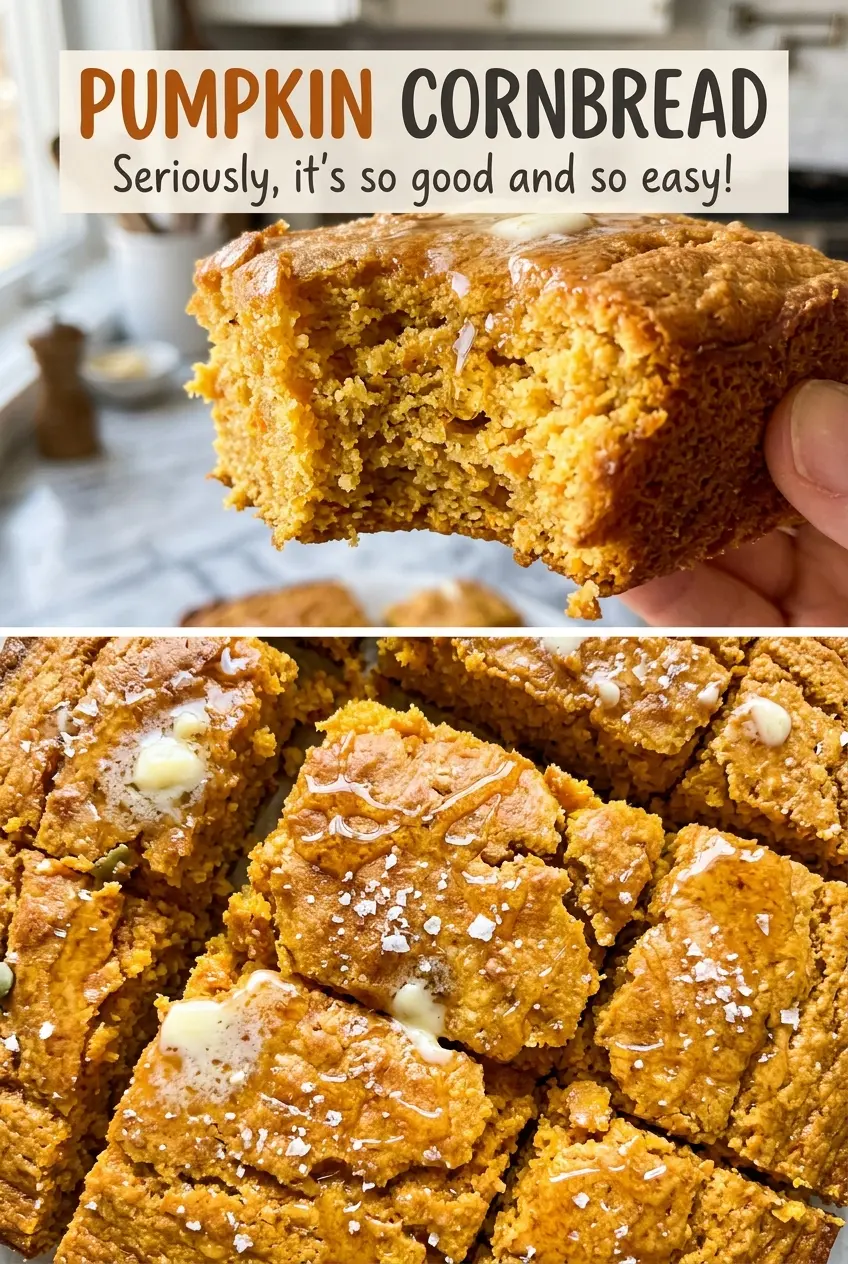
- Yellow cornmeal — This is where the unmistakable cornbread texture comes from. A standard grocery-store yellow cornmeal works well; a coarser grind gives the crumb a more pronounced bite, while a fine grind feels softer. Corn flour or another grain won’t give the same flavor and texture.
- All-purpose flour — Flour supports the pumpkin-heavy batter and keeps the squares sliceable. Ordinary all-purpose flour is the right choice here; there’s no need for specialty flour or a high-protein bread flour.
- Pumpkin puree — Use plain puree, not pumpkin pie filling, which is already sweetened and spiced. Canned puree is convenient and consistent. If you’re using homemade puree, choose a smooth one that isn’t watery; excess liquid can make the center heavy.
- Buttermilk — Its acidity helps the baking soda work, and its tang keeps the sweetness in check. If you’re out, plain yogurt loosened with a little milk until it pours easily is a useful stand-in; the crumb may be a touch denser.
- Eggs — They bind the wet ingredients and help the cornbread hold together when cut. Large eggs are the standard size for this batter, and they blend more evenly when they aren’t refrigerator-cold.
- Unsalted butter — Melted butter gives the crumb a rounded, buttery taste. A basic unsalted butter is all you need; letting it cool slightly before mixing keeps it from scrambling the eggs.
- Light brown sugar and cinnamon — Brown sugar adds a soft molasses note that suits pumpkin, while cinnamon brings warmth without turning the whole pan into a spice cake. Fresh, fragrant cinnamon makes a noticeable difference; old cinnamon tends to taste flat.
- Baking powder and baking soda — These leaveners work together for lift and a tender crumb. Check that they’re fresh if your cornbread often bakes up dense; changing their balance isn’t a good place to improvise.
Mixing and Baking for a Tender, Even Crumb
Prepare the Pan and Combine the Dry Ingredients
Heat the oven to 400°F and coat a 9-inch square baking pan with nonstick cooking spray. Whisk the cornmeal, flour, brown sugar, baking powder, baking soda, kosher salt, and cinnamon in a large bowl. Break up any small brown-sugar lumps as you whisk so they don’t leave sweet pockets in the finished crumb. A thorough mix now helps the leaveners and cinnamon distribute evenly without extra stirring later.
Whisk the Pumpkin Mixture Until Smooth
In a medium bowl, whisk the pumpkin puree, eggs, buttermilk, and melted butter until the mixture looks smooth and evenly orange. If the butter is still hot, give it a little more time to cool before adding it; warm butter can start setting the eggs in streaks. Scrape the bottom of the bowl as you whisk, since pumpkin puree can cling there. The wet mixture should look unified, with no ribbons of egg or pools of butter.
Bring the Batter Together Without Overworking It
Pour the pumpkin mixture into the dry ingredients and stir until no dry patches remain. The batter will be thick, so use a broad spatula and scrape along the bottom of the bowl rather than whisking hard. Stop once the flour and cornmeal are incorporated; a perfectly smooth batter isn’t the goal. Spread it evenly in the prepared pan so the middle and edges bake at a similar pace.
Bake Until the Center Tests Clean
Bake for 25 to 30 minutes, until the top is golden and a toothpick inserted in the center comes out clean or with a few moist crumbs. Start checking at the earlier end of that range, since ovens vary and the center is the last part to set. If the toothpick has wet batter on it, give the pan more time and check again. Let the cornbread cool in the pan for 10 minutes before serving so the squares can settle and lift out neatly.
Three Small Changes That Give This Pan a Different Character
Make It Gluten-Free
Replace the all-purpose flour with a cup-for-cup gluten-free baking blend intended to replace wheat flour in baking. Choose one that includes a binder such as xanthan gum; the texture may be a little more delicate, so let the cornbread rest in the pan before cutting.
Use Dark Brown Sugar for a Deeper Note
Swap the light brown sugar for the same amount of dark brown sugar. The added molasses flavor makes the pumpkin taste earthier and the sweetness more pronounced, without changing the pan or baking method.
Lean Into the Spice
Use pumpkin pie spice in place of the cinnamon, keeping the same amount. The blend brings a fuller mix of warm spice notes; because blends vary, the flavor may come across stronger than cinnamon alone.
Storage and Reheating
- Refrigerator: Store cooled pieces in an airtight container for up to 4 days. The crumb firms up when chilled, then softens as it warms.
- Freezer: Freeze individual cooled squares in a tightly sealed freezer-safe container for up to 2 months. Thaw in the refrigerator or at room temperature before warming.
- Reheating: Warm a piece briefly in the microwave, just until it’s pleasant to eat. Long heating can dry the edges and make the cornmeal crumb tough.
Questions That Come Up When Baking Pumpkin Cornbread
Pumpkin Cornbread
Ingredients
Equipment
Method
- Heat the oven to 400°F.
- Coat a 9-inch square baking pan with nonstick cooking spray.
- Whisk the cornmeal, flour, brown sugar, baking powder, baking soda, salt, and cinnamon in a large bowl.
- Whisk the pumpkin puree, eggs, buttermilk, and melted butter in a medium bowl until smooth.
- Pour the pumpkin mixture into the dry ingredients and stir just until no dry patches remain.
- Spread the thick batter evenly in the prepared pan.
- Bake for 25 to 30 minutes, until the top is golden and a toothpick inserted in the center comes out clean or with a few moist crumbs.
- Cool in the pan for 10 minutes.
- Serve.