
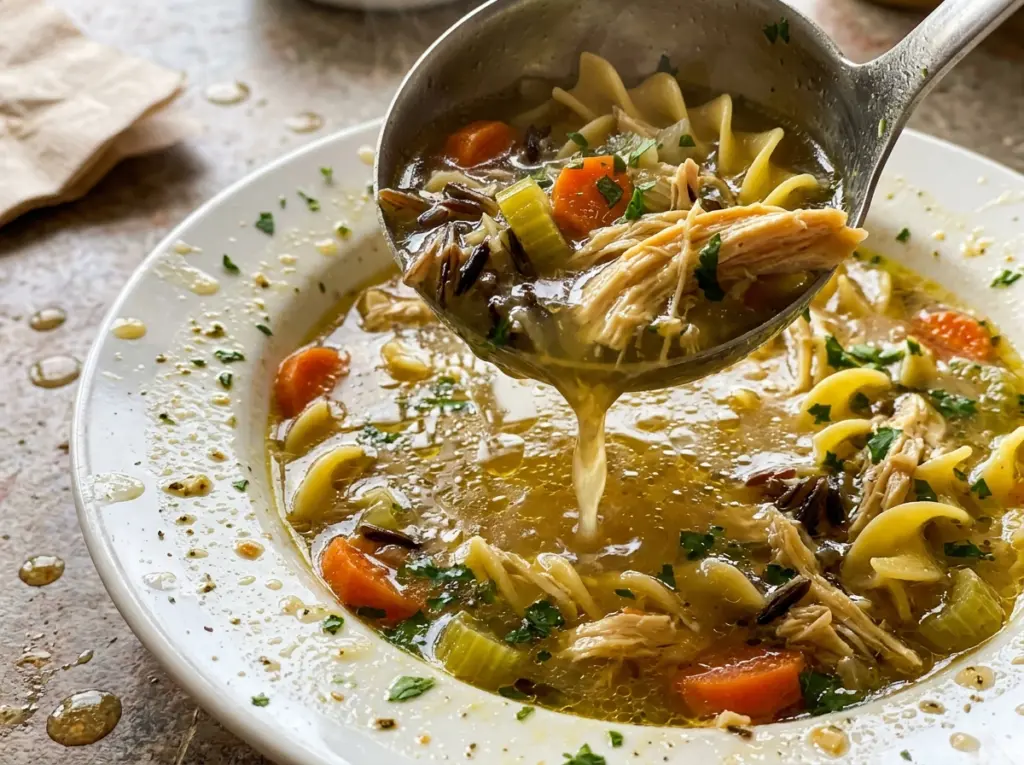
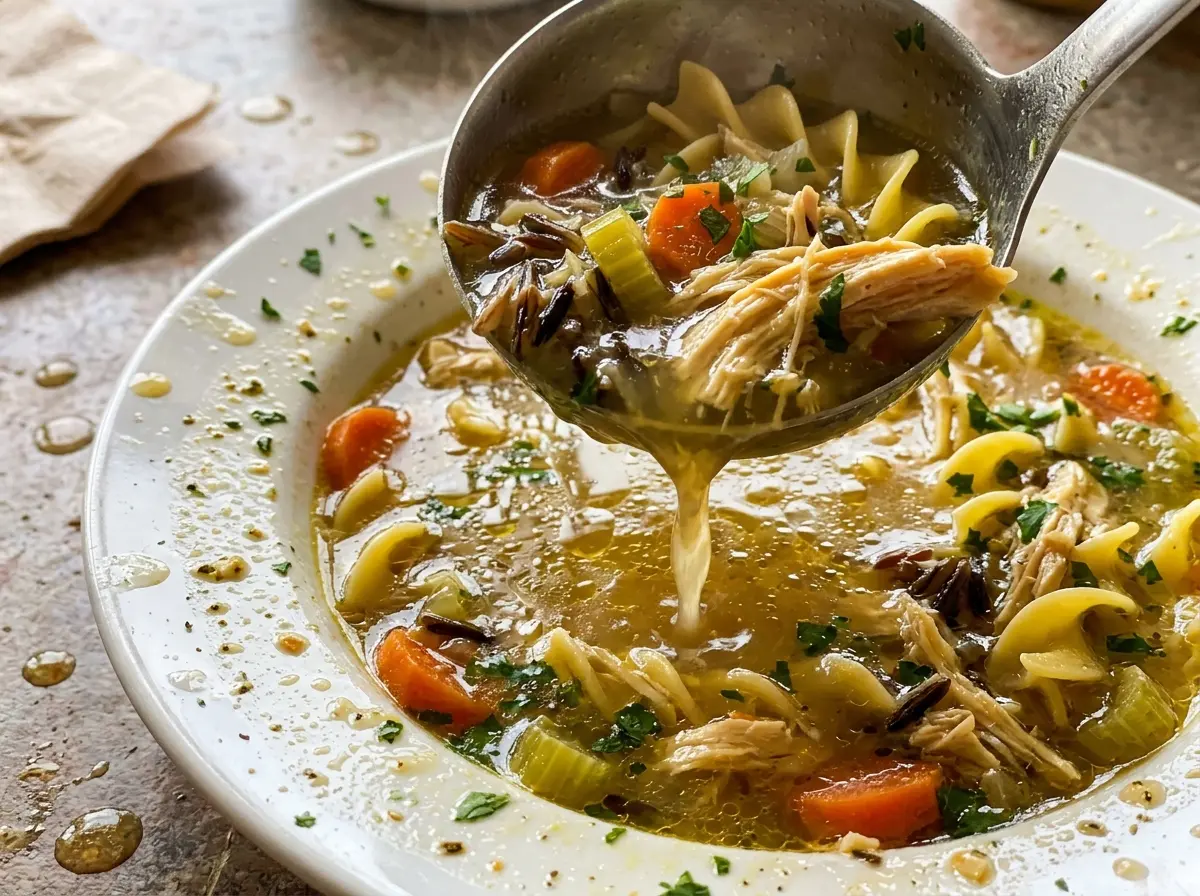
The first thing I notice is how the broth changes once the flour-coated vegetables meet the chicken stock: it turns from thin and clear to a little velvety, without needing a separate cream sauce. I let the wild rice simmer alongside the chicken, then give the noodles their own short turn at the end. That order is what makes this chicken noodle and wild rice soup feel hearty without leaving the egg noodles soft and swollen.
I use boneless, skinless chicken thighs because they stay tender through the gentle simmer, and I take them out as soon as they reach 165°F. The rice gets more time in the pot while the chicken rests on the cutting board, so each part can finish at the right pace. A little heavy cream goes in after the noodles are tender, and the soup rests for five minutes before serving. The bowl is creamy but still full of distinct grains, noodles, and shreds of chicken.
Kitchen Note
Rinse the wild rice in a fine-mesh strainer before it goes into the pot. The long grains can slip through a wide colander, and it’s easier to drain them well when they stay together.
Save this chicken noodle and wild rice soup for a cozy bowl with tender chicken, chewy rice, and creamy broth.
Why the Wild Rice Needs Its Own Finish Line
Chicken and wild rice don’t become tender on the same schedule. The chicken thighs usually reach their safe temperature while the wild rice still has a firm center, so leaving both in the pot until the rice is ready can make the chicken stringy and dry. I move the chicken to a cutting board as soon as it reaches 165°F, then keep the soup at a gentle simmer until the grains soften.
Don’t judge wild rice by the look of every single grain. It’s ready when it’s tender to bite and some grains have split open, which gives the soup its characteristic mix of chewy centers and softer edges. That split is a useful visual cue, not a signal that every grain needs to burst. Keeping the noodles out until the rice is finished matters for the same reason: wide egg noodles need only a few minutes, and a long simmer would leave them past tender.
This staggered timing also makes the final bowl easier to serve. The chicken is shredded while the rice finishes, then goes back into the pot with noodles and cream at the end. You get a thick, substantial soup without asking one ingredient to wait around in hot broth while another catches up.
What the Wild Rice, Flour, and Cream Each Bring

- Wild rice — Whole wild rice has a firmer, chewier bite than ordinary white rice and gives this soup its nutty character. A plain bag from the grocery store works well; look for whole wild rice rather than a blend, since other rice varieties can cook at a different pace.
- Chicken thighs — Boneless, skinless thighs stay moist through the two-part simmer and shred easily. A basic package is fine here; the gentle cooking and broth do the work, so there’s no need to seek out a specialty cut.
- All-purpose flour — Cooking the flour briefly in the butter and vegetables gives the broth body before the stock goes in. For a gluten-free version, a 1:1 gluten-free flour blend is the most useful swap; the variation below also accounts for the noodles.
- Wide egg noodles — Their broad shape catches the creamy broth and gives each spoonful a soft, familiar noodle bite. Gluten-free wide noodles can replace them, though their cook time and texture depend on the brand.
- Heavy cream — Cream rounds out the broth and makes it feel silky without turning it into a thick sauce. Standard grocery-store cream works; leaving it out gives you a lighter, more broth-forward soup rather than the same creamy finish.
- Low-sodium chicken broth — A carton is perfectly suitable, and the lower sodium leaves room for the measured kosher salt. A richer or more expensive broth isn’t necessary because the chicken, vegetables, and herbs simmer directly in it.
Building the Soup in the Right Order
Soften the Vegetables and Cook the Flour
Melt the butter in a 6-quart Dutch oven over medium heat, then add the diced onion, carrots, and celery. Cook for 6–8 minutes, stirring occasionally, until the vegetables have softened; they shouldn’t be browned or left crunchy. Stir in the minced garlic for 30 seconds, just until fragrant. Sprinkle in the flour and keep stirring for 1 minute so it coats the vegetables and cooks before any broth goes in.
Whisk in Broth and Simmer the Chicken
Pour in the chicken broth gradually, whisking as you go until the flour blends in smoothly. Stir in the rinsed wild rice, chicken thighs, thyme, bay leaf, kosher salt, and black pepper, then bring the pot to a boil over medium-high heat. Reduce the heat to maintain a gentle simmer and partially cover the Dutch oven. Cook for 20–30 minutes, checking the thickest part of a thigh with a thermometer; take the chicken out when it reaches 165°F.
Give the Wild Rice More Time
Transfer the chicken to a cutting board and leave the soup simmering gently, partially covered. Stir occasionally as the rice cooks for another 20–35 minutes. Look for tender grains with some split open; if the rice still has a hard center, it isn’t ready yet. Removing the chicken before this stretch keeps it from spending extra time in the hot broth.
Finish With Noodles and Cream
Remove and discard the bay leaf, then shred the chicken with two forks. Stir the wide egg noodles into the soup and simmer uncovered for 6–8 minutes, until just tender. Return the shredded chicken to the pot and stir in the heavy cream. Cook gently for 2–3 minutes until heated through, without letting the soup boil, then take it off the heat and let it rest for 5 minutes before serving.
Three Ways to Adapt This Chicken and Wild Rice Soup
Use Chicken Breasts for a Leaner Bowl
Swap the thighs for boneless, skinless chicken breasts and still use 165°F in the thickest part as your doneness cue. Breast meat is leaner and less forgiving if it stays in the pot after it’s cooked, so check it rather than relying on the full time range; the soup will have a slightly leaner, less rich chicken flavor.
Make It Gluten-Free
Use an equal volume of 1:1 gluten-free flour blend in place of the all-purpose flour, and choose gluten-free wide noodles and gluten-free low-sodium chicken broth. The blend thickens the broth in the same step, though the finished soup may be a little less cohesive than one made with wheat flour. Cook the noodles to the package’s tender-but-not-soft cue because gluten-free varieties don’t all take the same time.
Leave Out the Cream for a Brothier Soup
Skip the heavy cream and finish the soup with the shredded chicken as usual. The broth will be lighter and less silky, but the flour and starch from the rice still give it some body. This is a change in texture, not a dairy-free version, since the butter remains in the soup.
Storage and Reheating
- Refrigerator: Refrigerate leftovers within 2 hours and keep them for 3–4 days. The noodles and rice continue to absorb broth, so the soup will be thicker after chilling.
- Freezer: For the best texture, freeze the soup after the rice and chicken are cooked but before adding the noodles and cream. Cool it, store it airtight, and use it within 3 months; add the noodles and cream after thawing and reheating.
- Reheating: Warm leftovers gently on the stovetop, stirring often, and loosen the soup with a splash of chicken broth if it has thickened. Avoid a hard boil, which can make the cream less smooth and the noodles too soft.
Questions That Come Up While the Soup Simmer
Chicken Noodle And Wild Rice Soup
Ingredients
Equipment
Method
- Melt the butter in a 6-quart Dutch oven over medium heat. Add the onion, carrots, and celery and cook for 6–8 minutes, stirring occasionally, until softened.
- Stir in the garlic and cook for 30 seconds, then sprinkle in the flour and cook for 1 minute, stirring constantly.
- Gradually whisk in the broth until smooth, then stir in the wild rice, chicken thighs, thyme, bay leaf, salt, and pepper. Bring to a boil over medium-high heat.
- Reduce the heat to maintain a gentle simmer, partially cover, and cook for 20–30 minutes, until the chicken reaches 165°F in the thickest part. Transfer the chicken to a cutting board and continue simmering the soup for 20–35 minutes, stirring occasionally, until the wild rice is tender and some grains have split.
- Remove and discard the bay leaf, then shred the chicken with two forks. Stir the egg noodles into the soup and simmer uncovered for 6–8 minutes, until just tender.
- Stir in the shredded chicken and heavy cream and cook gently for 2–3 minutes, until heated through; do not boil. Remove from the heat and let the soup rest for 5 minutes before serving.




