
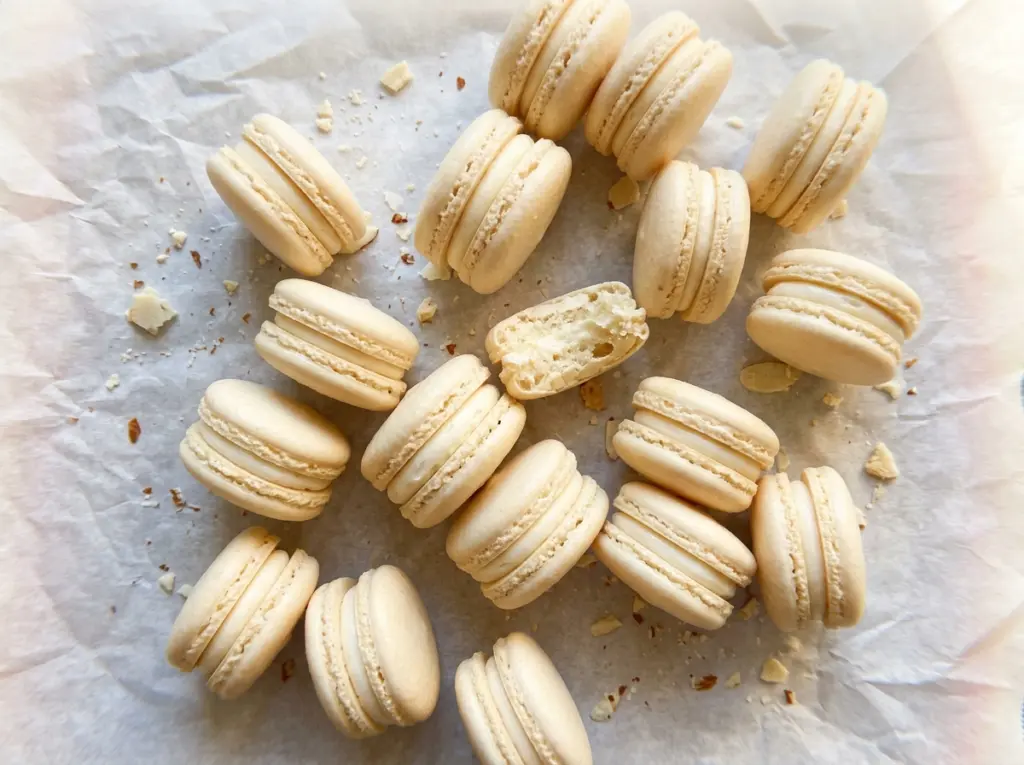
The first thing I watch with macarons is the batter sliding off the spatula. If it runs like pancake batter, the shells spread; if it drops in a thick ribbon and settles back into the bowl in about 10 seconds, it’s ready to pipe. That small window is what makes these Basic French Macarons feel manageable instead of mysterious.
The shells use just almond flour, powdered sugar, egg whites, and granulated sugar, so there’s nowhere for an uneven texture to hide. I sift the dry ingredients, whip the whites until glossy and stiff, then fold with a light hand. After piping, the rounds need time to develop dry tops before they go into the oven. A simple chocolate ganache gives the finished macarons a smooth, bittersweet center.
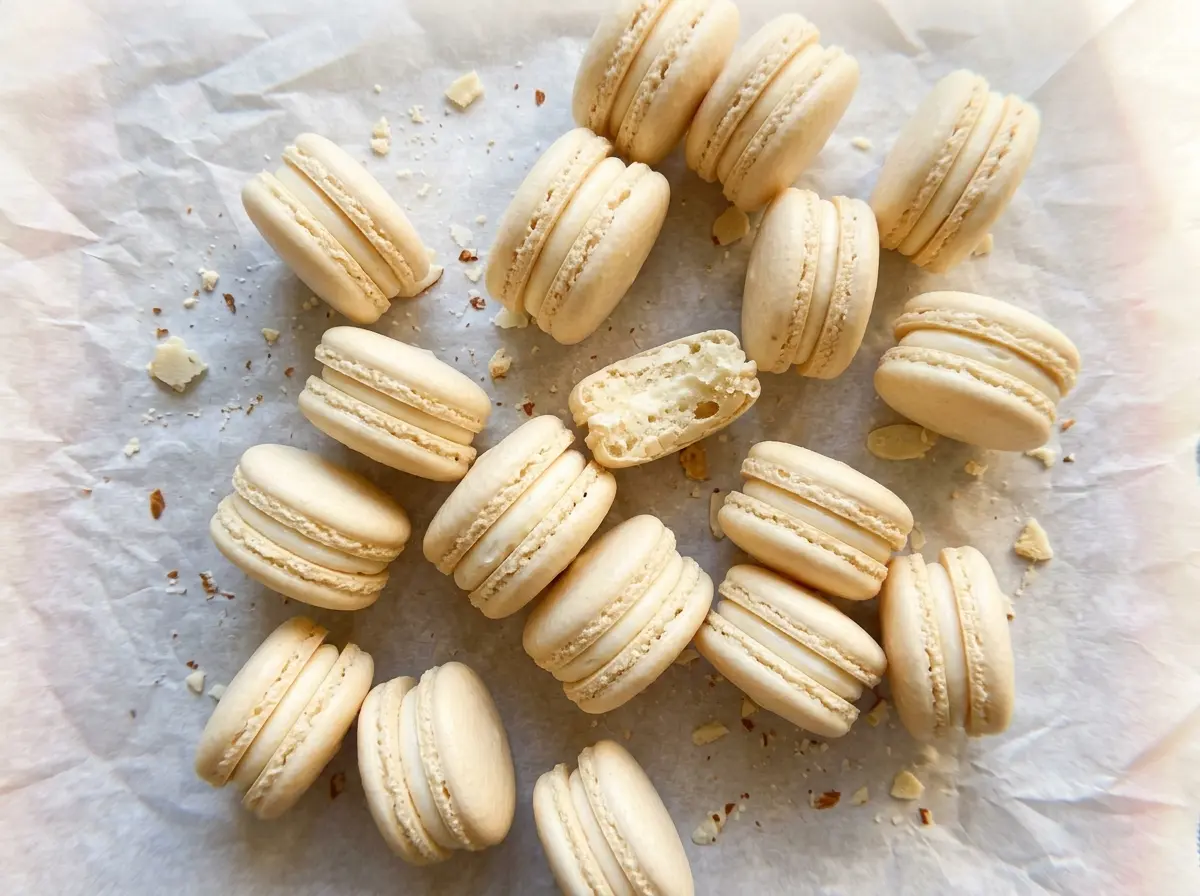
Kitchen Note
Don’t judge the ganache by the clock alone. Stir it every 10 minutes as it chills, and stop when it’s thick enough to hold a small mound but still moves easily through the piping bag.
Save these Basic French Macarons for a baking day when you want delicate almond shells with a smooth chocolate ganache center.
Why a Dry Macaron Top Matters More Than a Longer Bake
Macaron shells need a dry surface before they meet the oven. That thin, no-longer-tacky skin helps the shell hold its shape as the interior heats and rises. Put a wet-topped round into the oven and the surface is more likely to split before it can set into a smooth cap.
The timing varies with the room, so use the texture of the tops rather than treating the resting time as a timer you have to beat. After 30 minutes, lightly touch one round with a clean fingertip. If the surface feels tacky, leave the trays out longer; when the tops feel dry, they’re ready to bake. Keep the trays on a level counter while they rest, too. Shifting or bumping the parchment can distort the piped rounds before the shells have set.
This waiting period is separate from baking. A longer bake won’t fix a tacky surface, and a dry top doesn’t mean the center is cooked. Let the shells dry first, then bake each sheet until the tops are set and don’t slide when gently nudged.
What Almond Flour and Chocolate Bring to These Macarons

- Blanched almond flour — It gives the shells their characteristic nutty taste and tender bite. Choose a finely ground bag rather than coarse almond meal; the latter can leave the shells speckled and rough. There isn’t a reliable one-for-one swap with coconut or all-purpose flour because their texture and moisture behavior are different.
- Powdered sugar — Its fine texture blends into the almond flour without leaving the grain you’d get from using granulated sugar in the dry mixture. Keep it dry and free of clumps so it sifts evenly.
- Egg whites — Room-temperature whites are easier to whip into the glossy meringue this batter needs. Separate them carefully; even a trace of yolk makes it harder for the whites to build volume.
- Granulated sugar — This sugar is added gradually to the whites and helps the meringue become glossy and stable. Ordinary granulated sugar is the right choice here; powdered sugar isn’t a replacement in this stage.
- Semisweet chocolate — It balances the sweet shells with a clear chocolate flavor. A dependable baking bar is useful, but there’s no need for an expensive specialty brand; finely chop it so the warm cream can melt it evenly.
- Heavy cream — Its richness makes a smooth filling that firms enough to pipe after chilling. For the dairy-free variation, use full-fat coconut cream instead; thinner carton coconut milk won’t give the same body.
From Glossy Meringue to Finished Macaron Sandwiches
Sift the dry ingredients until fine
Heat the oven to 300°F and line two 18×13-inch rimmed baking sheets with parchment. Sift the almond flour and powdered sugar together into a bowl, then discard the large pieces left in the sieve. Don’t press coarse bits through; they can make the shell surface uneven. Set the sifted mixture aside while you make the meringue.
Whip the whites to stiff, glossy peaks
Use a clean, grease-free bowl and beat the room-temperature egg whites on medium speed until foamy. Add the granulated sugar gradually, then beat on high until the meringue looks glossy and forms stiff peaks. If the peaks droop when you lift the beaters, keep beating rather than starting to fold. A stable meringue gives the batter the structure it needs to hold piped rounds.
Fold until the batter falls in a ribbon
Add the sifted dry mixture to the meringue in three additions, folding gently each time. Stop when the batter falls from the spatula in a thick ribbon and the ribbon blends back in within about 10 seconds. Too little folding leaves stiff peaks that are hard to pipe smoothly; too much folding turns the batter runny, and extra flour won’t bring it back. Transfer the batter to a piping bag fitted with a 1/2-inch round tip and pipe 1 1/2-inch rounds about 1 inch apart.
Tap the trays and let the rounds dry
Tap each baking sheet firmly on the counter to bring visible air bubbles to the surface, then pop those bubbles with a toothpick. Leave the rounds at room temperature for 30–60 minutes, until their tops feel dry and are no longer tacky. While they rest, heat the heavy cream in a small saucepan over medium heat until steaming and just beginning to simmer. Pour it over the finely chopped chocolate, wait 2 minutes, then stir until smooth.
Bake, fill, and give the centers time to settle
Refrigerate the ganache for 20–30 minutes, stirring every 10 minutes, until thick but still pipeable. Bake the sheets one at a time on the center rack for 14–17 minutes; the tops should be set and stay put when gently nudged. Cool the shells completely on the sheets before lifting them. Pipe a small mound of ganache onto the flat side of half the shells and sandwich with the rest, then refrigerate the macarons in an airtight container for at least 12 hours and let them stand at room temperature for 20 minutes before serving.
Two Chocolate-Center Changes That Work
Use bittersweet chocolate for a sharper filling
Swap the semisweet chocolate for the same amount of finely chopped bittersweet chocolate. The filling will taste less sweet and more cocoa-forward, while keeping the same simple cream-and-chocolate method.
Make the ganache dairy-free
Replace the heavy cream with the same amount of full-fat coconut cream and use dairy-free semisweet chocolate. The filling may carry a gentle coconut note and feel a little softer, so chill it until it’s thick enough to pipe.
Storage and Reheating
- Refrigerator: Keep the assembled macarons in an airtight container for up to 5 days. The shells soften as they sit with the ganache, which is part of their tender texture.
- Freezer: Freeze assembled macarons in an airtight container for up to 1 month, separating layers with parchment. Thaw them in the refrigerator before serving.
- Reheating: These are served at room temperature, not reheated. Let refrigerated macarons stand for 20 minutes before eating; microwaving can soften the ganache too much.
Questions That Come Up While Making French Macarons
Basic French Macarons
Ingredients
Equipment
Method
- Preheat the oven to 300°F.
- Line two 18x13-inch rimmed baking sheets with parchment paper.
- Sift the almond flour and powdered sugar together into a bowl, discarding any large pieces that remain in the sieve.
- Beat the egg whites in a clean, grease-free bowl on medium speed until foamy.
- Gradually add the granulated sugar and beat on high until the meringue is glossy and forms stiff peaks.
- Fold the sifted dry ingredients into the meringue in three additions until the batter falls from the spatula in a thick ribbon and the ribbon blends back in within about 10 seconds.
- Transfer the batter to a piping bag fitted with a 1/2-inch round tip and pipe 1 1/2-inch rounds onto the prepared sheets, spacing them about 1 inch apart.
- Tap each sheet firmly on the counter and pop visible bubbles with a toothpick.
- Let the piped rounds stand at room temperature for 30–60 minutes, until the tops feel dry and are no longer tacky.
- Heat the heavy cream in a small saucepan over medium heat until steaming and just beginning to simmer.
- Pour it over the chopped chocolate and let stand for 2 minutes.
- Stir the ganache smooth.
- Refrigerate the ganache for 20–30 minutes, stirring every 10 minutes, until thick but still pipeable.
- Bake the sheets one at a time on the center rack for 14–17 minutes, until the tops are set and do not slide when gently nudged.
- Cool completely on the sheets.
- Pipe a small mound of ganache onto the flat side of half the shells.
- Gently sandwich with the remaining shells.
- Refrigerate the macarons in an airtight container for at least 12 hours.
- Let them stand at room temperature for 20 minutes before serving.




