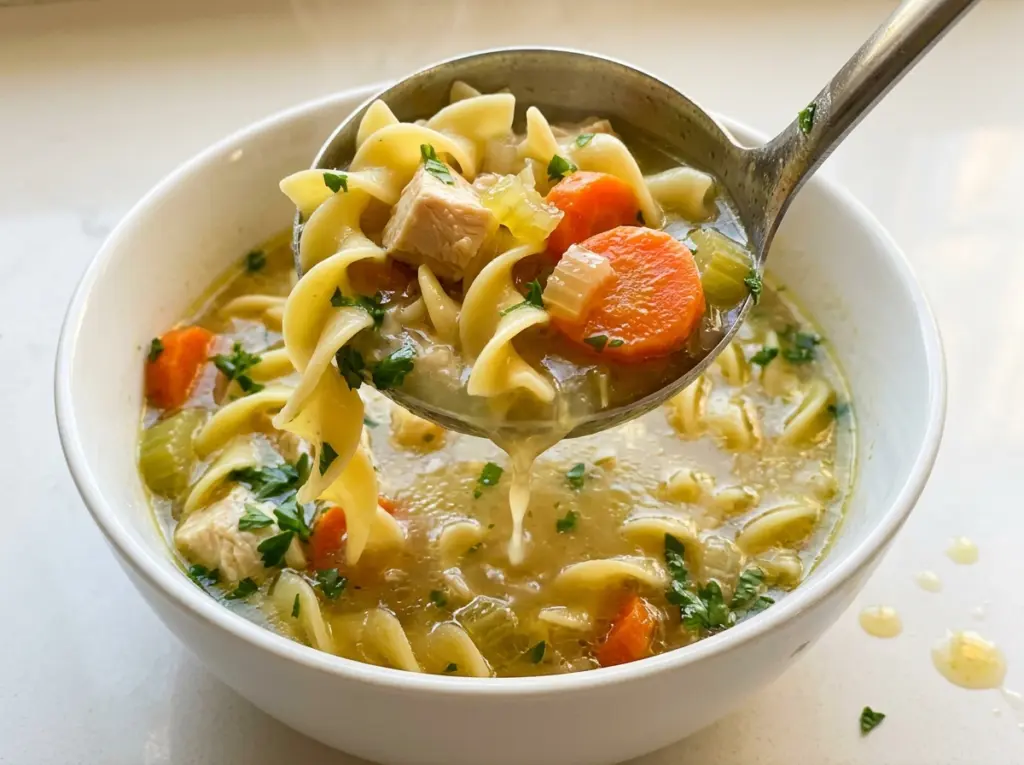
The carrots and celery should soften without browning, and the broth should smell savory before the chicken even goes in. That gentle start gives this small pot of chicken noodle soup a rounded flavor without needing a long simmer or a sink full of dishes.
I make Small Batch Chicken Noodle Soup when I want a proper bowl of soup without cooking for a crowd. The chicken breasts poach whole in the broth, so there’s no extra pan to wash and they’re easy to shred once they’re cooked through.
The timing is what keeps the noodles pleasant instead of swollen and soft: the chicken cooks first, then the noodles go into the simmering broth at the end. With tender vegetables, shredded chicken, and wide noodles in every spoonful, it’s a cozy four-serving pot.
Kitchen Note
I take the bay leaf out when I lift the chicken from the pot, before the noodles go in. It’s much easier to spot then than after the noodles are moving through the broth.
Save this Small Batch Chicken Noodle Soup for a cozy pot of tender chicken, soft vegetables, and wide egg noodles.
Why the Noodles Go In After the Chicken Comes Out
Chicken breasts need a gentle simmer long enough for the center to cook through and the vegetables to become tender. Egg noodles need only a short boil, so adding them at the beginning would leave them cooking in the broth for much longer than they need. That mismatch is the quickest way to turn a fresh pot into a starchy, over-soft one.
Cooking the noodles at the end keeps their texture distinct and gives you better control over the broth. The chicken comes out first, which also makes room to bring the soup back to a boil for the noodles. While they cook, you can shred the chicken; then it goes back into the pot just before the parsley. Each part reaches the finish line at the right time, rather than asking the noodles to wait around in hot liquid.
This order is especially helpful in a small batch, where the noodles make up a noticeable share of each serving. Follow the package timing for your noodles and check them near the end; the usual range is short, but brands and shapes aren’t identical.
What Gives This Small Pot Its Savory, Balanced Base

- Chicken breasts — Boneless, skinless breasts cook directly in the broth and shred easily once tender. Fresh or frozen-thawed chicken both work; aim for pieces of similar thickness so they cook at roughly the same pace. Boneless, skinless thighs are a useful swap if you prefer darker, richer meat; check the thickest part for doneness because the timing can differ.
- Low-sodium chicken broth — The broth carries the vegetables, herbs, and chicken through the whole pot, so a basic store-brand carton is fine. Low-sodium broth gives the measured salt room to season the soup without starting with a heavily salted base. If you use regular broth instead, leave out the added kosher salt.
- Wide egg noodles — Their broad shape gives you a soft, substantial noodle in each spoonful, and an everyday dried brand works well here. A different shape of egg noodle is fine; follow its package directions and expect the bite and cooking time to change.
- Onion, carrots, and celery — Together they give the broth a savory, gently sweet vegetable base. Fresh vegetables are a good choice, but there’s no need to buy specialty produce. Dice them into similarly sized pieces so they soften at a similar rate.
- Garlic, dried thyme, and bay leaf — These bring a warm herbal note without making the broth taste heavy. Dried thyme is practical and keeps well, while ordinary garlic works as long as it’s minced finely enough to stir through the vegetables. The bay leaf adds a subtle background aroma; remove it before serving.
- Fresh parsley — Stirring it in at the end keeps its flavor brighter than cooking it through the whole simmer. Fresh parsley is worth choosing for this finishing touch; if you don’t have it, you can leave it out, though the soup will lose that fresh herbal lift.
Build the Broth First, Then Finish the Noodles
Soften the vegetables without browning them
Warm the olive oil in a 4-quart pot over medium heat, then add the diced onion, carrots, celery, kosher salt, and black pepper. Cook for 6–8 minutes, stirring occasionally, until the vegetables begin to soften. They should look slightly relaxed around the edges, not browned or crisp. If they start catching on the bottom, lower the heat so they soften gently.
Let the garlic and thyme bloom briefly
Stir in the minced garlic and dried thyme and cook for 30 seconds. Keep stirring during this short step so the garlic becomes fragrant without taking on color. Pour in the chicken broth, add the bay leaf, and nestle in the chicken breasts. The chicken should be covered by the broth as much as possible.
Poach the chicken at a gentle simmer
Bring the pot to a boil, then reduce the heat to maintain a gentle simmer and cook uncovered for 15–20 minutes. Look for small, steady bubbles rather than a rolling boil; vigorous bubbling can make the chicken tougher. The vegetables should be tender, and the thickest part of each chicken breast must reach 165°F. Lift the chicken to a plate and discard the bay leaf.
Boil the noodles and return the shredded chicken
Bring the soup back to a boil, add the wide egg noodles, and cook until tender according to the package directions, usually 6–8 minutes. Check a noodle near the end rather than relying only on the clock; it should be tender with a little structure, not falling apart. While the noodles cook, shred the chicken with two forks. Return it to the pot, stir in the chopped fresh parsley, and serve once everything is hot.
Easy Swaps for Different Needs and Preferences
Make the soup gluten-free
Replace the egg noodles with gluten-free noodles and use low-sodium chicken broth labeled gluten-free. Gluten-free noodles can soften quickly, so cook them separately according to their package directions and add them to bowls before ladling in the soup. The broth stays clearer, and leftover noodles are easier to keep from absorbing all the liquid.
Use boneless, skinless chicken thighs
Swap in the same weight of boneless, skinless thighs for a richer, slightly more tender shredded chicken. Cook them in the broth until the thickest part reaches 165°F; depending on their size, they may need longer than the breasts. The soup will have a fuller chicken flavor, while the rest of the method stays the same.
Storage and Reheating
- Refrigerator: Store in an airtight container for 3–4 days. The noodles will continue to absorb broth and soften as the soup sits.
- Freezer: The soup freezes safely for up to 2–3 months, though cooked noodles soften after thawing. For the best texture, freeze the chicken-and-vegetable broth before adding noodles, then cook fresh noodles when you serve it.
- Reheating: Warm a portion in a saucepan over medium-low heat, stirring gently, until steaming throughout. Avoid a hard boil, which can make the noodles mushy; add a little broth if they’ve absorbed more liquid than you like.
Questions That Come Up With This Small-Batch Soup
Small Batch Chicken Noodle Soup
Ingredients
Method
- Heat the olive oil in a 4-quart pot over medium heat. Add the onion, carrots, celery, salt, and pepper and cook for 6–8 minutes, stirring occasionally, until the vegetables begin to soften.
- Stir in the garlic and thyme and cook for 30 seconds.
- Add the bay leaf, chicken broth, and chicken breasts. Bring the soup to a boil, then reduce the heat to maintain a gentle simmer and cook uncovered for 15–20 minutes, until the vegetables are tender and the thickest part of each chicken breast reaches 165°F.
- Transfer the chicken to a plate and discard the bay leaf. Bring the soup to a boil, add the egg noodles, and cook according to the package directions until tender, usually 6–8 minutes.
- Shred the chicken with two forks, return it to the pot, and stir in the parsley.