
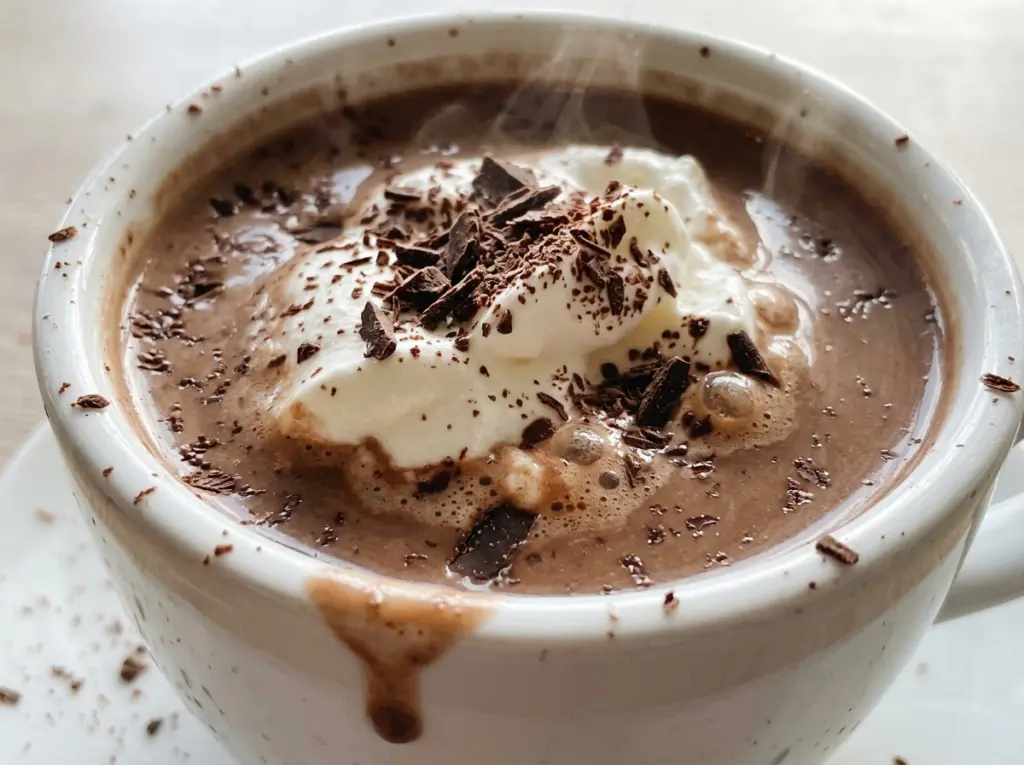
Cocoa powder hits cold milk and clumps before you can get the whisk around the pan. I start this coffee hot chocolate with a small amount of milk, which gives the cocoa and sugar room to turn into a smooth paste before the rest goes in. Then the chopped semisweet chocolate melts into the warm milk while the coffee waits until the end.
That order keeps the cocoa from gathering into dry little pockets, and it lets the coffee stay distinct instead of disappearing into a long simmer. I use medium-low heat and whisk often; the mixture should steam, not boil. A little vanilla rounds out the coffee and chocolate without making either one take over. Pour it into two mugs while it’s hot, and you get a creamy drink with a clear coffee note and a proper chocolate finish.
Kitchen Note
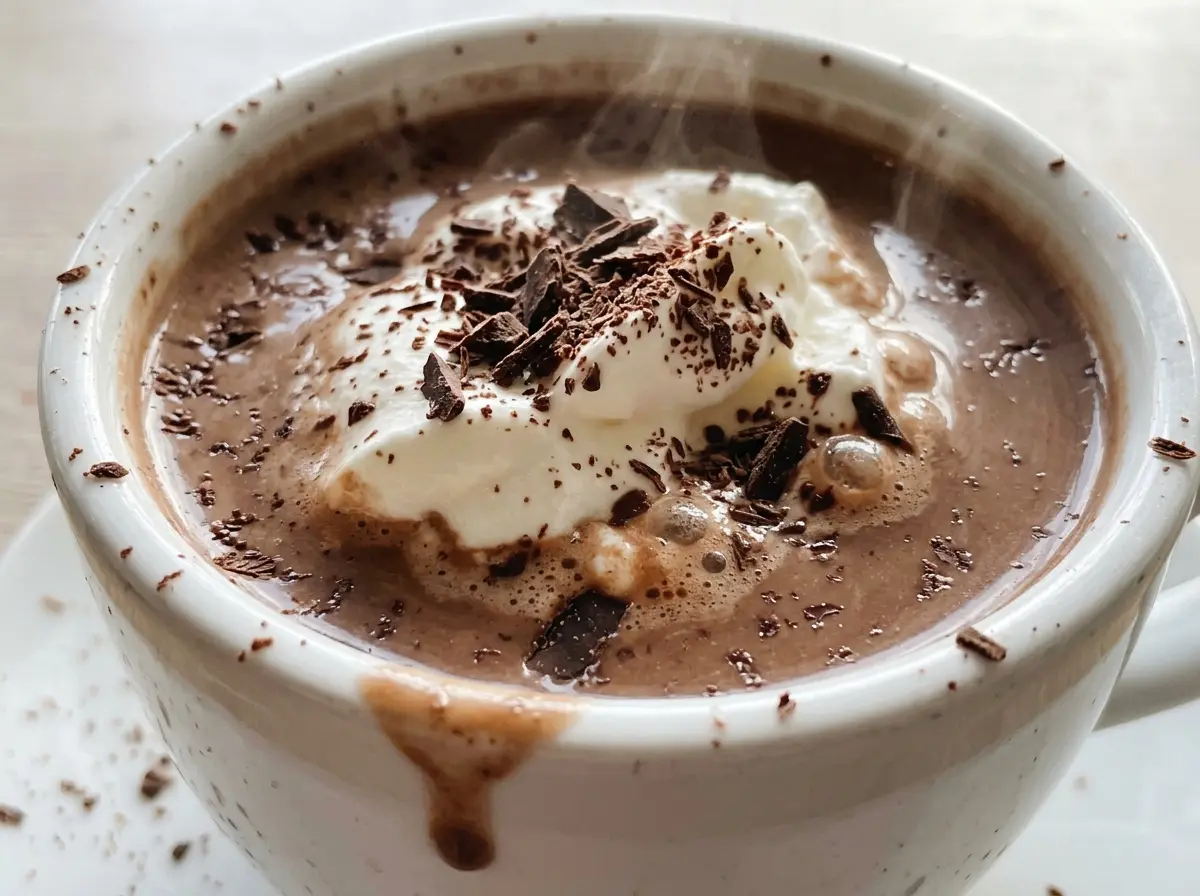
Add the coffee and vanilla after the chocolate has melted, then give the drink just another minute or two to heat through. Keep it below a boil; a steady wisp of steam is the cue to take it off the heat.
Save this coffee hot chocolate for a cozy mug with melted semisweet chocolate, strong coffee, and a smooth cocoa base.
Why the Cocoa Needs a Head Start Before the Chocolate Goes In
Cocoa powder doesn’t dissolve the way sugar does. If you whisk it straight into a full pan of milk, the surface can look smooth while little cocoa pockets cling underneath or float back up. Mixing the cocoa, sugar, and salt with just part of the milk first gives you a thick, even paste that’s easier to loosen without chasing lumps around the saucepan.
That small start also lets the two chocolate ingredients do different jobs. Cocoa brings a deep, dry chocolate flavor, while the chopped semisweet chocolate melts into the milk and gives the drink body. Add the remaining milk gradually, whisking as you go, and the base stays cohesive. If you see a stubborn lump before adding the chopped chocolate, keep whisking the cocoa paste until it’s smooth rather than hoping the later heating will take care of it.
Use a 2-quart saucepan for the full batch. It gives you enough room to whisk without sloshing milk over the sides, while still keeping the mixture shallow enough to warm evenly over medium-low heat.
What Cocoa, Chopped Chocolate, and Coffee Each Bring to the Mug

- Whole milk — It creates the drink’s creamy base and carries both the cocoa and melted chocolate. Use fresh milk; there’s no need for a specialty brand. Since it’s the largest part of the drink, whole milk gives a fuller texture than a thinner milk would.
- Unsweetened cocoa powder — This supplies the concentrated chocolate taste without adding sweetness. Break up any compacted clumps before whisking it with the first portion of milk; dry pockets are much harder to smooth out once the pan is full.
- Semisweet chocolate — Finely chopping the chocolate helps it melt quickly and evenly in the warm milk. A bar that tastes good on its own is a good choice here, but an expensive one isn’t necessary. Larger chunks take longer to melt and can leave the drink uneven.
- Granulated sugar — It sweetens the cocoa and helps balance the roasted edge of the coffee. Ordinary granulated sugar dissolves well when whisked into the cocoa and the small amount of milk.
- Strong brewed coffee — Strong coffee keeps its character alongside the cocoa and semisweet chocolate. Brew it before you start heating the milk so it’s ready to stir in at the finishing stage.
- Vanilla extract — A small amount softens the transition between the coffee and chocolate. Measure it before adding it so you can stir it in with the coffee rather than leaving the hot pan unattended while you search for it.
How to Melt the Chocolate Without Losing the Coffee Flavor
Make a smooth cocoa paste
In a 2-quart saucepan, whisk the cocoa powder, granulated sugar, and kosher salt with half a cup of the milk. Keep whisking until no dry cocoa is visible and the mixture looks like a smooth, thick paste. If it’s lumpy at this point, don’t add the rest of the milk yet; work the lumps out while the mixture is still concentrated. This gives you a clean base before the chocolate goes in.
Warm the milk and melt the chocolate
Gradually whisk in the remaining milk, then add the finely chopped semisweet chocolate. Set the pan over medium-low heat and warm it for 3 to 5 minutes, whisking often. Watch the chocolate pieces disappear and look for steam rising from the surface; the mixture should be hot and smooth, not bubbling. If you turn the heat up to hurry it along, milk can scorch on the bottom before the chocolate has melted evenly.
Stir in coffee and vanilla
Once the chocolate has melted, stir in the strong brewed coffee and vanilla extract. The coffee will loosen the chocolate mixture slightly, so whisk until the color looks even from edge to edge. Heat for another 1 to 2 minutes, keeping the pan below a boil. The drink is ready when it’s hot throughout and steaming again.
Divide while it’s hot
Take the saucepan off the heat and divide the drink between two mugs. Pour steadily so each mug gets an even share of the chocolate and coffee mixture. The drink is at its smoothest right after heating, while the chocolate is fully dispersed. Serve it hot.
Three Ways to Adjust the Balance of Coffee and Chocolate
A More Coffee-Forward Mug
For a stronger coffee note, replace part of the milk with an equal amount of additional strong brewed coffee. The drink will taste more roasted and less creamy, so keep the cocoa paste step the same and add the coffee with the original brewed coffee near the end.
A Less-Sweet Finish
Reduce the granulated sugar to suit a darker, more cocoa-forward cup. The semisweet chocolate still adds sweetness as it melts, but the finished drink will taste more pronounced and less like a dessert. Whisk the smaller amount of sugar into the cocoa at the beginning so it dissolves evenly.
A More Chocolate-Forward Cup
Use a little more finely chopped semisweet chocolate and a little less cocoa powder for a rounder, softer chocolate taste. Keep the total amount of milk and coffee the same, and give the added chocolate time to melt over medium-low heat. The texture will feel a touch fuller, with less of cocoa’s dry intensity.
Storage and Reheating
- Refrigerator: Store leftovers covered and refrigerate within 2 hours. Use within 3 to 4 days; the chocolate may settle or firm up as it chills.
- Freezer: Freeze in a sealed freezer-safe container for up to 2 months, leaving a little room at the top. Thaw in the refrigerator; the milk and chocolate may separate, but whisking as it warms brings the drink back together.
- Reheating: Warm gently in a saucepan over low heat, whisking until smooth and steaming. Avoid boiling or blasting it over high heat, which can scorch the milk and leave the chocolate uneven.
Questions That Come Up When Making Coffee Hot Chocolate
Coffee Hot Chocolate
Ingredients
Equipment
Method
- In a 2-quart saucepan, whisk the cocoa powder, sugar, and salt with 1/2 cup of the milk until smooth.
- Gradually whisk in the remaining 1 1/2 cups milk and add the chopped chocolate; warm over medium-low heat for 3 to 5 minutes, whisking often, until the chocolate is melted and the mixture is steaming.
- Stir in the brewed coffee and vanilla extract, then heat for 1 to 2 minutes until hot without boiling.
- Divide between two mugs and serve hot.




