
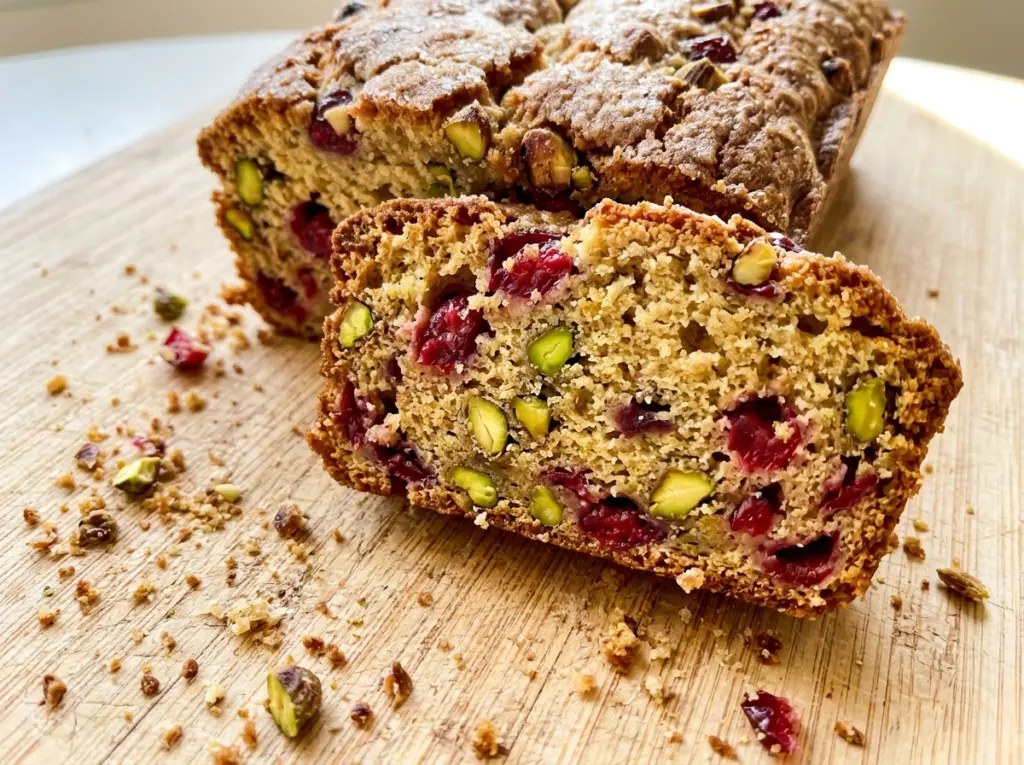
The top can turn a deep golden brown while the center of a cranberry loaf is still catching up. I learned not to trust color alone with this bread: the chopped berries leave juicy pockets, so a toothpick needs to land in the cake between them to give a useful reading. Once that little detail clicked, this cranberry pistachio bread became a reliable, tender loaf with tart fruit in every slice.
Fresh orange zest and juice lift the flavor without making the crumb taste like a cake with frosting missing. Sour cream keeps the batter moist, while the pistachios add a gentle crunch against the soft crumb and juicy cranberries. The batter comes together in one large bowl after the dry ingredients are whisked separately, and the fruit gets folded in at the end so it stays distinct.
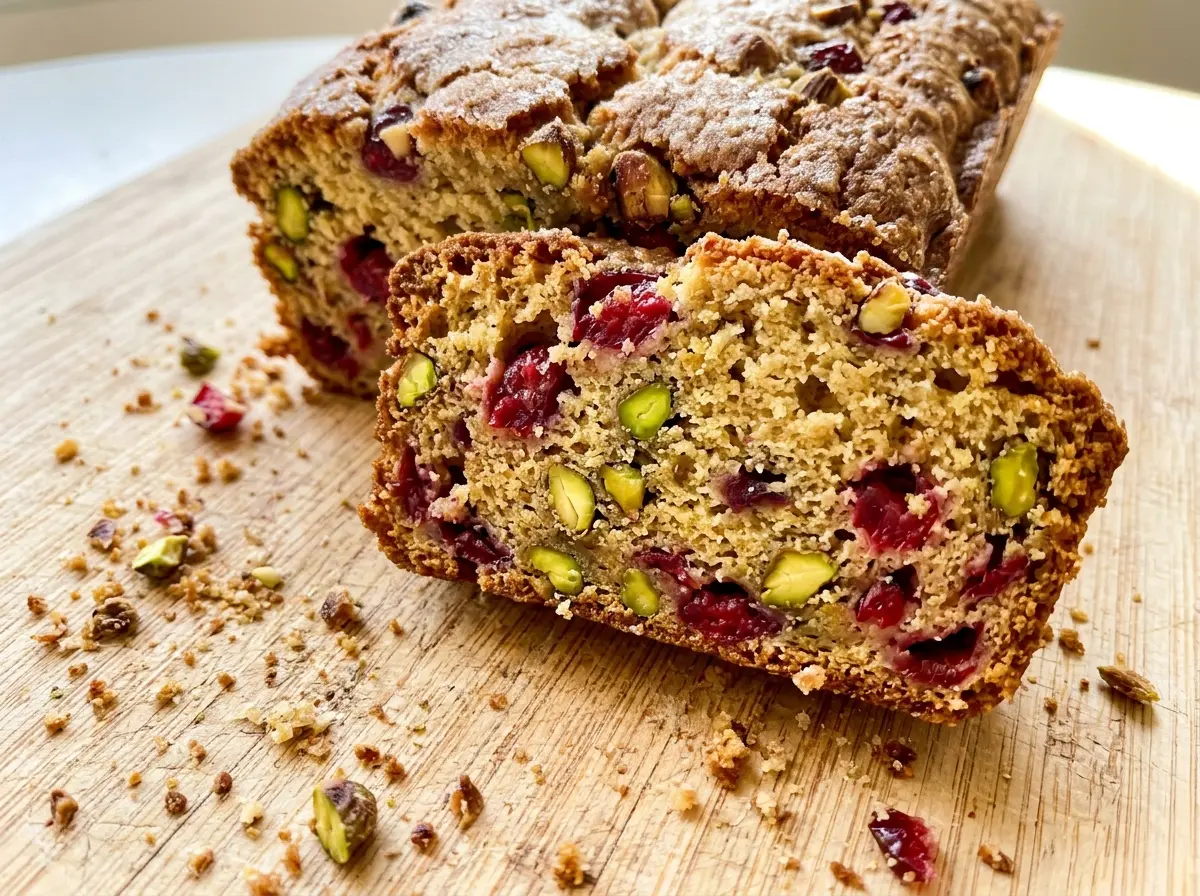
Give the loaf time to cool before slicing; the crumb is delicate while warm and settles as it rests. The finished slices have a bright orange aroma, sharp cranberry bites, and little pistachio pieces tucked throughout.
Kitchen Note
I leave the loaf in its pan for the full 15 minutes before turning it out. It’s still tender when it comes from the oven, and that short rest gives it enough structure to release without breaking at the edges.
Save this cranberry pistachio bread for a bright, citrusy loaf with tart berries and a tender crumb.
Why This Cranberry Loaf Uses Both Baking Soda and Baking Powder
They aren’t interchangeable in this batter. The sour cream brings acidity, which gives the baking soda something to react with; baking powder adds lift of its own. Together, they help a fairly rich batter rise instead of baking into a heavy, tight loaf. The orange juice adds another touch of acidity, but it doesn’t replace the other ingredients or their separate jobs.
That balance is one reason I keep the dry ingredients measured and whisked together before they meet the wet mixture. If you leave out one leavener or swap in extra of the other, the batter won’t rise in quite the same way, and the taste can shift too. Mix the flour mixture into the wet ingredients only until the dry streaks disappear. Once the flour is hydrated, extra stirring works the batter harder than it needs and can make the crumb less tender.
What Gives This Loaf Its Orange-Cranberry Balance
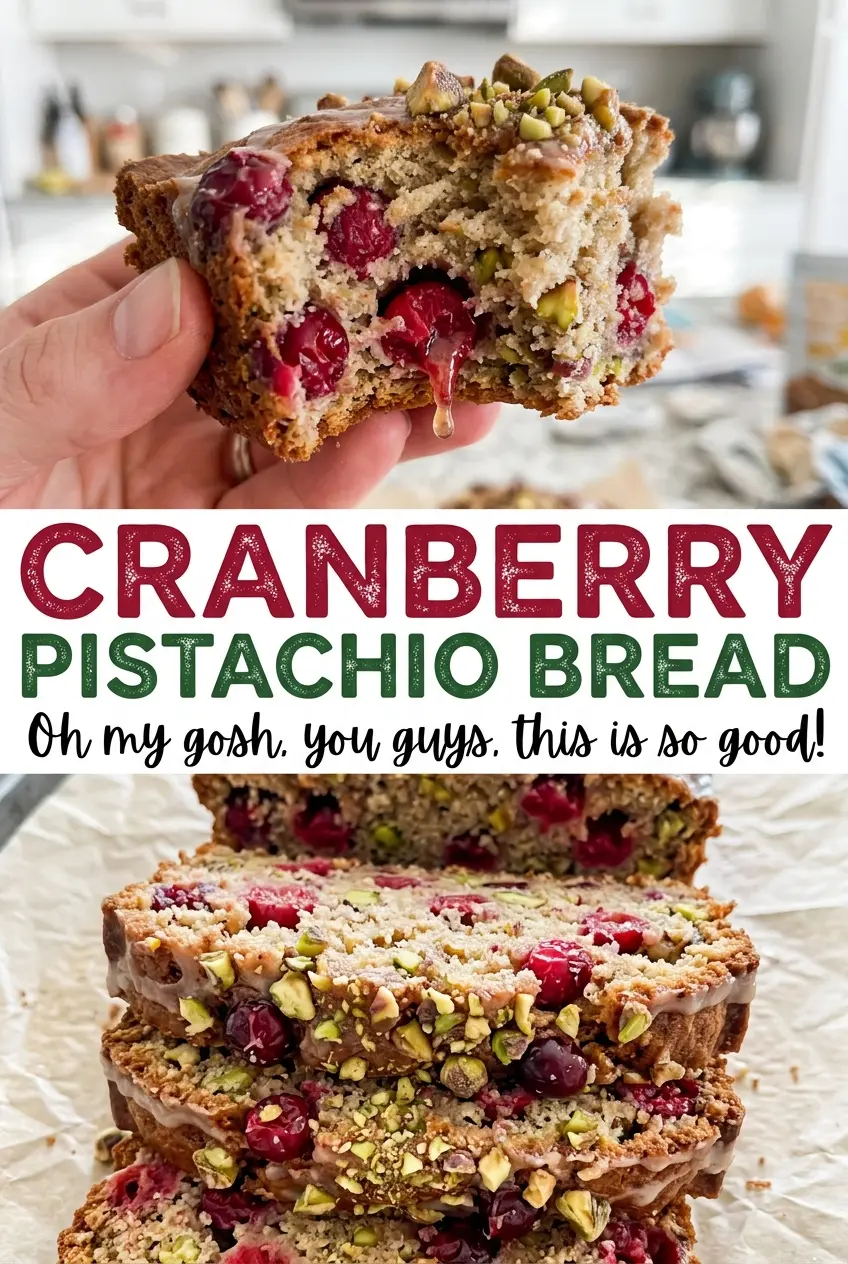
- Orange zest and juice — The zest carries the strongest orange aroma, while the juice brings a gentler citrus note into the batter. Finely grate just the orange-colored peel; the white pith underneath tastes bitter. Freshly squeezed juice is a good fit, though plain 100% orange juice from a carton works when that’s what you have.
- Sour cream — It contributes moisture and a slight tang that keeps the crumb from tasting flat beside the tart berries. Use it at room temperature so it blends smoothly with the butter mixture rather than leaving cold, firm streaks. Full-fat sour cream gives the richest texture; plain full-fat Greek yogurt is a workable one-for-one swap, with a slightly tangier crumb.
- Fresh cranberries — Their sharp, tart flavor is what keeps each bite from reading as simply sweet. Coarsely chop them so they distribute through the loaf without disappearing into the batter. Choose firm berries; soft or shriveled ones won’t give the same clean, bright bites.
- Shelled unsalted pistachios — These bring a mild, buttery crunch and keep the loaf’s color and flavor balanced. Buy shelled nuts to save prep time, and chop them roughly so you still get texture in a slice. Unsalted nuts let the measured salt in the batter stay in control.
- Softened butter and room-temperature eggs — Soft butter creams evenly with the sugar, and eggs that aren’t cold blend into that mixture more readily. The butter should give slightly when pressed, not look shiny or melted. There’s no need for a specialty brand here; fresh, ordinary unsalted butter works well.
Mixing and Baking the Loaf Without Tough Crumb or Raw Pockets
Prepare the pan and whisk the dry ingredients
Heat the oven to 350°F and grease a 9×5-inch loaf pan. Whisk the flour, baking powder, baking soda, and fine salt together in a medium bowl until the leaveners are evenly distributed. A few seconds of whisking now helps prevent concentrated pockets of baking soda in the finished bread. Set the bowl aside while you build the wet mixture.
Cream the butter and sugar until airy
Beat the softened butter and granulated sugar in a large bowl for about 2 minutes, until the mixture looks lighter and fluffy rather than dense and greasy. Scrape the bowl if butter is clinging to the sides, then beat in the eggs one at a time so each one incorporates before the next goes in. Mix in the finely grated orange zest. If the mixture looks a little uneven after the eggs, keep mixing just until it comes together.
Bring the batter together and fold in the fruit
Mix in the sour cream and orange juice until combined, then add the dry mixture and stir just until no dry streaks remain. Don’t keep beating once the flour disappears; an overworked quick-bread batter can bake up tougher. Fold in the coarsely chopped cranberries and chopped pistachios with a spatula, using broad turns until they’re spread through the batter. Transfer the batter to the prepared pan and smooth it into an even layer.
Bake to moist crumbs, then cool completely
Bake for 60 to 70 minutes. If the top browns too quickly, lay foil loosely over it and continue baking; don’t press the foil against the batter. Check the center with a toothpick inserted between cranberries, not through a berry, and look for a few moist crumbs rather than wet batter. Cool in the pan for 15 minutes, turn the loaf onto a wire rack, and let it cool completely before slicing.
Three Easy Ways to Change the Flavor or Flour
Make it gluten-free with a 1:1 baking blend
Replace the all-purpose flour with the same amount of a measure-for-measure gluten-free flour blend that contains xanthan gum. The loaf may have a slightly more delicate crumb, so let it cool completely before cutting clean slices.
Trade pistachios for walnuts
Use an equal amount of chopped unsalted walnuts in place of the pistachios. They give the loaf a deeper, earthier nut flavor while keeping the same satisfying crunch.
Give it a lemon-citrus twist
Use finely grated lemon zest and fresh lemon juice in place of the orange zest and juice, keeping the same amounts. The flavor will be sharper and more tart, which plays especially well with the cranberries.
Storage and Reheating
- Refrigerator: Wrap the cooled loaf or slices airtight and refrigerate for up to 5 days. The crumb firms when cold, so let a slice lose its chill before eating.
- Freezer: Freeze individual slices or the whole cooled loaf, wrapped tightly and placed in a freezer-safe bag, for up to 3 months. Thaw wrapped slices at room temperature so they don’t dry out.
- Reheating: Warm a slice in the microwave for 10 to 15 seconds. Use a short burst; longer heating can dry the crumb and make cranberry pockets unexpectedly hot.
Questions That Come Up When Baking Cranberry Pistachio Bread
Cranberry Pistachio Bread
Ingredients
Equipment
Method
- Heat the oven to 350°F.
- Grease a 9x5-inch loaf pan.
- Whisk the flour, baking powder, baking soda, and salt together in a medium bowl.
- Beat the butter and sugar in a large bowl until light and fluffy, about 2 minutes.
- Beat in the eggs one at a time.
- Mix in the orange zest.
- Mix in the sour cream and orange juice until combined.
- Stir in the flour mixture just until no dry streaks remain.
- Fold in the cranberries and pistachios.
- Spread the batter evenly in the prepared pan.
- Bake for 60 to 70 minutes, tenting loosely with foil if the top browns too quickly; the loaf is done when a toothpick inserted in the center between cranberries comes out with a few moist crumbs.
- Cool the loaf in the pan for 15 minutes.
- Turn it out onto a wire rack.
- Cool completely before slicing.