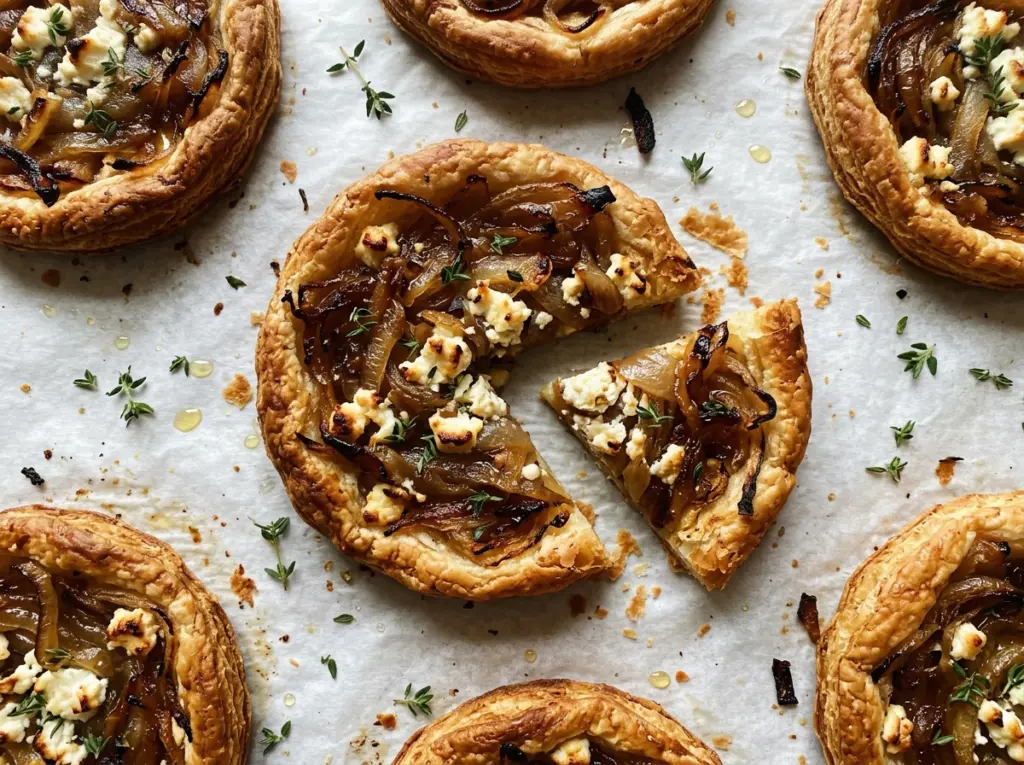
The onions start out piled high in the skillet, then slowly collapse into a soft, golden layer with a sweetness you can smell across the kitchen. Give them time; rushing the heat is the difference between tender, caramelized onions and onions that are merely browned in spots. I tuck that concentrated onion flavor beneath creamy goat cheese in these caramelized onion and goat cheese tarts, using frozen puff pastry to keep the preparation straightforward.
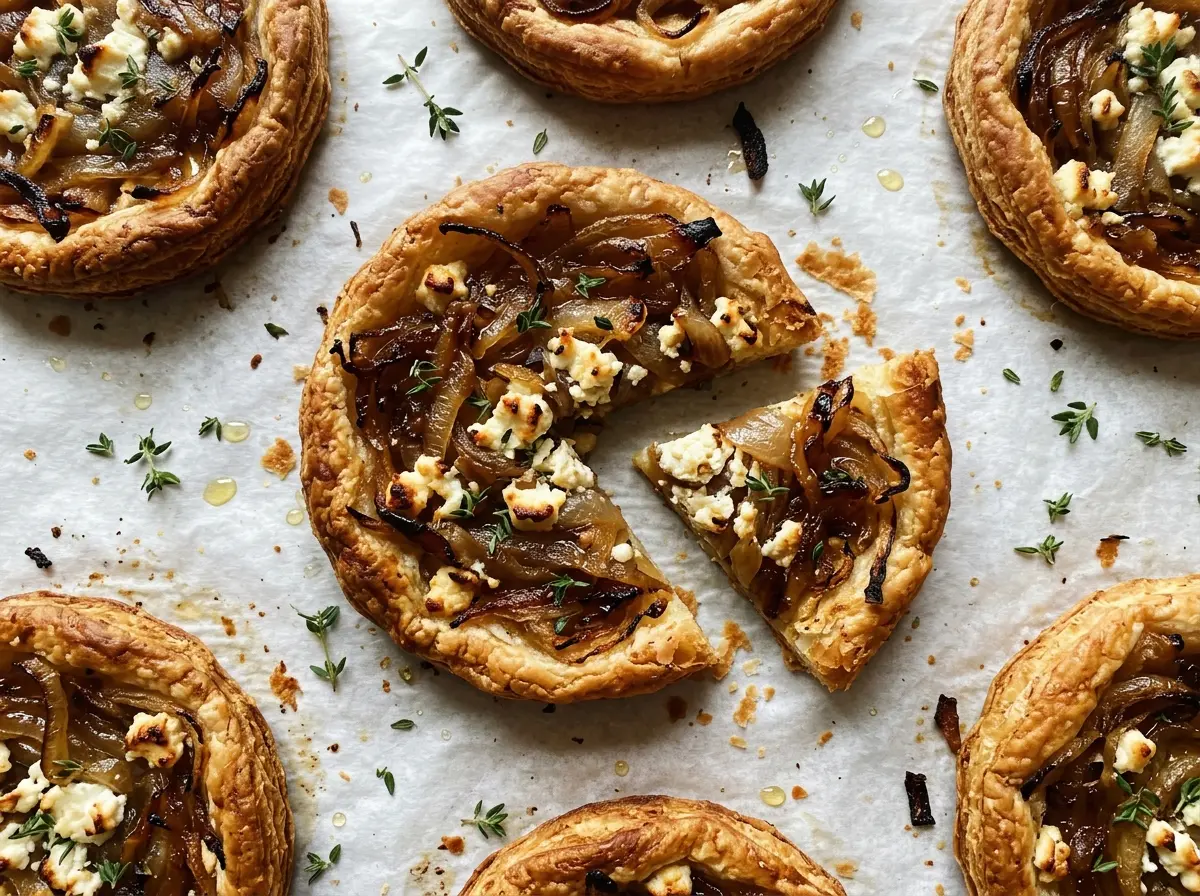
The pastry gets a defined border, while the center is pricked all over so it doesn’t rise into a tall pillow beneath the topping. Goat cheese brings a tangy, creamy contrast, and thyme with a little balsamic vinegar gives the onions a savory edge. Once baked, the border turns deep gold and crisp around the soft filling, making a single tart that slices neatly into six portions.
Kitchen Note
Let the balsamic cook with the thyme for the full minute, until most of the vinegar has evaporated. A wet onion topping can soften the pastry center before it has a chance to crisp.
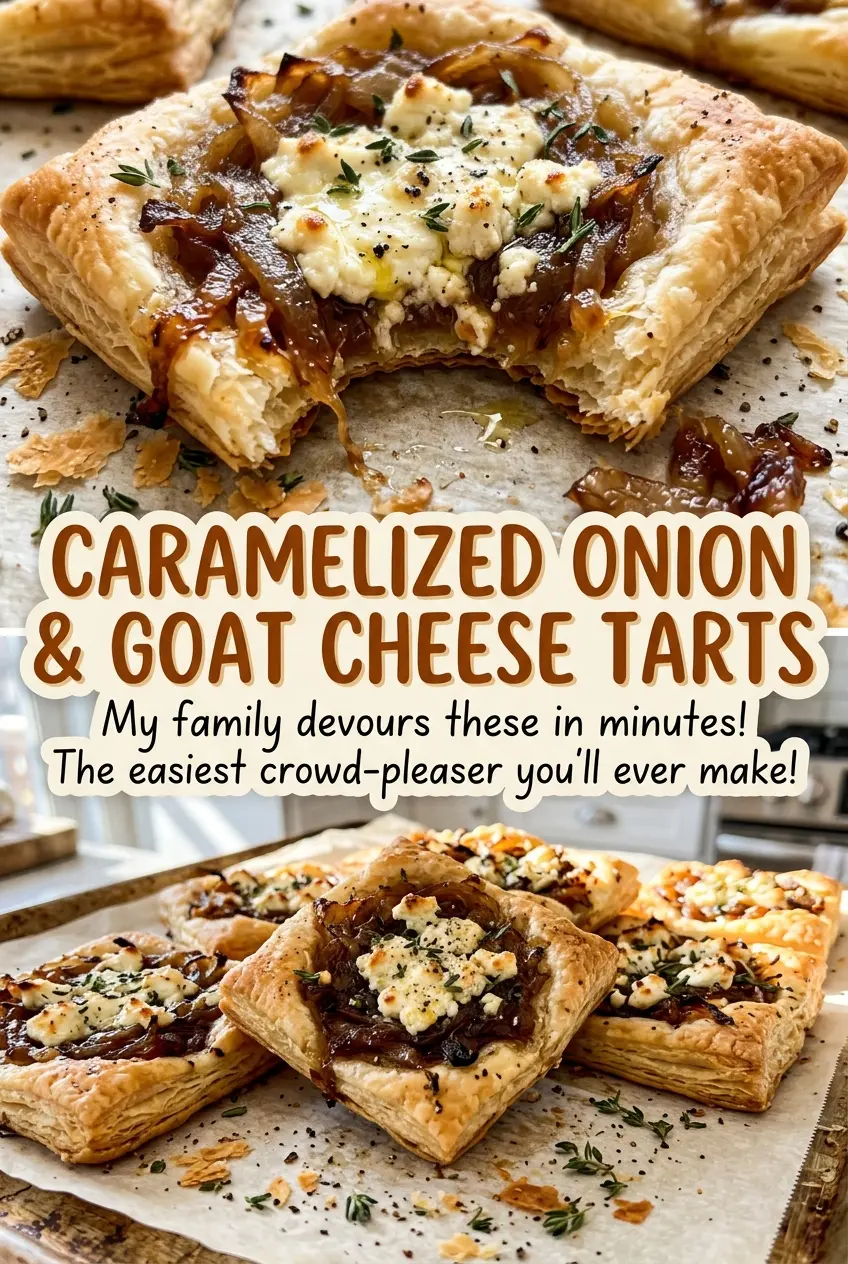
Save these caramelized onion and goat cheese tarts for a crisp puff pastry border, tangy cheese, and sweet thyme-scented onions.
Why the Tart Center Needs Fork Holes Before the Topping Goes On
Puff pastry rises as its layers of dough and fat heat up. That lift is exactly what you want around the edge, but a completely untouched center can puff beneath the cheese and onions, pushing the topping aside or making the tart awkward to slice. Scoring a border without cutting all the way through marks where you want the pastry to rise; pricking the center gives steam a way to escape.
Keep the score shallow enough that the sheet stays in one piece, and use a fork to prick across the center rather than the border. The goat cheese and onions go only inside that scored frame. If the center still rises in a few places during baking, it doesn’t mean the tart has failed; the finished pastry should be puffed and deep golden, with a crisp bottom. That contrast between a light border and a covered, savory center is what makes each slice hold together.
What the Onions, Goat Cheese, and Puff Pastry Each Bring
- Yellow onions — Their sweetness deepens during the slow skillet cook and becomes the main savory-sweet layer. Choose firm onions without soft spots; thin, even slices cook more consistently than a mix of thick and thin pieces.
- Olive oil and unsalted butter — The oil and butter cook the onions together, while the butter adds a rounded flavor. Everyday olive oil and standard unsalted butter work well here; there’s no need for a specialty oil.
- Fresh thyme and balsamic vinegar — Thyme lends an earthy note, and balsamic brings acidity to balance the sweet onions. Fresh thyme leaves distribute easily through the skillet, and a regular balsamic vinegar is a good fit; the goal is a little sharpness, not a separate sauce.
- Frozen puff pastry — A thawed sheet gives you the flaky, layered base without mixing dough. Keep it cold enough to handle cleanly but thawed enough to unfold without cracking; if it feels stiff, give it a little more time rather than forcing the folds apart.
- Goat cheese — Softened goat cheese spreads into a creamy layer and has a tang that stands up to the onions. A plain log or tub is fine; let it soften before spreading so you don’t tear the pastry while working it across the center.
- Egg — Beaten with water, it makes the pastry border turn glossy and golden in the oven. Brush it over the border, not across the onion-and-cheese topping.
Build the Tart in Layers, Then Bake Until the Base Is Crisp
Cook the Onions Until Soft and Golden
Heat the olive oil and butter in a 10-inch skillet over medium heat. Add the thinly sliced onions with the kosher salt and black pepper, then cook over medium-low heat, stirring occasionally, for 30 to 35 minutes. The onions should be very soft and golden brown, not just translucent or browned at the edges. If they begin to color quickly before softening, keep the heat low and stir so the onions cook evenly.
Finish the Onion Mixture
Stir in the fresh thyme leaves and balsamic vinegar, then cook for 1 minute. The vinegar should mostly evaporate, leaving the onions glossy rather than pooled with liquid. This brief finish seasons the onions without making the topping watery. Take the skillet off the heat once the mixture looks cohesive.
Shape the Pastry and Define the Border
Heat the oven to 400°F and line a 13×18-inch baking sheet with parchment paper. Unfold the thawed puff pastry on the sheet and gently roll it into an approximately 10-inch square. Score a 1/2-inch border without cutting through the pastry, then prick the center all over with a fork. If the pastry sticks or starts to split at a fold, handle it gently instead of pressing hard with the rolling pin.
Top, Egg-Wash, and Bake
Spread the softened goat cheese over the center, then arrange the onions evenly on top. Beat the egg with the water and brush the mixture over the pastry border. Bake for 20 to 25 minutes, until the pastry is puffed and deep golden brown and the bottom is crisp. Let the tart rest on the baking sheet for 5 minutes before slicing and serving so the layers settle and the topping is easier to cut.
Three Smart Ways to Adapt the Tart
Use a gluten-free puff pastry sheet
Replace the wheat-based pastry with one sheet of gluten-free puff pastry, thawed according to its package directions. The tart keeps the same onion-and-goat-cheese filling, though gluten-free pastry often handles more delicately and may have a slightly different layer and crunch.
Trade goat cheese for feta
Use the same amount of feta in place of the goat cheese, crumbling it over the pastry center instead of spreading it. The result is saltier and less creamy, with distinct salty bites alongside the soft onions.
Make the onion layer with red onions
Swap in red onions for the yellow onions while keeping the same slicing and skillet method. They give the filling a slightly sharper, fruitier sweetness and a deeper color; cook until they’re very soft and golden brown before adding the thyme and balsamic.
Storage and Reheating
- Refrigerator: Store covered for up to 3 days. The puff pastry softens as it sits, though the onion-and-cheese topping keeps well.
- Freezer: Freeze the baked tart in portions, wrapped airtight, for up to 2 months. Thaw in the refrigerator before reheating; the pastry may be less crisp than when freshly baked.
- Reheating: Warm in a 400°F oven until heated through and crisp again. Avoid the microwave, which softens the pastry instead of restoring its crunch.
Questions That Come Up While Making These Tarts
Caramelized Onion and Goat Cheese Tarts
Ingredients
Equipment
Method
- Heat the olive oil and butter in a 10-inch skillet over medium heat.
- Add the onions, salt, and pepper, and cook over medium-low heat, stirring occasionally, for 30 to 35 minutes, until very soft and golden brown.
- Stir in the thyme and balsamic vinegar and cook for 1 minute, until the vinegar has mostly evaporated.
- Heat the oven to 400°F.
- Line a 13x18-inch baking sheet with parchment paper.
- Unfold the puff pastry on the baking sheet and gently roll it into an approximately 10-inch square.
- Score a 1/2-inch border without cutting through.
- Prick the center all over with a fork.
- Spread the goat cheese over the center of the pastry.
- Top evenly with the onions.
- Beat the egg with the water.
- Brush the egg mixture over the pastry border.
- Bake for 20 to 25 minutes, until the pastry is puffed and deep golden brown and the bottom is crisp.
- Let the tart rest on the baking sheet for 5 minutes.
- Slice and serve.