
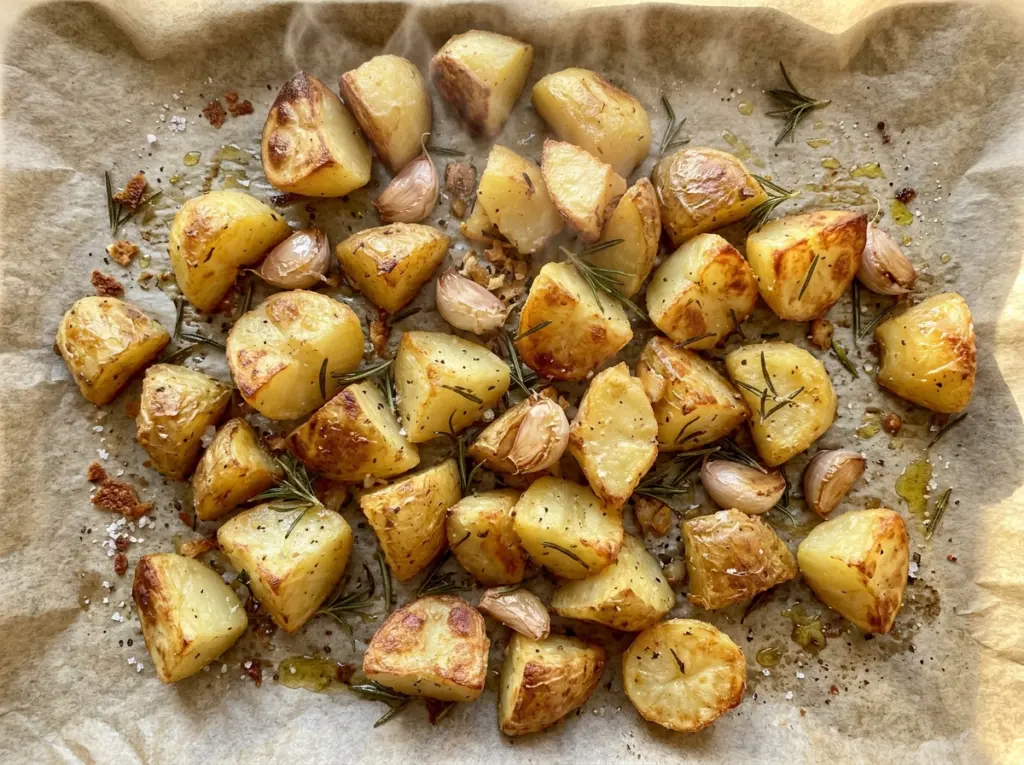
On a crowded baking sheet, potatoes can turn soft before their cut sides have a chance to brown. Spreading them out in one layer gives the hot oven room to do its work, so you get golden edges and tender centers instead of a pile of pale, steamy pieces.
I cut these Yukon Golds into even pieces and toss them with olive oil, fresh rosemary, salt, and pepper. The rosemary perfumes the potatoes as they roast, while the olive oil helps the exposed sides color. Garlic Rosemary Potatoes are simple, but each part has a job.
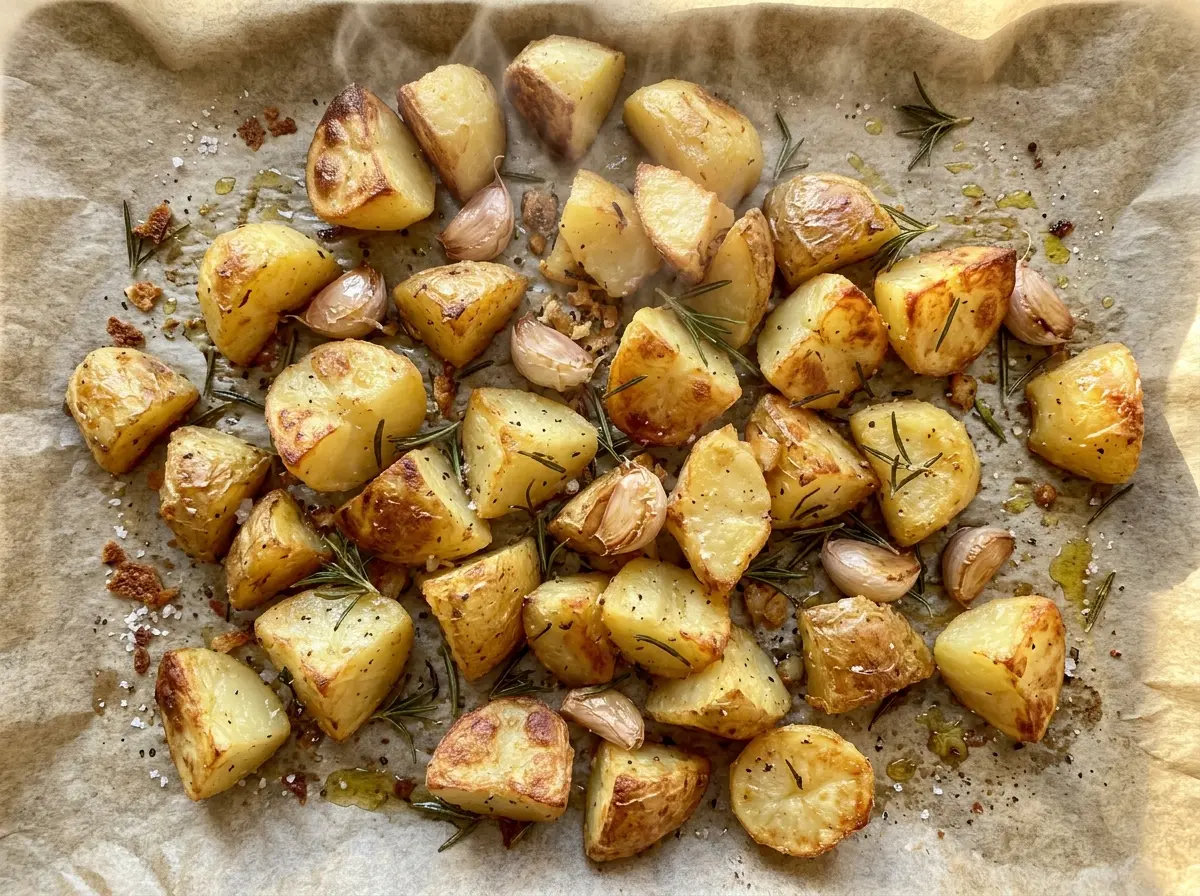
They’re a good fit alongside a weeknight dinner, and the same sheet works when you’re cooking for a small gathering. What I want when they come out is a fork-tender center, browned sides, and little bits of rosemary clinging to every piece.
Kitchen Note
Keep the potato pieces close to the same size. If a few are much larger than the rest, they’ll still be firm when the smaller pieces are ready to eat.
Save these Garlic Rosemary Potatoes for a dinner that needs crisp edges, creamy centers, and a fresh rosemary lift.
Why the Garlic Goes In After the First Roast
Fresh minced garlic needs less time in the oven than a chunk of potato. If it went onto the sheet at the beginning, it would sit in the 425°F heat for the full roast and could turn dark and bitter before the potatoes were tender. Adding it later gives the cloves enough time to soften and perfume the oil without asking them to last through the entire cooking window.
The potatoes also benefit from a head start on their own. Their surfaces begin to dry and take on color during the first roast, so the garlic joins a pan that’s already hot and full of cooking aromas. Tossing it through at that point coats the potatoes with the fresh garlic while keeping the pieces moving against the pan.
This timing is useful beyond avoiding burnt garlic: it lets both main flavors stay distinct. The rosemary has time to mingle with the oil from the start, while the garlic tastes warm and savory rather than harsh. Keep the garlic evenly distributed when you add it, rather than leaving one clump on the sheet; a little in each bite is what makes the finished potatoes feel balanced.
What Yukon Golds, Fresh Rosemary, and Olive Oil Bring to the Pan

- Yukon Gold potatoes — Their creamy, lightly waxy texture gives you a tender center that holds together when the potatoes are tossed. Pick firm potatoes without soft spots; there’s no need to hunt for a specialty variety beyond Yukon Gold.
- Olive oil — It helps the herbs and seasonings cling and promotes browning on the potato surfaces. A basic olive oil works well here; a costly finishing oil’s delicate character isn’t the point in a hot oven.
- Fresh rosemary — Fresh leaves bring a bright, piney aroma that spreads through the oil as the potatoes roast. Strip the leaves from the woody stems before chopping, and chop them small enough to distribute instead of leaving long, tough pieces.
- Garlic — Fresh cloves give the finished potatoes a rounded, savory aroma. Mince them evenly so the pieces disperse across the pan; large chunks can stay pungent while tiny fragments brown much faster.
- Black pepper — Pepper adds a warm bite that keeps the potatoes from tasting one-note. Freshly ground pepper has a more noticeable aroma, while a standard jar of ground pepper is perfectly serviceable for an everyday side.
Roast the Potatoes in Two Passes for Better Browning
Heat the Oven and Season the Potatoes
Heat the oven to 425°F. On an 18×13-inch rimmed baking sheet, toss the potatoes with the olive oil, chopped fresh rosemary, kosher salt, and black pepper. Turn the pieces until the oil and seasonings are distributed over their surfaces. Spread everything into one layer so the potatoes roast rather than steam against one another.
Give the Potatoes Their First 20 Minutes
Roast for 20 minutes without adding the garlic yet. The potatoes should be starting to soften, and the undersides will have had time to meet the hot pan. If you see a few pieces touching, separate them as you get ready to toss; crowded spots won’t brown as readily. Use a broad spatula to turn the potatoes so more than one side gets contact with the sheet.
Add the Garlic and Finish Until Tender
Toss the potatoes with the minced garlic and turn them over. Return the pan to the oven for another 15 to 20 minutes. Watch for golden-brown surfaces and check the largest pieces with a fork; it should slide in without resistance. If they’ve browned but still feel firm in the center, they need more time in the oven to become tender.
Small Changes for a Different Tray of Rosemary Potatoes
Cut wedge-shaped pieces for more browned sides
Keep the pieces around the same 1-inch size, but cut them into chunky wedges instead of neat cubes. The angled faces give the potatoes a slightly different look and more varied crisp edges, while the centers stay creamy. Their shape won’t be as uniform, so check the largest pieces for tenderness.
Make a lower-sodium tray
Use 1/2 teaspoon kosher salt instead of the listed teaspoon. The potatoes will taste less salty, and the rosemary, pepper, and garlic will come through more clearly. This is a straightforward adjustment for anyone watching sodium, without changing the cooking method.
Storage and Reheating
- Refrigerator: Refrigerate leftovers within 2 hours in a covered container and use them within 3 to 4 days. The potatoes soften in storage, so they won’t keep their just-roasted edges.
- Freezer: They can be frozen, though thawed potatoes are softer. Freeze in a single layer, then transfer to a sealed freezer container for up to 2 to 3 months for best quality.
- Reheating: Spread the potatoes on a baking sheet and warm them in a 425°F oven until hot throughout, reaching 165°F in the center. Avoid reheating them in a covered container if you want the edges to regain some crispness.
Questions That Come Up When Roasting Garlic Rosemary Potatoes
Garlic Rosemary Potatoes
Ingredients
Equipment
Method
- Heat the oven to 425°F.
- On an 18x13-inch rimmed baking sheet, toss the potatoes with the olive oil, rosemary, salt, and pepper, then spread them in a single layer.
- Roast for 20 minutes.
- Toss the potatoes with the garlic and turn them over.
- Roast for another 15 to 20 minutes, until golden brown and tender when pierced with a fork.




