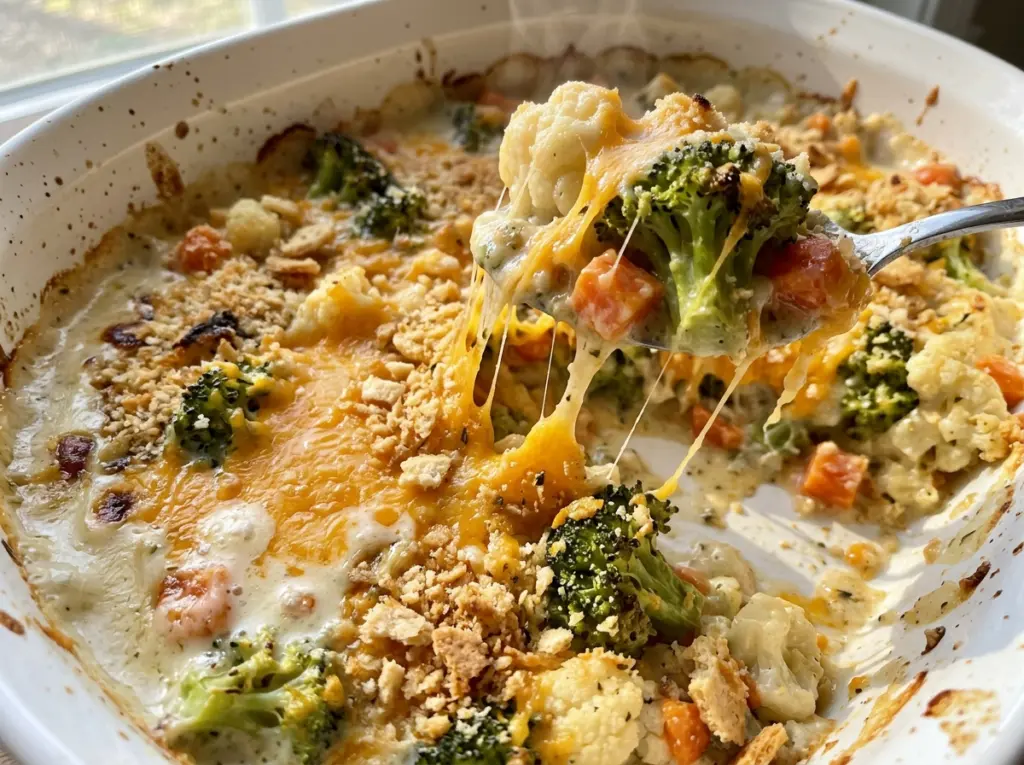
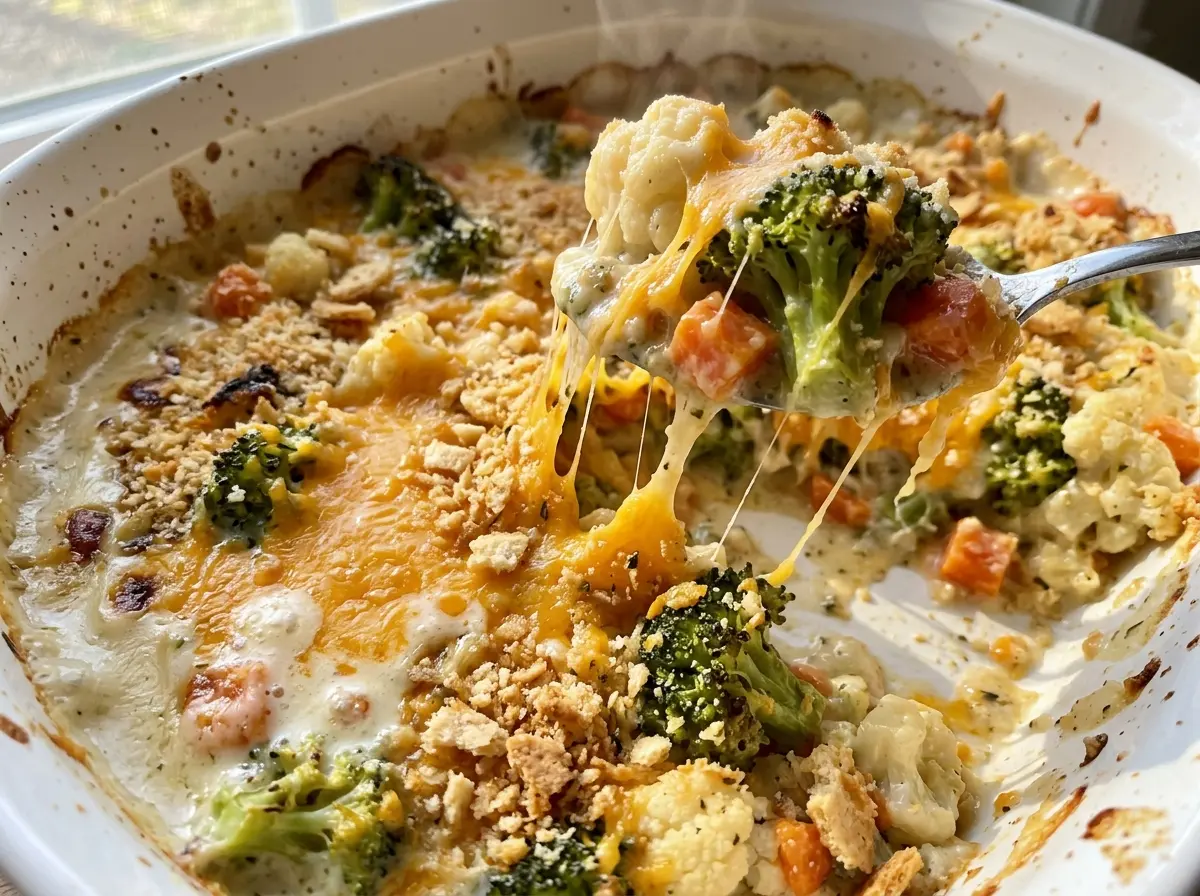
When the edges of a vegetable casserole start bubbling, the cracker topping should be turning golden at the same time. That contrast is what I watch for here: a creamy, tender center under buttery crumbs that stay crisp instead of sinking into the filling. This vegetable casserole gets both textures from a short ingredient list and a 9×13-inch baking dish.
Frozen mixed vegetables make the prep straightforward, but they need to be thawed and well drained before they go into the bowl. Any water left clinging to them thins the creamy mixture as it bakes. I fold the vegetables into the soup, sour cream, cheddar, and seasonings gently, then spread the mixture evenly so it heats at the same pace from edge to center.
The topping is just crushed buttery round crackers tossed with melted butter, scattered over the top before the dish goes into a 375°F oven. It comes out bubbling around the sides, with a crisp golden layer over a soft, savory filling.
Kitchen Note
Crush the crackers into small, fairly even pieces rather than fine dust. When the crumbs are tossed thoroughly with melted butter, they brown more evenly and leave fewer dry, pale patches across the top.
Save this vegetable casserole for its creamy mixed-vegetable filling and crisp, buttery cracker topping.
The Water in Frozen Vegetables Is What Makes This Casserole Soggy
Frozen vegetables release water as they thaw. If that extra liquid goes into the baking dish, it loosens the soup-and-sour-cream mixture, and the finished casserole can be soft and watery rather than creamy. Thawing is only half the job; draining thoroughly matters just as much. Give the vegetables time to lose their icy coating, then let excess water run off before adding them to the bowl.
There’s a second reason to spread the mixture in a 9×13-inch dish: a broad, even layer gives the filling room to heat through while the topping browns. A deeper pile changes how the center warms and keeps more moisture tucked inside. Once the vegetables are drained, fold them into the creamy base without mashing them, then level the mixture in the prepared dish. That even surface supports a more consistent blanket of buttery crumbs, with bubbling edges and a golden top to guide you at the end.
What the Creamy Base and Cracker Top Each Bring

- Frozen mixed vegetables — They make this casserole convenient and bring a variety of vegetables in one bag. A standard grocery-store blend works well; thaw it fully and drain it well before mixing. A frozen broccoli-and-cauliflower blend can stand in for the mixed vegetables, though the casserole will have a simpler, more pronounced vegetable texture.
- Condensed cream of mushroom soup — The concentrated soup helps bind the vegetables and gives the filling its savory, creamy body. Cream of celery soup is a practical swap if you want to avoid mushroom flavor; it keeps the casserole creamy but shifts the savory note. Choose a smooth condensed soup rather than a ready-to-serve soup, which has more liquid.
- Sour cream — Sour cream adds tang and a thick, rich texture that balances the condensed soup. Plain Greek yogurt can replace it; the filling will taste a little tangier and less rich. Use plain, unflavored yogurt, not a sweetened variety.
- Shredded cheddar — Cheddar adds a familiar savory cheese flavor and melts into the filling. Sharp cheddar gives the casserole a stronger cheese taste, while Monterey Jack melts smoothly for a milder result. Pre-shredded cheese is convenient; freshly shredded cheese tends to blend into the base more smoothly.
- Buttery round crackers — These make a crisp, savory top that a plain breadcrumb topping won’t quite duplicate. For a gluten-free version, use gluten-free buttery crackers and crush them to a similar texture. Keep the crumbs coarse enough to brown rather than disappear into the butter.
- Unsalted butter — Melted butter coats the crumbs and helps them turn golden in the oven. Salted butter also works, though the topping will taste a little saltier. Melt it before stirring it through the crackers so the coating spreads evenly.
Build the Casserole Before the Crumb Topping Goes On
Prepare the Dish and Creamy Base
Heat the oven to 375°F and coat a 9×13-inch baking dish with nonstick cooking spray. In a large bowl, stir together the condensed cream of mushroom soup, sour cream, cheddar, onion powder, and black pepper until the mixture looks cohesive. Scrape the bottom and sides of the bowl so the seasonings don’t sit in one pocket. The base should be thick and creamy, not loose or separated.
Fold in the Drained Vegetables
Add the thawed, well-drained vegetables to the bowl and fold them through the creamy mixture. Use a gentle motion so the vegetables stay intact rather than getting crushed into the base. Look for an even coating on the vegetables, with no large pockets of plain soup mixture. Spread the mixture into the prepared baking dish in a level layer.
Coat the Cracker Crumbs
Stir the crushed buttery round crackers with the melted butter in a small bowl. Keep stirring until the crumbs look evenly moistened; dry-looking patches won’t brown as well. Scatter the topping over the vegetable mixture, spreading it from edge to edge. Don’t press the crumbs down, since a loose layer browns more readily.
Bake Until the Edges Bubble
Bake for 30 to 35 minutes. The casserole is ready when the edges are bubbling and the cracker topping is golden brown. If the top still looks pale, give it a little more time while watching closely for the color to deepen. Let the dish settle briefly after it comes out so the hot filling is easier to scoop.
Three Ingredient Swaps That Keep the Casserole’s Comfort-Food Character
Use a Broccoli-and-Cauliflower Blend
Replace the mixed vegetables with a frozen broccoli-and-cauliflower blend. Thaw and drain it just as thoroughly before folding it into the creamy base. The casserole will have a more focused vegetable flavor and larger, more distinct pieces.
Make the Cheddar Flavor Bolder
Choose sharp cheddar in place of mild cheddar for a more pronounced cheese flavor without changing the casserole’s texture. Monterey Jack is another good swap when you want a gentler, mellow cheese note.
Make a Gluten-Free Cracker Topping
Use gluten-free buttery crackers in place of the regular crackers, crushing and tossing them with the melted butter in the same way. The topping may vary a little by brand, but the casserole keeps its creamy filling and crisp, buttery finish.
Storage and Reheating
- Refrigerator: Store leftovers covered for 3 to 4 days. The cracker topping softens as it sits against the filling.
- Freezer: Freeze portions in an airtight container for up to 2 months. The creamy filling may be a little softer after thawing, and the topping won’t stay as crisp.
- Reheating: Reheat uncovered in a 350°F oven until the center reaches 165°F. An uncovered oven reheat helps the topping regain some crispness; microwaving is quicker but leaves it softer.
Answers to Vegetable Casserole Questions That Come Up at Prep Time
Vegetable Casserole
Ingredients
Equipment
Method
- Preheat the oven to 375°F.
- Coat a 9x13-inch baking dish with nonstick cooking spray.
- In a large bowl, stir together the condensed cream of mushroom soup, sour cream, shredded cheddar cheese, onion powder, and black pepper.
- Fold in the thawed, well-drained vegetables and spread the mixture in the prepared dish.
- Stir the crushed buttery round crackers with the melted unsalted butter and scatter evenly over the casserole.
- Bake for 30 to 35 minutes, until the casserole is bubbling at the edges and the topping is golden brown.