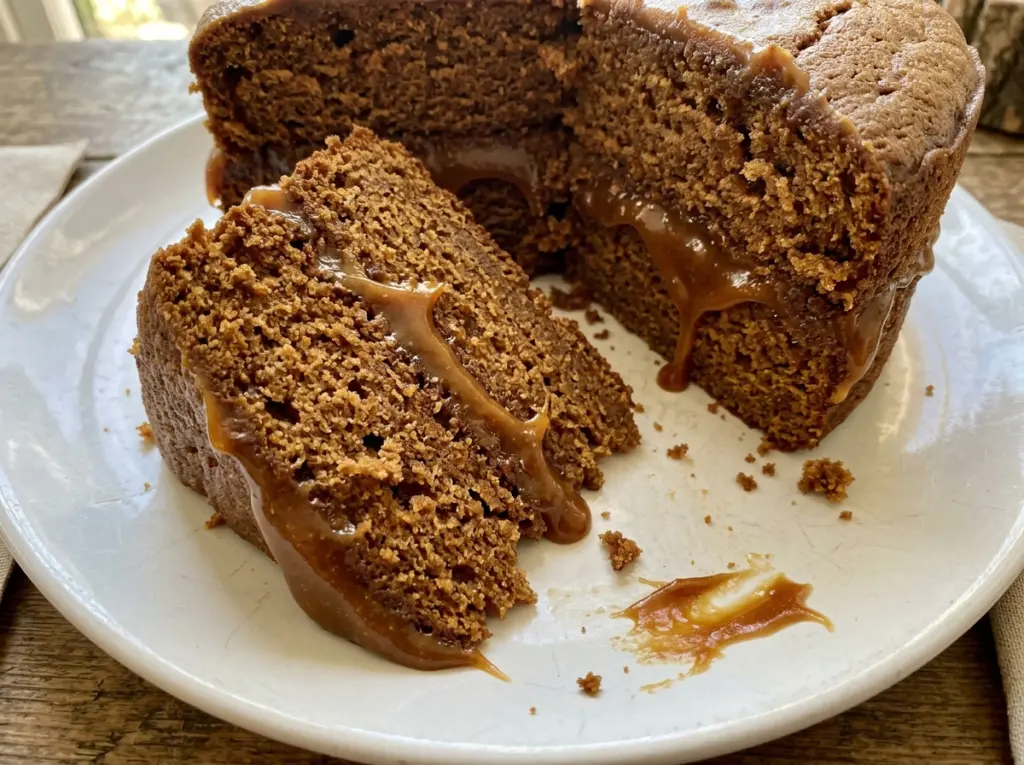
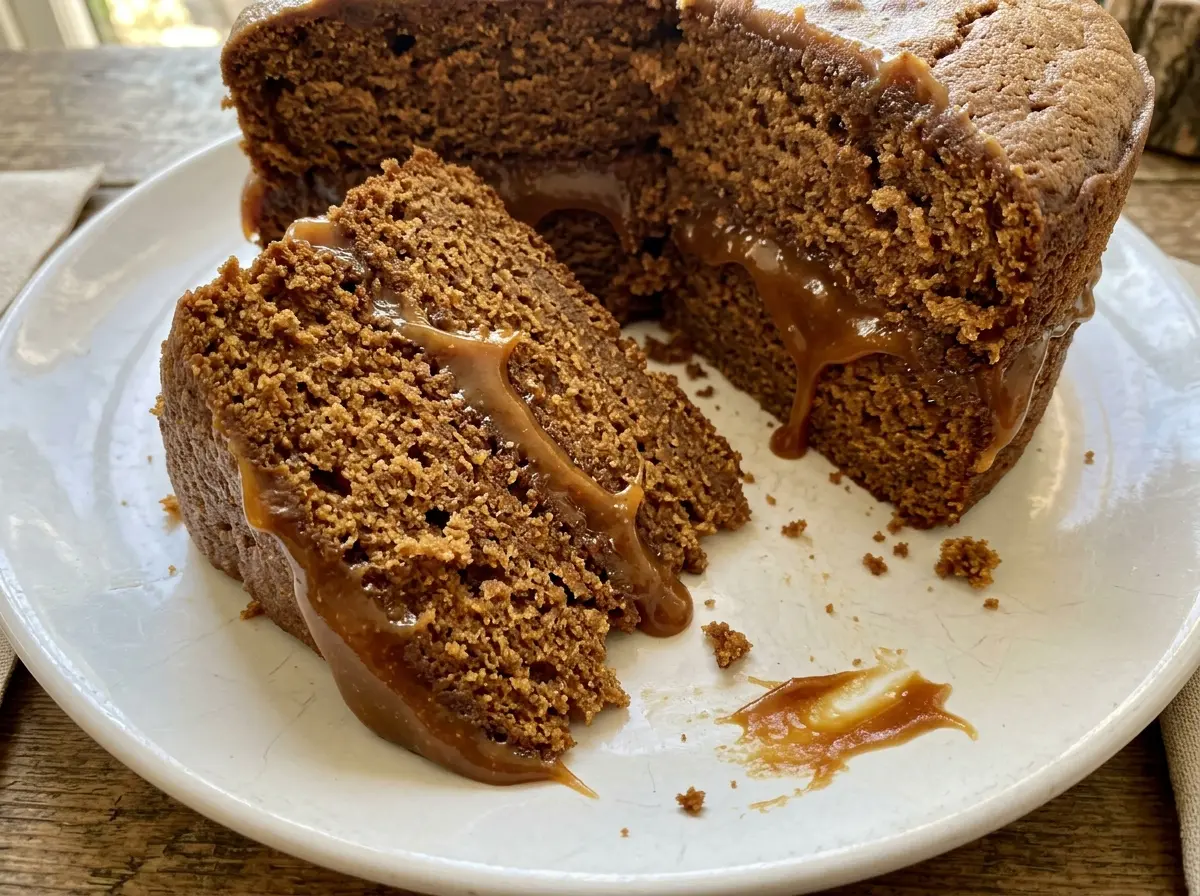
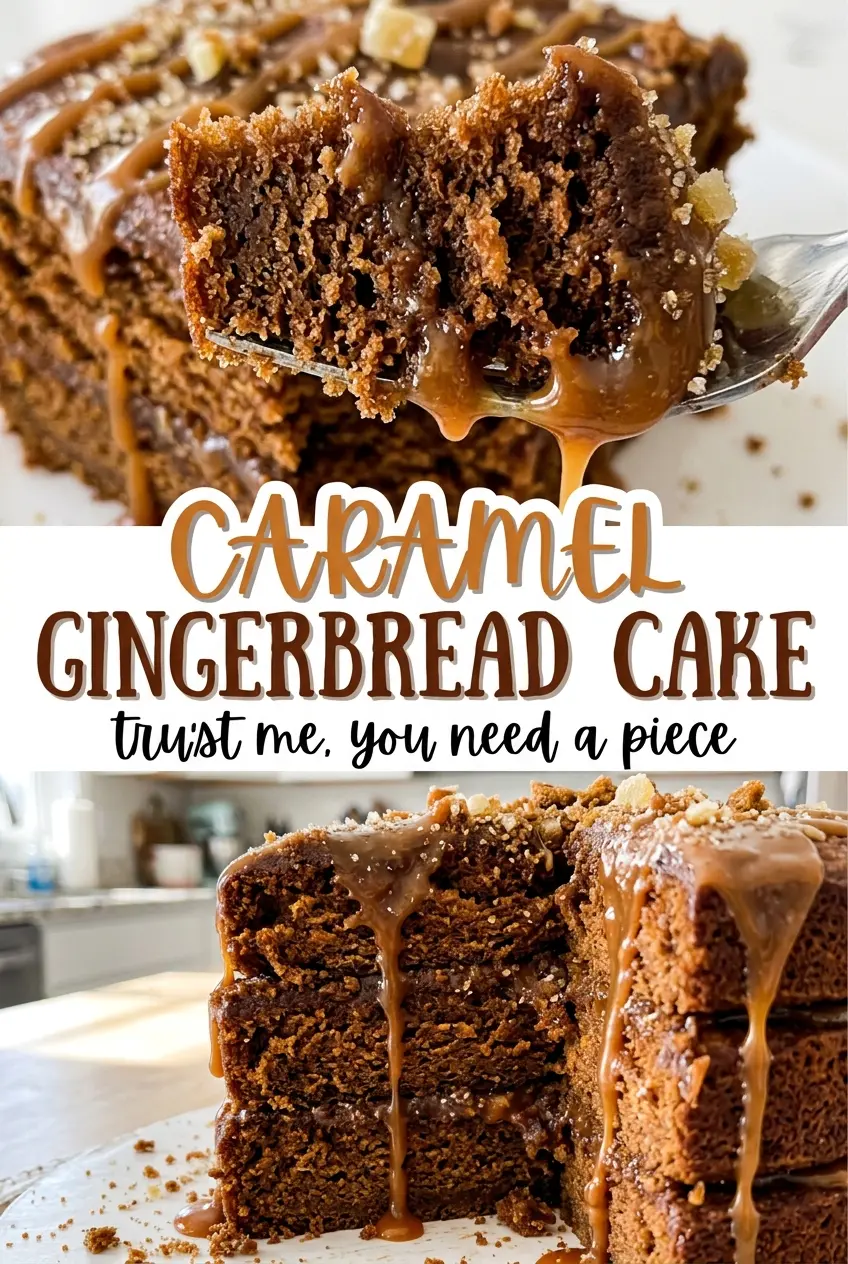
When a toothpick comes out with a few moist crumbs instead of looking completely clean, the cake is ready—even if your instincts say to leave it in longer. That cue keeps this Caramel Gingerbread Cake tender instead of dry, and the warm brown-sugar caramel on top makes each piece feel finished without frosting.
I mix the batter by alternating the flour mixture with buttermilk, starting and ending with flour. It’s a little more deliberate than adding everything at once, but it helps the ingredients come together without beating the flour too long. The molasses brings the deep gingerbread flavor, while cinnamon and cloves round it out. Once the cake has cooled in the pan for at least 15 minutes, cut it into squares and spoon warm caramel over each serving.
Kitchen Note
I spoon the caramel over individual pieces, not over the whole pan. That way, the cake keeps its tender top, and every serving gets warm sauce right before it reaches the plate.
Save this Caramel Gingerbread Cake for its soft, spiced crumb and warm brown-sugar caramel served over every slice.
Why the Flour Goes In First and Last
Adding the dry ingredients in three portions, with buttermilk between them, isn’t busywork. The flour mixture goes in first and last so the batter starts and finishes with a dry addition; the buttermilk gets incorporated in between rather than being poured into a bowl full of flour. That makes it easier to mix the batter evenly without overworking it.
Once flour is mixed with liquid, continued beating develops gluten. Too much of that and a gingerbread cake can turn firm or chewy instead of soft. Use the mixer for creaming the butter and sugar and incorporating the eggs, then keep the mixing brief once the flour and buttermilk enter the bowl. Stop as soon as the batter is combined; a few small lumps are less of a problem than a long, vigorous mix.
Room-temperature eggs and buttermilk also blend into the creamed butter more smoothly than cold ingredients. Set them out while you gather the dry ingredients, and the batter will be easier to bring together in the planned additions.
What Gives This Cake Its Gingerbread Depth
- Unsulfured molasses — This is the deep, unmistakable gingerbread note in the cake. Choose regular unsulfured molasses, not blackstrap; blackstrap is much more assertive and can make the flavor harsh. There isn’t a swap that gives quite the same character.
- Ground ginger, cinnamon, and cloves — Ginger leads, while cinnamon and cloves add warmth behind it. Spices lose their punch as they sit, so use fresh, fragrant jars if yours have been open for years; there’s no need to buy a premium brand if the spices still smell lively.
- Buttermilk — Its tang balances the molasses, and it brings moisture to the crumb. Use it at room temperature so it blends into the batter without making the softened butter seize up. For a dairy-free version, see the adaptation below.
- Light brown sugar — The cake’s sugar adds moisture and a mild molasses note, while the separate brown sugar in the sauce creates its caramel base. Pack it firmly when measuring; soft, fresh brown sugar is easier to blend than a dry, hardened lump.
- Unsalted butter and heavy cream — Butter gives the cake richness and helps the sauce turn smooth; heavy cream makes the caramel pourable. Standard supermarket butter and cream work well here, and softened butter should give slightly when pressed without looking oily or melted.
Mixing, Baking, and Finishing the Cake
Set Up the Pan and Spice the Flour
Heat the oven to 350°F and coat a 9×13-inch baking pan with nonstick cooking spray. Whisk the flour with the ginger, cinnamon, cloves, baking powder, baking soda, and fine salt in a medium bowl, breaking up any spice clumps as you go. An even whisk now means you won’t find a pocket of baking soda or clove in a slice. Set the bowl aside while you cream the butter and sugar.
Cream the Butter, Then Build the Batter
Beat the softened butter and packed light brown sugar in a large bowl with an electric mixer until light and fluffy, about 2 minutes. Add the eggs one at a time, then mix in the molasses and vanilla until incorporated. Add the flour mixture in three additions, alternating with the buttermilk in two additions, beginning and ending with flour. Mix just until combined; the batter should look cohesive, not heavily beaten.
Bake Until the Center Springs Back
Spread the batter evenly in the prepared pan so the center and corners bake at a similar pace. Bake for 30 to 35 minutes. The center should spring back lightly when touched, and a toothpick inserted in the middle should come out with a few moist crumbs rather than wet batter. Cool the cake in the pan for at least 15 minutes before cutting it into 12 pieces.
Simmer the Caramel and Serve It Warm
Combine the brown sugar, heavy cream, butter, and salt in a medium saucepan over medium heat, stirring until the butter melts and the mixture reaches a simmer. Simmer for 3 minutes, stirring often; keep it at a steady simmer rather than letting it boil hard. Take the pan off the heat and stir in the vanilla. Spoon the warm sauce over each piece of cake.
Simple Ways to Adapt the Cake
Make It Gluten-Free
Replace the all-purpose flour with the same amount of a cup-for-cup gluten-free baking blend formulated for cakes. A blend that includes xanthan gum helps the cake hold together; expect a slightly more delicate crumb, and let the cake cool fully before lifting out pieces.
Use Dark Brown Sugar for a Deeper Note
Swap dark brown sugar for the light brown sugar in both the cake and sauce, keeping the same amounts. The extra molasses in dark brown sugar pushes the flavor deeper and makes the caramel taste more robust without changing the method.
Make a Dairy-Free Version
Use plant-based butter sticks in place of the butter, and replace the buttermilk with 1 cup unsweetened oat milk stirred with 1 tablespoon lemon juice; let it stand for 5 minutes before using. For the sauce, use dairy-free butter and full-fat coconut cream instead of heavy cream. The cake stays soft, while the sauce picks up a gentle coconut note.
Storage and Reheating
- Refrigerator: Keep the covered cake and caramel sauce in separate airtight containers for up to 4 days. The chilled cake will feel firmer than it does at room temperature.
- Freezer: Freeze the completely cooled, unsauced cake, tightly wrapped, for up to 2 months. Thaw it wrapped at room temperature; the cream-based sauce is best made fresh rather than frozen.
- Reheating: Warm a piece of cake briefly in the microwave, and reheat refrigerated sauce gently in a small saucepan over low heat, stirring until pourable. Avoid high heat on the sauce, which can make it separate or scorch.
Questions That Come Up With Gingerbread Cake
Caramel Gingerbread Cake
Ingredients
Equipment
Method
- Heat the oven to 350°F.
- Coat a 9x13-inch baking pan with nonstick cooking spray.
- Whisk the flour, ginger, cinnamon, cloves, baking powder, baking soda, and salt in a medium bowl.
- Beat the softened butter and brown sugar in a large bowl with an electric mixer until light and fluffy, about 2 minutes.
- Beat in the eggs one at a time, then mix in the molasses and vanilla.
- Mix in the flour mixture in three additions, alternating with the buttermilk in two additions, beginning and ending with the flour mixture; mix just until combined.
- Spread the batter evenly in the prepared pan.
- Bake for 30 to 35 minutes, until the center springs back lightly and a toothpick inserted in the center comes out with a few moist crumbs.
- Cool the cake in the pan for at least 15 minutes.
- Combine the brown sugar, heavy cream, butter, and salt in a medium saucepan.
- Bring to a simmer over medium heat, stirring until the butter melts.
- Simmer for 3 minutes, stirring often.
- Remove from the heat and stir in the vanilla.
- Cut the cake into 12 pieces.
- Spoon the warm sauce over each serving.