
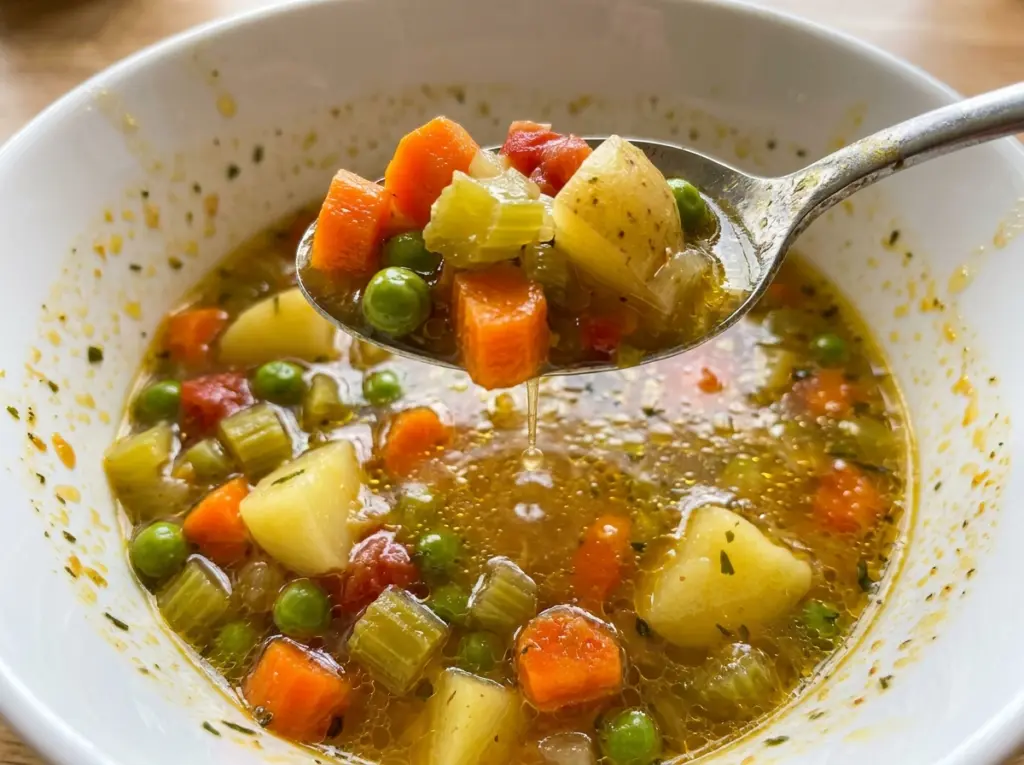
The onion, carrots, and celery turn sweet and fragrant as they soften in the pot, and that’s where a pot of vegetable soup starts to feel like dinner instead of a pile of vegetables. I like how this version builds a savory base first, then lets the potatoes and green beans simmer in the broth before the quicker-cooking vegetables join in. Every spoonful gets a little of everything without asking the zucchini and peas to sit in the pot for the entire cook.
The sequence matters more than fancy ingredients here. Tomato paste gets a brief cook with the garlic and thyme, while the broth, tomatoes, potatoes, and green beans get their own longer simmer. That gives the soup a rounded, tomato-scented broth and vegetables that still have distinct shapes. Fresh parsley stirred in at the end brings a clean finish to the warm, hearty bowl.
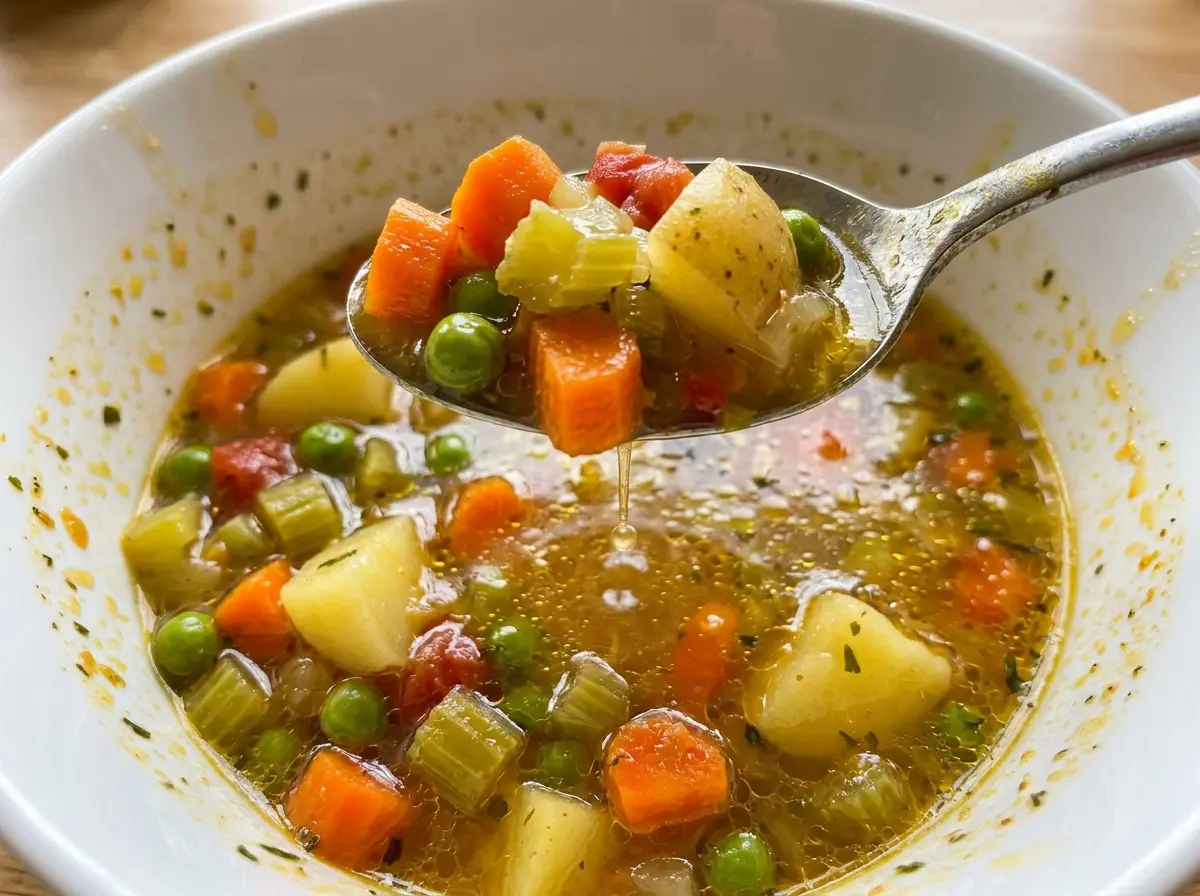
Kitchen Note
Give the potatoes and green beans their head start before adding the zucchini, corn, and peas. Those later additions need just 8 to 10 minutes, so they stay tender without disappearing into the broth.
Save this vegetable soup for a cozy pot of tender vegetables and tomato-rich broth, finished with fresh parsley.
Why the Tomato Paste Gets a Full Minute Before the Broth
Tomato paste can taste sharp and a little raw when it goes straight into a pot of liquid. Cooking it briefly with the garlic, thyme, salt, and pepper gives it a chance to mingle with the oil and vegetables before the broth loosens everything. You’ll smell the difference: the paste becomes warmer and more savory, not just tomatoey.
That minute also gives the garlic time to release its aroma without leaving it in the pot long enough to brown. Once the broth and diced tomatoes go in, the paste disperses through the liquid and helps the finished soup taste more substantial. It won’t turn the broth thick or creamy; this is still a clear, spoonable vegetable soup. If the paste sticks, stir steadily and keep the heat at medium rather than letting the garlic catch on the bottom.
What Each Vegetable Brings to This Pot

- Yukon Gold potatoes — Their creamy texture gives the broth some heft while the cubes hold their shape through a simmer. Red potatoes are a good stand-in; cut them to the same size so they soften at a similar pace. Russets tend to break down more, so the broth can turn cloudier and thicker.
- Low-sodium vegetable broth — Starting with a lower-sodium broth leaves room for the kosher salt in the pot without making the finished soup hard to balance. A regular vegetable broth works, but it can make the result saltier; taste before adding any extra seasoning.
- Diced tomatoes with their liquid — The tomato juices belong in the pot, too. They bring acidity that balances the sweet carrots and corn, while the pieces give the broth a little texture. Choose a can without added herbs if you want the thyme to remain the main herbal note.
- Green beans — Fresh beans keep a pleasant bite through their longer simmer. Trim and cut them into even pieces; if using frozen cut green beans instead, add them with the potatoes and expect a softer finish.
- Frozen corn and peas — Frozen vegetables are convenient here and go straight into the soup without thawing. Their sweetness rounds out the savory broth, and keeping them for the later simmer helps preserve their color and texture.
- Fresh parsley — Chopped parsley tastes brighter when it’s stirred in after the bay leaf comes out, rather than simmered for the whole cook. Flat-leaf parsley is easiest to chop finely, but curly parsley works too.
Building the Broth Before the Tender Vegetables Go In
Soften the Onion, Carrots, and Celery
Heat the olive oil in a 6-quart Dutch oven over medium heat, then add the diced onion, carrots, and celery. Cook for 6 to 8 minutes, stirring occasionally, until the vegetables have softened. The onion should look less opaque, and the carrots and celery should begin to bend rather than feel crisp. If the pot looks dry, keep stirring so the vegetables soften evenly instead of catching on the bottom.
Let the Garlic and Tomato Paste Turn Fragrant
Stir in the minced garlic, tomato paste, dried thyme, kosher salt, and black pepper. Cook for 1 minute, stirring so the paste coats the vegetables and the garlic doesn’t sit in one hot spot. You’re looking for a fragrant base, not browned garlic. Add the liquid promptly after that brief cook.
Simmer the Potatoes and Green Beans
Add the vegetable broth, undrained diced tomatoes, cubed potatoes, cut green beans, and bay leaf. Bring the pot to a boil over high heat, then reduce the heat and simmer uncovered for 15 to 20 minutes. Keep the simmer steady rather than letting the pot roll hard; a gentler bubble cooks the vegetables without tossing them around. The potatoes and beans should be on their way to tender before you move on.
Finish with the Quick-Cooking Vegetables
Add the zucchini, frozen corn, and frozen peas, then simmer for 8 to 10 minutes, until the potatoes and vegetables are tender. Check a potato cube with a fork; it should give easily without crumbling apart. Remove the bay leaf before stirring in the chopped fresh parsley. Serve while the broth is hot and the vegetables still hold their shape.
Easy Changes That Still Fit This Vegetable Soup
Use red potatoes for a firmer bite
Replace the Yukon Gold potatoes with red potatoes and cut them into the same 3/4-inch cubes. They hold their shape well, so the finished soup has a slightly firmer potato texture while keeping the same straightforward method.
Make a lower-sodium pot
Use unsalted vegetable broth in place of low-sodium broth and reduce the kosher salt. The vegetables and tomatoes still build a savory base, but the soup will taste less seasoned; adjust the salt at the table if needed.
Swap fresh corn for frozen
Cut the kernels from fresh corn and add them at the same time as the zucchini and peas. Fresh corn gives the soup a slightly crisper pop; simmer until the kernels and the other vegetables are tender.
Storage and Reheating
- Refrigerator: Store in a covered container for 3 to 4 days. The potatoes may absorb some broth as the soup sits.
- Freezer: Freeze in airtight containers for up to 2 months for best quality. The potatoes can become a little mealy and the zucchini softer after thawing.
- Reheating: Warm gently on the stovetop, stirring occasionally, until the soup reaches 165°F throughout. Avoid a hard boil, which can make the vegetables softer.
Questions That Come Up While This Soup Simmeres
Vegetable Soup
Ingredients
Equipment
Method
- Heat the olive oil in a 6-quart Dutch oven over medium heat.
- Add the onion, carrots, and celery and cook for 6 to 8 minutes, stirring occasionally, until softened.
- Stir in the garlic, tomato paste, thyme, salt, and black pepper and cook for 1 minute.
- Add the vegetable broth, diced tomatoes, potatoes, green beans, and bay leaf.
- Bring to a boil over high heat, then reduce the heat and simmer uncovered for 15 to 20 minutes.
- Add the zucchini, corn, and peas and simmer for 8 to 10 minutes, until the potatoes and vegetables are tender.
- Remove the bay leaf.
- Stir in the parsley and serve.




