
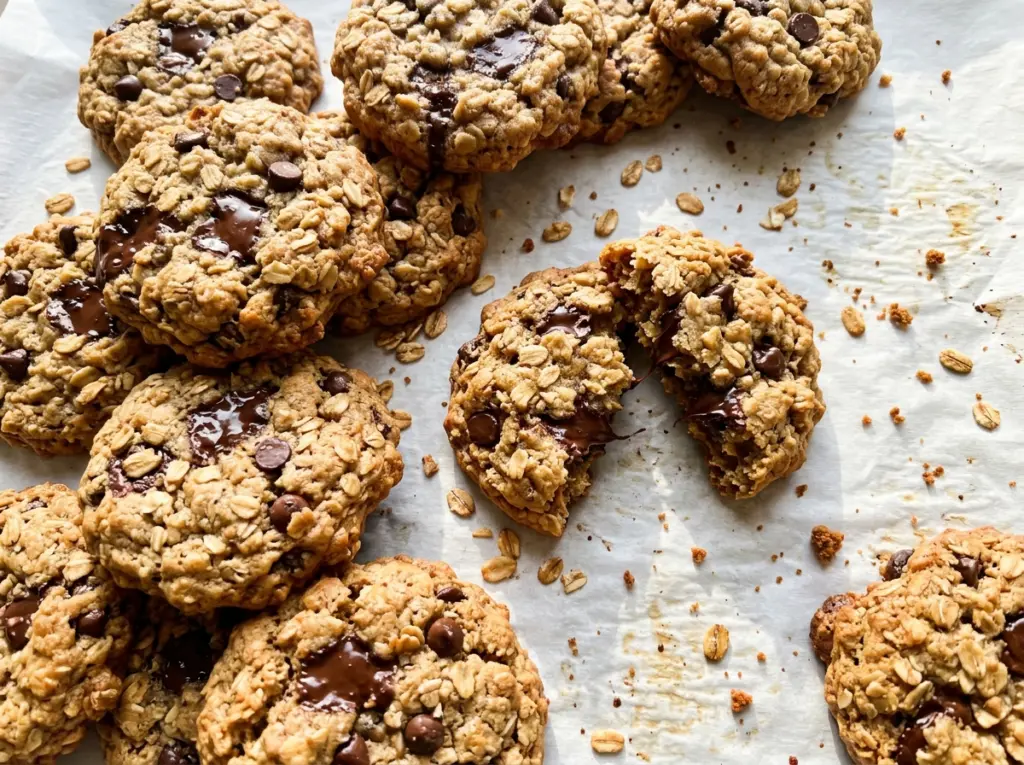
As the oats and chocolate go into the bowl, the dough turns thick and pleasantly nubbly, with chunks tucked throughout instead of disappearing into the batter. These oatmeal chocolate chunk cookies bake up with golden edges, a soft middle, and enough cinnamon to make the kitchen smell warm without overpowering the chocolate.
I like how each bite lands a little differently: some have a big pocket of semisweet chocolate, while others are all oats and brown sugar. The rolled oats give the cookies a hearty chew, but the dough still spreads enough to make tender, familiar cookies rather than dense little oat cakes.
The dough gets a short rest in the refrigerator before baking, which makes it easier to portion and gives the oats time to settle into the mixture. Once baked, the edges turn lightly crisp while the centers stay soft. That contrast is what makes these oatmeal chocolate chunk cookies worth keeping in the cookie jar.
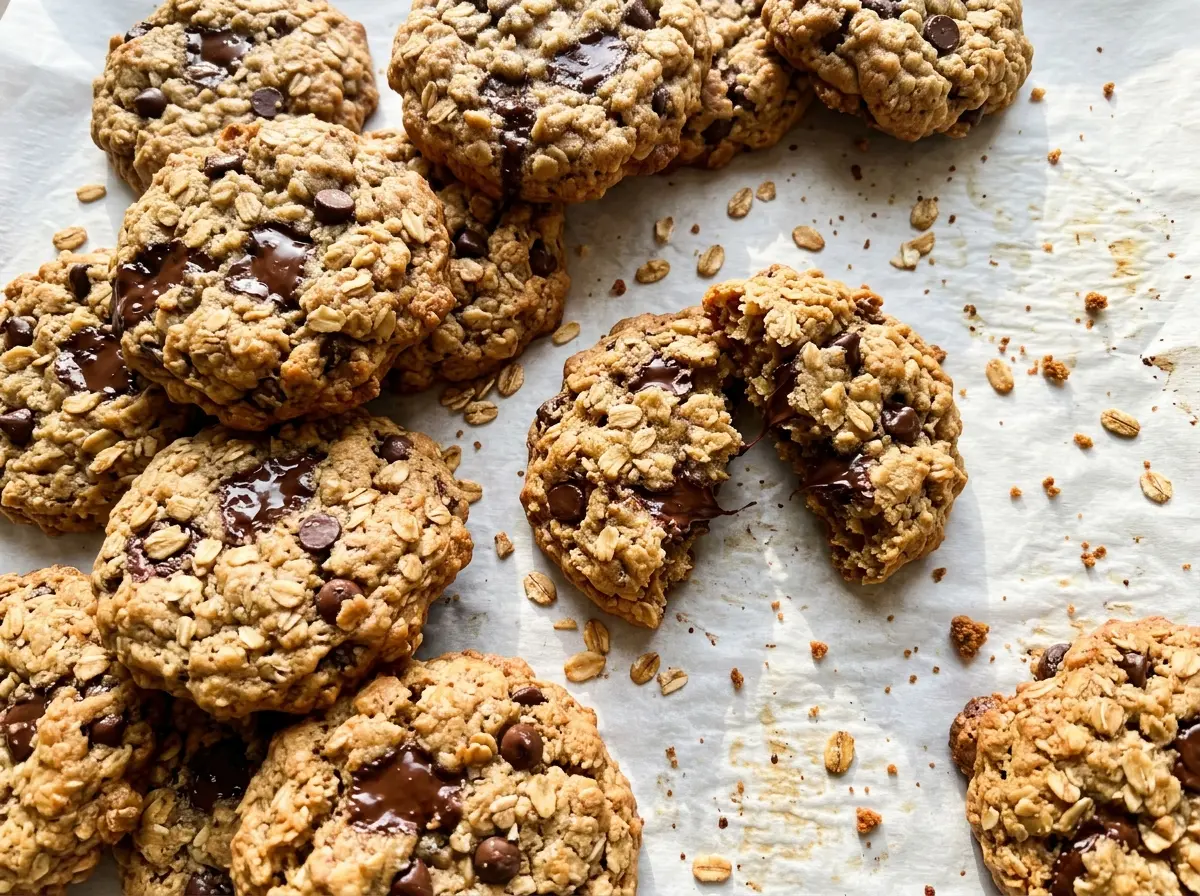
Kitchen Note
Pull the cookies when the edges are golden but the centers still look a little soft. They firm up during their five-minute rest on the hot baking sheet, so waiting for fully set centers can leave them drier than you want.
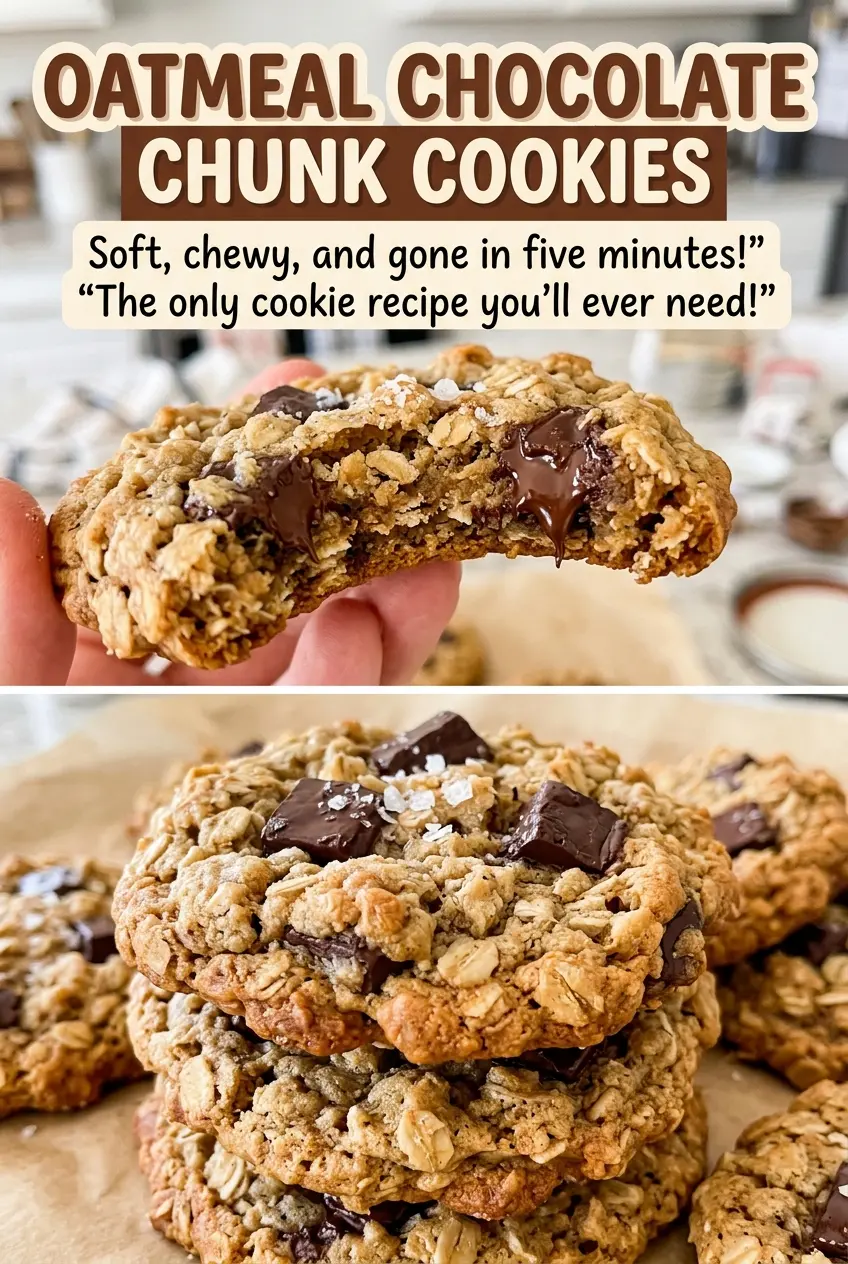
Save these oatmeal chocolate chunk cookies for chewy oat centers and generous pockets of semisweet chocolate.
Why the Oat-to-Flour Balance Makes These Chewy, Not Cakey
There are twice as many rolled oats as flour by volume here, so the oats shape the bite instead of sitting quietly in the background. They make the cookies hearty and chewy, while the flour still binds everything into a dough that holds together and bakes into a tender center. That balance is why these feel like cookies first, not granola bars.
The two sugars have different jobs, too. Brown sugar brings a deeper, molasses-like note and helps keep the middle soft; granulated sugar gives the dough a cleaner sweetness and supports those lightly crisp edges. Using both keeps the cookies from tasting flat or turning uniformly soft.
Cinnamon is present, but it stays in the supporting role. It rounds out the brown sugar and chocolate without making the cookies taste strongly spiced. The result has enough structure to carry a generous amount of oats and chocolate, with a texture that stays tender rather than crumbly.
What to Choose for the Best Oatmeal Chocolate Chunk Texture
- Unsalted butter — Let it soften until it gives slightly when pressed but still holds its shape. Melted butter changes how the dough handles, so don’t rush it in the microwave until it’s liquid. A basic store-brand butter works well; using unsalted also lets the measured kosher salt stay in control.
- Light brown sugar — Pack it into the measuring cup so the amount is consistent. Its mild molasses flavor complements the cinnamon without masking the chocolate. Dark brown sugar can stand in, but it brings a more pronounced molasses note and a darker flavor.
- Old-fashioned rolled oats — These are the source of the cookies’ distinct, substantial chew. Choose a fresh package with intact flakes; an inexpensive brand is fine as long as the oats aren’t stale or dusty. Their size gives the finished cookie more texture than finely cut oats would.
- Semisweet chocolate chunks — Semisweet keeps the cookies from becoming overly sweet alongside the brown sugar. Choose chunks you enjoy eating on their own, since the chocolate flavor comes through clearly. Chopped semisweet chocolate also works; the uneven pieces make a mix of small flecks and larger melted pockets.
- Large eggs — The eggs bind the dough and help it bake into a cohesive cookie instead of loose oat clusters. Use large eggs for the intended balance. There’s no need to separate them; add each whole egg individually so it blends into the creamed butter mixture.
- All-purpose flour and cinnamon — All-purpose flour gives the cookies enough structure without making them tough, and the cinnamon adds a gentle warmth. For the flour, a familiar grocery-store brand is perfectly suitable. Ground cinnamon doesn’t need to be expensive, but it should smell fragrant when you open the jar.
From Creamed Butter to Golden-Edged Cookies
Cream the Butter and Sugars Until Lighter
Beat the softened butter with both sugars in a large bowl for about 2 minutes, until the mixture looks light and creamy. Scrape the bowl if sugar is clinging to the sides so it gets mixed in evenly. If the butter is still cold and firm, it won’t blend smoothly; give it more time to soften before you begin. Stop when the mixture looks fluffy, not greasy.
Add the Eggs, Then the Dry Ingredients
Beat in the eggs one at a time, letting the first disappear into the butter mixture before adding the second. Mix in the vanilla, then whisk the flour, baking soda, cinnamon, and salt together in a separate medium bowl. Stir that dry mixture into the wet ingredients just until no streaks of flour remain. Mixing past that point can make the cookies tougher.
Fold in the Oats and Give the Dough a Rest
Stir in the rolled oats and chocolate chunks until they’re distributed throughout the dough. It will be thick, and that’s expected; keep folding until you don’t see a pocket of oats or chocolate gathered at the bottom. Cover the bowl and refrigerate the dough for 30 minutes. This short chill makes the dough easier to scoop and keeps it from feeling loose as you portion it.
Portion and Bake in Batches
Heat the oven to 350°F and line a large baking sheet with parchment paper. Scoop the dough into 2-tablespoon portions, arranging 12 on the sheet with about 2 inches between them, and bake for 10 to 12 minutes. Let the cookies rest on the baking sheet for 5 minutes before moving them to a wire rack. The sheet needs to cool completely before you bake the remaining dough, or the next batch can start spreading before it reaches the oven.
Three Ways to Change Up These Oatmeal Chocolate Chunk Cookies
Use Dark Chocolate for a Less-Sweet Cookie
Replace the semisweet chunks with the same amount of dark chocolate chunks. The cookies will have a more bittersweet, cocoa-forward finish, which is a nice counterpoint to the brown sugar.
Trade Half the Chocolate for Raisins
Replace half of the chocolate chunks with raisins and stir them in with the oats. You’ll get a fruitier cookie with extra chewy bits, while the remaining chocolate still gives you a rich, melty bite.
Make Them Gluten-Free
Use a cup-for-cup gluten-free flour blend in place of the all-purpose flour, along with oats labeled gluten-free. The cookies keep their oat-and-chocolate character, though the texture may be a little more delicate than the original.
Storage and Reheating
- Refrigerator: Store cooled cookies in an airtight container for up to 5 days. They soften a little as they sit, but stay pleasantly chewy.
- Freezer: Freeze cooled cookies in a sealed freezer-safe container for up to 2 months, separating layers with parchment. Thaw at room temperature before serving.
- Reheating: Warm a cookie in the microwave for about 8 seconds if you’d like the chocolate soft again. Longer heating can make the cookie overly hot and the chocolate messy.
Questions That Come Up When Baking These Cookies
Oatmeal Chocolate Chunk Cookies
Ingredients
Equipment
Method
- Beat the butter, brown sugar, and granulated sugar in a large bowl until light and creamy, about 2 minutes.
- Beat in the eggs one at a time.
- Mix in the vanilla extract.
- Whisk together the flour, baking soda, cinnamon, and salt in a medium bowl.
- Stir the flour mixture into the butter mixture just until combined.
- Stir in the oats and chocolate chunks.
- Cover the bowl and refrigerate the dough for 30 minutes.
- Heat the oven to 350°F.
- Line a large baking sheet with parchment paper.
- Scoop the dough into 2-tablespoon portions and arrange 12 portions about 2 inches apart on the baking sheet.
- Bake for 10 to 12 minutes, until the edges are golden and the centers still look slightly soft.
- Let the cookies rest on the baking sheet for 5 minutes.
- Transfer the cookies to a wire rack to cool.
- Let the baking sheet cool completely before baking the remaining dough.
- Arrange 12 portions of the remaining dough about 2 inches apart on the baking sheet.
- Bake for 10 to 12 minutes, until the edges are golden and the centers still look slightly soft.
- Let the cookies rest on the baking sheet for 5 minutes, then transfer them to a wire rack to cool.