
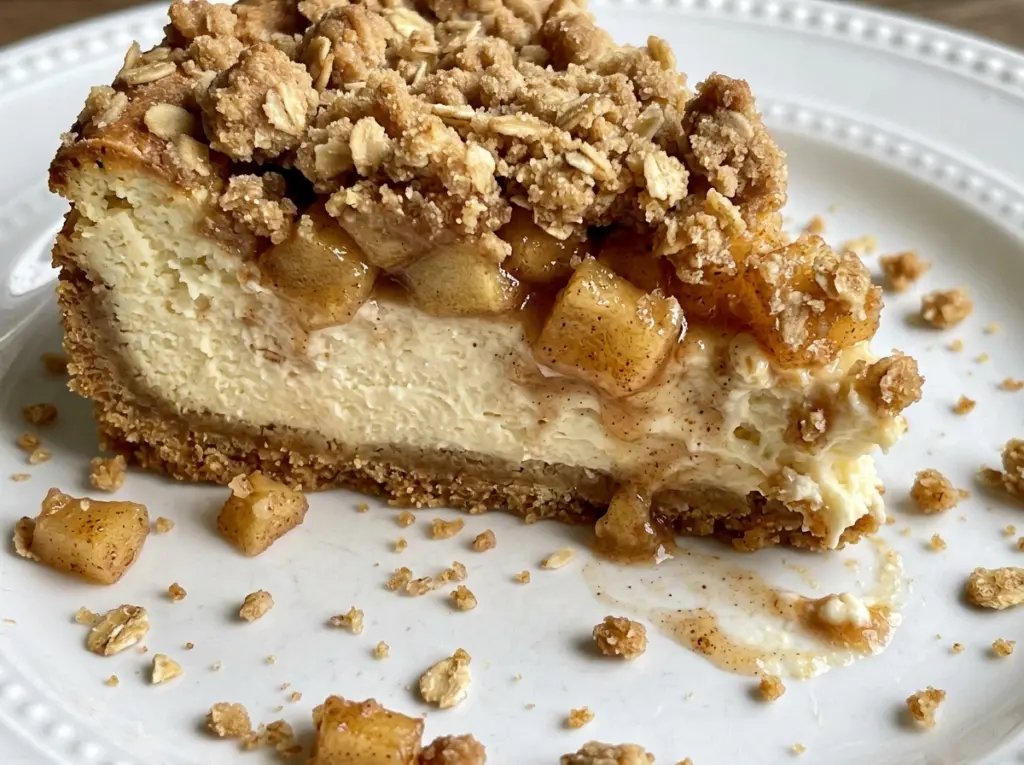
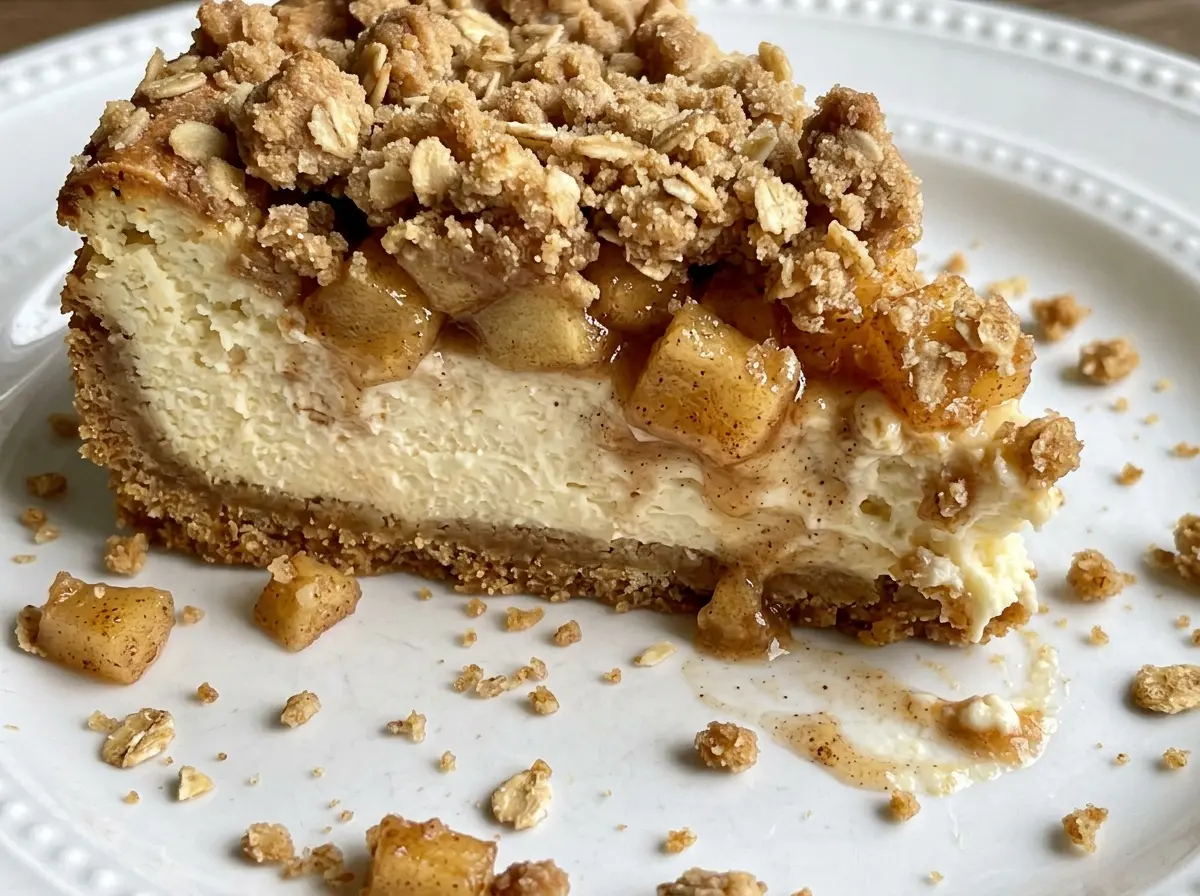
A fork first meets the buttery oat crumble, then sinks into cool cheesecake and tender apples. The apples turn glossy as they cook, but they still hold their shape, so each slice gets fruit without a puddle of juice running across the plate. That balance is what makes this apple crumble cheesecake feel like more than cheesecake with a topping.
I like the contrast between tart Granny Smith apples and the smooth, gently sweet filling. The graham cracker crust gives each slice a firm base, while cinnamon and nutmeg make the apple and oat layers taste right at home together. The separate textures are the point: a crisp crumble, soft apples, and a creamy center that cuts cleanly after chilling.
Kitchen Note
A water bath only helps if the water stays outside the springform pan. I wrap the pan in two snug layers of heavy-duty foil, paying particular attention to the bottom seam before it goes into the roasting pan.
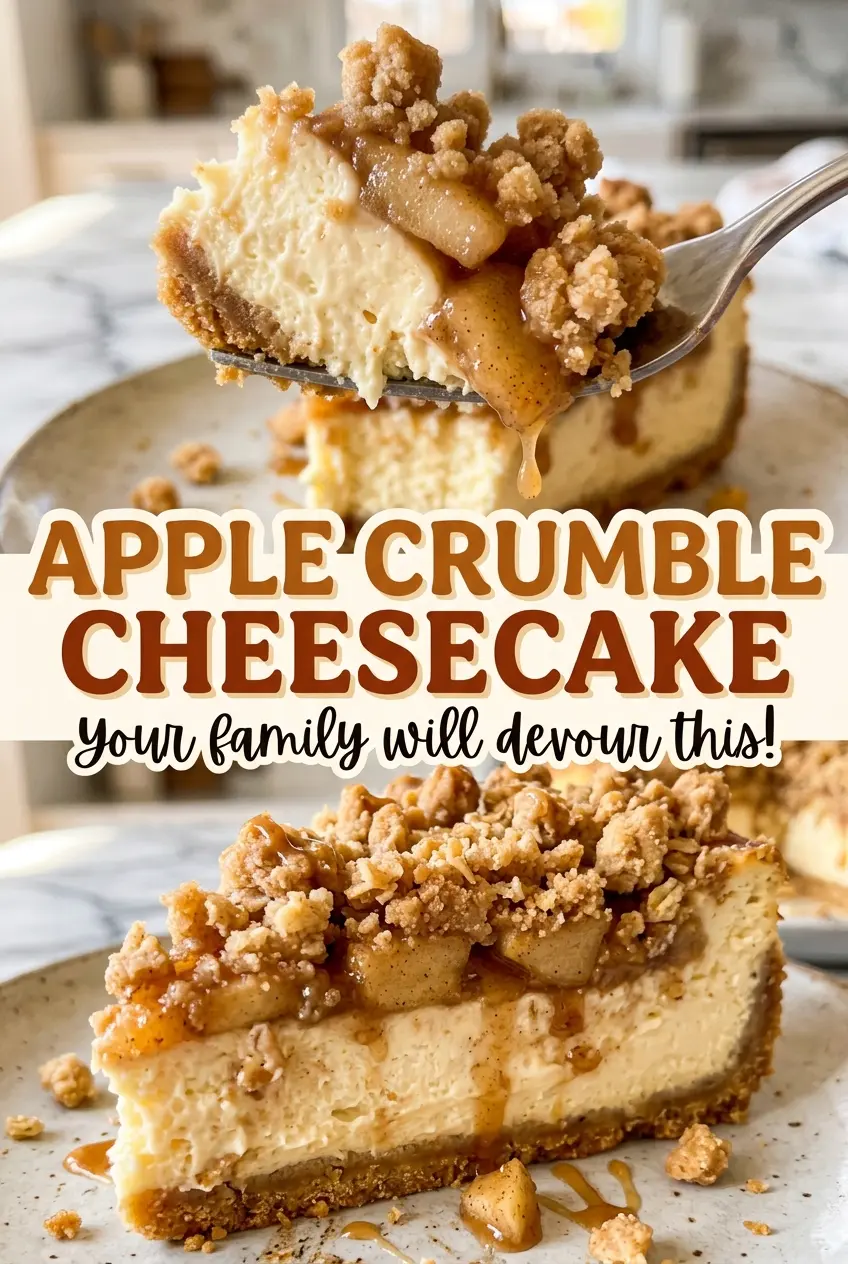
Save this Apple Crumble Cheesecake for its tart cinnamon apples, creamy center, and crisp oat crumble.
Why the Crumble Gets Baked Before It Ever Meets the Cheesecake
The topping has two jobs: it needs to stay crisp and give the soft filling a little crunch. If the flour-and-oat mixture bakes directly on top of the apples, it picks up moisture from the fruit as the cheesecake chills. Baking the crumble on its own gives it time to turn golden and dry out before it lands on the finished dessert.
Cooling matters just as much as baking. Warm crumble traps steam against the apples, and steam is the enemy of that crisp texture. Let the crumble cool completely on its baking sheet, then add it after the apple topping has cooled and the cheesecake is cold. You get distinct layers instead of one soft, buttery blanket—and the crumble stays easy to scatter rather than clumping together.
What Keeps the Apples Tart and the Crumble Crisp
- Granny Smith apples — Their tartness cuts through the sweet filling, and they hold their shape during a short skillet cook. Another firm, tart baking apple works; sweeter fruit will make the topping taste less tangy.
- Cream cheese and sour cream — Cream cheese gives the filling its structure, while sour cream loosens it into a smooth, tangy batter. Let both come to room temperature for easier mixing. Plain Greek yogurt can replace the sour cream in an equal volume, though the filling will taste a little tangier and less rich.
- Graham cracker crumbs and unsalted butter — The crumbs make a compact base, and melted butter binds them when pressed. Store-bought crumbs are fine; finely crushed graham crackers work too. Unsalted butter keeps the crust and crumble from picking up more salt than intended.
- Old-fashioned oats and brown sugar — Rolled oats create the crumble’s distinct, hearty bits, and packed brown sugar gives it a deeper sweetness than granulated sugar. Quick oats make a finer, denser topping, so old-fashioned oats are the better pick here.
- Lemon juice, cinnamon, and nutmeg — Lemon brightens the apple mixture, cinnamon belongs with the fruit, and nutmeg gives the crumble a warm finish. Fresh lemon juice has the cleanest taste; bottled juice works if that’s what you have.
How to Build the Crust, Filling, and Apple Layers Without Losing Their Texture
Set the Graham Cracker Base
Heat the oven to 350°F, lightly grease the bottom and sides of a 9-inch springform pan, and line the bottom with parchment. Stir the graham cracker crumbs with 6 tablespoons of melted butter, then press them firmly and evenly over the pan’s base. Bake for 10 minutes; the crust should feel set rather than loose when you take it out. Reduce the oven to 325°F for the remaining baking.
Bake the Crumble on Its Own
Stir together the flour, old-fashioned oats, brown sugar, and nutmeg, then mix in the remaining 5 tablespoons of melted butter until you have clumps. Spread them over a parchment-lined rimmed baking sheet so they have room to brown. Bake at 325°F for 20 to 25 minutes, stirring once halfway through. Take the crumble out when it’s golden, then leave it on the sheet until completely cool.
Mix and Bake the Cheesecake Gently
Beat the softened cream cheese until smooth before adding the sugar and salt. Mix in the eggs one at a time on low speed, then add the sour cream and vanilla; stop once the batter is combined. Pour it onto the crust, wrap the pan in two layers of heavy-duty foil, and set it in a roasting pan with hot water reaching halfway up the springform sides. Bake at 325°F for 65 to 80 minutes, until the edges are set and the middle still wobbles slightly.
Cool the Cheesecake in Stages
When the baking time is up, turn off the oven, crack the door, and leave the cheesecake in its water bath for 1 hour. Then lift it out, remove the foil, and cool it on a wire rack until it reaches room temperature, about 1 hour. A quick temperature change can make the surface crack, so give the cake this slow cool rather than moving it straight to the refrigerator. Chill it for at least 6 hours or overnight before releasing the springform sides.
Cook the Apples Until Their Juices Turn Glossy
Put the peeled, cored, quarter-inch apple slices in a 10-inch skillet with the sugar, cinnamon, lemon juice, and 2 tablespoons of water. Cover and cook over medium heat for 6 to 8 minutes, stirring occasionally, until the apples are tender but still hold their shape. Stir the cornstarch with the remaining tablespoon of water, add it to the skillet, and cook for 1 minute, stirring, until the juices thicken and look glossy. Cool the topping completely, run a thin knife around the chilled cheesecake, release the pan sides, and spoon on the apples and cooled crumble.
Three Small Changes for a Different Apple Crumble Cheesecake
Make the crust and crumble gluten-free
Use gluten-free graham cracker crumbs, a cup-for-cup gluten-free baking flour, and certified gluten-free old-fashioned oats in the matching components. The crust may be a little more delicate, but the cheesecake and apple layers stay the same.
Add pecans to the oat topping
Stir a small handful of finely chopped pecans into the dry crumble ingredients before mixing in the butter. They add a toasty, nutty crunch, though the topping will be a little denser than the oat-only version.
Trade the nutmeg for cinnamon
Use cinnamon in the crumble instead of nutmeg for a more cinnamon-forward finish that echoes the apples. The flavor will be more familiar and less warmly spiced, while the crumble keeps its same texture.
Make-Ahead, Storage, and Serving
- Refrigerator: Keep leftover cheesecake covered and refrigerated for up to 4 days. The crumble softens gradually once it sits on the apples.
- Freezer: Freeze cheesecake without the apple topping or crumble. Wrap individual slices tightly and freeze for up to 2 months; thaw in the refrigerator, then add the toppings.
- Serving: Serve chilled rather than reheating. For the crispest topping, keep any extra crumble separate until you’re ready to serve a slice.
Questions That Come Up When Making Apple Crumble Cheesecake
Apple Crumble Cheesecake
Ingredients
Equipment
Method
- Heat the oven to 350°F.
- Lightly grease the bottom and sides of a 9-inch springform pan with the vegetable oil, then line the bottom with parchment paper.
- Stir the graham cracker crumbs with 6 tablespoons of the melted butter.
- Press the mixture firmly over the bottom of the pan.
- Bake for 10 minutes.
- Remove the crust and reduce the oven temperature to 325°F.
- Stir together the flour, oats, brown sugar, and nutmeg.
- Mix in the remaining 5 tablespoons of melted butter until clumps form.
- Spread the crumble on a parchment-lined rimmed baking sheet.
- Bake at 325°F for 20 to 25 minutes, stirring once halfway through, until golden brown.
- Cool completely.
- Beat the cream cheese until smooth.
- Beat in 1 cup of the granulated sugar and the salt.
- Mix in the eggs one at a time on low speed, followed by the sour cream and vanilla.
- Pour the filling over the crust.
- Wrap the outside of the springform pan in two layers of heavy-duty foil.
- Set the springform pan in a roasting pan.
- Pour hot water into the roasting pan to reach halfway up the sides of the springform pan.
- Bake at 325°F for 65 to 80 minutes, until the edges are set and the center still wobbles slightly.
- Turn off the oven, crack the door open, and leave the cheesecake in the water bath for 1 hour.
- Remove the cheesecake from the bath and foil.
- Cool on a wire rack until room temperature, about 1 hour.
- Refrigerate the cheesecake for at least 6 hours or overnight.
- Combine the apples, remaining 1/4 cup granulated sugar, cinnamon, lemon juice, and 2 tablespoons water in a 10-inch skillet.
- Cover and cook over medium heat for 6 to 8 minutes, stirring occasionally, until the apples are tender but still hold their shape.
- Stir the cornstarch with the remaining 1 tablespoon water.
- Add the cornstarch mixture to the skillet and cook for 1 minute, stirring, until the juices thicken and turn glossy.
- Transfer the apple topping to a bowl and cool completely.
- Run a thin knife around the edge of the chilled cheesecake and release the springform sides.
- Spoon the cooled apple topping over the cheesecake.
- Scatter the cooled crumble on top.




