
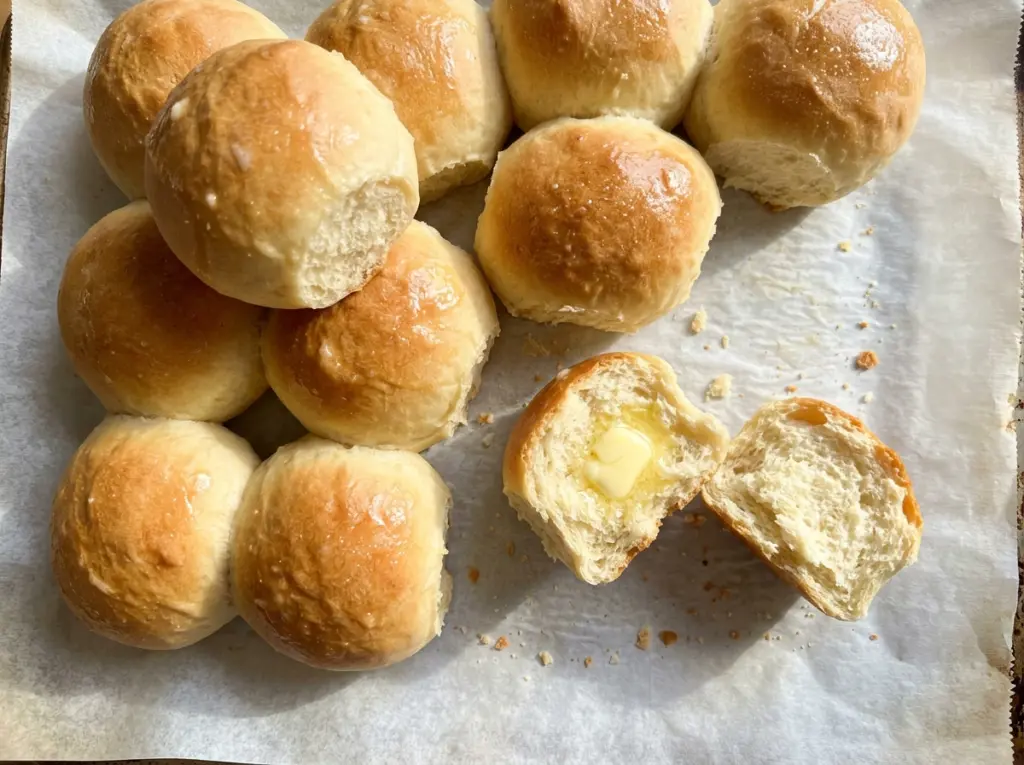
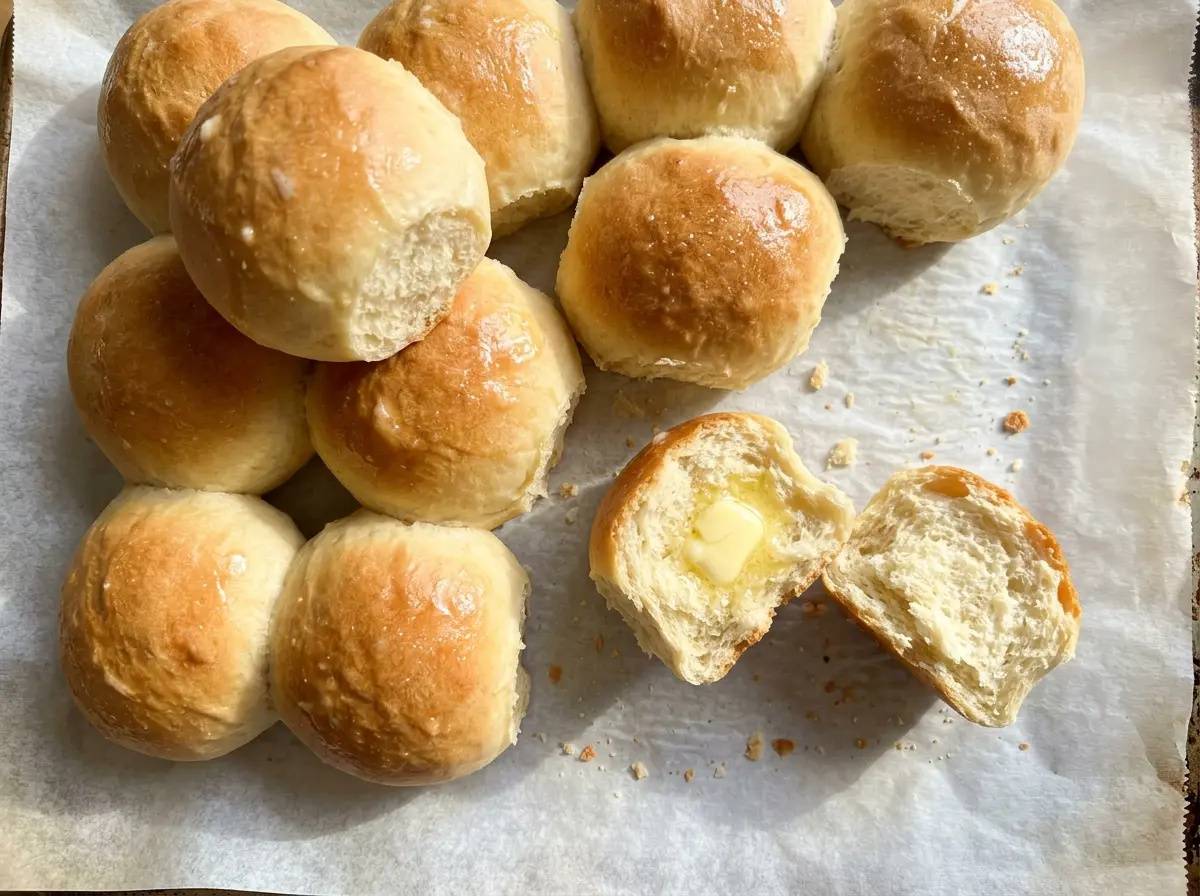
Warm milk, a little sugar, and yeast sit quietly in the bowl for a few minutes, then turn foamy on top. That small change is the first sign these dinner rolls are off to a good start. The dough comes together with an egg and melted butter, and after two rises it bakes into soft rolls with golden tops. I like this straightforward method because it gives you a clear cue at each stage instead of asking you to guess when the dough is ready.
The first rise gives the dough time to expand before you shape it; the second lets the individual balls puff up together in the baking dish. Kneading by hand takes 8 to 10 minutes, but you can feel the dough change from shaggy and uneven to smooth and elastic. Keep extra flour nearby, but add only enough to keep the dough manageable. The finished rolls are tender inside, lightly rich from the butter, and ready for one last brush of butter while they’re still hot.
Kitchen Note
I check the warmed milk with a thermometer instead of guessing by touch. Keep it between 105°F and 110°F; milk that’s too hot can set the yeast back before the dough even gets started.
Save these soft dinner rolls for the next meal that needs a warm, buttery bread basket. The dough rises twice, then bakes together in one 9×13-inch dish.
Why These Rolls Need Two Rises, Not One Long One
It’s easy to think of the two rises as interchangeable waiting time, but they do different jobs. The first rise lets the full mass of dough expand before it’s divided. Then shaping the dough into 12 balls redistributes some of that air and gives each roll a smooth outer surface. The second rise builds the light, puffy texture in the baking dish, where the rolls sit close enough to bake as a soft-sided group.
Skipping the second rise leaves the shaped dough without time to relax and puff back up. On the other hand, the clock isn’t a substitute for looking at the dough: a cool kitchen slows rising, while a warm spot speeds it along. Use the visual cues as your guide. The first rise should leave the dough doubled in size; the shaped rolls should look puffy before they go into the oven. Giving each stage its own time helps these rolls bake up tender rather than tight and heavy.
What the Milk, Egg, and Butter Each Bring to the Dough

- Whole milk — Milk gives the dough richness and helps create a tender crumb. Whole milk is the best fit for the soft, slightly rich result here; 2% milk works in the same amount, though the rolls will be a little less rich.
- Active dry yeast — This yeast needs to be stirred into the warm milk mixture and given a few minutes to foam. That visible activity is useful before you commit the flour and egg to the bowl.
- Egg — The egg enriches the dough and helps hold its structure. Bring it to room temperature first so it blends more readily with the warm milk and melted butter.
- Unsalted butter — Butter adds tenderness and a rounded, buttery taste. It’s divided between the dough and the finish, so save the final tablespoon for brushing over the hot rolls.
- All-purpose flour — All-purpose flour keeps the crumb soft without making the rolls overly chewy. Spoon it into the measuring cup and level it off rather than packing it down; too much flour can leave the dough stiff.
- Kosher salt — Salt keeps the dough from tasting flat and balances the sugar. Stir it in with the flour so it’s distributed through the dough instead of landing in one concentrated spot.
From Foamy Yeast to a Pan of Puffy Rolls
Start with a foamy yeast mixture
Stir the warm milk with the sugar and active dry yeast in a large bowl, then leave it for 5 to 10 minutes. A foamy layer on top tells you the yeast has begun working. Whisk in the egg and 3 tablespoons of melted butter once that cue appears. Stir in the flour and salt until no dry pockets remain and the dough looks shaggy.
Knead until the dough turns smooth and elastic
Move the dough to a lightly floured surface and knead for 8 to 10 minutes. At first it will feel rough and uneven; keep working it until the surface looks smooth and the dough stretches more easily. Add flour a little at a time only when the dough is too sticky to handle. Too much extra flour is the easiest way to make the finished rolls dense.
Let the dough double, then shape 12 balls
Use about half a teaspoon of the oil to grease a bowl, add the dough, and turn it so the surface gets coated. Cover the bowl and leave it in a warm place until the dough has doubled, about 60 to 90 minutes. Grease a 9×13-inch baking dish with the remaining oil. Divide the dough into 12 equal pieces, shape each piece into a ball, and arrange the balls in the dish.
Give the rolls their final rise before baking
Cover the pan and let the rolls rise for 30 to 45 minutes, until they look puffy. Heat the oven to 375°F during this rise so it’s ready when the dough is. Bake for 18 to 22 minutes, until the tops are golden brown. Brush the hot rolls with the remaining tablespoon of melted butter and let them rest for 10 minutes before serving.
Two Simple Ways to Change the Dough
Make the rolls dairy-free
Use unsweetened soy milk in place of the whole milk and dairy-free stick butter in place of the unsalted butter, keeping the same amounts and division. The egg stays in the dough, so this is dairy-free, not vegan. Expect a slightly different richness depending on the brands you use.
Make a less-sweet dinner roll
Use half the granulated sugar for a less sweet roll that leans more savory alongside dinner. The dough will still have sugar to support the yeast, but the baked rolls may brown a little less deeply, so watch for golden tops rather than expecting a dark finish.
Storage and Reheating
- Refrigerator: Not recommended; refrigeration makes bread stale faster. Keep the rolls in an airtight container at room temperature for about 2 days.
- Freezer: Freeze the cooled rolls in an airtight freezer-safe bag or container for up to 2 months. Thaw them before warming.
- Reheating: Warm the rolls in a 300°F oven until heated through. Avoid leaving them uncovered in the oven longer than needed, or the edges can dry out.
Questions That Come Up When Making Dinner Rolls
Dinner Rolls
Ingredients
Equipment
Method
- Stir together the warm milk, sugar, and yeast.
- Let stand for 5–10 minutes, until foamy.
- Whisk in the egg and 3 tablespoons of the melted butter.
- Stir in the flour and salt until a shaggy dough forms.
- Knead the dough on a lightly floured surface for 8–10 minutes, adding only enough flour to keep it manageable, until smooth and elastic.
- Use about 1/2 teaspoon of the oil to grease the bowl.
- Add the dough to the bowl and turn it to coat.
- Cover and let rise in a warm place for 60–90 minutes, until doubled in size.
- Grease a 9x13-inch baking dish with the remaining oil.
- Divide the dough into 12 equal pieces and shape each into a ball.
- Arrange the dough balls in the dish.
- Cover the rolls and let rise for 30–45 minutes, until puffy.
- Heat the oven to 375°F during the rise.
- Bake for 18–22 minutes, until the rolls are golden brown.
- Brush the hot rolls with the remaining 1 tablespoon melted butter.
- Let rest for 10 minutes before serving.




