
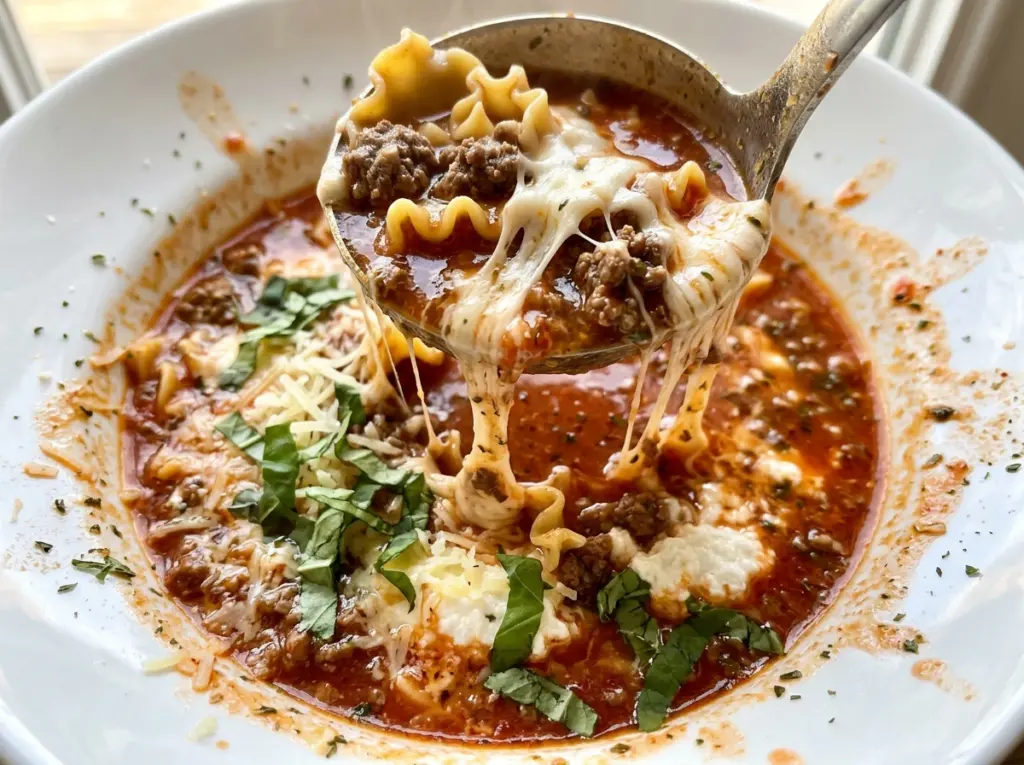
The broth starts bubbling, the broken lasagna noodles go in, and suddenly this smells like the best parts of lasagna without a baking dish in sight. I make Cheesy Lasagna Soup when I want that tomato-and-beef comfort in a bowl, with tender pasta and a cool, creamy spoonful of cheese on top.
Cooking the noodles right in the soup keeps this to one pot, but it does mean they need a little attention. I stir frequently while they simmer so the pieces cook evenly instead of clumping or sticking to the bottom. The broth should stay at a gentle simmer, not a hard boil.
I keep the ricotta, mozzarella, and Parmesan mixture out of the pot until serving. That way each bowl gets its own creamy, cheesy topping, and the leftovers don’t start with all the cheese stirred through the soup. A spoonful melting into the hot tomato broth is exactly right.
Kitchen Note
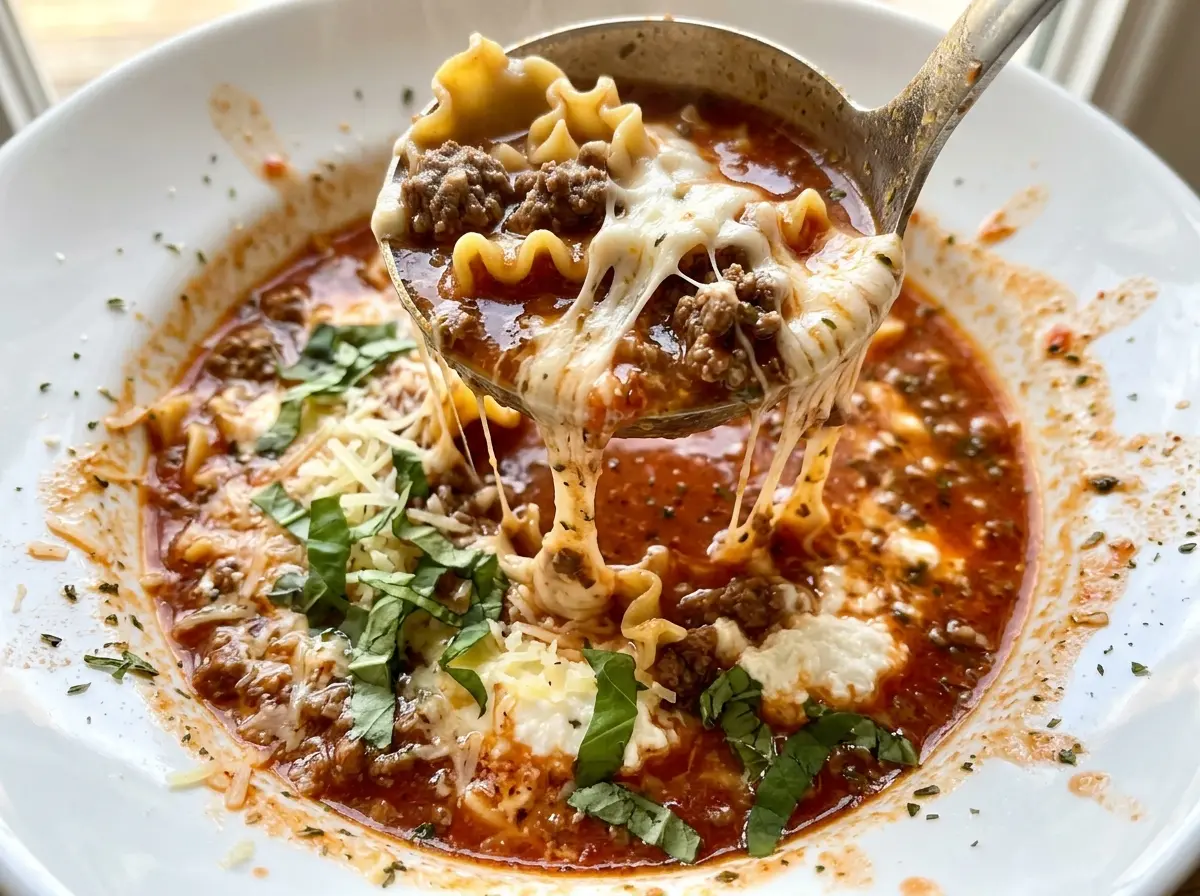
Stir the noodles frequently as they simmer, especially along the bottom of the pot. Broken lasagna pieces like to gather together, and a few extra stirs keep them separate without breaking them up further.
Save Cheesy Lasagna Soup for a one-pot dinner with tender noodles and a creamy three-cheese topping.
Why the Lasagna Noodles Cook in the Soup, Not on the Side
It might seem safer to cook the noodles separately, but this soup is built around letting the pasta simmer directly in the tomato-and-beef broth. The noodles take on that savory liquid as they soften, so each bite tastes connected instead of like plain pasta dropped into a bowl of soup. There’s no extra pot of water to drain, either.
The timing matters because the broth is doing two jobs: it cooks the noodles and becomes the soup you serve. Bring the tomatoes and beef broth to a boil before adding the pasta, then lower the heat to a gentle simmer. Starting with hot liquid gives the noodles a steady cook, while a hard boil can toss the pieces around and make them break apart. Keep the simmer uncovered and stop when the noodles are tender; cooking well past that point leaves them overly soft.
Because the pasta continues to take up liquid as it sits, this soup is at its best soon after the noodles finish cooking. The cheese topping stays separate until the bowls are ready, which keeps the broth clear and the ricotta mixture distinct rather than turning the whole pot creamy.
What the Beef, Tomato, and Cheese Each Bring to the Bowl

- Ground beef — The 85% lean beef gives the broth a meaty base without leaving it overly greasy. Drain excess grease after browning; skipping that step can make the tomato broth feel oily. Leaner ground beef can work, but the soup will have a less rich beef flavor.
- Yellow onion and garlic — The onion softens alongside the beef, while the garlic cooks briefly with the tomato paste and seasoning. Mince the garlic before it goes into the pot so it can be stirred constantly and won’t scorch in the hot oil.
- Tomato paste and crushed tomatoes — Tomato paste concentrates the savory tomato flavor before the liquids go in. Crushed tomatoes provide the body and texture of the broth, so keep both rather than replacing one with more of the other.
- Low-sodium beef broth — It carries the soup and lets the measured kosher salt season it without starting with an already salty base. Regular-sodium broth can make the finished soup saltier than intended, so low-sodium is the better choice here.
- Lasagna noodles — Breaking the noodles into small pieces makes them easy to scoop up with the broth and cheese. Keep the pieces roughly the same 1- to 2-inch size so they cook at a similar pace.
- Ricotta, mozzarella, and Parmesan — Ricotta makes the topping soft and creamy, mozzarella brings the familiar stretchy cheese quality, and Parmesan adds a sharper, salty edge. The three work together; leaving out one changes the balance and texture of the spoonful.
Building the Soup Without Breaking Up the Noodles
Brown the Beef Until the Onion Softens
Heat the olive oil in a 6-quart Dutch oven over medium-high heat, then add the ground beef and diced onion. Break the beef into smaller pieces as it cooks so it browns evenly rather than steaming in one large clump. Cook for 8–10 minutes, until the beef reaches 160°F and the onion is softened. Drain excess grease before moving on.
Cook the Tomato Paste and Seasonings Briefly
Add the minced garlic, tomato paste, Italian seasoning, kosher salt, and black pepper to the pot. Lower the heat to medium and cook for 1 minute, stirring constantly. The paste will coat the beef and onion, and the garlic should smell fragrant. Keep stirring through this short stage so the garlic doesn’t sit against the hot pot and burn.
Bring the Broth to a Boil Before Adding Pasta
Stir in the crushed tomatoes and low-sodium beef broth, then raise the heat to high and bring the mixture to a boil. Add the broken lasagna noodles once the liquid is boiling. Don’t add them while the broth is still warming; a boiling start sets up a more consistent simmering cook.
Simmer Until the Noodles Are Tender, Then Top Each Bowl
Reduce the heat to maintain a gentle simmer and cook uncovered for 12–15 minutes, stirring frequently. Check that the noodles are tender rather than relying only on the clock, since their thickness can affect the timing. While they cook, stir together the ricotta, mozzarella, and Parmesan in a medium bowl. Ladle the soup into bowls and finish each serving with a spoonful of the cheese mixture.
Two Ways to Adapt the Soup Without Losing Its Lasagna Feel
Make It Vegetarian with Vegetable Broth
Leave out the ground beef and replace the beef broth with vegetable broth. Start by softening the diced onion in the olive oil, then add the garlic, tomato paste, and seasonings as usual. The soup will be lighter and less meaty, while the tomato base, noodles, and three-cheese topping keep it hearty.
Turn the Cheese Topping into Creamy Ribbons
For a softer, creamier bowl, stir the cheese mixture into each serving after ladling rather than leaving it as a mound on top. The hot soup loosens the ricotta and melts the mozzarella into ribbons. Keep it to the individual bowls, not the Dutch oven, so the cheese doesn’t disappear into the leftovers.
Storage and Reheating
- Refrigerator: Refrigerate leftovers within 2 hours and keep them covered for 3–4 days. The noodles will absorb broth as they sit, so the soup will be thicker the next day.
- Freezer: The soup can be frozen in airtight freezer-safe containers for up to 2–3 months, but the noodles soften further after thawing. Freeze the soup without the cheese topping when possible, then mix the cheeses fresh for serving.
- Reheating: Warm leftovers gently in a saucepan over medium-low heat, stirring occasionally, or heat a bowl in the microwave in short intervals and stir between them. Reheat until the soup reaches 165°F; avoid a long, hard boil, which can make the noodles mushy.
Questions That Come Up When Making Cheesy Lasagna Soup
Cheesy Lasagna Soup
Ingredients
Equipment
Method
- Heat the olive oil in a 6-quart Dutch oven over medium-high heat; add the ground beef and onion and cook for 8–10 minutes, breaking up the beef, until the beef reaches 160°F and the onion is softened.
- Drain excess grease, then add the garlic, tomato paste, Italian seasoning, salt, and pepper and cook over medium heat for 1 minute, stirring constantly.
- Stir in the crushed tomatoes and beef broth, bring to a boil over high heat, then add the broken lasagna noodles.
- Reduce the heat to maintain a gentle simmer and cook uncovered for 12–15 minutes, stirring frequently, until the noodles are tender.
- Stir together the ricotta, mozzarella, and Parmesan in a medium bowl.
- Ladle the soup into bowls and top each serving with a spoonful of the cheese mixture.