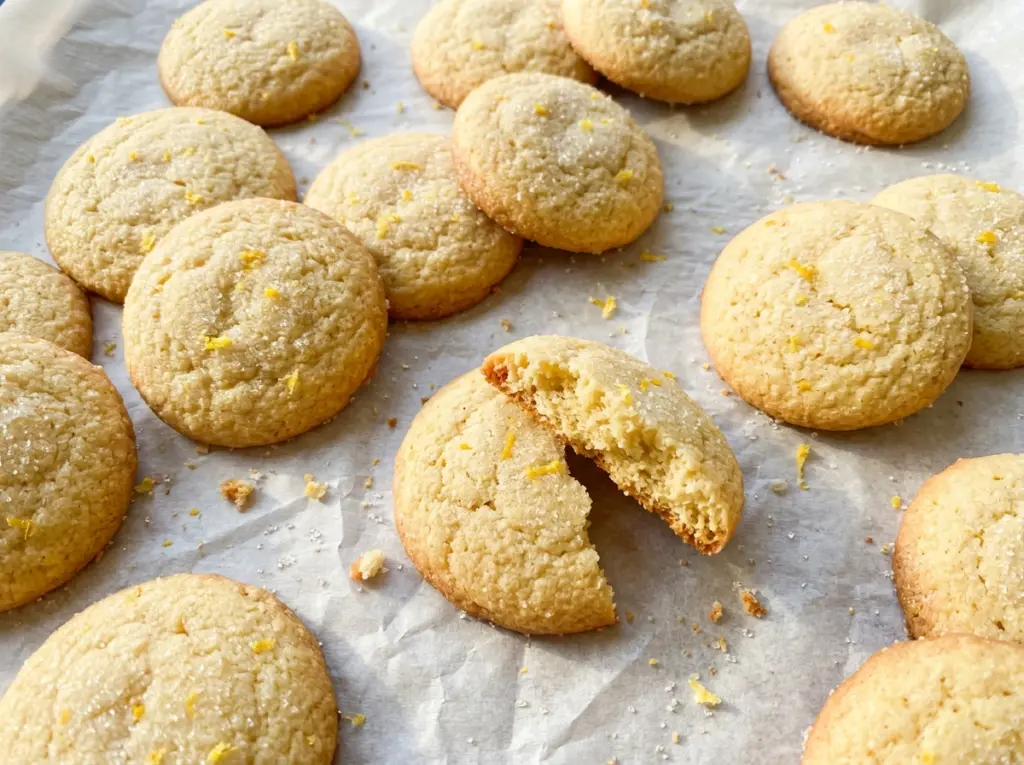
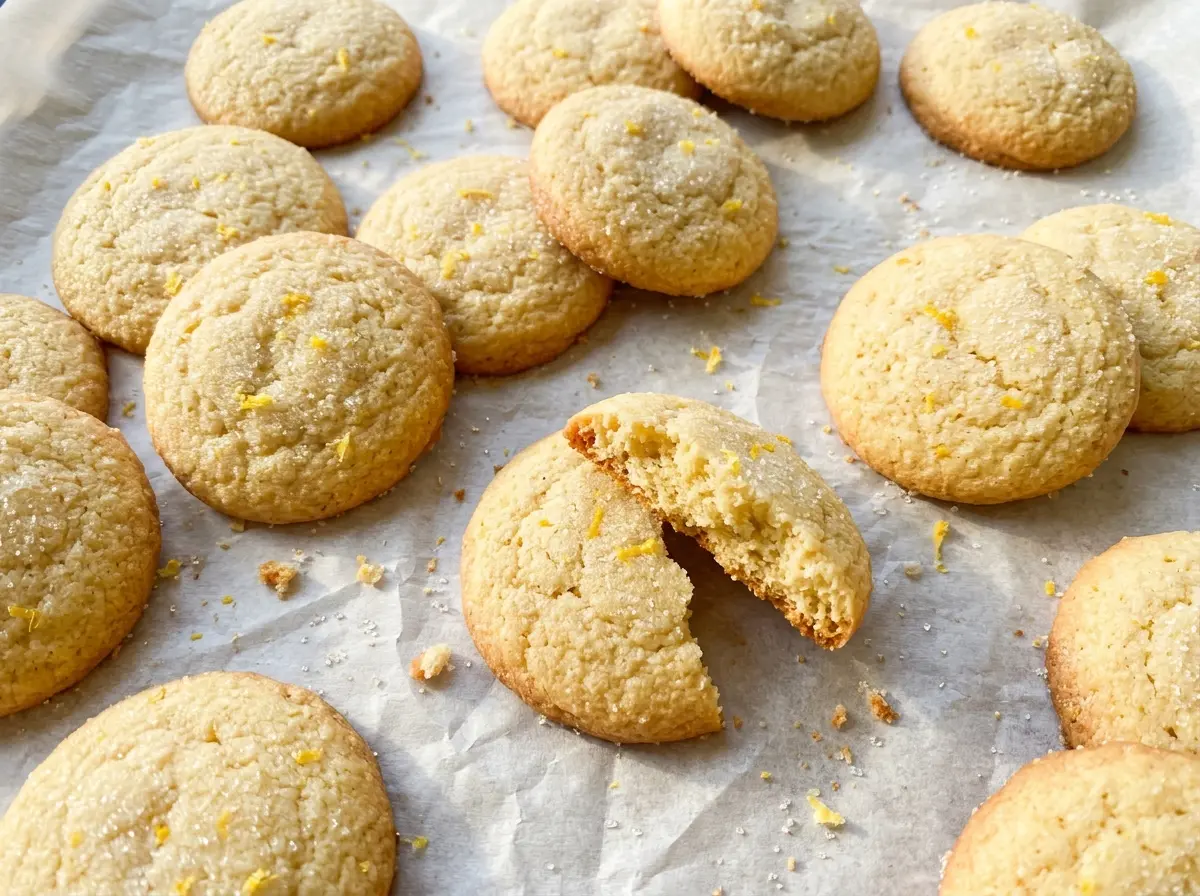
The sugar coating catches the light before these cookies have even cooled, but the edges tell you when to pull the pan: set and lightly golden, while the centers still look a little soft. That contrast is what gives lemon sugar cookies their tender middle instead of a dry, crisp bite.
I use both finely grated lemon zest and fresh lemon juice here, but they do different jobs. The zest brings the fragrant lemon aroma; a little juice gives the dough a brighter, sharper edge without making it taste like lemon candy.
A short chill makes the dough easier to portion and roll in sugar, and the cookies bake up with a delicate crackle around the edges. You’ll get 24 cookies with a sunny lemon flavor and a soft, sugar-crusted finish.
Kitchen Note
Give the dough the full 30-minute chill before scooping. It firms up enough to portion cleanly and roll in sugar, so don’t try to fix soft dough by adding extra flour.
Save these lemon sugar cookies for a bright, tender cookie with crisp sugar edges and fresh lemon flavor.
Why an Extra Scoop of Flour Can Make These Cookies Bready
Flour is easy to overmeasure when you dip a measuring cup straight into the bag. The cup packs the flour down, and a little extra is enough to make a soft cookie dough bake up dense instead of tender. Spoon flour into the measuring cup, then level the top with a straight edge; don’t tap or shake the cup to fit more in.
This matters especially in a dough with fresh lemon juice. The dough should hold together once mixed, but it shouldn’t need a dusting of extra flour to become workable. If it feels soft when you first finish mixing, let the chill do its job rather than changing the balance of the dough. Measuring lightly also helps the cookies spread as intended, so you get defined edges and a soft center instead of a thick, bready cookie.
What Gives These Cookies Their Fresh Lemon Flavor

- Lemon zest — Finely grated zest carries the strongest lemon aroma, so use fresh lemons and grate only the yellow outer skin. The white pith underneath tastes bitter. A fine grater helps the zest distribute through the dough instead of leaving large chewy pieces.
- Fresh lemon juice — Fresh juice keeps the citrus flavor clean and lively. Bottled juice works in a pinch for the juice portion, but it can’t replace the zest that gives the cookies their fragrant lemon character.
- Unsalted butter — Softened butter creams smoothly with the sugar and gives the cookies their tender texture. A standard grocery-store butter is fine; let it soften until it yields when pressed but isn’t shiny or melting.
- Granulated sugar — Sugar sweetens the dough and helps create the light coating on the outside. Keep the coating sugar separate from the sugar creamed with the butter so each portion gets an even roll before baking.
- All-purpose flour — Regular all-purpose flour gives the dough enough structure to hold its shape while keeping the centers soft. Cake flour makes the dough more delicate, while bread flour can push the texture in a chewier direction.
- Egg and vanilla — A room-temperature egg blends more readily into the creamed butter, and vanilla rounds out the citrus. Use pure or imitation vanilla extract according to what you keep on hand; either works in this dough.
Mixing and Baking the Dough Without Losing Its Tender Texture
Whisk the dry ingredients evenly
Whisk the flour, baking powder, and salt together in a medium bowl until the baking powder is dispersed throughout. This keeps the cookies from getting unevenly leavened spots. Set the bowl aside while you cream the butter and sugar.
Cream the butter and sugar until fluffy
Beat the softened butter with 1 cup of the granulated sugar in a large bowl using an electric mixer on medium speed. Give it about 2 minutes, stopping when the mixture looks lighter and fluffy rather than simply blended. Scrape down the bowl so no firm butter is hiding along the sides.
Add the egg and lemon
Beat in the egg, lemon zest, lemon juice, and vanilla until combined. Scrape the bowl as needed; streaks of butter at the bottom won’t incorporate evenly once the flour goes in. The mixture may look slightly textured after the juice is added, but it should come together as you mix.
Bring the dough together and chill
Add the flour mixture and mix on low just until no dry streaks remain. Stop there; continued mixing after the flour disappears can make cookies less tender. Cover the bowl and chill the dough for 30 minutes while you heat the oven to 350°F and line two large baking sheets with parchment paper.
Roll, bake, and cool
Put the remaining 1/4 cup sugar in a small bowl. Scoop the dough into 1 1/2-tablespoon portions, roll each portion in sugar, and arrange them about 2 inches apart on the prepared sheets. Bake at 350°F for 10 to 12 minutes, until the edges are set and lightly golden while the centers still look slightly soft. Cool the cookies on the baking sheets for 5 minutes, then move them to a wire rack to cool completely.
Easy Ways to Change the Citrus or Make a Gluten-Free Batch
Swap the lemon for lime
Use the same amounts of finely grated lime zest and fresh lime juice in place of the lemon. The cookies will taste sharper and more floral, with the same sugar-coated finish.
Use a cup-for-cup gluten-free flour blend
Replace the all-purpose flour with the same volume of a gluten-free baking blend labeled for direct 1:1 substitution. The cookies may have a slightly more delicate bite, so let them rest on the baking sheet for the full cooling time before moving them.
Turn up the lemon aroma
For a bolder citrus scent, increase the finely grated lemon zest to 3 tablespoons and keep the lemon juice the same. The extra zest boosts the aroma without adding much liquid to the dough.
Storage and Reheating
- Room temperature: Store completely cooled cookies in an airtight container for up to 4 days. The sugar coating softens a little as they sit, while the centers stay tender.
- Freezer: Freeze cooled cookies in an airtight container for up to 2 months, with parchment between layers to protect the sugar coating. Thaw at room temperature while still covered.
- Reheating: These cookies are good at room temperature. For a warm cookie, microwave one for about 5 seconds; longer heating can make it too soft and sticky.
Questions That Come Up When Baking Lemon Sugar Cookies
Lemon Sugar Cookies
Ingredients
Equipment
Method
- Whisk the all-purpose flour, baking powder, and salt together in a medium bowl.
- Beat the softened butter and 1 cup of the granulated sugar in a large bowl with an electric mixer on medium speed until light and fluffy, about 2 minutes.
- Beat in the egg, lemon zest, lemon juice, and vanilla extract until combined, scraping down the bowl as needed.
- Add the flour mixture and mix on low just until no dry streaks remain.
- Cover and chill the dough for 30 minutes.
- Heat the oven to 350°F.
- Line two large baking sheets with parchment paper.
- Put the remaining 1/4 cup granulated sugar in a small bowl.
- Scoop the dough into 1 1/2-tablespoon portions.
- Roll each portion in the remaining sugar.
- Arrange the portions about 2 inches apart on the baking sheets.
- Bake at 350°F for 10 to 12 minutes, until the edges are set and lightly golden while the centers still look slightly soft.
- Let the cookies cool on the baking sheets for 5 minutes.
- Transfer the cookies to a wire rack to cool completely.