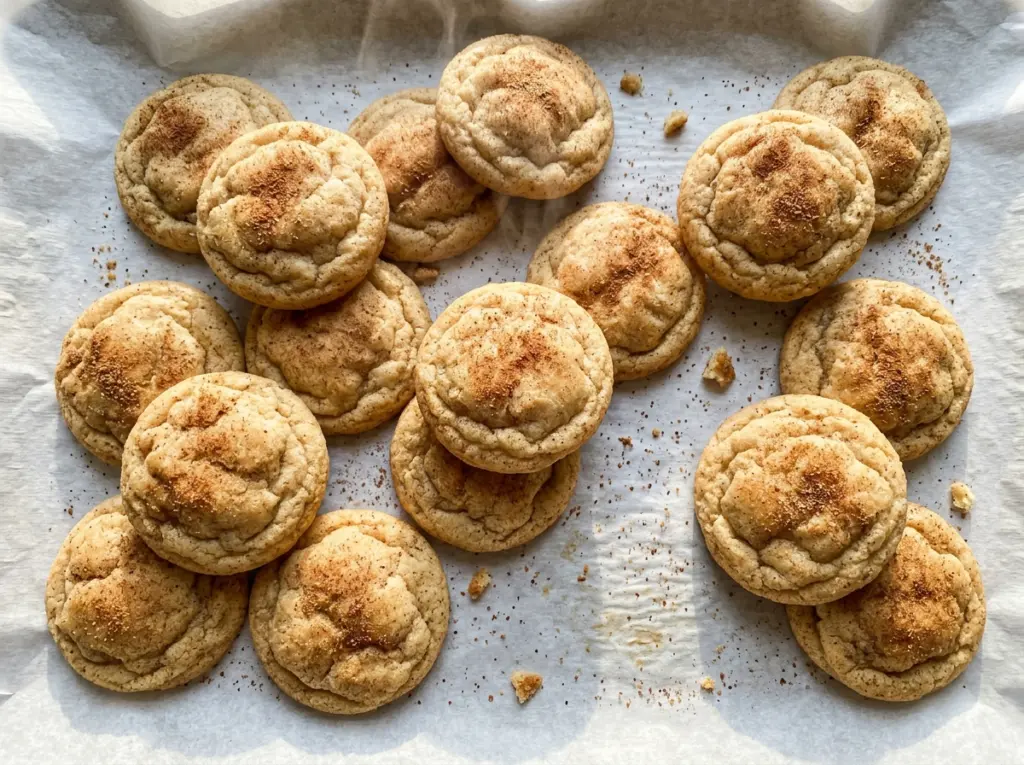
When these cookies come out of the oven, the edges look settled but the centers still seem a little too soft to touch. That’s exactly the moment to pull them. They finish setting on the baking sheet, leaving you with the tender middle and cinnamon-sugar shell I want from eggnog snickerdoodles.
I make the dough with eggnog mixed right in, so the holiday flavor reaches beyond the coating. A short chill makes the dough easier to roll and helps the cookies hold their shape as they bake. The batch makes 24, which is just enough for a cookie tin without leaving you with an unwieldy pile of dough. Each one has a gentle nutmeg note and that familiar snickerdoodle tang.
Kitchen Note
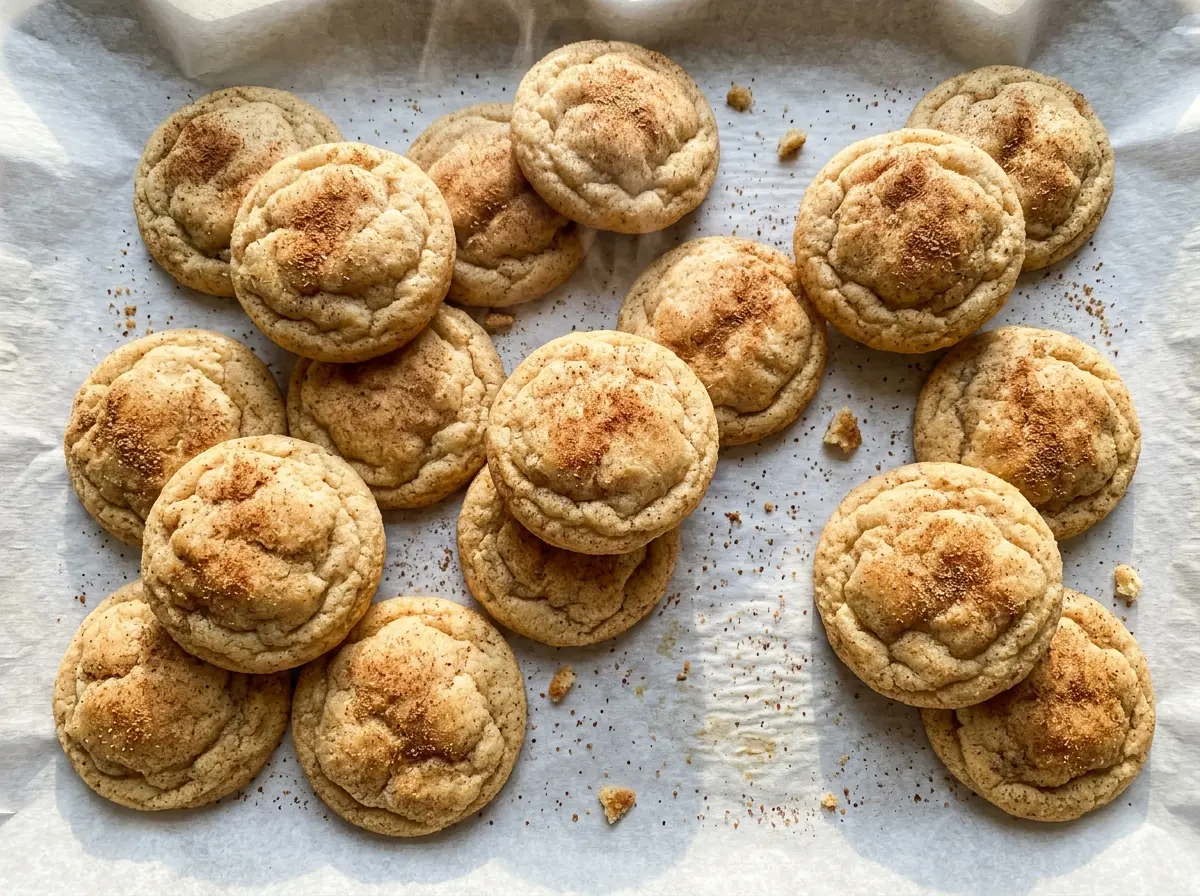
With two pans in the oven, switch their positions and rotate them halfway through baking. That small adjustment helps the cookies on both racks bake evenly instead of letting one tray get ahead.
Save these eggnog snickerdoodles for a batch with soft centers, cinnamon sugar, and a little nutmeg in every bite.
Why Eggnog Goes Into the Dough, Not Just the Coating
A cinnamon-sugar coating gives a snickerdoodle its first familiar scent, but it can’t carry the eggnog flavor on its own. Mixing eggnog into the dough spreads that flavor through the cookie, while cinnamon and nutmeg on the outside provide a fragrant finish in each bite. The balance matters: the coating stays warmly spiced, and the cookie itself still tastes like a snickerdoodle rather than a plain sugar cookie wearing a holiday crust.
Eggnog also adds liquid to a dough that needs enough structure to roll into neat balls. That’s why I chill it before portioning instead of trying to compensate with extra flour. More flour would make the baked cookies denser and could mute the tender texture. Give the dough its full chill, then roll it while it’s cool enough to handle; you’ll get tidy rounds that take an even coat of spiced sugar.
The cream of tartar keeps the snickerdoodle character in the mix. It brings the slight tang that balances the sweetness and works with the baking soda to give the cookies lift. Without it, you’d still have a spiced cookie, but you’d lose part of what makes a snickerdoodle taste distinct.
What the Eggnog, Butter, and Spice Each Bring

- Eggnog — Choose one you enjoy drinking; its flavor comes through in the dough, so a bland carton makes a less fragrant cookie. Stir it before measuring if it has separated. Dairy-free eggnog works as a replacement, though the finished cookies will reflect the flavor of that product.
- Unsalted butter — Softened butter creams smoothly with the sugar and gives the dough its rich texture. Let it soften until you can press a shallow dent into it, but don’t use melted or oily butter. Unsalted butter also lets the measured salt stay in balance.
- Cream of tartar — This is the ingredient that gives snickerdoodles their signature slight tang. It’s worth keeping on hand for this style of cookie; there isn’t a direct swap that reproduces both its flavor and its role alongside baking soda.
- Cinnamon and nutmeg — The nutmeg makes the coating read as eggnog-inspired, while cinnamon supplies the familiar snickerdoodle warmth. Freshly opened spices smell brighter, but ordinary ground spices work well; break up any clumps so the coating is even.
- All-purpose flour — Measure it without packing it down. Too much flour can make the dough stiff and the cookies dry, so fluff the flour first, spoon it into the measuring cup, and level the top.
From Fluffy Butter to Soft Centers: The Cookie Process
Cream the Butter and Sugar Until Light
Whisk the flour, cream of tartar, baking soda, and salt together in a medium bowl so the leavening is distributed before it reaches the dough. Set aside the portion of sugar for the coating. Beat the softened butter with the remaining sugar on medium speed for 2 to 3 minutes, until it looks lighter and fluffy rather than dense. If the butter is still cold, it won’t blend evenly; if it’s melted, the mixture won’t become fluffy.
Mix the Dough and Give It a Chill
Beat in the egg, eggnog, and vanilla until combined. Add the flour mixture and mix on low just until no dry streaks remain; stop as soon as the flour disappears, because extended mixing can make the cookies tougher. Cover the bowl and refrigerate the dough for 30 minutes. Chilling firms the soft dough so it’s easier to portion and coat.
Roll and Coat Each Cookie
Heat the oven to 350°F with racks in the upper and lower thirds, and line two large baking sheets with parchment paper. Stir the reserved sugar with the cinnamon and nutmeg in a shallow bowl. Roll the dough into 2-tablespoon balls and turn each ball in the mixture until coated. Arrange 12 on each sheet, leaving about 2 inches between them so they have room to spread.
Bake Until the Centers Still Look Soft
Bake both sheets for 10 to 12 minutes, switching their positions and rotating them halfway through. Look for set edges and centers that are puffed and still slightly soft; don’t wait for the middles to look completely firm in the oven. Leave the cookies on the baking sheets for 5 minutes, then move them to a wire rack to cool. The brief rest on the hot sheets lets the centers finish setting without baking them until dry.
Ways to Adapt These Eggnog Snickerdoodles
Make Them Dairy-Free
Use dairy-free stick-style butter in place of the unsalted butter and dairy-free eggnog in place of regular eggnog. Choose a baking butter that softens and creams like dairy butter; the flavor will depend on the eggnog you use, and the texture may be a little different from the original.
Use a Gluten-Free Flour Blend
Replace the all-purpose flour with a cup-for-cup gluten-free blend made for baking. Choose one that already includes a binder such as xanthan gum, and mix only until the dry streaks disappear. The cookies may have a slightly different crumb, but the blend lets you keep the same spiced-sugar coating and shaping method.
Give the Coating More Nutmeg
For a more pronounced eggnog-style spice, increase the nutmeg and use less cinnamon in the coating. Keep both spices in the mixture so you still get the familiar cinnamon warmth, with nutmeg more noticeable at the first bite.
Storage and Reheating
- Refrigerator: Store baked cookies in an airtight container for up to 1 week; refrigeration can make them firmer, so let them come to room temperature before serving.
- Freezer: Freeze fully cooled cookies in an airtight container for up to 2 months. Thaw them at room temperature in the container to limit condensation on the sugar coating.
- Reheating: These cookies are best brought back to room temperature rather than reheated. Extra heat can melt the coating and dry the edges.
Questions That Come Up While Baking Eggnog Snickerdoodles
Eggnog Snickerdoodles
Ingredients
Equipment
Method
- Whisk the flour, cream of tartar, baking soda, and salt in a medium bowl.
- Set aside 1/4 cup of the granulated sugar for the coating.
- In a large bowl, beat the butter with the remaining 1 1/2 cups sugar on medium speed until light and fluffy, 2 to 3 minutes.
- Beat in the egg, eggnog, and vanilla until combined.
- Mix in the flour mixture on low just until no dry streaks remain.
- Cover and refrigerate the dough for 30 minutes.
- Heat the oven to 350°F with racks in the upper and lower thirds, and line two large baking sheets with parchment paper.
- Stir the reserved sugar, cinnamon, and nutmeg together in a shallow bowl.
- Roll the dough into 2-tablespoon balls and coat each in the sugar mixture.
- Arrange 12 balls on each baking sheet, spacing them about 2 inches apart.
- Bake both sheets for 10 to 12 minutes, switching their positions and rotating them halfway through, until the edges are set and the centers look puffed and slightly soft.
- Cool the cookies on the baking sheets for 5 minutes.
- Transfer the cookies to a wire rack to cool.