
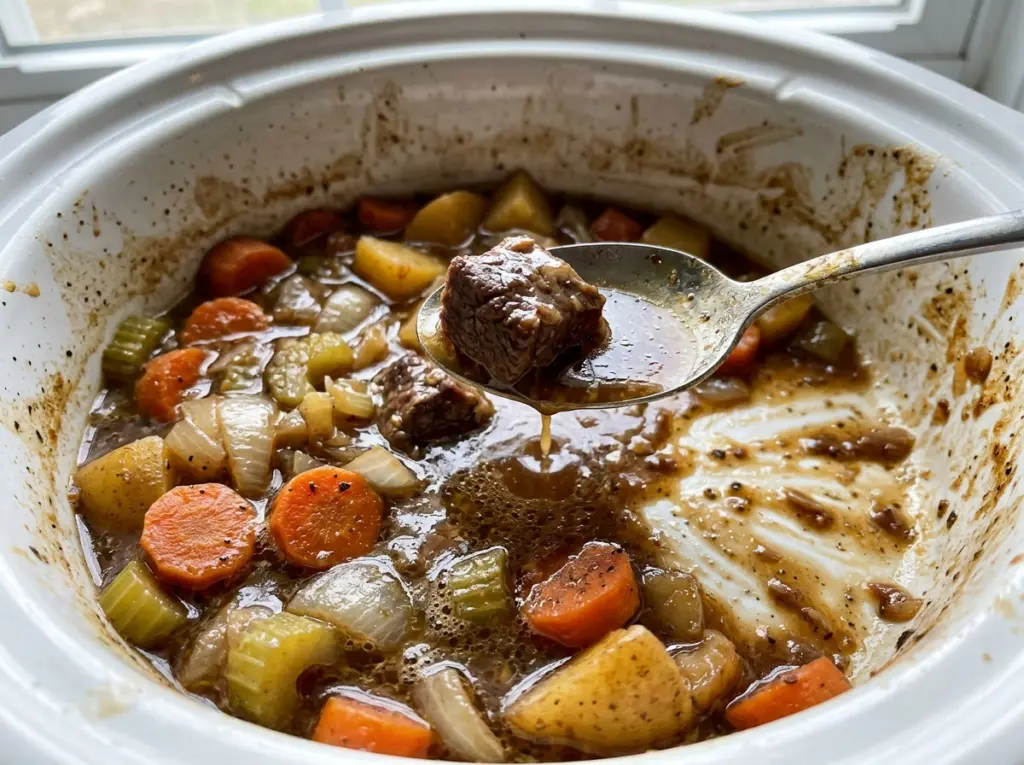
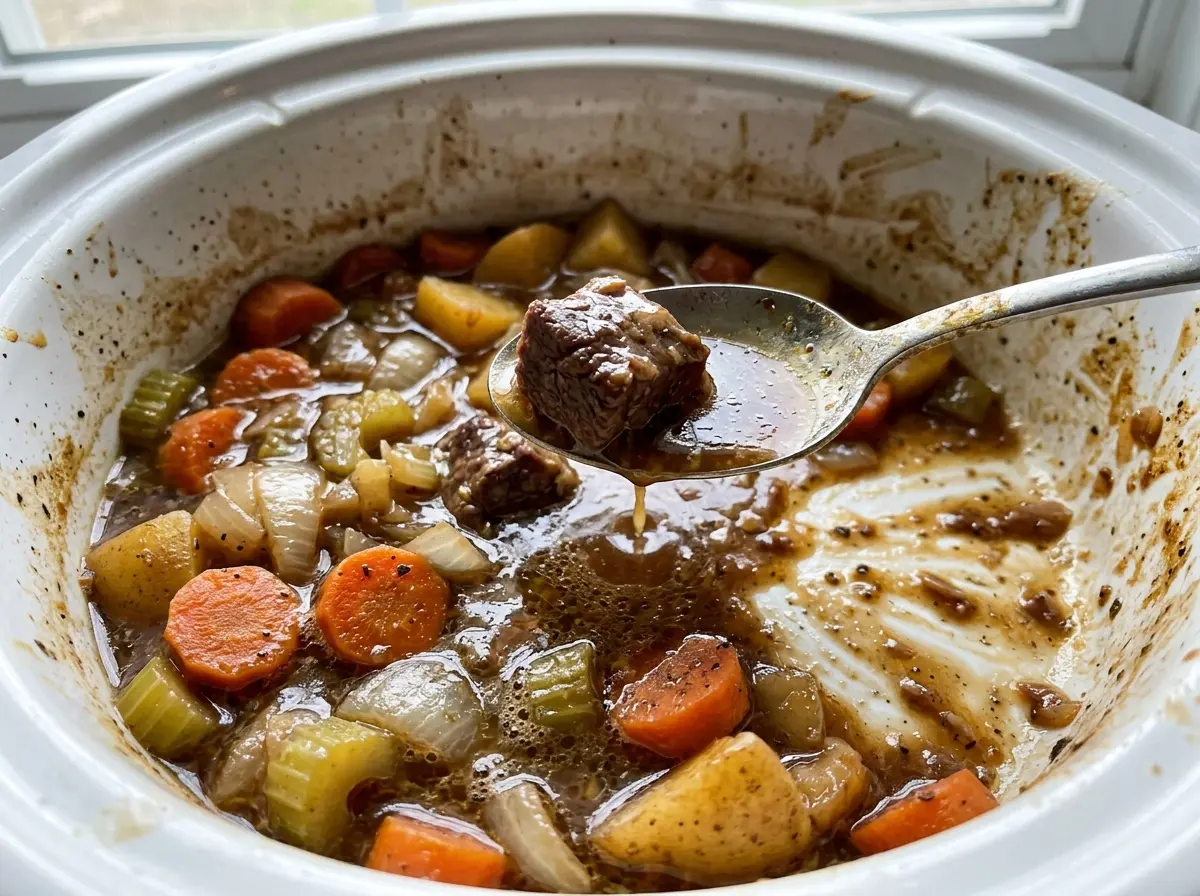
When the lid comes off, the beef should give way easily to a fork and the vegetables should still hold their shape. That balance is what I want from Crock Pot Beef Stew: tender chuck, soft potatoes, and a broth that clings to the spoon instead of pooling thinly at the bottom of the bowl.
I brown the beef in batches before it goes into the slow cooker. It takes a little extra time, but the browned bits left in the skillet become part of the broth when I scrape them up with the liquid. Tomato paste adds a deeper, rounded taste, and a quick cornstarch slurry thickens the stew at the end without making the vegetables cook down for hours.
The slow cooker handles the long, gentle cooking while I get on with the day. By dinnertime, the beef is fork-tender and the carrots and Yukon Gold potatoes have soaked up the savory broth.
Kitchen Note
Brown the beef in batches, even if that means taking a few turns at the skillet. When the pan is crowded, the meat steams instead of browning, and those deep, savory bits are what give the stew its head start.
Save Crock Pot Beef Stew for a hands-off dinner with fork-tender beef, soft vegetables, and a broth thickened right before serving.
Why Slow Cooker Stew Needs Its Thickening at the End
A slow cooker keeps moisture inside the pot. Unlike a stew simmering uncovered on the stove, the broth doesn’t have much chance to reduce as it cooks, so a long cooking time alone won’t necessarily give you a thick, clingy texture. If the stew looks more like broth than gravy when the beef and vegetables are tender, that’s normal—not a sign that anything went wrong.
I wait until the end to thicken it because the beef and vegetables need the full cooking time to turn tender. A smooth mixture of cornstarch and cold water thickens the cooking liquid during a short stretch on HIGH, without asking the potatoes and carrots to simmer longer. Whisk the slurry until no dry cornstarch remains before it goes into the cooker; that gives it a chance to disperse evenly instead of leaving little starchy lumps.
This timing also gives you a clear texture cue: after the final covered cook, the broth should look glossier and lightly coat a spoon. It will still be stew, not a stiff gravy, and it will continue to settle as you ladle it into bowls.
Why Chuck, Yukon Golds, and Tomato Paste Belong in This Pot

- Beef chuck — Chuck has enough connective tissue to become tender during the long, gentle cook. Keep the pieces close to the same size so they finish at a similar pace; leaner beef won’t give the stew the same rich, tender bite.
- Yukon Gold potatoes — Their creamy texture suits stew, and they hold their shape well when cut into even pieces. There’s no need to peel them for this recipe; scrub the skins and cut away any blemishes.
- Carrots and celery — These build the vegetable base and bring their own sweetness and savoriness to the broth. Cut the carrots and potatoes to the specified 1-inch size and the celery smaller, as directed, so the vegetables cook through without disappearing.
- Tomato paste, broth, and Worcestershire sauce — Together, they give the cooking liquid savory depth and a gentle tang. Low-sodium broth leaves room for the seasoned beef and Worcestershire to contribute flavor without making the broth taste overly salty.
- Cornstarch — Cornstarch thickens the finished liquid without needing to cook a flour-based roux first. Use cold water for the slurry; warm water can make the starch harder to whisk smooth.
- Dried thyme and bay leaves — These add a quiet herbal note while the stew cooks. Remember to lift out the bay leaves before serving; they season the pot but aren’t meant to be eaten.
Build the Stew in the Skillet Before the Slow Cooker Takes Over
Brown the Chuck in Batches
Pat the beef dry, season it with kosher salt and black pepper, then brown it in vegetable oil in a 12-inch skillet over medium-high heat. Work in batches so the pieces have room to make contact with the pan. The full browning takes about 8–10 minutes total; look for browned surfaces, not gray, steamed edges. Transfer the beef to the 6-quart slow cooker.
Turn the Skillet Bits into Broth
Add the chopped onion to the same skillet and cook it for 3 minutes, stirring. Stir in the minced garlic and tomato paste and cook for 30 seconds, just until fragrant. Pour in the beef broth, Worcestershire sauce, and dried thyme, then add the bay leaves. Scrape the browned bits from the bottom of the pan as the liquid loosens them; don’t leave that concentrated flavor behind.
Layer the Vegetables and Set the Cook
Add the potatoes, carrots, and celery to the slow cooker with the beef, then pour the broth mixture over everything. Cover and cook on LOW for 8–9 hours or HIGH for 4–5 hours. The stew is ready for its final step when the beef is fork-tender and the vegetables are tender. If the beef still resists the fork, give it more time within the cooking window rather than rushing to thicken the broth.
Thicken and Finish
Whisk the cornstarch and cold water in a small bowl until the mixture is smooth, then stir it into the stew. Cover and cook on HIGH for 15–20 minutes, until the broth thickens. Keep the lid on during this short finish so the cooker can heat the slurry properly. Remove the bay leaves before serving.
Two Practical Ways to Adapt This Beef Stew
Make the Same Stew Gluten-Free
Choose certified gluten-free low-sodium beef broth and Worcestershire sauce, keeping the same amounts, and use cornstarch for the thickener. The stew keeps its savory, hearty character; check that both packaged products are certified gluten-free, since formulations vary.
Leave Out the Celery
For a celery-free pot, omit the celery ribs and leave the rest of the ingredients and method unchanged. The broth will lose some of its familiar aromatic depth, but the onion, garlic, thyme, and Worcestershire still give it a savory base.
Storage and Reheating
- Refrigerator: Refrigerate leftovers in shallow, airtight containers within 2 hours and use them within 3–4 days. The potatoes will soften a little as they sit.
- Freezer: Freeze in airtight portions for up to 2–3 months. The potatoes may be softer after thawing, but the stew freezes well overall.
- Reheating: Reheat gently in a saucepan over medium-low heat, stirring occasionally, until it reaches 165°F. Avoid a hard boil, which can break up the softened potatoes.
Questions That Come Up While the Stew Cooks
Crock Pot Beef Stew
Ingredients
Equipment
Method
- Pat the beef dry and season it with the salt and pepper.
- Heat the oil in a 12-inch skillet over medium-high heat.
- Brown the beef in batches, about 8–10 minutes total, then transfer it to a 6-quart slow cooker.
- Add the onion to the skillet and cook for 3 minutes, stirring.
- Add the garlic and tomato paste and cook for 30 seconds.
- Pour in the broth, Worcestershire sauce, and thyme, add the bay leaves, and scrape up the browned bits.
- Add the potatoes, carrots, and celery to the slow cooker.
- Pour the broth mixture over the vegetables and beef.
- Cover and cook on LOW for 8–9 hours or HIGH for 4–5 hours, until the beef is fork-tender and the vegetables are tender.
- Whisk the cornstarch and cold water in a small bowl until smooth.
- Stir the cornstarch mixture into the stew.
- Cover and cook on HIGH for 15–20 minutes, until thickened.
- Remove the bay leaves before serving.