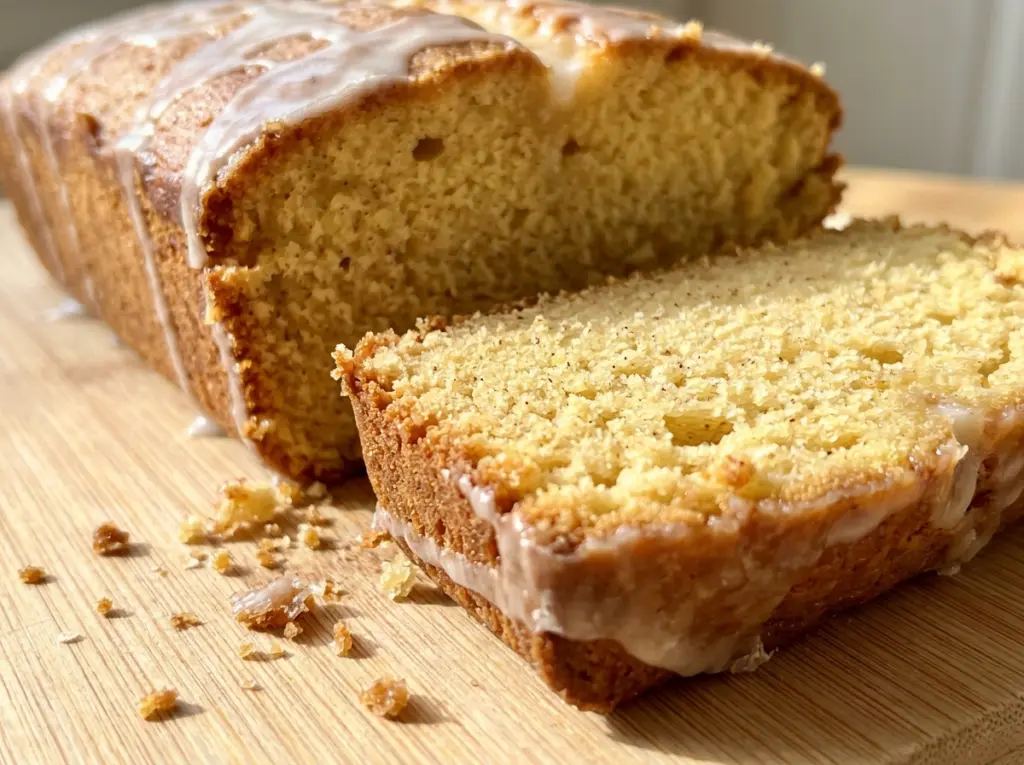
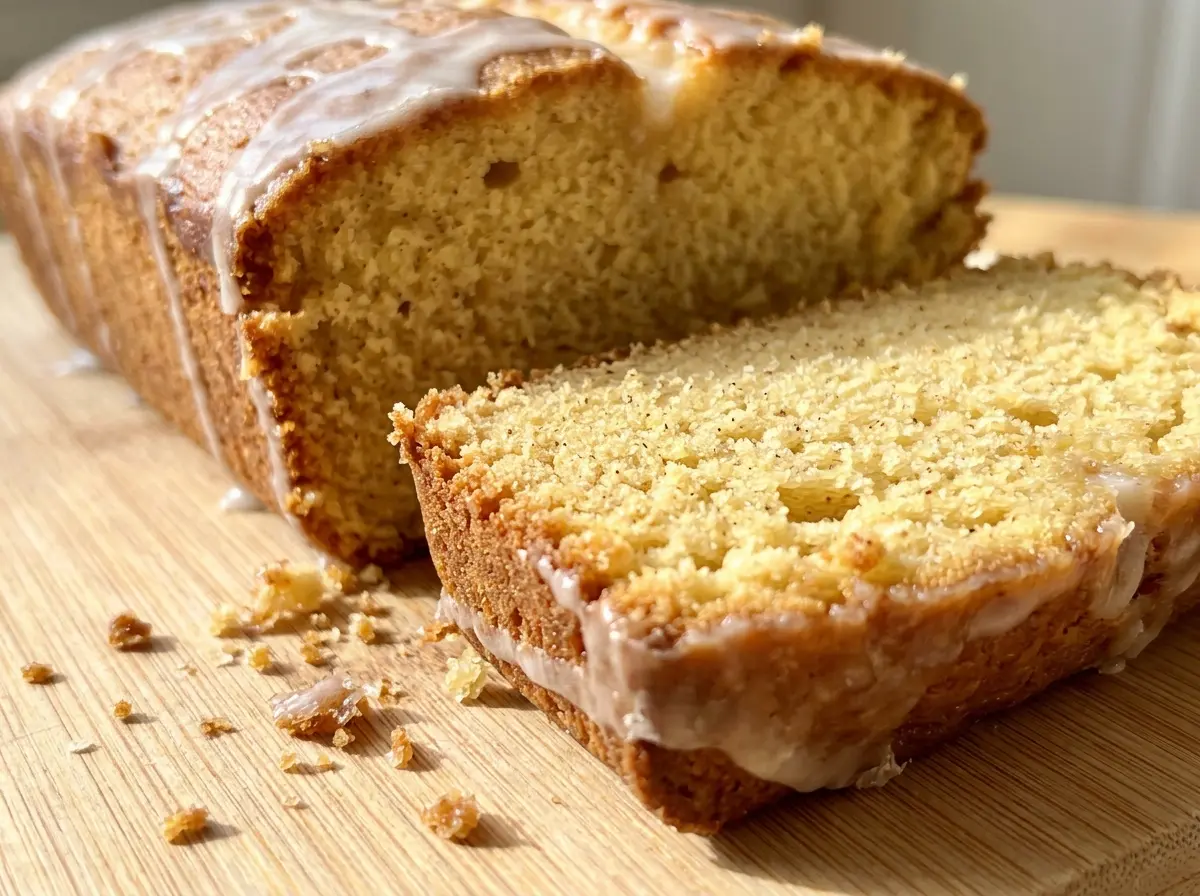
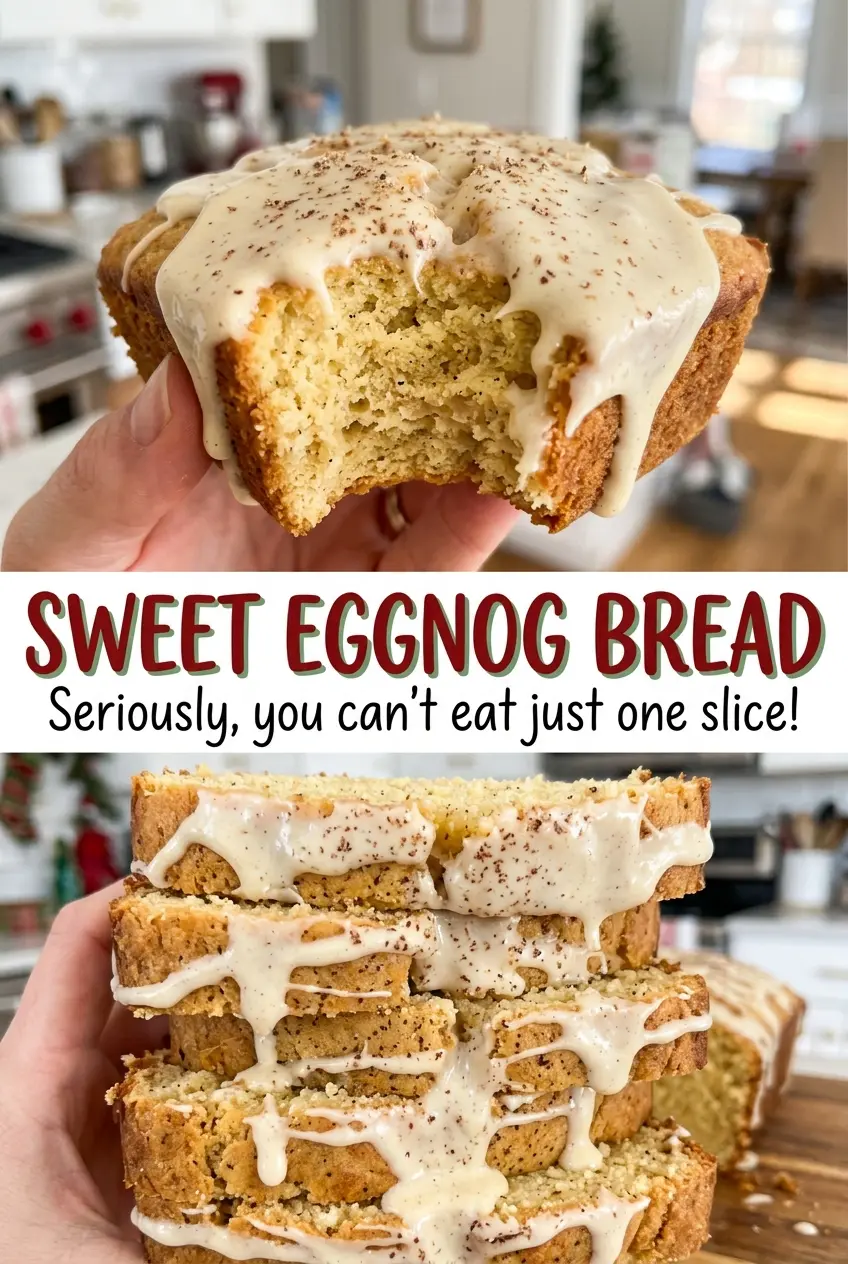
The kitchen starts to smell like nutmeg before this loaf has even gone into the oven. The batter is quick to put together, but the first time I made it, I kept stirring because I wanted every bit of flour to disappear. That extra mixing left me with a tighter crumb than I wanted. Now I stop as soon as the dry streaks are gone, and this sweet eggnog bread comes out tender with a lightly golden top.
Eggnog brings more than its familiar spice to the batter: it gives the loaf richness and sweetness, too. I pair it with nutmeg and vanilla, then let the simple mixing do its job without working the flour any longer than necessary. A toothpick with a few moist crumbs is the cue to pull the loaf from the oven; waiting for it to come out completely clean can leave the edges drier than they need to be. Once cooled and sliced, the bread has a soft, close crumb and a gentle eggnog warmth.
Kitchen Note
Give the loaf the full 10 minutes in its pan before turning it out. That short rest lets it firm up enough to release without breaking along the edges.
Why the Eggnog’s Sweetness Isn’t a Reason to Cut the Sugar
Eggnog already tastes sweet, so reducing the granulated sugar might seem like an easy adjustment. In a loaf like this, though, sugar does more than make the bread taste sweet. It helps the crumb stay tender and contributes to the golden surface as the loaf bakes. Changing it can shift the texture as well as the sweetness, and the eggnog’s own sweetness varies from brand to brand.
I keep the balance between the measured sugar and the eggnog intact, then rely on the nutmeg and vanilla to round out the flavor. That keeps the loaf from tasting flat without asking one ingredient to do all the work. If your eggnog tastes sweeter or more strongly spiced than another brand, expect a small flavor difference in the finished bread, not a reason to change the flour or sugar. The result should taste gently sweet, with the eggnog still easy to recognize.
What Each Ingredient Brings to This Eggnog Loaf
- All-purpose flour — It gives the loaf enough structure to rise and slice cleanly. A standard store-brand flour works well; the important part is not to keep stirring once it has been mixed with the wet ingredients. I don’t recommend swapping in a different flour here, since it can change how much liquid the batter needs.
- Granulated sugar — Its neutral sweetness lets the eggnog, nutmeg, and vanilla come through without adding another flavor. Regular granulated sugar is the right choice; brown sugar would bring extra moisture and a more pronounced molasses note, changing the crumb and taste.
- Baking powder — This is the loaf’s lift, so use baking powder rather than baking soda. If yours has been open a long time, check that it still bubbles when stirred into hot water before baking day; weak leavening can leave a dense loaf.
- Ground nutmeg — Nutmeg gives the bread its warm, eggnog-like aroma. Freshly ground nutmeg has a brighter scent than a jar that has been open for months, but ordinary ground nutmeg works well. Keep the amount measured rather than adding extra by instinct, since it can quickly dominate the loaf.
- Large eggs — Eggs help bind the batter and support its structure as it bakes. Use large eggs for the intended balance; smaller or larger eggs change the amount of moisture. There isn’t a simple swap that preserves the same texture in this particular loaf.
- Eggnog — Eggnog provides moisture, richness, sweetness, and the defining flavor in one ingredient. Choose one you enjoy drinking; an especially spice-forward or sweet version will be more noticeable in the bread. Its consistency should be pourable so it blends into the wet ingredients smoothly.
- Unsalted butter and vanilla extract — Butter gives the crumb richness, while vanilla softens the edges of the nutmeg and eggnog flavor. A standard vanilla extract is fine, and the butter doesn’t need to be a specialty brand. Let the melted butter cool before whisking it with the eggs so the mixture stays smooth.
Mixing and Baking the Loaf Without a Tough Crumb
Prepare the Pan Before Mixing
Heat the oven to 350°F and grease a 9×5-inch loaf pan before you start combining ingredients. Having the pan ready means the batter can go straight into the oven once it is mixed. Coat the inside well, including the corners where a loaf can cling. Set the pan aside while you prepare the two bowls.
Whisk the Dry and Wet Mixtures Separately
In a large bowl, whisk together the flour, sugar, baking powder, salt, and nutmeg so the leavener and spice are distributed through the flour. In a medium bowl, whisk the eggs, eggnog, cooled melted butter, and vanilla until combined. The mixtures don’t need to be beaten until foamy; an even, blended wet mixture is what you’re after. Keeping the bowls separate gives you control when they come together.
Stop Stirring When the Flour Disappears
Pour the eggnog mixture into the flour mixture and stir just until no dry streaks remain. Scrape around the bottom and sides so there isn’t a pocket of flour hiding in the bowl, but don’t keep stirring for a perfectly smooth batter. A few small lumps are preferable to developing too much gluten, which can make the baked bread firm instead of tender. Scrape the batter into the greased pan.
Use the Center of the Loaf to Judge Doneness
Bake for 50–60 minutes, until the top is golden and a toothpick inserted in the center comes out with a few moist crumbs. The center matters more than the color at the edges, which can look finished first. Cool the loaf in the pan for 10 minutes, then turn it onto a wire rack. Let it cool before slicing so the soft crumb has time to settle.
Small Changes That Keep the Loaf’s Eggnog Character
Use Freshly Grated Nutmeg
Swap freshly grated nutmeg for the ground nutmeg, measuring it by volume in the same amount. The aroma will be brighter and more pronounced, so the loaf may taste a little more freshly spiced. Keep the rest of the ingredient balance unchanged.
Choose a More Spice-Forward Eggnog
A classic eggnog with a stronger nutmeg note makes the finished bread taste more warmly spiced without changing the mixing method. Keep the measured quantity the same, and choose a pourable eggnog so the batter has the consistency this loaf needs.
Storage and Reheating
- Refrigerator: Store the fully cooled loaf in an airtight container for up to 5 days. The crumb will firm up and may dry out a little in the refrigerator.
- Freezer: Freeze the cooled loaf whole or in slices, wrapped well in an airtight freezer-safe package, for up to 2 months. Thaw it while still wrapped so the surface doesn’t dry out.
- Reheating: Let slices come to room temperature or warm them briefly. Avoid prolonged heating, which can dry the crumb and make the edges tough.
Questions That Come Up While Baking Sweet Eggnog Bread
Sweet Eggnog Bread
Ingredients
Equipment
Method
- Heat the oven to 350°F.
- Grease a 9x5-inch loaf pan.
- Whisk the flour, sugar, baking powder, salt, and nutmeg in a large bowl.
- In a medium bowl, whisk the eggs, eggnog, melted butter, and vanilla until combined.
- Pour the eggnog mixture into the flour mixture.
- Stir just until no dry streaks remain; do not overmix.
- Scrape the batter into the prepared pan.
- Bake for 50–60 minutes, until golden and a toothpick inserted in the center comes out with a few moist crumbs.
- Cool the bread in the pan for 10 minutes.
- Turn it out onto a wire rack and cool before slicing.