
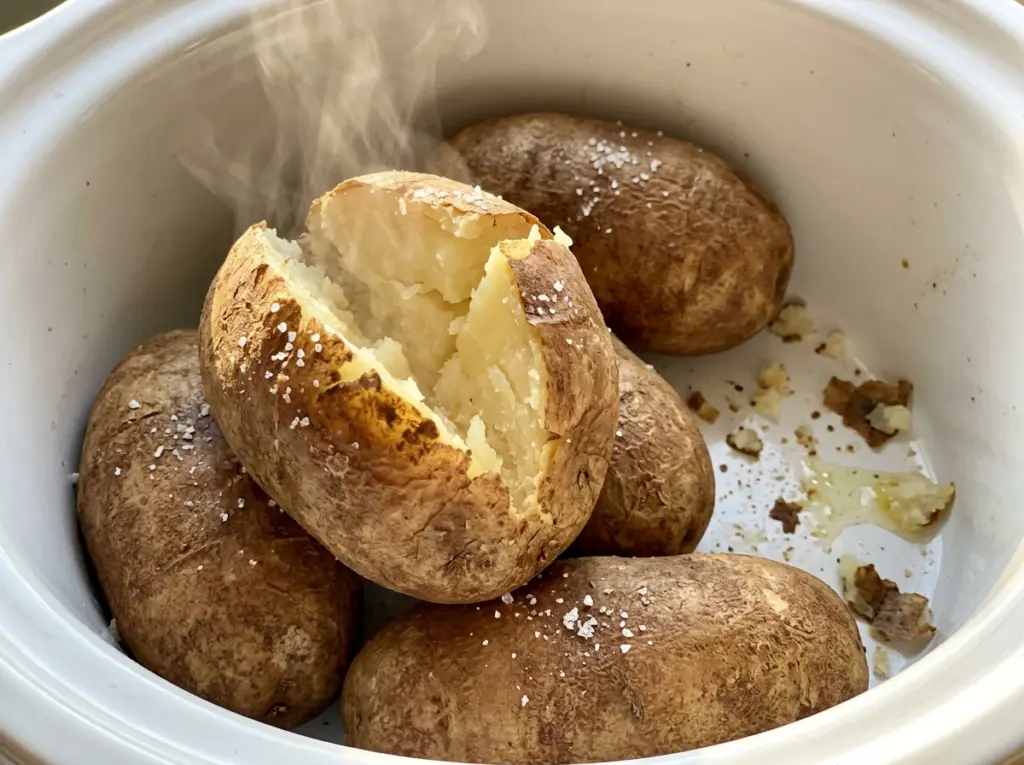
The fork can slide through the outside of a potato and still catch on a firm center; that last bit of resistance is easy to miss when dinner is waiting. I use the slow cooker for baked potatoes when I want the oven free and don’t want to keep checking a pan. These Crock Pot Baked Potatoes need a scrub, a little olive oil and salt, then a tight foil wrap before they go into the cooker. The hands-on work is quick, but the potatoes need hours to turn tender all the way through.
Drying the potatoes well before rubbing them with oil makes a difference: the oil coats the skin evenly instead of sliding over damp spots. Russets give you the familiar fluffy center, and wrapping each one keeps the prep simple. Pick potatoes close in size so they finish at roughly the same time, then let the fork—not the clock alone—tell you when the centers are tender.
Kitchen Note
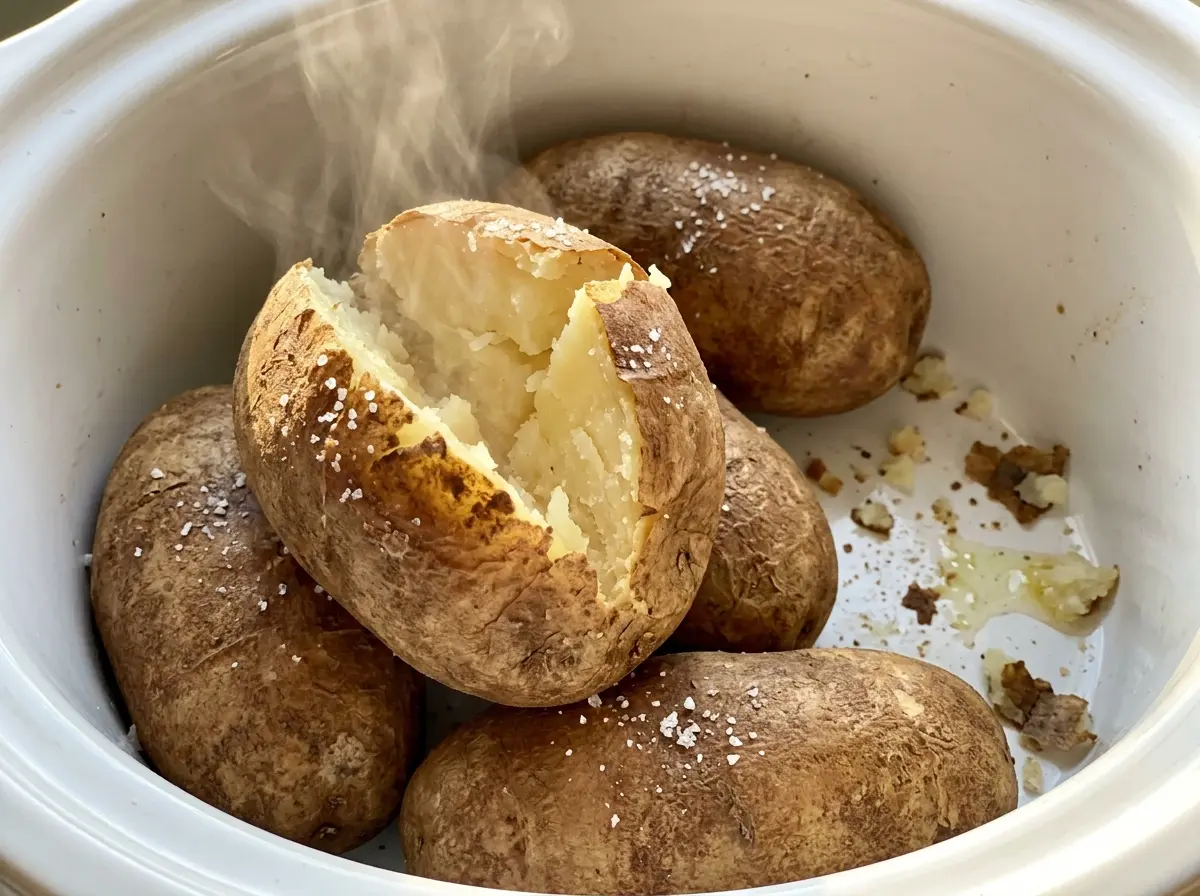
Potatoes that are close in size are much easier to finish together. I look for medium russets around the same weight, rather than mixing a small one with a much larger potato.
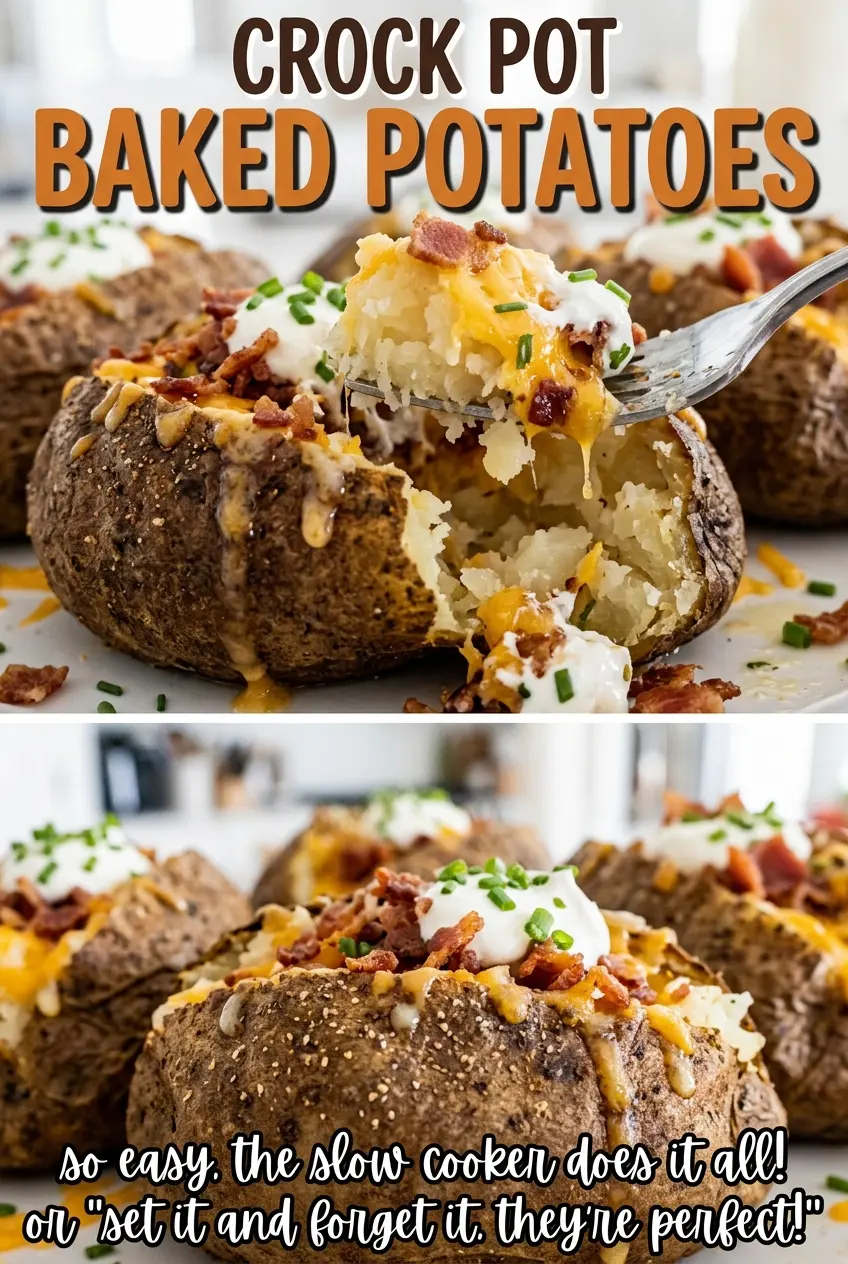
Save these Crock Pot Baked Potatoes for an easy, hands-off way to get tender russets without tying up the oven.
Why Foil-Wrapped Potatoes Have Soft Skins, Not Oven Crunch
Slow cooker baked potatoes aren’t meant to come out with the dry, crisp skins you get from an uncovered potato in a hot oven. The foil holds moisture close to each potato while it cooks, so the skin stays soft and the inside becomes tender. That trade-off is useful here: the potatoes cook without needing attention, and the foil keeps the oil and salt right against the skin.
Knowing what the foil does also helps set expectations. If you open one and the skin is soft, that isn’t a sign that the potato failed or needs more cooking. Check the center instead. A potato can have a tender skin before the thickest part has finished cooking, so use a fork in the middle to judge doneness. If you want an oven-crisp skin, this slow cooker method isn’t designed to deliver it; its strength is a fluffy russet with very little active work.
Wrapping each potato tightly matters because loose foil won’t sit as snugly against the skin. Once they’re wrapped, arrange them in a single layer rather than piling them up. That gives the potatoes an even position in the cooker and follows the simple setup that makes this method dependable.
Russets, Olive Oil, and Salt: What Each One Brings
- Russet potatoes — Their starchy texture is what gives the middle that familiar fluffy baked-potato feel. Choose firm potatoes without soft spots, cuts, or green areas. Yukon Golds can stand in if that’s what you have, but their centers are creamier and less fluffy, and the skin is thinner.
- Olive oil — A light coating helps the salt adhere and keeps the outside from drying out. There’s no need for a costly finishing oil here; a standard olive oil works well. Avocado oil is the closest easy swap, used in the same amount, with a more neutral taste.
- Kosher salt — Its larger crystals are easy to scatter across the potato skins. If you only have fine table salt, use half as much by volume because the smaller grains pack more tightly and taste saltier in an equal spoonful. Sprinkle it evenly so one spot doesn’t end up overly salty.
The ingredients in this potato base are naturally gluten-free, dairy-free, and vegan. The main choice that changes the result is the kind of potato: russets give you a drier, fluffier center, while a waxier potato cooks up with a denser bite.
The Simple Sequence That Keeps the Centers Tender
Scrub, Dry, and Prick the Skins
Scrub each potato to remove dirt, then dry it well with a clean towel. Prick each one several times with a fork so the skin has small openings before it goes into the cooker. Don’t skip the drying; damp skins make it harder for the oil to coat them evenly. Set the potatoes aside once they’re clean and prepared.
Oil, Salt, and Wrap Each Potato
Rub the olive oil over the potato skins, then sprinkle them evenly with kosher salt. Wrap each potato tightly in aluminum foil, bringing the foil close around the potato rather than leaving it loose. Check that every potato is wrapped before loading the cooker. A snug wrap keeps the oil and salt in place during the long cook.
Cook in a Single Layer and Check the Center
Arrange the wrapped potatoes in a single layer in a 6-quart slow cooker and cover it. Cook on LOW for 6 to 8 hours or on HIGH for 3 to 4 hours. Toward the end of the cooking window, carefully open one foil packet and slide a fork into the center of the potato. It’s ready when the fork moves easily through the middle; if it catches, close the cooker and keep cooking until the center is tender.
Small Swaps That Change the Potato Without Complicating It
Use Avocado Oil for a More Neutral Finish
Replace the olive oil with the same amount of avocado oil and follow the same preparation. It coats the skins just as well but has a milder taste, so the russet and salt come through more clearly.
Try Yukon Golds for a Creamier Center
Swap in Yukon Gold potatoes close to the same size. Keep the oil, salt, foil, and slow cooker method, but expect a denser, creamier texture instead of the fluffy russet center; use the fork test to judge when they’re tender.
Scale the Batch Down for Two
Use two potatoes instead of four and keep them in a single layer. Reduce the olive oil and kosher salt proportionally so each potato still gets an even coating. The smaller batch is handy when you want fewer leftovers without changing the basic method.
Storage and Reheating
- Refrigerator: Remove the foil and refrigerate leftovers within 2 hours. Store them in a covered container for 3 to 4 days; the skins soften further as they chill.
- Freezer: Cooked potatoes can be frozen, but whole russets often turn mealy after thawing. For the best quality, freeze only if you don’t mind a softer, less fluffy texture, and use within 1 month.
- Reheating: Remove any foil and reheat in the microwave or in a 350°F oven until the center reaches 165°F. Don’t put foil in the microwave, and avoid reheating the same potato more than once.
Questions That Come Up Before the Slow Cooker Goes On
Crock Pot Baked Potatoes
Ingredients
Equipment
Method
- Scrub the potatoes.
- Dry the potatoes well.
- Prick each potato several times with a fork.
- Rub the potatoes with olive oil.
- Sprinkle them evenly with kosher salt.
- Wrap each potato tightly in aluminum foil.
- Arrange the potatoes in a single layer in a 6-quart slow cooker.
- Cover and cook on LOW for 6 to 8 hours or HIGH for 3 to 4 hours, until a fork slides easily into the center.




