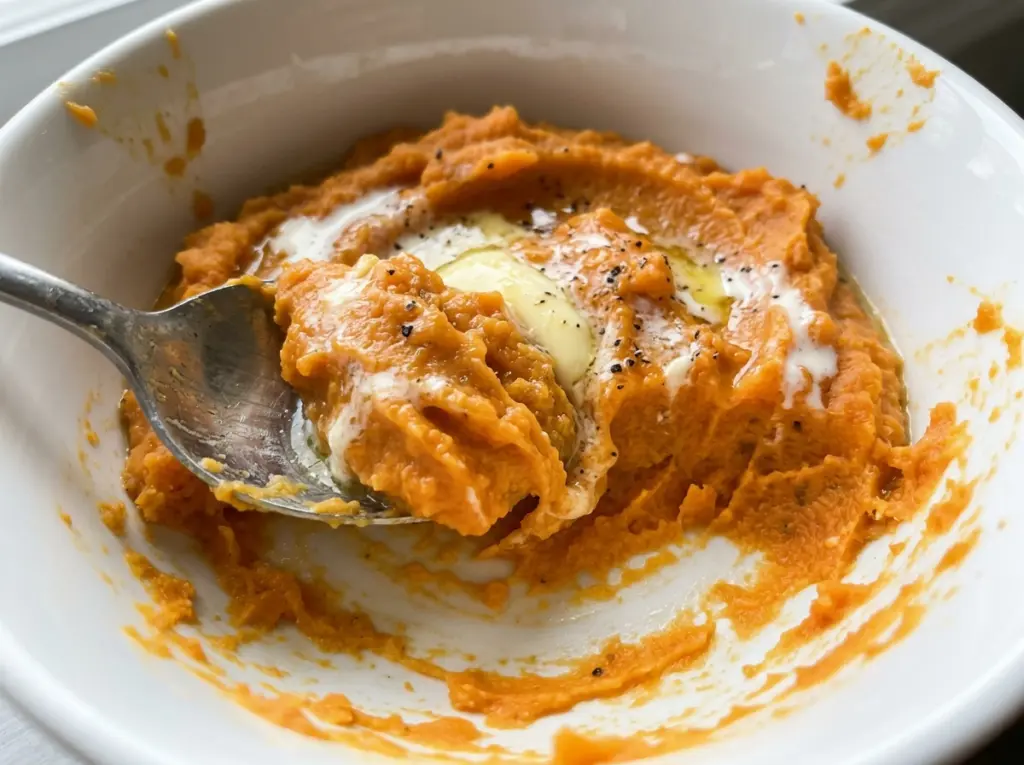
When a fork slips through a sweet potato cube with almost no pressure, you know the pot is close. I used to rush straight from draining to mashing, and the butter would melt into some bites while other pieces stayed stubbornly lumpy. These creamy savory mashed sweet potatoes come together more evenly when the potatoes are still hot and the butter and cream are ready to go.
The flavor stays on the savory side: the sweet potatoes bring their natural sweetness, while kosher salt and black pepper keep the mash balanced. I like this simple approach because it lets the potatoes taste like themselves, with enough butter and cream to make each spoonful soft and smooth. It’s a straightforward side dish, but the small details—from the size of the cubes to how tender they get—make a noticeable difference in the pot.
Kitchen Note
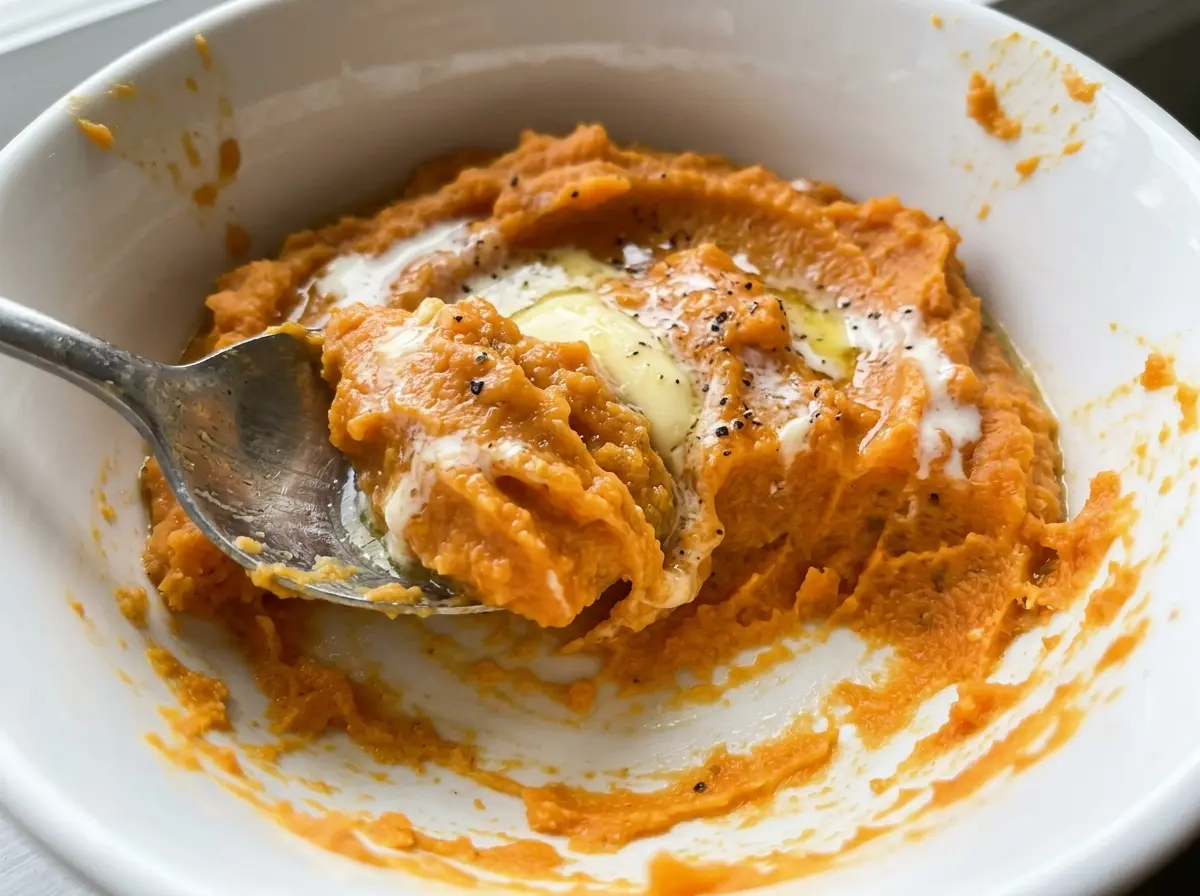
Have the butter and cream ready before you drain the potatoes. They mash more smoothly while hot, and you won’t be stopping to measure while the pot cools.
Save these creamy savory mashed sweet potatoes for a meal that calls for a soft, buttery side with a little black pepper.
Why One-Inch Sweet Potato Cubes Keep the Mash From Turning Patchy
Sweet potatoes don’t all soften at exactly the same pace when pieces vary widely in size. Smaller pieces can become very soft while the larger centers are still firm, so the finished mash ends up with a mix of smooth spots and hard-to-break lumps. Cutting the potatoes into similar one-inch cubes gives them a better chance of becoming tender together.
That size also suits this simple stovetop method: the cubes cook in water until a fork passes through easily, then they’re mashed right in the pot. You’re not looking for perfectly identical cubes, but do trim noticeably larger pieces down before they go into the water. It’s a small bit of knife work that saves you from chasing firm pieces around the pot later. If some cubes are a little smaller, that’s fine; what matters is avoiding a handful of much larger chunks that lag behind the rest.
What Sweet Potatoes, Butter, and Cream Each Bring to the Mash

- Sweet potatoes — Choose firm potatoes without soft spots, since damaged areas can be difficult to peel and trim cleanly. Orange-fleshed sweet potatoes give the familiar color and sweet, earthy flavor. White-fleshed sweet potatoes also work, but the mash will be paler and less sweet.
- Unsalted butter — It adds richness and helps the mash feel rounded rather than dry. Unsalted butter gives you more control over seasoning, especially because salt is also added during cooking and again when mashing. Use butter that’s fresh and tastes good; there’s no need for a specialty brand.
- Heavy cream — Cream loosens the cooked potatoes while keeping the texture rich. A thinner dairy product won’t bring the same body, so I stick with heavy cream here rather than treating milk as a one-for-one swap.
- Black pepper — Pepper keeps the sweet potatoes firmly in savory territory. Freshly ground pepper has a brighter, more aromatic bite, though ordinary ground black pepper works well for a mellow finish.
From Cold Water to a Creamy Mash Without Firm Lumps
Start the Cubes in Cold, Salted Water
Add the peeled, one-inch sweet potato cubes to a 5-quart pot with the cold water, adding more if needed to cover them. Stir in the first portion of kosher salt before turning on the heat. Starting with cold water lets the potatoes warm up as the water heats, rather than putting cold centers straight into already-boiling water. Keep the pieces covered so they cook evenly.
Simmer Until a Fork Slides Through Easily
Bring the pot to a boil over high heat, then lower the heat to maintain a steady simmer. Cook for 15 to 20 minutes, checking a cube with a fork as the cooking time approaches its end. The fork should pierce the center very easily; if you feel resistance, give the potatoes more time rather than trying to mash them firm. A vigorous boil isn’t needed once the water is bubbling.
Drain Well, Then Mash While Hot
Drain the sweet potatoes well and return them to the pot. Add the butter, heavy cream, remaining kosher salt, and black pepper, then mash until creamy. If the potatoes still look lumpy, keep mashing instead of adding more liquid; pieces that are fully tender will break down as you work. Stop when the texture looks smooth and the butter and cream are distributed throughout.
Small Adjustments for a Different Sweet Potato Mash
Leave a Little Texture
For a more rustic bowl, stop mashing while a few small, tender pieces remain. You’ll keep more of the sweet potato’s natural texture, though the result won’t be as uniformly creamy.
Make the Pepper More Noticeable
For a sharper savory finish, add a little more black pepper after mashing and taste as you go. The extra pepper cuts through the sweetness without changing the soft texture.
Make a Lighter, Less Rich Version
Use less butter and heavy cream while keeping the other ingredients the same. The sweet potato flavor will stand out more, but the mash will be less plush and may need more work to reach a creamy texture.
Storage and Reheating
- Refrigerator: Store leftovers in a covered container for 3 to 4 days. The mash firms up as it chills.
- Freezer: It freezes well. Cool it, transfer it to an airtight freezer container, and freeze for up to 1 month for the best texture; thaw overnight in the refrigerator.
- Reheating: Warm gently in a saucepan over low heat or in the microwave in short intervals, stirring between intervals, until hot throughout. High heat can make the edges dry before the center warms.
Questions I Get Asked About Savory Mashed Sweet Potatoes
Creamy Savory Mashed Sweet Potatoes
Ingredients
Equipment
Method
- Add the sweet potatoes and 8 cups cold water to a 5-quart pot, adding more water as needed to cover.
- Stir in 1 teaspoon kosher salt.
- Bring to a boil over high heat.
- Reduce the heat to maintain a steady simmer and cook for 15 to 20 minutes, until the sweet potatoes are very tender when pierced with a fork.
- Drain well and return the sweet potatoes to the pot.
- Mash with the butter, heavy cream, remaining 1/2 teaspoon kosher salt, and black pepper until creamy.