
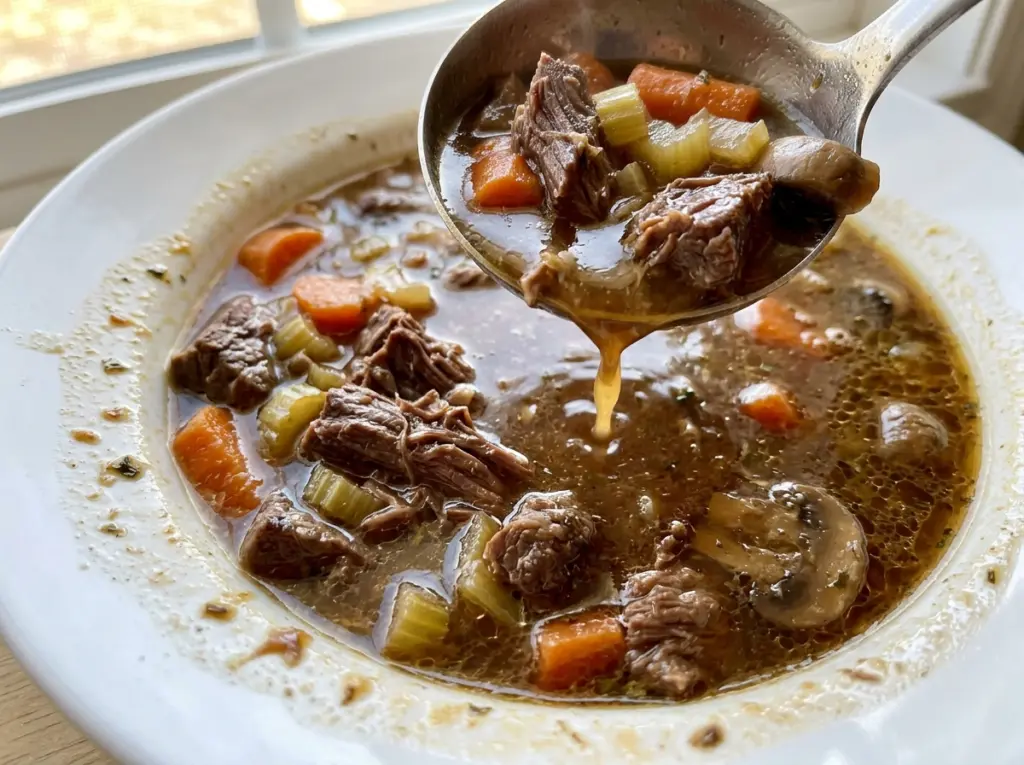
The beef hits the hot oil with a sharp sizzle, and the first batch tells you whether the pot is crowded: if the pieces sit too close together, they steam instead of browning. I work in batches and let the chuck develop a deep, browned surface before it goes back into the pot. That extra color gives Keto Beef Stew its savory backbone without relying on flour or potatoes.
Turnips bring their own tender, slightly peppery character to the bowl, while cremini mushrooms add an earthy bite. This isn’t a beef stew trying to pass as a potato stew; it’s a low-carb braise with vegetables that belong in their own right. The beef gets a long, gentle simmer first, then the vegetables join near the end, so each part has time to become tender without disappearing into the broth.
Once the lid comes off, the broth smells deeply savory, the beef yields easily to a fork, and the turnips still hold their shape. Give the finished stew a short rest before serving, and you’ll have a warm, satisfying bowl with tender beef and plenty of character.
Kitchen Note
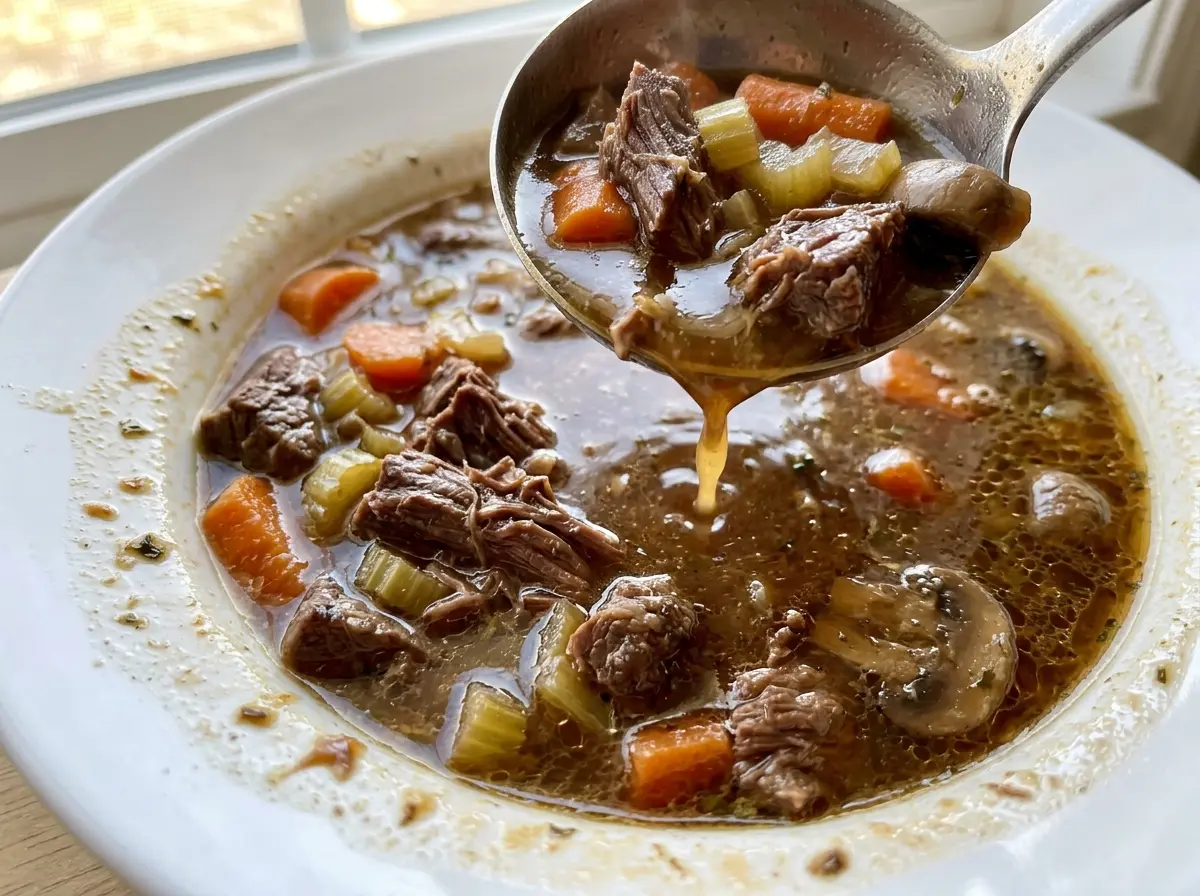
Cut the chuck into even 1 1/2-inch pieces. Similar-sized chunks cook at a similar pace, so you’re less likely to find one tender piece beside another that still feels firm.
Save this Keto Beef Stew for a cozy low-carb dinner, with fork-tender chuck, earthy mushrooms, and turnips that hold their shape.
Why Turnips Belong in This Stew Instead of a Potato Stand-In
Turnips bring a mild, earthy bite that works naturally with beef, mushrooms, and thyme. They don’t have the same starchy texture as potatoes, and this stew doesn’t need them to pretend otherwise. Their job is to become tender and soak up some of the savory broth while still reading as a vegetable in the finished bowl.
The order they go into the pot matters. Chuck needs a long, gentle braise to become fork-tender, while the turnips and mushrooms need less time. Add all the vegetables at the beginning and they’ll spend the entire beef-braising time in the liquid; the turnips are more likely to lose their shape, and the mushrooms can become overly soft. Adding them later gives the beef its head start and lets the vegetables finish alongside it. That balance is what makes this feel like a complete stew rather than beef with vegetables that have cooked down too far.
There’s no flour-based thickener here, so expect a savory broth rather than a heavy, gravy-like sauce. The browned beef, aromatics, and tomato paste make the broth taste full without changing the low-carb direction of the dish.
What the Beef, Turnips, and Tomato Paste Each Bring

- Beef chuck — Chuck has enough connective tissue and marbling to reward a slow braise; it becomes tender as it cooks in the covered pot. Choose evenly cut pieces so they cook at a similar rate. A leaner cut won’t give the same forgiving, tender result over this long simmer.
- Turnips — Peeled turnips soften in the broth but keep a more distinct bite than vegetables cooked from the start. Choose firm turnips without soft spots, then cut them into even pieces so they finish together. Within this ingredient list, the cremini mushrooms are the closest vegetable alternative if you’d rather leave the turnips out, though the stew will have less vegetable bulk.
- Cremini mushrooms — Their earthy flavor deepens the savory quality of the broth. Look for firm mushrooms with dry, clean surfaces; there’s no need to seek out an expensive variety. Quarter them evenly, and they’ll cook through without becoming tiny pieces in the finished stew.
- Tomato paste — Tomato paste gives the broth concentrated savory depth and a little body. A standard grocery-store tube or can works well here. Cooking it briefly with the garlic before adding broth takes away its raw, tinny edge.
- Beef broth — Broth carries the flavor from the browned beef and aromatics through the braise. Use a broth you enjoy sipping, since its seasoning becomes part of every spoonful; the kosher salt is already doing its share of seasoning.
- Onion, celery, garlic, thyme, and bay leaf — These build the familiar savory base without needing a separate seasoning blend. Chop the onion and celery evenly, mince the garlic, and keep the bay leaf whole so it’s easy to find and remove before serving. Dried thyme is a practical choice for a long simmer.
How to Brown the Chuck and Finish the Vegetables at the Right Pace
Dry and Brown the Beef in Batches
Pat the chuck dry with paper towels, then season it all over with kosher salt and black pepper. Heat the olive oil in a 6-quart Dutch oven over medium-high heat. Brown the beef in batches for about 3 minutes per side, then transfer each batch to a plate. The pieces should develop a deep brown surface; if the pot is crowded, work in smaller batches rather than letting the beef steam.
Soften the Aromatics and Cook the Paste
Add the chopped onion and celery to the pot and cook over medium heat for 5 minutes, stirring occasionally, until softened. The vegetables should begin to look glossy and pliable, not browned or crisp. Stir in the minced garlic and tomato paste and cook for 1 minute. Keep stirring so the garlic doesn’t catch on the bottom before the broth goes in.
Let the Chuck Braise Slowly
Return the browned beef and any juices on the plate to the Dutch oven. Add the beef broth, dried thyme, and bay leaf, then bring everything to a simmer. Cover the pot and cook over low heat for 1 hour and 15 minutes. You want a gentle simmer, not a hard boil; steady, low heat gives the chuck time to soften without aggressively bubbling the broth.
Add the Vegetables, Then Rest the Stew
Stir in the peeled, cut turnips and quartered mushrooms, cover, and simmer over low heat for 30 to 45 minutes. The beef should yield easily when tested with a fork, and the turnips should be tender without falling apart. Remove the bay leaf before serving. Let the stew rest for 10 minutes so the bubbling settles and the broth is comfortable to spoon.
Two Simple Ways to Shift the Vegetables in Your Keto Beef Stew
A lower-carb, mushroom-led pot
Leave out the turnips and let the cremini mushrooms be the stew’s vegetable bite. The bowl will have fewer pieces and less bulk, but the beef, broth, aromatics, and mushroom flavor still make a satisfying low-carb stew.
A turnip stew without mushrooms
Leave out the cremini mushrooms and keep the turnips in the pot. You’ll lose some earthy depth, while the turnips provide the tender vegetable pieces and the beef broth remains the main savory note.
Storage and Reheating
- Refrigerator: Store cooled stew in a covered container for 3 to 4 days. The turnips soften a little more as they sit in the broth.
- Freezer: Freeze in airtight containers for up to 2 to 3 months. The beef freezes well, though the thawed turnips may be softer than when freshly cooked.
- Reheating: Warm gently in a covered saucepan over low heat, stirring occasionally, until it reaches 165°F. Avoid a hard boil, which can break the turnips apart and make the beef feel stringier.
Questions That Come Up When Making Keto Beef Stew
Keto Beef Stew
Ingredients
Equipment
Method
- Pat the beef dry with paper towels, then season it all over with the salt and pepper.
- Heat the olive oil in a 6-quart Dutch oven over medium-high heat.
- Brown the beef in batches for about 3 minutes per side, then transfer the browned beef to a plate.
- Add the onion and celery to the pot and cook over medium heat for 5 minutes, stirring occasionally, until softened.
- Stir in the garlic and tomato paste and cook for 1 minute.
- Add the beef and any accumulated juices, broth, thyme, and bay leaf.
- Bring the stew to a simmer.
- Cover and cook over low heat for 1 hour and 15 minutes.
- Stir in the turnips and mushrooms.
- Cover and simmer over low heat for 30 to 45 minutes, until the beef is fork-tender and the turnips are tender.
- Remove the bay leaf.
- Let the stew rest for 10 minutes before serving.




