
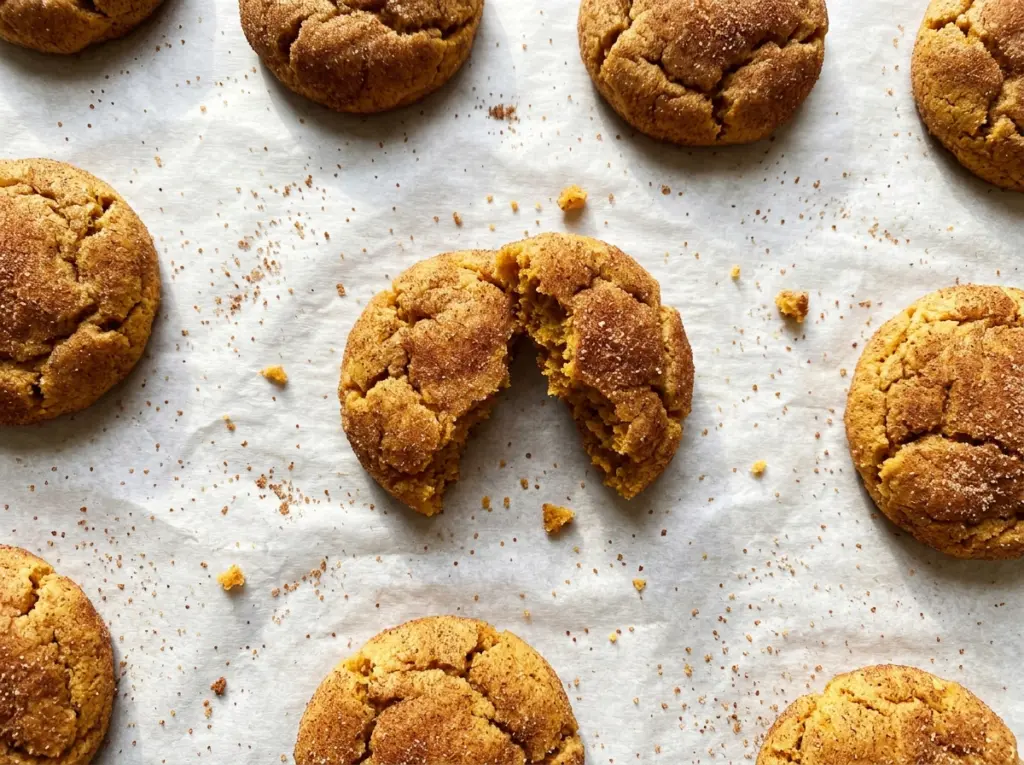
When the dough starts clinging to your fingers as you roll it, the cinnamon sugar won’t coat it neatly. I give these pumpkin snickerdoodle cookies a full hour in the refrigerator, until the dough feels firm enough to shape without a sticky mess. That chill also makes it easier to portion the dough evenly, so the cookies bake at about the same pace.
Plain pumpkin puree brings moisture and pumpkin flavor without adding the extra sugar and spices found in pumpkin pie filling. I keep the coating simple—granulated sugar and cinnamon—so it gives each cookie a fragrant, lightly crisp outside without burying the pumpkin spice in the dough.
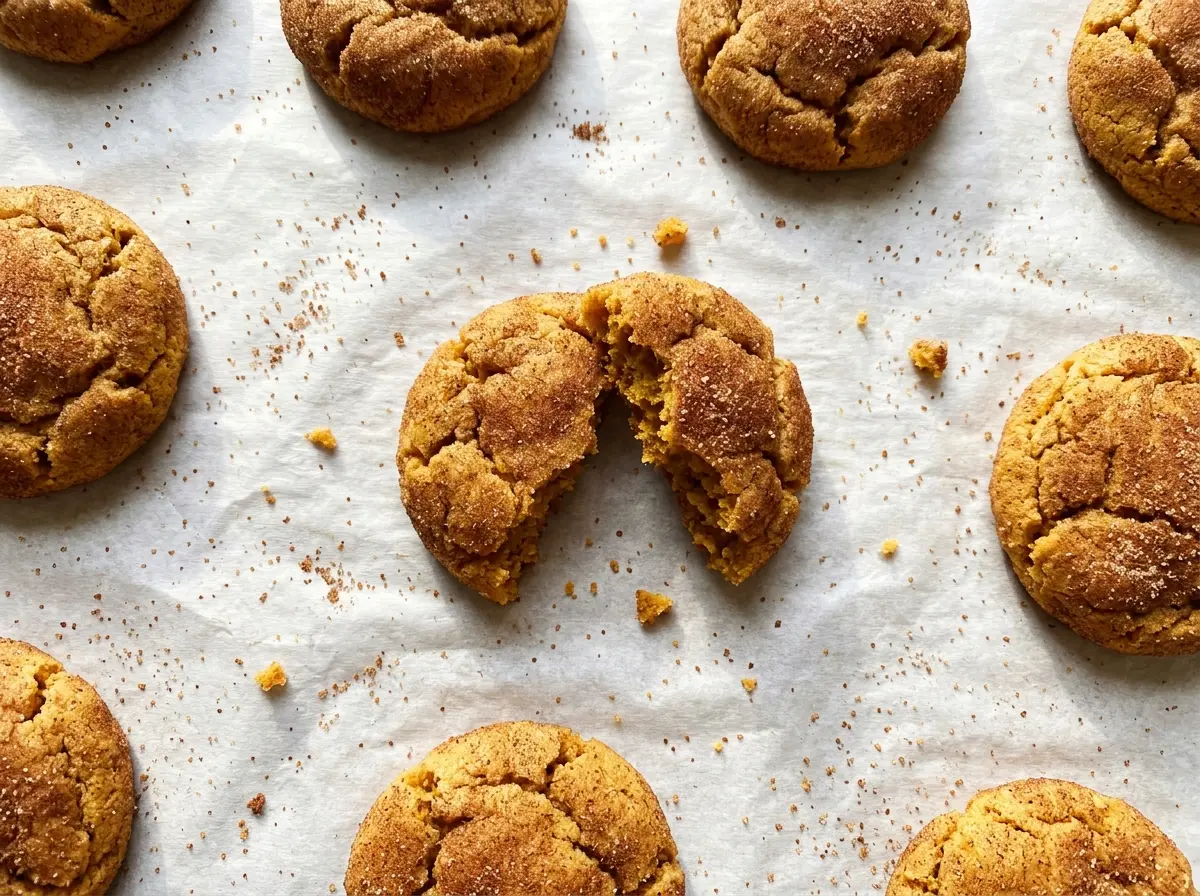
Once baked, the edges are set and the tops look dry, while the centers stay tender. The cinnamon sugar settles into a delicate coating that makes these especially good with a glass of milk or a cup of coffee.
Kitchen Note
I spoon the flour into the measuring cup and level it off instead of scooping straight from the bag. Packed flour can leave the dough stiff and the cookies dry, so take a moment with this small detail.
Save these pumpkin snickerdoodle cookies for their tender pumpkin centers and cinnamon-sugar coating—the dough chills until it’s easy to roll.
Why Cream of Tartar Matters More Than Another Shake of Pumpkin Spice
Pumpkin can make these feel like ordinary soft pumpkin cookies, but cream of tartar keeps the snickerdoodle character in the dough. It works with the baking soda and brings the gentle tang associated with a classic snickerdoodle. Pumpkin pie spice adds aroma; it doesn’t provide the same acidity, so increasing the spice won’t replace the cream of tartar.
The balance matters because pumpkin already brings moisture and a distinct flavor. The cream of tartar helps the sweetness feel less one-note, while the baking soda supports the cookie’s rise as it bakes. Leaving one out or swapping in a random leavener changes that balance, not just the flavor. I whisk the cream of tartar and baking soda thoroughly with the flour and spices, which helps distribute them through the dough instead of leaving a sharp or bitter pocket in a bite.
What Pumpkin, Butter, and the Sugar Coating Bring to These Cookies

- Pumpkin puree — Use plain puree, not pumpkin pie filling, which is already sweetened and spiced. Stir it if liquid has separated before measuring. There isn’t a direct substitute that keeps the pumpkin flavor and moisture balance the same.
- Unsalted butter — Everyday butter works well; it doesn’t need to be a specialty brand. It should be softened enough to beat smoothly with the sugars, but not melted. For a dairy-free batch, stick-style plant butter is the most practical swap; the finished cookies will have a slightly different buttery flavor.
- All-purpose flour — It gives the cookies enough structure to hold their shape while staying tender. A cup-for-cup gluten-free baking flour can work in its place, though the crumb may be a little more delicate or grainy depending on the blend.
- Granulated and light brown sugar — The granulated sugar sweetens the dough and makes the cinnamon coating; brown sugar adds a soft, lightly molasses-like note. Dark brown sugar can replace light brown sugar in the same quantity, with a deeper molasses flavor.
- Cream of tartar and baking soda — These do more than help the cookies rise: together they give the dough its snickerdoodle tang. Keep both in the mixture rather than trying to replace them with extra pumpkin pie spice.
- Pumpkin pie spice and cinnamon — The spice goes into the dough, while cinnamon in the coating gives the outside its familiar snickerdoodle finish. Fresh, fragrant ground cinnamon is worth using here; a stale jar makes the coating taste flat.
How to Mix, Chill, and Coat the Pumpkin Dough
Whisk the dry ingredients evenly
Whisk the flour, cream of tartar, baking soda, pumpkin pie spice, and salt together in a medium bowl. Break up any visible clumps as you whisk so the leaveners and spice are spread through the flour. Set the bowl aside before you start creaming the butter. A few extra seconds of whisking help prevent uneven seasoning in the finished cookies.
Cream the butter and sugars, then add pumpkin
Beat the softened butter with the dough’s granulated sugar and brown sugar until creamy, about 2 minutes. Beat in the pumpkin puree and vanilla, then mix in the dry ingredients just until no dry streaks remain. Stop as soon as the flour disappears; mixing longer can make the cookies tougher. The dough will be soft at this point, which is why it needs a proper chill before shaping.
Chill until the dough is firm enough to roll
Cover the bowl and refrigerate the dough for 1 hour. It should feel firm enough to roll into balls without coating your hands in sticky dough. If it still feels too soft, give it more time in the refrigerator rather than adding extra flour. That keeps the flour-to-pumpkin balance intact.
Roll, coat, and bake until the tops look dry
Heat the oven to 350°F and line two baking sheets with parchment paper. Stir the remaining granulated sugar with the cinnamon, roll the dough into 1 1/2-tablespoon balls, and coat each one before arranging them 2 inches apart. Bake for 10 to 12 minutes, switching the sheets between racks and rotating them halfway through; look for set edges and dry-looking tops. Let the cookies cool on the baking sheets for 5 minutes, then transfer them to a wire rack to cool completely.
Two Useful Swaps for a Different Kind of Pumpkin Snickerdoodle
Make Them Dairy-Free with Stick-Style Plant Butter
Use the same amount of stick-style plant butter in place of the softened unsalted butter. Choose a baking-style stick rather than a tub spread, which can contain more water and make the dough softer. The cookies keep their cinnamon-pumpkin character, though the buttery taste will be less pronounced.
Use a Cup-for-Cup Gluten-Free Baking Flour
Replace the all-purpose flour with the same volume of a gluten-free blend labeled for cup-for-cup baking. The cookies may be more fragile and the crumb can feel slightly grainy, so let them cool fully on the baking sheet before moving them to a rack.
Storage and Reheating
- Refrigerator: These cookies don’t need refrigeration. Keep them in an airtight container at room temperature for up to 4 days; refrigeration firms them and can dry the centers.
- Freezer: Freeze fully cooled cookies in an airtight container, with parchment between layers, for up to 2 months. Thaw at room temperature while still covered to keep condensation off the cookies.
- Reheating: Warm a cookie in a 300°F oven for 3 to 4 minutes. Don’t leave it in until it feels crisp; it will firm further as it cools.
Questions That Come Up While Baking These Pumpkin Cookies
Pumpkin Snickerdoodle Cookies
Ingredients
Equipment
Method
- Whisk the flour, cream of tartar, baking soda, pumpkin pie spice, and salt together in a medium bowl.
- Beat the softened butter, 3/4 cup granulated sugar, and packed light brown sugar in a large bowl until creamy, about 2 minutes.
- Beat in the pumpkin puree and vanilla.
- Mix in the flour mixture just until no dry streaks remain.
- Cover and refrigerate the dough for 1 hour, until firm enough to roll.
- Heat the oven to 350°F.
- Line two baking sheets with parchment paper.
- Stir the remaining 1/4 cup granulated sugar and cinnamon together in a small bowl.
- Roll the dough into 1 1/2-tablespoon balls.
- Coat each ball in the cinnamon sugar.
- Arrange the balls 2 inches apart on the baking sheets.
- Bake for 10 to 12 minutes, switching the sheets between racks and rotating them halfway through, until the edges are set and the tops look dry.
- Let the cookies cool on the baking sheets for 5 minutes.
- Transfer the cookies to a wire rack to cool completely.




