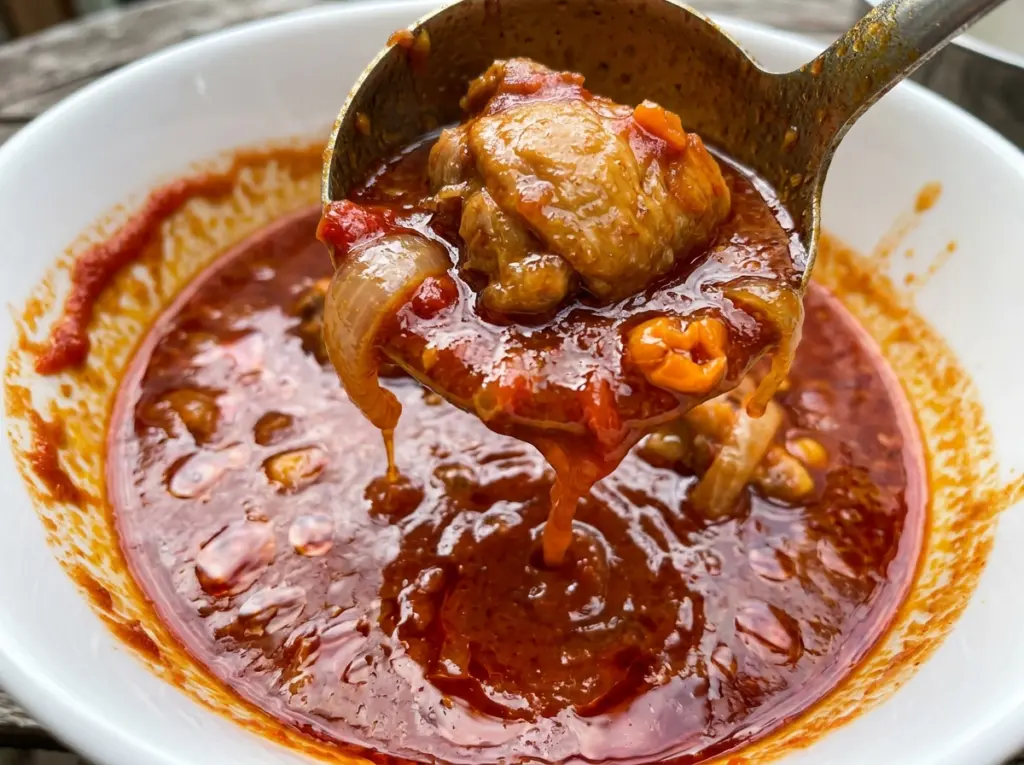
The chicken simmers first, then goes back into the pot to brown while the tomato and pepper mixture cooks down. That two-part start is what gives Nigerian chicken stew its deep, savory base and a sauce that clings to each piece instead of pooling thinly on the plate. I use bone-in, skinless thighs and drumsticks, and the whole process happens in one Dutch oven.
The blended tomatoes, red bell peppers, habanero, and onion go into the pot after the chicken comes out. Let that mixture cook uncovered until it thickens and you see oil beginning to show around the edges; that visual cue matters more than rushing to the next step. Then the reserved chicken liquid and browned pieces return for a final simmer, bringing everything together in a rich red sauce.
Kitchen Note
Pat the simmered chicken dry before it goes into the hot oil. Damp surfaces steam instead of browning, so taking a moment with paper towels helps each piece develop a better browned exterior.
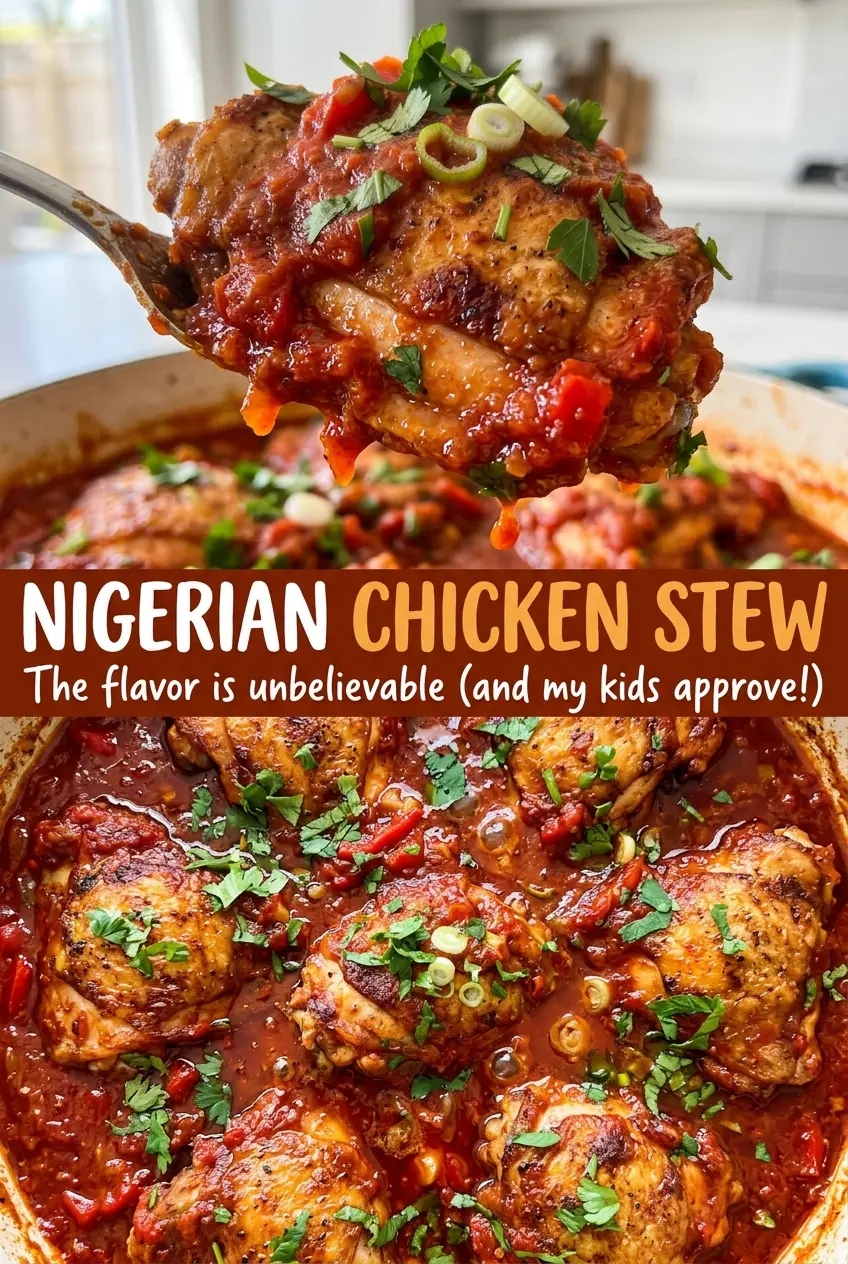
Save Nigerian chicken stew for its slow-cooked pepper sauce and tender, browned chicken, all made in one Dutch oven.
Why the Pepper Base Needs Time Before the Chicken Goes Back In
The tomato and pepper puree starts out loose. While it cooks uncovered, water evaporates and the mixture becomes thicker and more concentrated. Stirring often keeps the bottom from catching, and watching for oil around the edges gives you a dependable sign that the base has cooked down. If the sauce still looks watery, it needs more time at this stage rather than extra seasoning or a longer final simmer with the chicken.
That separation is part of the texture you’re aiming for, not a sign that the stew has gone wrong. The chicken’s first simmer creates a seasoned cooking liquid, and only a measured portion goes back into the pot after the pepper base has reduced. Adding it then loosens the sauce just enough for the chicken to finish simmering in it. Keeping those stages distinct gives the stew a concentrated tomato-and-pepper flavor while letting the chicken stay tender.
What the Chicken, Pepper, and Onion Each Bring to the Pot
- Bone-in, skinless chicken thighs and drumsticks — These pieces hold their shape through simmering, browning, and the final cook in the sauce. The bones also give the first cooking liquid a savory foundation. Keeping the skin off means the chicken can brown in the vegetable oil without a layer of skin changing the texture of the stew.
- Roma tomatoes and red bell peppers — Roma tomatoes form the body of the blended sauce, while red bell peppers bring sweetness and a rounded pepper flavor. Choose ripe tomatoes that feel firm rather than soft or leaking; the peppers should look fresh and smooth. Both are blended with the roughly chopped onion, so there’s no need to dice them finely.
- Habanero — This is the stew’s source of heat, blended right into the tomato and pepper base. Stem it before blending, as the ingredient list specifies, and handle it carefully. Its heat is more pronounced than the red bell peppers, so it’s the ingredient that defines the sauce’s spicy edge.
- Yellow onion, divided — The finely chopped portion simmers with the chicken and seasons its cooking liquid. The roughly chopped portion joins the raw tomatoes and peppers in the blender, where it becomes part of the smooth sauce. Keeping the two portions separate gives each one a different job.
- Curry powder, dried thyme, bouillon, and bay leaf — Curry powder and thyme season the chicken as it simmers; the bouillon is split between that first cooking liquid and the finished stew. The bay leaf simmers in the sauce at the end. Use the bouillon cubes you normally buy, since the measured salt is part of the seasoning balance.
- Vegetable oil — The oil gives the chicken room to brown and forms the cooking base for the blended vegetables. Use a neutral vegetable oil rather than one with a strong taste, so it doesn’t compete with the peppers, tomatoes, and spices.
Building the Stew in Four Clear Stages
Simmer the Chicken in Its Seasoned Broth
Put the chicken in a 6-quart Dutch oven with the finely chopped half of the onion, some of the salt, curry powder, dried thyme, one bouillon cube, and the water. Bring it to a boil over medium-high heat, then cover and simmer over low heat for 25 to 35 minutes, turning the pieces once. Check the thickest pieces with a thermometer; they need to reach 165°F. A steady, gentle simmer cooks the chicken without boiling the liquid hard.
Dry and Brown the Pieces
Transfer the cooked chicken to a platter and pat it dry. Strain the cooking liquid into a measuring cup, reserve one cup, and discard any extra. Heat the vegetable oil in the same Dutch oven over medium-high heat, then brown the chicken in batches for 2 to 3 minutes per side. Crowding the pot makes the pieces harder to brown evenly, so give each batch room and return the browned chicken to the platter.
Blend and Cook Down the Pepper Mixture
Blend the tomatoes, red bell peppers, stemmed habanero, and roughly chopped half of the onion until smooth, working in batches if needed. Carefully pour the mixture into the Dutch oven and return the pot to medium heat. Cook it uncovered for 20 to 25 minutes, stirring often; the sauce should thicken and oil should begin to show around the edges. Pour carefully, since the blended mixture can sputter when it meets the hot pot.
Finish with the Reserved Liquid and Chicken
Stir in the reserved cooking liquid, the remaining bouillon cube, the remaining salt, the bay leaf, and the browned chicken. Simmer uncovered over medium-low heat for 10 to 15 minutes. Turn the chicken gently as needed so the sauce coats the pieces without breaking them apart. The stew is ready when the sauce clings to the chicken and everything is hot throughout.
Two Chicken-Cut Options That Keep the Stew’s Method Intact
All thighs for evenly sized pieces
Use bone-in, skinless thighs for the full chicken portion instead of combining thighs and drumsticks. Keep the total chicken at 3 pounds and use the same simmering and browning stages; an all-thigh pot gives you pieces with a more uniform shape.
All drumsticks for easy individual portions
Choose bone-in, skinless drumsticks for the same total weight. They’re easy to move around in the pot and brown on several sides, but use the thickest pieces to judge doneness because drumsticks can vary in size.
Storage and Reheating
- Refrigerator: Refrigerate leftovers within 2 hours and keep them covered for 3 to 4 days. The sauce may firm up as it chills.
- Freezer: This stew freezes well. Cool it, pack it in airtight freezer-safe containers, and freeze for up to 3 months for best quality.
- Reheating: Warm it gently in a covered saucepan over low heat, stirring now and then until hot throughout. Avoid a hard boil, which can make the chicken break apart and splatter sauce.
Questions That Come Up When Cooking Nigerian Chicken Stew
Nigerian Chicken Stew
Ingredients
Equipment
Method
- Combine the chicken, finely chopped half of the onion, 1 teaspoon of the salt, curry powder, thyme, 1 bouillon cube, and water in a 6-quart Dutch oven.
- Bring to a boil over medium-high heat.
- Cover and simmer over low heat for 25–35 minutes, turning the pieces once, until the thickest pieces reach 165°F.
- Transfer the chicken to a platter and pat dry.
- Strain the cooking liquid into a measuring cup, reserve 1 cup, and discard any extra.
- Heat the vegetable oil in the same Dutch oven over medium-high heat.
- Working in batches, brown the chicken for 2–3 minutes per side, then transfer it back to the platter.
- Blend the tomatoes, bell peppers, habanero, and roughly chopped half of the onion until smooth, working in batches if needed.
- Carefully pour the blended mixture into the Dutch oven and return it to medium heat.
- Cook uncovered for 20–25 minutes, stirring often, until thickened and oil begins to show around the edges.
- Stir in the reserved cooking liquid, remaining bouillon cube, remaining 1/2 teaspoon salt, bay leaf, and browned chicken.
- Simmer uncovered over medium-low heat for 10–15 minutes, until the sauce clings to the chicken and it is hot throughout.