
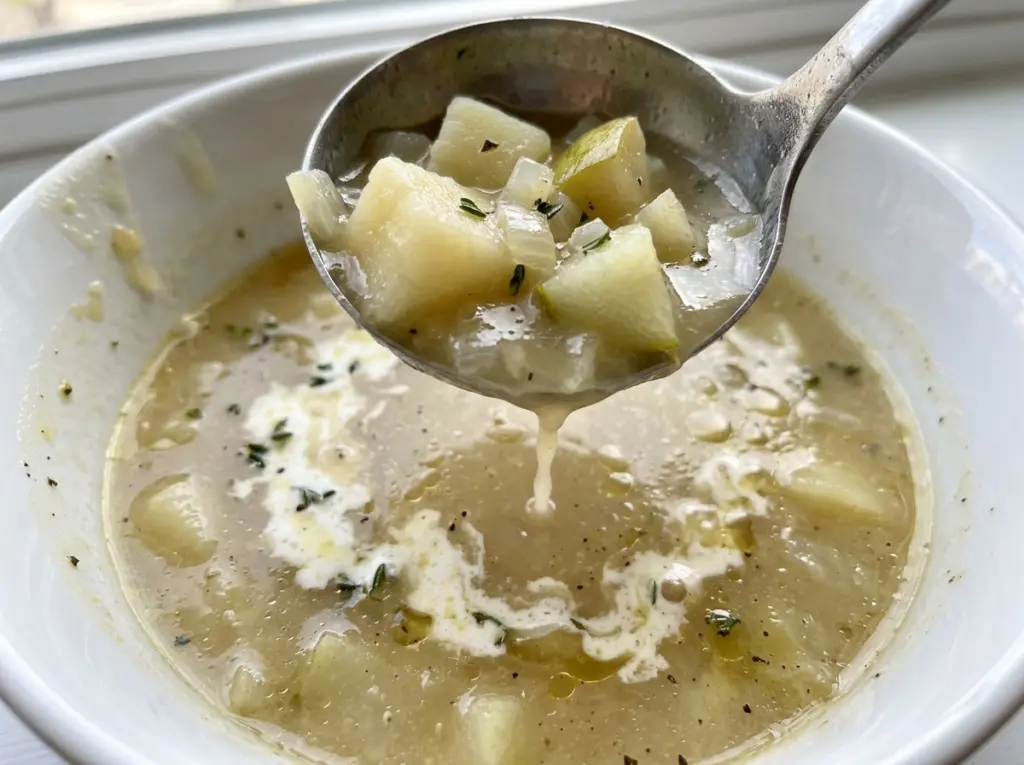
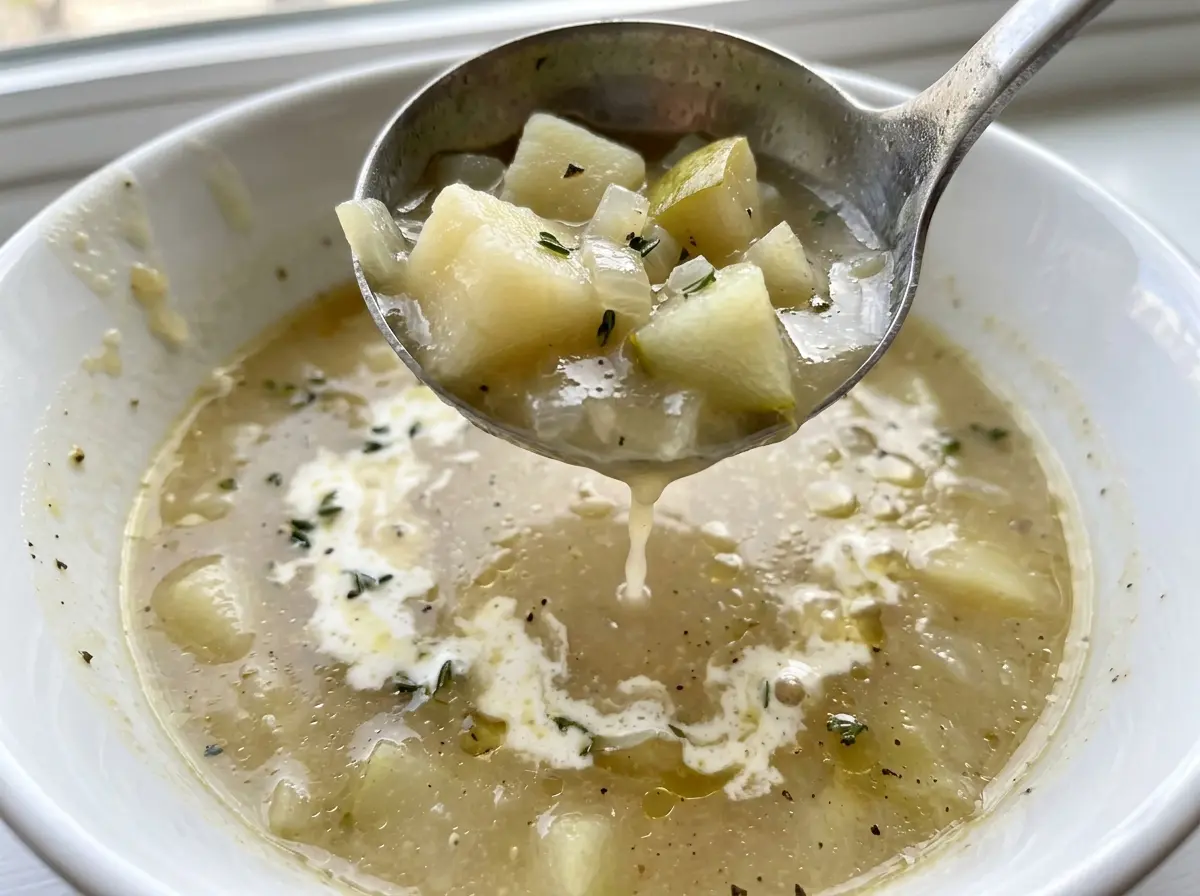
When the onion turns soft and sweet in the butter, the whole pot starts off on the right note. Pears and potatoes join it with broth and thyme, then simmer together until the potatoes give easily to a fork. I blend the soup right in the Dutch oven, which keeps the cleanup simple and lets the pears disappear into a silky base. The result is Pear Potato Soup: savory first, with a quiet fruit sweetness in the background.
Yukon Gold potatoes are a good fit because they make the soup creamy when blended without needing the pears to do all the work. I keep the heat gentle after adding the heavy cream; boiling at that point can make the finish less smooth. A little black pepper and a final taste for salt bring the bowl into balance, and the soup comes to the table warm and velvety.
Kitchen Note
Cut the potatoes into even 1-inch cubes so they soften at about the same pace. If a few are much larger, they can still feel firm when the smaller pieces are ready to blend.
Save Pear Potato Soup for a cozy pot of velvety soup with gentle pear sweetness and a thyme-scented finish.
Why Pears Make This Potato Soup Taste Round, Not Sweet
Pears bring a soft, mellow sweetness, but they don’t turn the pot into a fruit soup. The potatoes and vegetable broth give the blend a savory foundation, while thyme and black pepper steer it toward a comforting soup rather than a sweet puree. Once everything is blended, the pear works more like a quiet supporting note than a distinct chunk of fruit.
That balance depends on letting the pears cook until tender alongside the potatoes. They soften into the base instead of competing with it, and the heavy cream rounds out the texture at the end. If you expect a sharp pear flavor, the finished soup is subtler: creamy and savory, with a little sweetness that keeps the potatoes from tasting flat. Taste after the cream goes in, then adjust salt and pepper a little at a time so the fruit stays in balance with the broth.
Pears and Yukon Golds Set the Soup’s Sweet-to-Savory Balance

- Pears — Choose pears that are ripe enough to smell fragrant but still hold their shape when you chop them. Very soft fruit can be messy to prepare, though it will cook down; a firm apple works as a one-for-one replacement if pears aren’t available, with a brighter, more tart result.
- Yukon Gold potatoes — Their naturally creamy texture helps the blended soup feel substantial. Yellow potatoes are the closest swap; use the same weight and cut them to the same size. Russets also blend, but they can make the finished soup feel more starchy and thick.
- Unsalted butter and yellow onion — Butter gives the softened onion a mellow base, and unsalted butter leaves you in control of the seasoning. If you only have salted butter, start with less added salt and taste at the end. A fresh, firm onion is worth choosing; there’s no need to seek out a specialty variety.
- Low-sodium vegetable broth — A mild broth lets the pear and thyme come through without making the soup taste too salty. Chicken broth works in the same amount if you don’t need the soup to be vegetarian, though it brings a more savory flavor. Low-sodium broth is helpful because reducing the soup isn’t part of this method.
- Dried thyme and black pepper — Dried thyme has time to season the broth while the potatoes simmer, and pepper keeps the sweet edge in check. If you have fresh thyme, strip the leaves from the stems and use about three times as much as dried; the flavor will be fresher and more herbal.
- Heavy cream — It gives the finished soup a fuller, smoother mouthfeel. Half-and-half can replace it in the same amount for a lighter, less rich bowl. Add either choice after blending, since dairy added before the potatoes cook doesn’t help with the final texture.
From Softened Onion to a Smooth, Creamy Finish
Soften the onion without browning it
Melt the butter in a 5-quart Dutch oven over medium heat, then stir in the finely chopped onion. Cook for 5 to 7 minutes, stirring occasionally, until it’s softened. You want the pieces tender and translucent, not deeply browned; dark edges can give the soup a more roasted flavor than the gentle pear-and-thyme balance calls for. If the butter starts to color quickly, lower the heat slightly while the onion finishes softening.
Simmer the potatoes and pears until fork-tender
Stir the chopped pears, potato cubes, vegetable broth, dried thyme, salt, and pepper into the softened onion. Bring the pot to a boil over medium-high heat, then reduce the heat to low, cover, and simmer for 18 to 22 minutes. Keep the lid on so the potatoes cook evenly in the broth. They’re ready when a fork slips into a cube easily; if you feel resistance in the center, give them more time before blending.
Blend the soup off the heat
Take the Dutch oven off the heat before blending, then use an immersion blender to puree the soup until smooth. Move the blender through the pot steadily so you don’t leave small pieces of potato near the bottom or sides. Keep the blender head submerged as it runs to limit splashing. Pause and check the texture; a few more passes will smooth out any visible bits.
Warm the cream gently
Stir the heavy cream into the blended soup, then return the pot to low heat for 2 to 3 minutes. Stir as it warms and take it off the burner before it boils. A rolling boil after the cream goes in can make the texture less even, so keep the heat low and watch for gentle steam instead. Taste, adjust the salt and pepper, and serve while warm.
Two Easy Ways to Change the Pear Potato Soup
Make it dairy-free
Use olive oil instead of butter to soften the onion, then replace the heavy cream with an unsweetened oat-based cooking cream. The soup will still blend smooth, though it will taste less buttery and the oat cream may add a light cereal note. Choose an unsweetened version so the pear’s sweetness stays subtle.
Give the pot a ginger note
Stir a teaspoon of finely grated fresh ginger into the onion during its last minute of cooking. It adds a gentle, warming bite that plays well with the pears and thyme without changing the soup’s creamy texture. Keep the ginger finely grated so it blends smoothly with the rest of the pot.
Storage and Reheating
- Refrigerator: Store in an airtight container for 3 to 4 days. It will thicken as it chills.
- Freezer: Freeze in airtight, freezer-safe containers for up to 2 to 3 months. For the smoothest thaw, freeze the blended soup before stirring in the cream, then add the cream when reheating; soup frozen after adding cream may separate slightly.
- Reheating: Warm gently in a saucepan over low heat, stirring until steaming hot; leftovers should reach 165°F. Don’t bring the soup to a boil, especially after the cream has been added.
Questions That Come Up When Making Pear Potato Soup
Pear Potato Soup
Ingredients
Equipment
Method
- Melt the butter in a 5-quart Dutch oven over medium heat.
- Add the onion and cook for 5 to 7 minutes, stirring occasionally, until softened.
- Stir in the pears, potatoes, broth, thyme, salt, and pepper.
- Bring the soup to a boil over medium-high heat.
- Reduce the heat to low, cover, and simmer for 18 to 22 minutes, until the potatoes are easily pierced with a fork.
- Remove the pot from the heat.
- Blend the soup until smooth with an immersion blender.
- Stir in the heavy cream.
- Warm the soup over low heat for 2 to 3 minutes without boiling.
- Taste and adjust the salt and pepper before serving.




