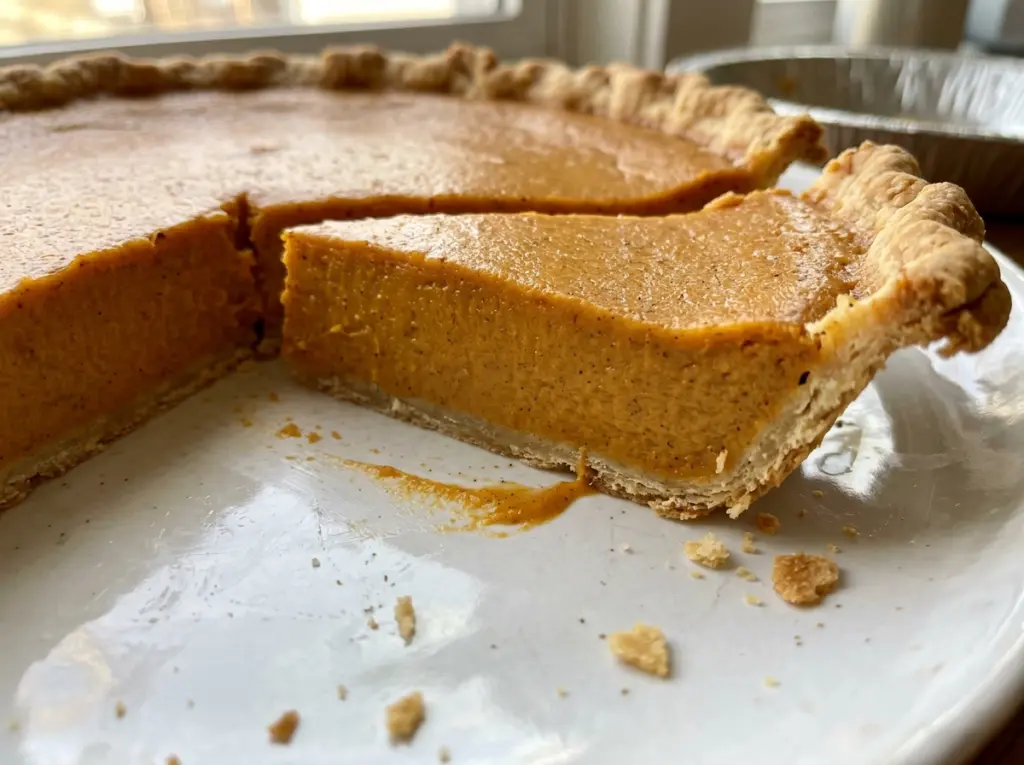
The pumpkin halves come out of the oven soft enough for a knife to slide through, but the puree can still carry more moisture than a pie filling needs. Draining it before it goes into the bowl is what keeps this fresh pumpkin pie from scratch from turning loose in the middle. I like that the pumpkin starts as a whole sugar pumpkin; roasting brings out its mellow sweetness without asking the spice blend to cover up a bland filling.
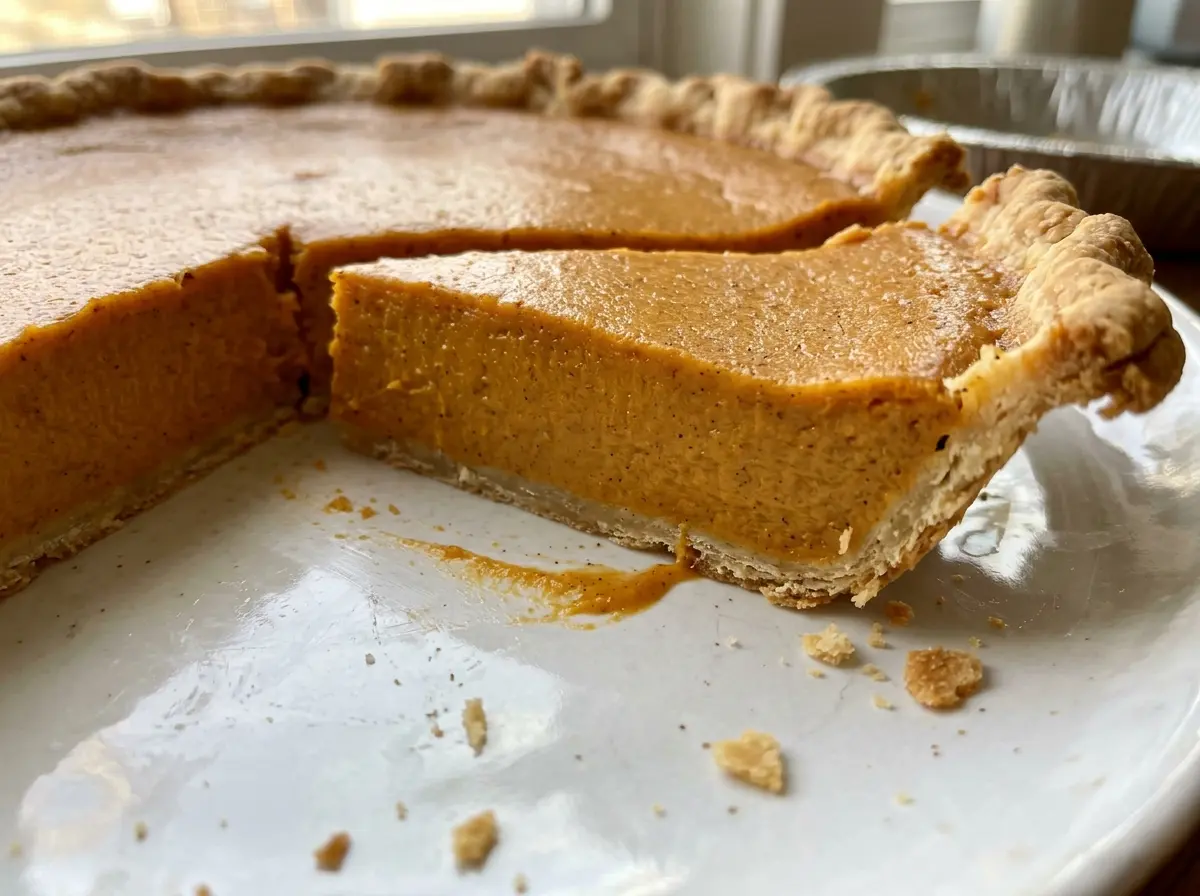
The crust gets its own head start, too. Cold butter stays in small pieces as you work it into the flour, and the dough gets two rests in the refrigerator before it meets the filling. That gives you a tender base that can hold the custard instead of going soft underneath it. Once baked, the pie should have set edges and a gentle wobble in the center, with a smooth, warmly spiced filling inside a crisp crust.
Kitchen Note
When you fit the dough into the pie plate, ease it into the corners rather than pulling it across the rim. Stretched dough is more likely to draw back as it bakes, and that short chill after crimping helps the edge hold its shape.
Save this fresh pumpkin pie for its crisp blind-baked crust and smooth, spice-balanced filling.
Fresh pumpkin needs one extra step before it can make a firm pie
Roasted pumpkin flesh holds more water than the finished custard can comfortably take. If that moisture stays in the puree, the center may bake up soft and take longer to set, even when the crust looks ready. Letting the puree drain in a fine-mesh strainer for the full 30 minutes gives excess liquid time to escape before you measure what goes into the filling.
There’s a small but important order to that process: roast the pumpkin until a knife slides easily into the flesh, let it cool enough to handle, then scoop and puree it before draining. Measure the 1 3/4 cups only after the puree has drained. That way, the filling uses the intended amount of pumpkin rather than a larger, wetter portion that can throw off the balance with the eggs and cream.
Fresh pumpkin also varies from one pumpkin to the next, so use the texture cues alongside the timer. The roasted flesh should puree smoothly, and after straining, your measured puree should be thick enough to mound briefly on a spoon rather than run like a sauce. Those checks make a bigger difference here than adding more spice.
What the pumpkin, butter, and cream each bring to this pie

- Sugar pumpkin — A sugar pumpkin is the right size and type for a homemade puree with a smooth, mellow character. Choose one that feels firm and heavy for its size. The puree needs to be smooth before it goes into the filling; any stringy bits stand out in a custard pie.
- Cold salted butter — Butter gives the crust its rich flavor and flaky layers, while keeping it cold helps preserve little pieces through mixing. A pastry cutter or fingertips both work; stop when the pieces are pea-sized rather than rubbing them into a uniform paste. If using unsalted butter instead, the crust will taste less seasoned, so keep in mind that the listed crust uses salted butter.
- Brown sugar and warm spices — Packed light brown sugar adds sweetness and a light molasses note that suits fresh pumpkin. Cinnamon, ginger, nutmeg, and cloves make a layered spice blend without masking the pumpkin. Freshly opened spices tend to taste more vivid, but there’s no need to buy specialty brands.
- Eggs and heavy cream — Eggs give the filling its custard structure, and heavy cream keeps the set tender rather than firm and rubbery. Whisk the eggs into the pumpkin mixture before adding the cream, then whisk until the filling looks even. The cream’s fat content matters for texture, so a thinner milk is not a like-for-like swap.
Building the pie in stages, from roasted pumpkin to set custard
Roast and drain the pumpkin
Heat the oven to 400°F and line a rimmed baking sheet with parchment. Set the pumpkin halves cut side down and roast for 45 to 60 minutes, until a knife easily pierces the flesh. Let them cool until easy to handle, about 30 minutes, then scoop out the flesh and puree it until smooth. Drain the puree in a fine-mesh strainer for 30 minutes, then measure 1 3/4 cups for the filling.
Mix, rest, and roll the crust
Mix the flour in a medium bowl, then cut in the cold butter with a pastry cutter or your fingertips until the pieces are pea-sized. Stir in 3 tablespoons of ice water, then add more 1 tablespoon at a time only until the dough holds together when pressed. Shape it into a disk, wrap it, and refrigerate for 1 hour. Roll it into a 12-inch round on a lightly floured surface, fit it into a 9-inch pie plate, trim and crimp the edge, then refrigerate for 20 minutes.
Blind-bake until the bottom looks dry
Heat the oven to 375°F. Line the chilled crust with parchment, fill it with pie weights, and bake for 15 minutes. Carefully remove the parchment and weights, then bake for another 5 to 7 minutes. The bottom should look dry rather than glossy; if it still looks damp, give it the remaining time before cooling the crust for 10 minutes.
Whisk the custard and watch the center
Heat the oven to 425°F. Whisk the pumpkin puree with the brown sugar, cinnamon, ginger, nutmeg, cloves, and salt, then whisk in the eggs followed by the heavy cream until smooth. Pour the filling into the crust and bake for 15 minutes; reduce the oven to 350°F and bake for 35 to 45 minutes more. Take the pie out when the edges are set, the center still jiggles slightly, and an instant-read thermometer in the center reads at least 160°F. Cool it on a wire rack for 2 hours before slicing.
Small changes for a make-ahead pie or a different crust
Roast the pumpkin ahead
Make the puree before pie day: roast, scoop, puree, and drain it, then refrigerate it in a covered container. Measure the puree after draining, not before. This splits up the work without changing the filling, and the chilled puree is ready to whisk with the remaining ingredients.
Make the crust gluten-free
Replace the all-purpose flour with the same amount of a cup-for-cup gluten-free baking blend that includes xanthan gum. Keep the butter cold and add the ice water gradually, stopping as soon as the dough holds together when pressed. The crust may be a little more delicate to roll, but the pumpkin filling itself needs no change.
Leave out the cloves for a softer spice note
Omit the ground cloves if you prefer a gentler spice finish. Cinnamon, ginger, and nutmeg will still give the pumpkin warmth, but the pie will lose the deeper, slightly sharp note cloves bring. Keep the other filling ingredients unchanged.
Storage and Reheating
- Refrigerator: Refrigerate leftovers for up to 4 days. The crust softens gradually as it sits under the custard.
- Freezer: Freeze individual slices or the whole cooled pie, wrapped tightly, for up to 1 month for best quality. Thaw in the refrigerator before serving.
- Reheating: This pie is good chilled, so reheating isn’t necessary. If you want a warm slice, microwave it in short bursts just until warm; heating it until hot can make the egg custard tough.
Questions that come up when baking pumpkin pie from scratch
Fresh Pumpkin Pie from Scratch
Ingredients
Equipment
Method
- Heat the oven to 400°F.
- Line a rimmed baking sheet with parchment paper.
- Place the pumpkin halves cut side down on the baking sheet and roast for 45 to 60 minutes, until a knife easily pierces the flesh.
- Let the pumpkin cool until easy to handle, about 30 minutes.
- Scoop out the pumpkin flesh.
- Puree the flesh until smooth.
- Drain the puree in a fine-mesh strainer for 30 minutes.
- Measure 1 3/4 cups puree for the pie.
- Mix the flour in a medium bowl.
- Cut in the cold salted butter with a pastry cutter or your fingertips until the pieces are pea-sized.
- Stir in 3 tablespoons ice water.
- Add more ice water 1 tablespoon at a time just until the dough holds together when pressed.
- Shape the dough into a disk, wrap, and refrigerate for 1 hour.
- Roll the dough into a 12-inch round on a lightly floured surface.
- Fit the dough into a 9-inch pie plate, trim and crimp the edge, then refrigerate for 20 minutes.
- Heat the oven to 375°F.
- Line the crust with parchment and fill with pie weights.
- Bake for 15 minutes.
- Remove the parchment and weights.
- Bake for 5 to 7 minutes until the bottom looks dry.
- Cool the crust for 10 minutes.
- Heat the oven to 425°F.
- In a large bowl, whisk the pumpkin puree with the brown sugar, cinnamon, ginger, nutmeg, cloves, and salt.
- Whisk in the eggs.
- Whisk in the heavy cream until smooth.
- Pour the filling into the crust.
- Bake for 15 minutes.
- Reduce the oven to 350°F and bake for 35 to 45 minutes more, until the edges are set, the center still jiggles slightly, and an instant-read thermometer in the center reads at least 160°F.
- Cool on a wire rack for 2 hours before slicing.
- Refrigerate leftovers.