
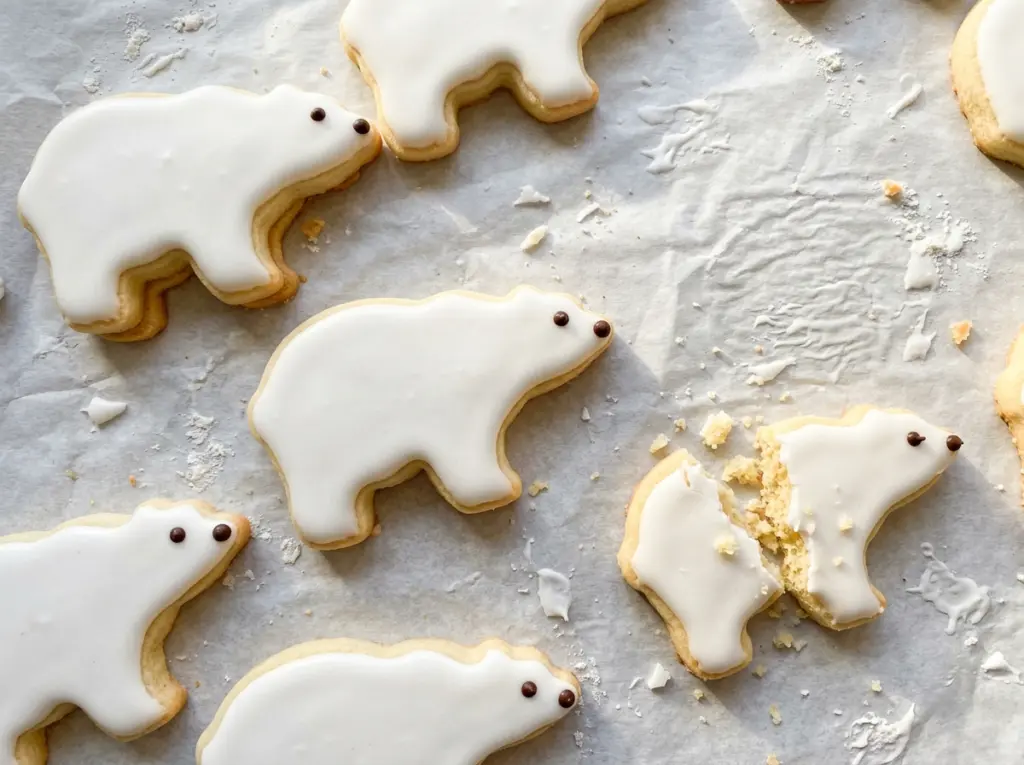
The glaze turns each cooled round into a little bear face, and the marshmallow ears give the cookies their character before the chocolate chips even go on. I like that the decorations are simple to place, but the dough still needs a little patience: soft cookie dough is harder to roll evenly and cut cleanly.
These Polar Bear Cookies start with a buttery sugar-cookie dough, then get a smooth powdered-sugar glaze and a few small decorations. The dough chills before rolling, which gives it time to firm up. Roll it between parchment sheets and you can lift the rounds without working extra flour into the dough. The finished cookies have a tender bite, a sweet white coating, and faces made from familiar pantry ingredients.
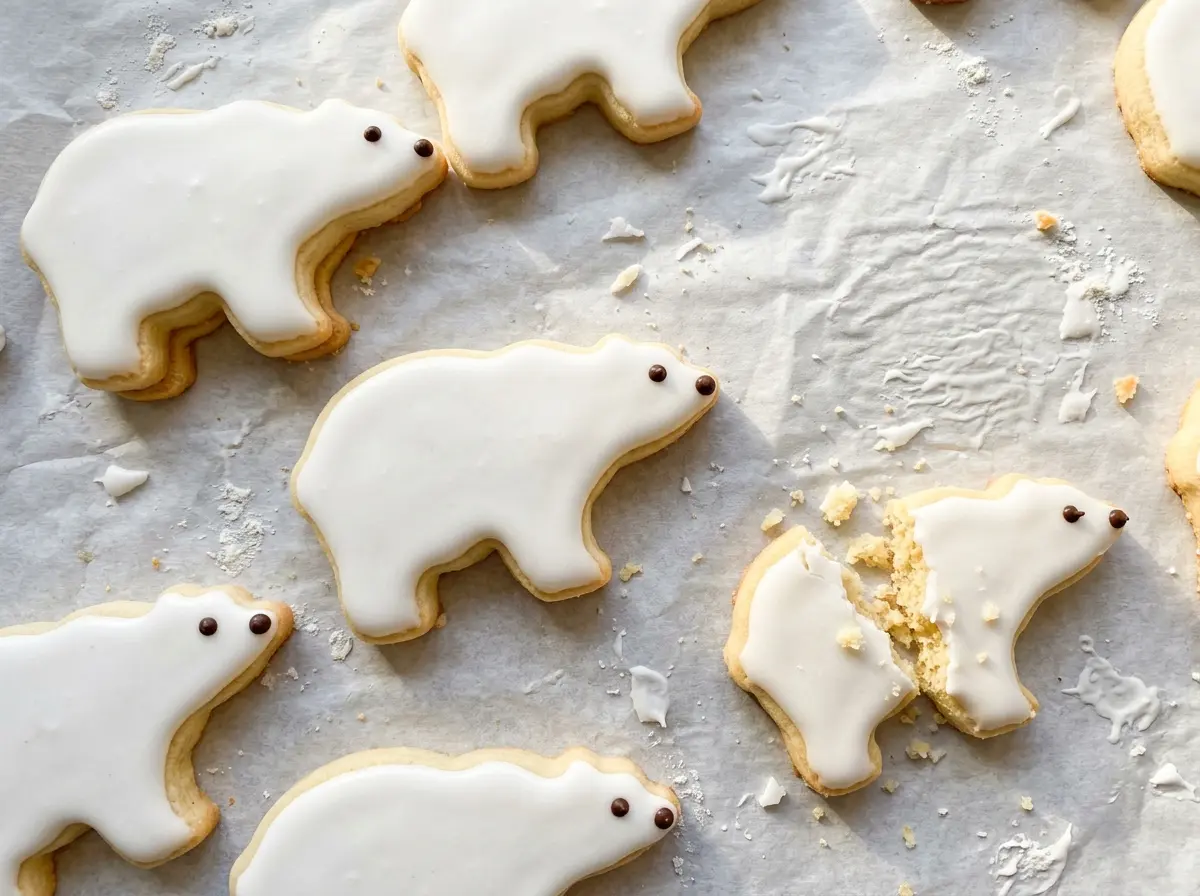
Kitchen Note
Cut each mini marshmallow crosswise, then set the halves cut-side down in the glaze. That flat side gives the ears a neater shape and helps them sit close to the cookie.
Save these Polar Bear Cookies for a cheerful cookie tray: soft rounds, smooth white glaze, and little marshmallow ears.
Why These Cookies Need an Even Roll, Not Extra Flour
A cutout cookie can look tidy on the counter and still bake unevenly if one side is thicker than the other. The thinner parts color first, while a thicker center takes longer to set. Rolling the dough to a consistent quarter-inch thickness helps the edges and middle finish at about the same time, so the cookies stay tender instead of developing dry, overbaked edges.
There’s no need to dust the dough heavily to stop sticking. Roll each disk between sheets of parchment instead; the paper keeps the dough manageable without working extra flour into it. A three-inch round cutter also gives you enough room for the ears and face while keeping the cookies a consistent size. If the dough becomes too soft to lift cleanly, pause and let it firm back up in the refrigerator rather than stretching or pressing the cutouts out of shape.
What Gives the Cookies Their Soft Bite and Bear Faces

- Unsalted butter — It gives the dough its rich, tender texture, while the separate salt keeps the seasoning controlled. Use butter softened enough to beat smoothly, not melted; melted butter changes how the dough comes together.
- All-purpose flour — This gives the cutouts enough structure to hold their round shape and support the decorations. Stick with all-purpose flour here; a different flour changes the dough’s texture and makes the rolling and cutting less predictable.
- Granulated sugar and vanilla — Sugar sweetens the cookie and helps the butter beat up light and fluffy; vanilla rounds out that familiar sugar-cookie flavor. A straightforward vanilla extract is all you need.
- Powdered sugar and milk — Powdered sugar makes a smooth, opaque glaze, and milk brings it to a spreadable consistency. The glaze should hold on the cookie rather than run off, so stir until the sugar is fully incorporated.
- Mini marshmallows and mini semisweet chocolate chips — Their small size suits the scale of a three-inch cookie. The marshmallows make soft ears, while the pointed ends of the mini chips press neatly into the glaze for the eyes and nose.
From Soft Dough to Glazed Polar Bear Faces
Cream the Butter and Build the Dough
Beat the softened butter and granulated sugar in a large bowl with a mixer on medium speed for 2 to 3 minutes, until the mixture looks light and fluffy. Beat in the egg and vanilla. In a separate bowl, whisk the flour, baking powder, and salt, then gradually mix them into the butter mixture just until a soft dough forms. Stop mixing once the flour disappears; working the dough longer can make the cookies tougher.
Chill, Roll, and Cut the Rounds
Divide the dough in half, shape each portion into a disk, wrap it, and refrigerate for 1 hour. While it chills, heat the oven to 350°F and line two baking sheets with parchment paper. Roll each disk between sheets of parchment to a quarter-inch thickness, then cut out rounds with a three-inch cutter. Arrange the rounds on the prepared sheets and reroll the scraps as needed.
Bake Until the Edges Set
Bake the cookies for 9 to 11 minutes, switching the sheets’ rack positions and rotating them halfway through. Look for set edges and bottoms that are just lightly golden; the cookies don’t need deep color across the tops. If the edges are still soft and unset, give them a little more time within the baking window. Cool the cookies on the sheets for 5 minutes, then move them to a wire rack to cool completely.
Stir a Thick, Smooth Glaze
Stir the powdered sugar and milk together in a medium bowl until the glaze is smooth and thick enough to spread. A few dry pockets of sugar can make the finish lumpy, so scrape around the sides and bottom of the bowl as you stir. The finished glaze should coat the back of a spoon and spread over a cookie without immediately running toward the edges.
Place the Ears, Eyes, and Nose
Cut each mini marshmallow in half crosswise. Spread a layer of glaze over each completely cooled cookie, then press two marshmallow halves cut-side down near the top edge for ears. Press three mini chocolate chips point-side down into the glaze to make two eyes and a nose. Let the glaze set before serving so the decorations stay in place.
Easy Ways to Change the Polar Bear Faces
Turn the rounds into paw prints
Keep the same glazed rounds, but arrange a marshmallow half as the large pad and three mini chocolate chips above it as toes. The cookies keep the same sweet, soft base, with a simpler decoration that uses the same ingredients.
Make a clean, undecorated iced cookie
Spread the glaze over the cooled rounds and leave off the marshmallows and chocolate chips. You’ll get a simple white-topped sugar cookie without the extra soft-and-crunchy details of the bear faces.
A note on dietary swaps
The dough and glaze rely on butter, flour, and milk, so leaving off the decorations won’t make these cookies dairy-free or gluten-free. A true version for those needs requires different ingredients, which would change this tested formula.
Storage and Reheating
- Refrigerator: Store the glazed cookies in an airtight container for up to 5 days. The marshmallows may soften, and the glaze can lose a little of its crisp finish.
- Freezer: Freeze the undecorated, completely cooled cookies in an airtight container for up to 2 months, with parchment between layers. Thaw them, then glaze and decorate.
- Reheating: These cookies are best served at room temperature; let refrigerated cookies sit out briefly before serving. Don’t microwave them, since the glaze can melt and the marshmallows can turn sticky.
Questions That Come Up While Making Polar Bear Cookies
Polar Bear Cookies
Ingredients
Equipment
Method
- Beat the butter and granulated sugar in a large bowl with a mixer on medium speed for 2 to 3 minutes, until light and fluffy.
- Beat in the egg and vanilla extract.
- Whisk the flour, baking powder, and salt in a separate bowl.
- Gradually mix the flour mixture into the butter mixture just until a soft dough forms.
- Divide the dough in half and shape each half into a disk.
- Wrap the disks and refrigerate for 1 hour.
- Preheat the oven to 350°F and line two baking sheets with parchment paper.
- Roll each disk between sheets of parchment to 1/4-inch thickness.
- Cut out 24 rounds with a 3-inch round cutter and arrange them on the baking sheets; reroll scraps as needed.
- Bake for 9 to 11 minutes, switching the sheets’ rack positions and rotating them halfway through, until the edges are set and the bottoms are just lightly golden.
- Cool the cookies on the sheets for 5 minutes.
- Transfer the cookies to a wire rack to cool completely.
- Stir the powdered sugar and milk in a medium bowl until smooth and thick enough to spread.
- Cut each mini marshmallow in half crosswise.
- Spread a layer of glaze over each cooled cookie.
- Press two marshmallow halves cut-side down near the top edge of each cookie for ears.
- Press three mini chocolate chips point-side down into the glaze on each cookie to make two eyes and a nose.
- Let the glaze set before serving.




