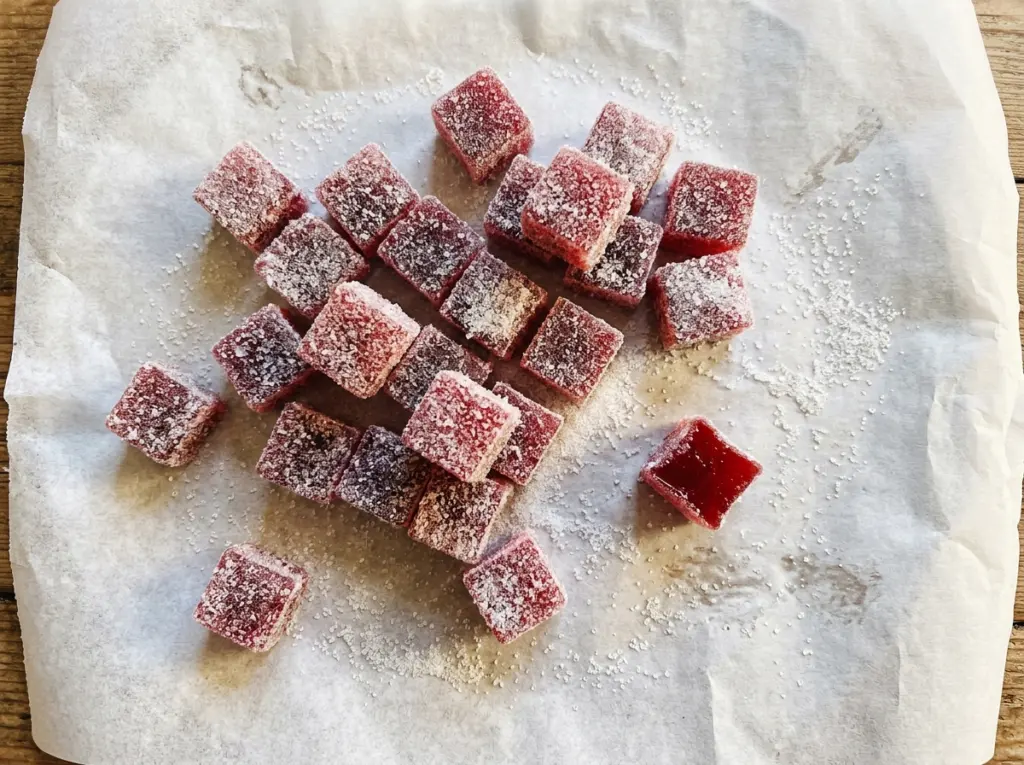
The cranberry mixture starts out looking like a pot of whole berries and water, then turns into a thick, jewel-red jelly once the fruit has softened and gone through a sieve. The first time I made cranberry jelly candy, I expected the sugar coating to do more of the work than it does. It can’t rescue a jelly that hasn’t cooked to the right concentration, so I keep a candy thermometer close by.
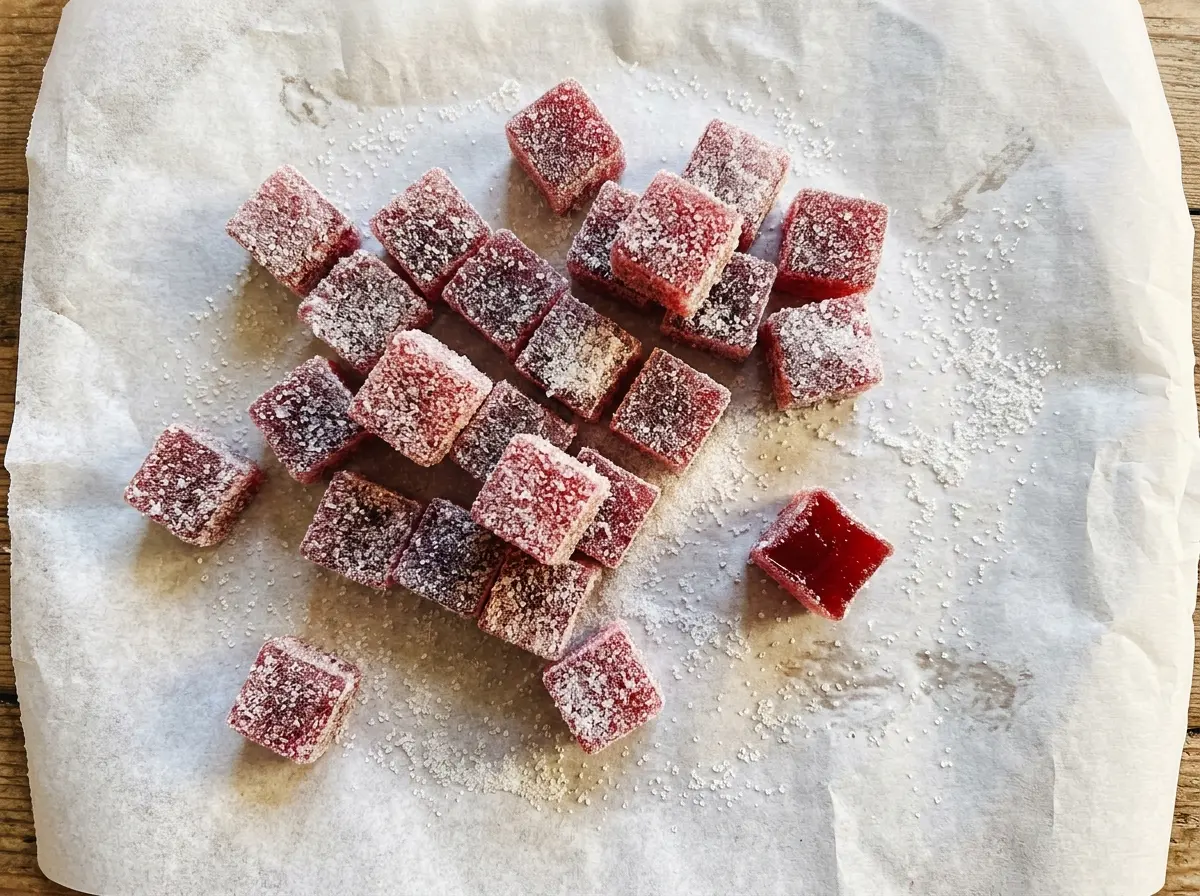
Fresh cranberries bring plenty of tartness, and regular powdered fruit pectin helps the puree set into squares you can pick up and coat. Whisking the pectin with a little sugar before it goes into the puree helps it disperse instead of clumping. Once the jelly is firm and the surface has had time to dry, each piece gets a crisp coat of granulated sugar around its bright, tangy center.
Kitchen Note
A shiny-wet surface isn’t ready for the sugar coating. I wait until the jelly feels slightly tacky rather than damp; coating it too soon can turn the sugar into a sticky layer.
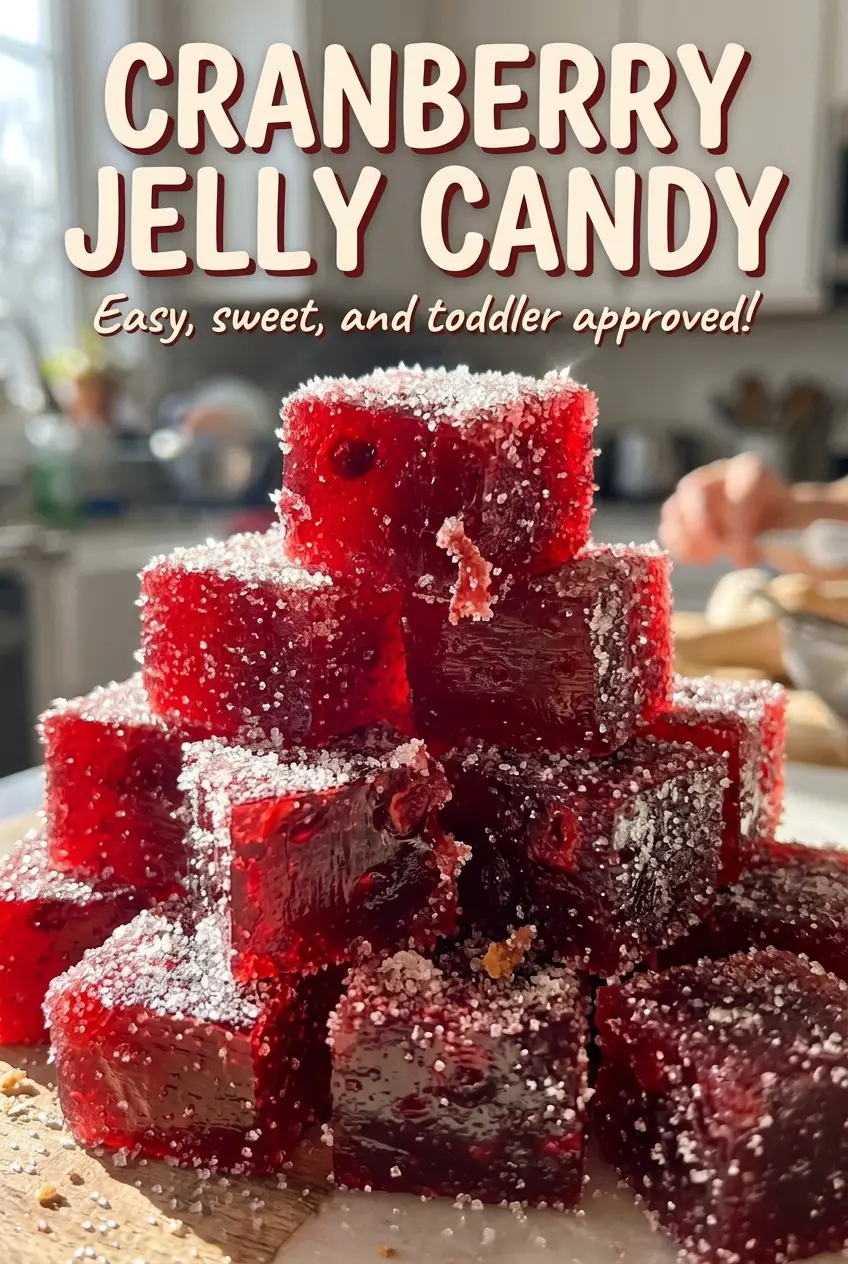
Save this cranberry jelly candy for its tart fruit center, jewel-red color, and crisp sugar coating.
The Small Sugar Portion That Keeps Cranberry Pectin From Clumping
Powdered pectin is easy to underestimate because it looks like a small addition, but a few dry clumps can leave the jelly setting unevenly. Rather than scatter it straight into the cranberry puree, whisk it with part of the measured sugar first. The separate sugar crystals help keep the pectin particles from sticking together as they meet the liquid.
That little bit of preparation matters before the pot reaches a full boil. Once the puree is hot, there’s less time to work out stubborn clumps, and stirring harder won’t distribute them as evenly as starting with a smooth mixture. Whisk the pectin and its sugar together thoroughly, stir that blend into the strained puree with the lemon juice, and then bring the mixture to a full boil. The remaining sugar goes in after that point, so the pectin has already been dispersed through the fruit.
This isn’t a shortcut around cooking the jelly to its proper endpoint. The pectin helps the cranberry mixture set, while the thermometer confirms that enough water has cooked off for the candy to hold its shape. Both parts matter: a smooth start and a properly concentrated finish.
What Cranberries, Pectin, and Lemon Each Bring to the Candy
- Fresh cranberries — Their sharp, tart taste gives the candy its unmistakable cranberry character, and the cooked berries make the fruit base. Choose fresh fruit for the stated proportions; cranberries don’t need to be expensive or especially large. I wouldn’t swap in another berry without adjusting the formula, since fruit moisture and natural pectin vary.
- Regular powdered fruit pectin — This is the setting ingredient, and the powdered form matters to the proportions and order of mixing here. Use regular powdered pectin rather than liquid pectin; the two types aren’t direct swaps. A standard grocery-store brand is fine.
- Granulated sugar — Sugar sweetens the tart fruit, contributes to the cooked jelly’s set, and makes the coating. Ordinary granulated sugar works well; alternative sweeteners don’t behave the same way in this candy. Keep the measured sugar portions separate so the amount for the pectin mixture, the cooking, and the coating stays where it belongs.
- Lemon juice — It adds brightness and acidity to balance the berries. Plain bottled lemon juice can be used in place of fresh lemon juice in the same quantity; there’s no need for a specialty brand.
From Burst Berries to Clean Sugar-Coated Squares
Soften the cranberries in the saucepan
Line an 8-inch square baking pan with parchment, leaving an overhang on two sides so you can lift the set jelly out later. Combine the cranberries and water in a 3-quart saucepan, bring them to a boil over medium-high heat, then simmer for 10–12 minutes. The berries should burst and soften; if several are still holding their shape, keep simmering until they’ve softened.
Puree, then strain out the skins
Puree the berries together with their cooking liquid, then press the puree through a fine-mesh sieve back into the saucepan. Work the fruit through the mesh so the smooth base makes it back into the pot while skins and seeds stay behind. Don’t skip the sieve if you want a more even jelly texture in each finished square.
Boil to the candy temperature
Whisk the pectin with 1/4 cup of the sugar, then stir that mixture and the lemon juice into the puree. Bring it to a full boil over medium-high heat, stir in 1 3/4 cups of the remaining sugar, and cook while stirring constantly. The cooking takes 8–15 minutes; use a candy thermometer and stop when the mixture reaches 224°F rather than relying on the clock alone.
Let the jelly set before cutting and coating
Pour the hot mixture into the prepared pan and let it cool at room temperature until firm. Leave it uncovered for 12–24 hours, then use the parchment overhang to lift the jelly out. Cut it into 1-inch squares with a sharp knife and toss the pieces in the remaining sugar to coat. The cubes should hold their shape as you turn them in the sugar.
Two Useful Ingredient Adjustments for Cranberry Jelly Candy
Choose vegan granulated sugar
If you need a vegan batch, replace the regular granulated sugar with vegan granulated sugar in the same measured portions. The fruit, lemon juice, and powdered fruit pectin are plant-based ingredients, and this sugar swap keeps the candy’s tart-sweet taste and sugar coating intact.
Use gluten-free powdered pectin
For a gluten-free batch, choose gluten-free regular powdered fruit pectin in place of the standard powdered pectin, keeping the same quantity and mixing it with sugar in the same way. The candy keeps its cranberry flavor and firm, sliceable texture without changing the cooking method.
Storage and Reheating
- Refrigerator: Keep the coated candy in an airtight container for up to 1 week. Moisture in the refrigerator can make the sugar coating tacky.
- Freezer: Freezing isn’t recommended; condensation as the candy thaws can wet the coating and soften the jelly.
- Reheating: These candies aren’t reheated. Serve them at room temperature; microwaving can soften the jelly and melt the sugar coating.
Questions That Come Up When Cranberry Jelly Candy Sets or Coats
Cranberry Jelly Candy
Ingredients
Equipment
Method
- Line an 8-inch square baking pan with parchment paper, leaving an overhang on two sides.
- Combine the cranberries and water in a 3-quart saucepan and bring to a boil over medium-high heat, then simmer for 10-12 minutes until the berries have burst and softened.
- Puree the berries and cooking liquid, then press the puree through a fine-mesh sieve back into the saucepan.
- Whisk the pectin with 1/4 cup of the sugar, then stir it and the lemon juice into the puree and bring to a full boil over medium-high heat.
- Stir in 1 3/4 cups of the remaining sugar and cook, stirring constantly, for 8-15 minutes until a candy thermometer reads 224°F.
- Pour the mixture into the prepared pan and cool at room temperature until firm, then leave uncovered for 12-24 hours until the surface is slightly tacky but not wet.
- Use the parchment overhang to lift the jelly from the pan and cut it into 1-inch squares with a sharp knife.
- Toss the squares in the remaining 1 cup sugar to coat.