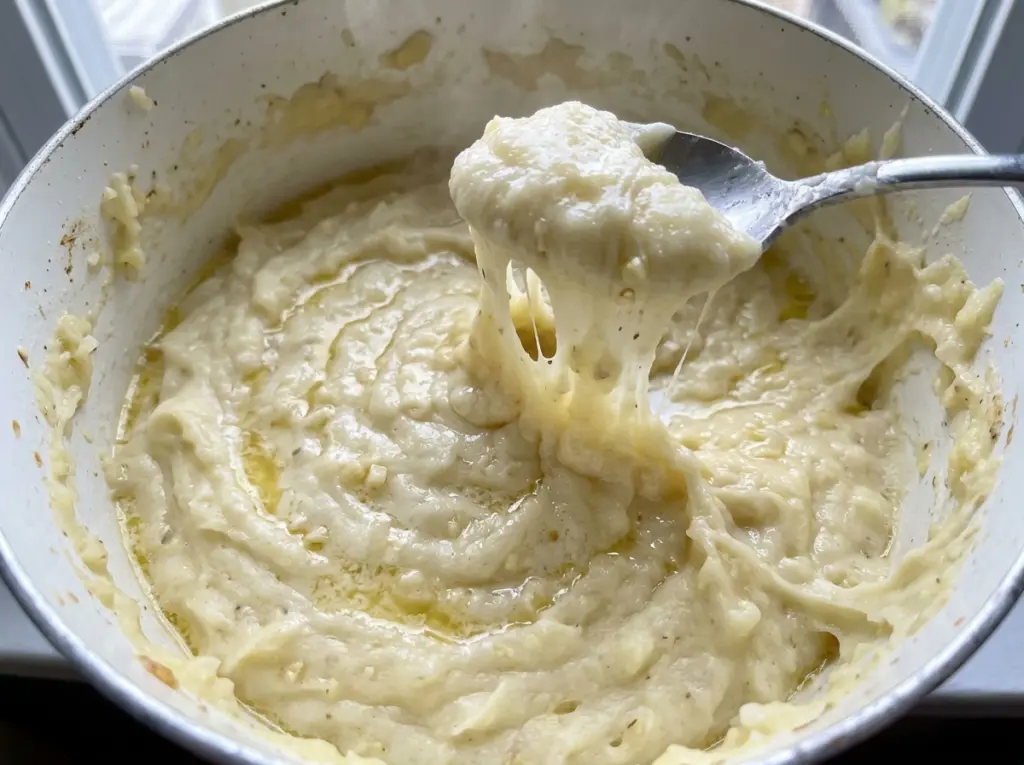
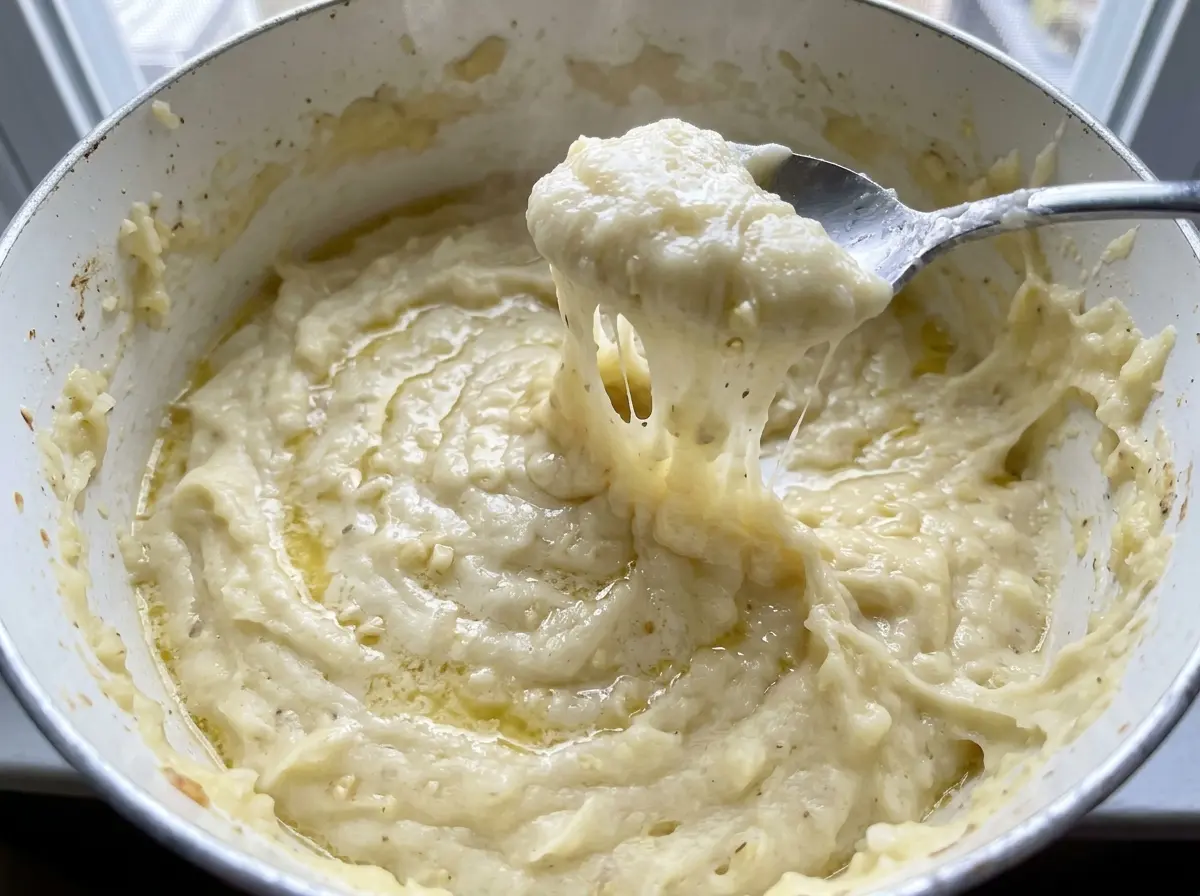
The first thing you notice is the sound: the spoon drags through the pot, then the potatoes pull after it in a glossy ribbon. That’s the moment these pommes aligot stop looking like ordinary mashed potatoes. I keep the ingredients simple and let the two cheeses do the work, so the finished potatoes are rich, smooth, and stretchy without needing a complicated technique.
Russets give the base a fluffy texture, but they need to be drained well before they meet the butter and cream. I also pass them through a ricer rather than beating them hard; that keeps the potatoes smooth before the cheese goes in. Add the cheeses a handful at a time over low heat, and give each addition a chance to melt into the potatoes. The result is a warm pot of cheesy whipped potatoes with long, elastic strands.
Kitchen Note
Bring everyone to the table before the cheese goes into the pot. Aligot is at its stretchiest right after it’s finished, and it thickens as it sits.
Save these pommes aligot for the moment you want potatoes that pull into glossy, stretchy ribbons with every spoonful.
Why aligot can turn gluey before the cheese even goes in
The potatoes set the texture long before the Gruyère and mozzarella hit the pot. Russets contain plenty of starch, which is useful here: once the potatoes are cooked and riced, that starch helps the dairy and cheese come together into a cohesive, stretchy mixture. But when cooked potatoes are worked too aggressively, they can turn pasty and gluey instead of soft and smooth.
That’s why I use a ricer and avoid vigorous beating at the potato stage. The ricer breaks up the cooked pieces evenly without asking you to mash them repeatedly. Drying the drained potatoes briefly in the pot also matters; excess water dilutes the buttery base and makes the texture harder to control. Aim for potatoes that look fluffy rather than wet when they go through the ricer. Once the cheese is added, the sturdy spoon does the mixing, and the potatoes gradually transform into aligot. Keeping those jobs separate—gentle handling first, steady stirring later—makes the finished texture much more dependable.
What the two cheeses contribute to pommes aligot

- Russet potatoes — Their fluffy, starchy interior makes a soft base that can absorb the warm butter and cream. Peel them and cut them into even pieces so they cook at a similar pace. For this particular texture, stick with russets rather than expecting a waxier potato to behave the same way.
- Gruyère — This brings the nutty, savory cheese flavor that gives aligot its character. Finely grate it so it melts readily into the potatoes; a block grated at home is a reliable choice because the shreds are loose and easy to add a handful at a time.
- Low-moisture mozzarella — This is the stretchy partner to Gruyère. The low-moisture style matters: a wetter cheese changes the balance of the mixture, while finely grated mozzarella melts into the potatoes more evenly.
- Heavy cream and unsalted butter — Together they make the potatoes supple before the cheese is stirred in. The cream should be steaming, not boiling, when it’s warmed with the butter. Unsalted butter lets you taste and adjust the salt after the cheeses have melted.
The two cheeses aren’t interchangeable in what they bring to the pot: Gruyère supplies the main savory note, while mozzarella adds elasticity. I don’t recommend replacing either one if you want the classic flavor and pull of this version.
How to build the stretchy texture without rushing the pot
Simmer the potatoes until a knife slips in easily
Put the peeled, 1-inch potato pieces in the pot with cold water, adding enough to cover them by about an inch. Bring the water to a boil, then lower the heat and simmer for 15 to 20 minutes. Check a larger piece with a knife; it should slide through easily without the potato crumbling apart in the water. If the centers are still firm, give them more time rather than draining them early.
Drain, dry, and rice while the potatoes are tender
Drain the potatoes well, then return them to the pot over low heat for 1 to 2 minutes, shaking the pot occasionally. That brief drying step gets rid of surface moisture, so the potatoes won’t water down the dairy. Pass them through a ricer back into the pot while they’re still tender. The riced potatoes should look light and even, with no large lumps.
Warm the butter and cream gently
In a small saucepan, warm the butter and heavy cream over low heat until the butter has melted and the cream is steaming. Don’t let the mixture boil; you only need it warm enough to blend smoothly with the potatoes. Pour it into the pot of riced potatoes and stir until the mixture looks smooth. If you see pockets of dry potato, keep stirring gently until they disappear.
Add the cheese a handful at a time
Set the potato pot over low heat and add the finely grated Gruyère and mozzarella a handful at a time. Beat with a sturdy wooden spoon as each addition melts, then add the next handful. Keep the heat low; turning it up to hurry the cheese can leave the mixture uneven rather than glossy. After about 5 to 8 minutes, look for melted cheese and potatoes that stretch from the spoon. Stir in the kosher salt, taste, and add more if needed.
Small adjustments that stay true to the two-cheese classic
Keep the cheese flavor front and center
Start with the listed kosher salt, then taste after both cheeses have melted before adding anything more. The cheeses bring their own savory saltiness, so stopping at the initial seasoning gives you a more cheese-forward bowl without changing the balance of Gruyère and mozzarella.
Make the finish a little more seasoned
For a saltier finish, stir in additional kosher salt a little at a time after the cheese has melted, tasting between additions. Adding it at the end lets you account for the saltiness of your particular cheeses instead of seasoning the potatoes heavily before you know how the finished pot tastes.
Storage and Reheating
- Refrigerator: Store leftovers in a covered container for 3 to 4 days. The potatoes will firm up as they chill, and the cheese won’t have the same pull when cold.
- Freezer: Freezing is safe, but the dairy-rich texture can become grainy or separate after thawing, so the leftovers are best enjoyed from the refrigerator.
- Reheating: Warm gently in a saucepan over low heat, stirring often until hot throughout. High heat can make the cheese oily, and the mixture will be thicker than it was freshly made.
Questions that come up while making pommes aligot
Pommes Aligot Cheesy Whipped Potatoes
Ingredients
Method
- Put the potatoes and 2 quarts cold water in a 5-quart pot; add a little more water if needed to cover the potatoes by about 1 inch.
- Bring to a boil, then reduce the heat and simmer for 15 to 20 minutes, until the potatoes are easily pierced with a knife.
- Drain the potatoes well and return them to the pot over low heat for 1 to 2 minutes, shaking the pot occasionally to dry them.
- Pass the potatoes through a ricer back into the pot.
- In a small saucepan, warm the butter and heavy cream over low heat until the butter melts and the cream is steaming; do not let it boil.
- Stir the warm butter and cream into the potatoes until smooth.
- Set the pot over low heat and add the Gruyère and mozzarella a handful at a time, beating with a sturdy wooden spoon until the cheese is melted and the potatoes are glossy and stretchy, about 5 to 8 minutes.
- Stir in the kosher salt.
- Taste and add more salt if needed.
- Serve immediately.