
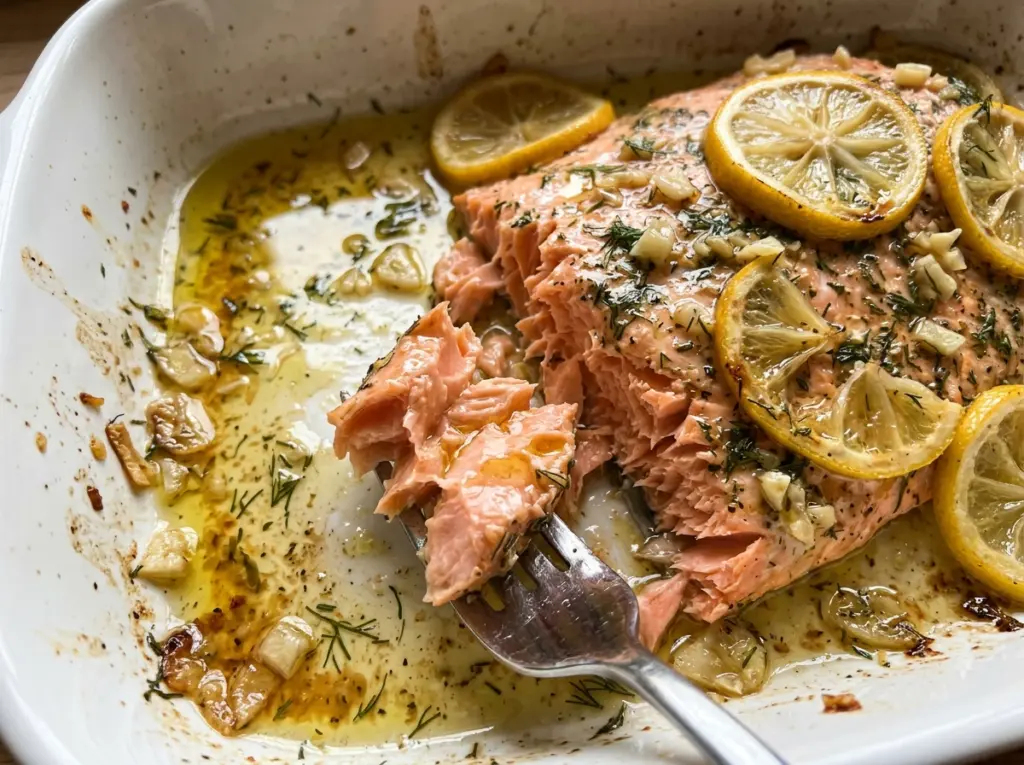
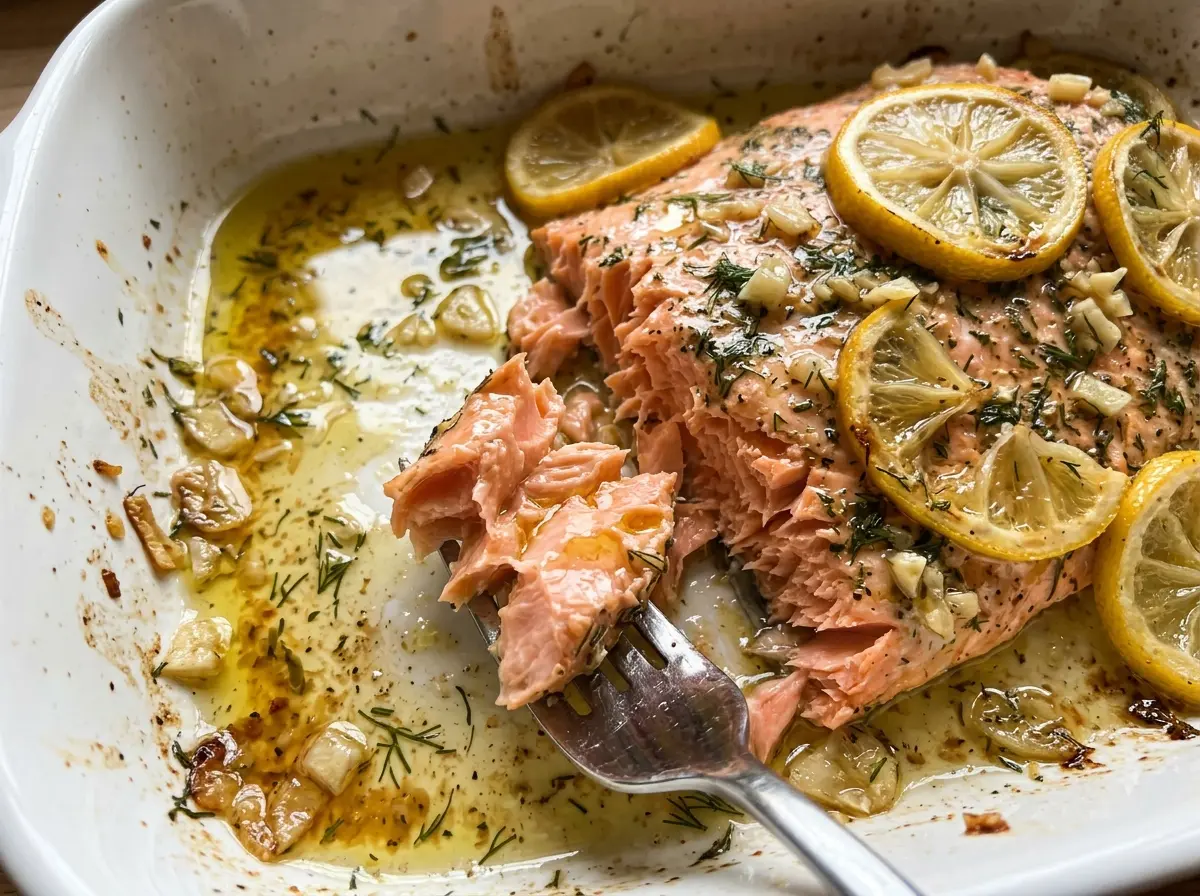
The butter foams quietly as the garlic warms, and the lemon cuts through before the salmon even reaches the oven. That quick brush-on sauce is what makes this 5-Ingredient Baked Salmon taste like more than a plain fillet with seasoning sprinkled over it. I like that the prep stays simple: the salmon goes skin side down on parchment, and the oven handles the rest.
There’s no need to flip the fish or build a separate sauce after baking. Melted butter carries the minced garlic and lemon juice across the top, while fresh dill goes on at the end, when its bright, grassy flavor is still easy to notice. The most reliable way to judge doneness is to check the thickest part with an instant-read thermometer, since fillets don’t all have the same shape. The result is tender salmon with buttery garlic on top and lemon and dill in every bite.
Kitchen Note
Give the butter mixture a quick stir right before you brush it on. The minced garlic settles while the butter sits, and stirring helps spread it evenly over the fillet.
Save this 5-Ingredient Baked Salmon for a simple dinner with buttery garlic, lemon, and fresh dill.
Why Skin-Side-Down Baking Keeps This Salmon Simple
Salmon can turn dry when it’s cooked too long, and trying to flip a soft fillet halfway through only adds another chance for it to break. Here, the skin stays against the parchment while the fish bakes. It acts as a natural barrier between the delicate flesh and the hot pan, so the top stays open for the butter, garlic, and lemon. There’s no flipping and no need to lift the fish until it’s ready to serve.
That setup also makes the doneness check straightforward. Salmon fillets taper, so the thin end may be ready before the thick center; checking the thickest part gives you a consistent target instead of relying on the surface color alone. Use an instant-read thermometer there, and take the shape of your fillet into account rather than treating the clock as the only cue. Once the fish is out of the oven, a short rest gives the juices a moment to settle before you serve it. The skin stays underneath, where it can be left on the plate if that’s your preference.
What the Butter, Lemon, and Dill Each Bring to the Salmon

- Skin-on salmon — The skin helps protect the flesh as it bakes and makes it easier to handle as one fillet. Choose a piece with an even thickness when you can; an especially tapered piece will cook at different rates from end to end. Fresh or thawed salmon works best for this oven timing.
- Unsalted butter — Butter gives the garlic and lemon a rich base and brushes easily over the fish when melted. Unsalted butter lets you season the salmon with kosher salt without guessing how salty the butter is. For a dairy-free version, olive oil is a workable replacement, though the topping will taste lighter and less buttery.
- Fresh garlic — Minced garlic gives the butter mixture its savory edge. Freshly minced cloves have a brighter, more direct flavor than garlic powder, and the small pieces cling to the top of the salmon.
- Lemon juice — Lemon balances the richness of the butter and gives the fish a clean, bright finish. Freshly squeezed juice has a livelier aroma, but bottled lemon juice works when that’s what you have.
- Fresh dill — Dill is added after baking so its delicate, grassy aroma doesn’t get lost in the oven. Chopped fresh dill is worth choosing here; dried dill has a more concentrated, muted character and won’t give the same fresh finish.
- Kosher salt and black pepper — These season the salmon itself, rather than asking the butter mixture to carry all the flavor. Season the top evenly so each portion is balanced.
From Parchment to Plate: The Few Steps That Matter
Set Up the Pan and Season the Fish
Heat the oven to 400°F and line a rimmed baking sheet with parchment paper. Set the salmon skin side down so it lies flat and the seasoned flesh faces up. Sprinkle the kosher salt and black pepper across the surface. Keeping the fillet in one piece makes it easier to brush and bake evenly.
Make the Lemon-Garlic Butter
Melt the unsalted butter in a small bowl, then stir in the minced garlic and lemon juice. The butter should be liquid enough to brush over the fish, not bubbling hot. If the garlic collects at the bottom while you’re working, stir the mixture again before coating the salmon. Brush the mixture across the top so the lemon butter reaches the full surface.
Bake Until the Thickest Part Is Ready
Place the baking sheet in the heated oven and bake the salmon for 12 to 15 minutes. Check the thickest part with an instant-read thermometer; it should register 145°F. The center is the most useful place to check because the thinner edges cook faster. If your fillet is unusually thick or tapered, use the thermometer reading rather than assuming every piece will take the same time.
Add Dill and Let the Fish Rest
Take the salmon out of the oven and sprinkle the chopped fresh dill over the top. Let it rest for 3 minutes before serving. That brief pause gives the fish time to settle, and the dill stays bright instead of baking into the buttery coating. Lift or portion the salmon gently so the flakes remain intact.
Easy Ways to Change the Finish Without Losing the Point
Make It Dairy-Free With Olive Oil
Swap olive oil for the melted butter, then stir in the garlic and lemon juice and brush it over the salmon. The oil keeps the topping moist and carries the same aromatics, but the finished fish will have a cleaner, less rich taste than the butter version.
Turn Up the Lemon
Use a little more lemon juice in the butter mixture for a sharper, brighter finish. Keep the butter in the mixture so the garlic still spreads easily over the fish; adding extra juice alone would make the topping less rich and harder to brush on evenly.
Skip the Dill for a Garlic-Lemon Finish
Leave off the fresh dill if you want the butter, garlic, and lemon to stand on their own. The salmon will lose the herbal freshness that dill brings at the end, but the main buttery citrus topping still works as written.
Storage and Reheating
- Refrigerator: Store leftovers in an airtight container and use within 3 to 4 days. The salmon will firm up as it chills, and the skin may soften.
- Freezer: Cooked salmon freezes for about 2 to 3 months. Wrap portions tightly or place them in a freezer-safe airtight container; thaw overnight in the refrigerator for a better texture.
- Reheating: Warm covered in a low oven or microwave in short bursts until hot. Stop as soon as it’s warmed through; extended heating dries out the fish.
Questions That Come Up With Baked Salmon
5-Ingredient Baked Salmon
Ingredients
Equipment
Method
- Heat the oven to 400°F.
- Line a rimmed baking sheet with parchment paper.
- Place the salmon skin side down on the prepared baking sheet.
- Season the salmon with the salt and pepper.
- Melt the butter in a small bowl.
- Stir the garlic and lemon juice into the melted butter.
- Brush the mixture over the salmon.
- Bake for 12 to 15 minutes, until the thickest part of the salmon registers 145°F on an instant-read thermometer.
- Sprinkle the salmon with the dill.
- Let it rest for 3 minutes before serving.




