
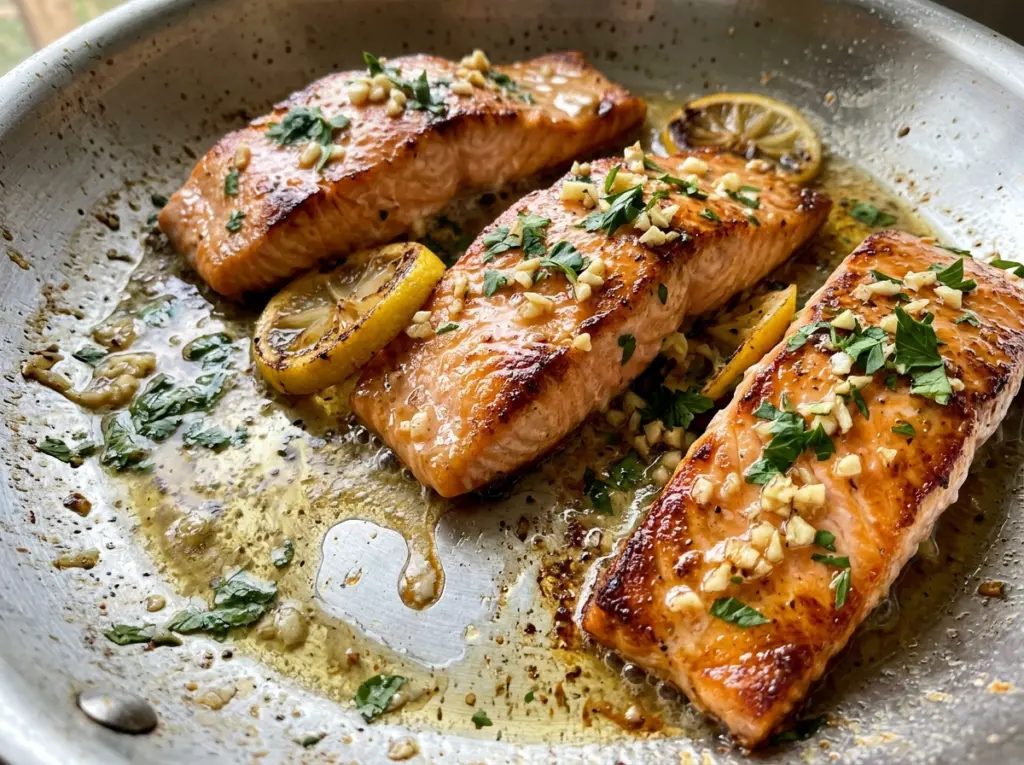
The butter turns glossy as it runs over the salmon, carrying little bits of garlic and lemon down the sides of each fillet. I like this oven method because the fish can cook undisturbed while the lemon-garlic butter keeps the surface moist. For Lemon Garlic Butter Salmon, skin-on fillets go onto a foil-lined pan, get a quick pour of that bright, buttery mixture, and bake until they’re just cooked through.
Fresh lemon does more than add tang: the juice brightens the butter, and a little zest gives it a fragrant lift without another cooking step. I stir both into the melted butter with the minced garlic, then spoon the mixture across the fillets so each one gets some garlic and zest. The result is tender salmon with a buttery top and a clean lemon finish, ready for the table after a brief rest.
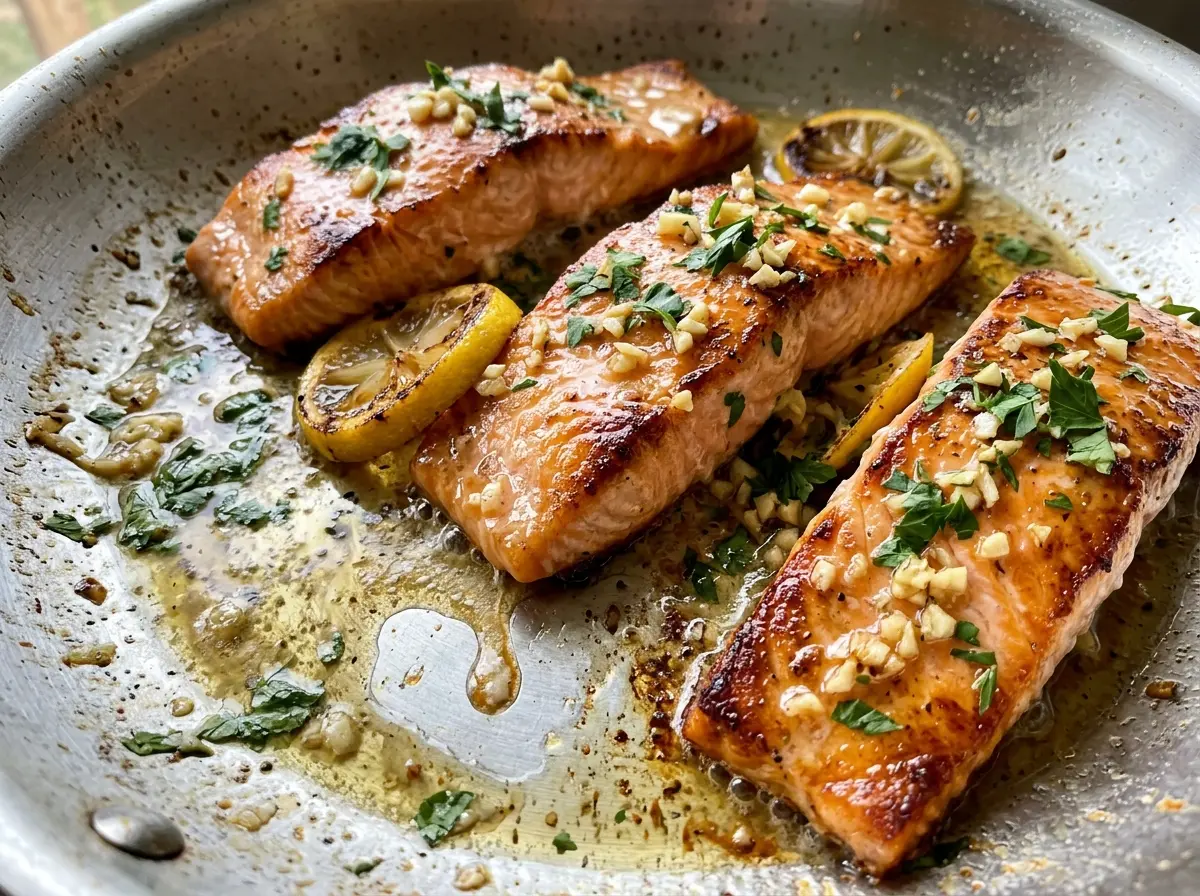
Kitchen Note
Give the salmon its full 3-minute rest after it comes out of the oven. That short pause lets the fillets settle before you lift them from the pan, so they’re less likely to break apart.
Save this Lemon Garlic Butter Salmon for a simple oven dinner with tender fillets and a bright, buttery lemon finish.
Why the Thickest Part Matters More Than the Clock
Salmon fillets don’t all have the same shape. One may be thick through the center while another tapers to a narrow end, so the same time in the oven doesn’t guarantee that every piece is ready at once. The useful check is the thickest part of each fillet, not the thinnest edge or the color of the butter on top.
I use both the temperature and the texture as cues. The center should reach 145°F, and the fish should flake easily when gently tested with a fork. If the thinner fillet is ready first, lift it off the pan while the thicker one finishes; leaving every piece in just because one needs more time can dry out the rest. That’s a small adjustment, but it gives you much better control than relying on the timer alone.
The butter mixture also makes the surface look glossy before the fish is cooked through, so appearance by itself can be misleading. Check the center of each piece and let that reading guide you. The salmon stays tender when you stop baking as soon as it reaches the doneness cues, rather than waiting for the top to look deeply browned.
Why Skin-On Salmon and Fresh Lemon Make This Butter Sauce Work

- Skin-on salmon — The skin holds each fillet together as you move it from the pan and gives you a sturdy side to set against the foil. Choose pieces that are similar in thickness so they finish at a similar pace. Skinless fillets work too, but they’re more delicate when lifted.
- Unsalted butter — Melted butter carries the garlic and lemon over the surface of the fish and gives the topping its rich texture. Unsalted butter lets the measured kosher salt stay in control. For a dairy-free version, olive oil is the most direct swap; it tastes lighter and less creamy.
- Fresh garlic — Minced cloves give the butter a sharper, more aromatic garlic flavor than garlic powder. Chop the garlic finely so it spreads through the butter instead of landing in a few large pieces. Jarred minced garlic can stand in, though fresh has the brighter flavor.
- Fresh lemon juice and zest — Juice brings acidity, while finely grated zest adds fragrant lemon oils that juice alone can’t supply. Zest the lemon before you cut and squeeze it; it’s much easier to handle whole. Bottled juice can replace the fresh juice in a pinch, but keep the zest for the fresh citrus aroma.
- Fresh parsley — Chopped parsley adds a clean, herbal finish after baking. Dried parsley won’t have the same fresh look or flavor; if that’s what you have, use it sparingly and expect a quieter finish.
From Foil-Lined Pan to Tender, Flaky Salmon
Prepare the Pan and Heat the Oven
Heat the oven to 400°F and line a rimmed baking sheet with foil. The rim helps keep the melted butter on the pan rather than letting it run off the edge. Set the salmon skin-side down, leaving it in a single layer. Starting with the oven fully heated gives the fillets a consistent bake.
Season the Fish and Stir Together the Butter
Season the salmon with kosher salt and black pepper. In a small bowl, stir together the melted butter, minced garlic, lemon juice, and finely grated lemon zest until the garlic and zest are distributed. Spoon the mixture evenly over the fillets, including the sides where it will run down naturally. If the garlic clumps in one spot, give the butter another stir before you finish spooning.
Bake Until the Centers Reach 145°F
Bake the salmon for 12 to 15 minutes. Start checking at the shorter end of the range, especially if the fillets are on the thinner side. Check the thickest part of each piece for 145°F, then gently test for easy flaking with a fork. If a thicker center needs more time, return that fillet to the oven rather than overbaking pieces that are already ready.
Finish with Parsley and Let the Fish Rest
Sprinkle the chopped fresh parsley over the cooked salmon. Leave the fillets on the pan for 3 minutes before serving. The short rest makes them easier to handle and gives the buttery topping a moment to settle. Lift each piece carefully, supporting it from underneath so the flakes stay together.
Simple Swaps for a Different Take on Lemon Garlic Salmon
Make the Butter Topping Dairy-Free
Replace the melted butter with the same amount of olive oil and stir it with the garlic, lemon juice, and zest. The salmon will still get a glossy citrus-garlic coating, but the flavor will be lighter and less rich than the butter version. Olive oil stays fluid as it sits, so stir the mixture again if the garlic settles before you spoon it over the fillets.
Trade the Parsley for Fresh Dill
Use chopped fresh dill in place of the parsley and sprinkle it over the salmon after baking. Dill has a more distinct, slightly grassy flavor, which pairs naturally with lemon and gives the finish a different character. Keep it as a finishing herb rather than mixing it into the butter before the oven.
Storage and Reheating
- Refrigerator: Refrigerate leftovers within 2 hours and use them within 3 to 4 days. The chilled butter will firm up, and the salmon will be less tender than it was freshly baked.
- Freezer: Cooked salmon freezes, though thawing softens its texture. Wrap individual portions tightly or place them in an airtight freezer container, then thaw overnight in the refrigerator.
- Reheating: Cover the salmon and warm it in a 275°F oven until heated through, checking the center so it doesn’t dry out. Avoid high heat or a long microwave cycle, which can make the fish tough.
Questions That Come Up When Baking Lemon Garlic Salmon
Lemon Garlic Butter Salmon
Ingredients
Equipment
Method
- Heat the oven to 400°F.
- Line a rimmed baking sheet with foil.
- Arrange the salmon skin-side down on the prepared baking sheet and season with the salt and pepper.
- Stir together the melted butter, garlic, lemon juice, and lemon zest.
- Spoon the butter mixture evenly over the salmon.
- Bake for 12 to 15 minutes, until the thickest part of each fillet reaches 145°F and the fish flakes easily with a fork.
- Sprinkle with the parsley.
- Let rest for 3 minutes before serving.




