
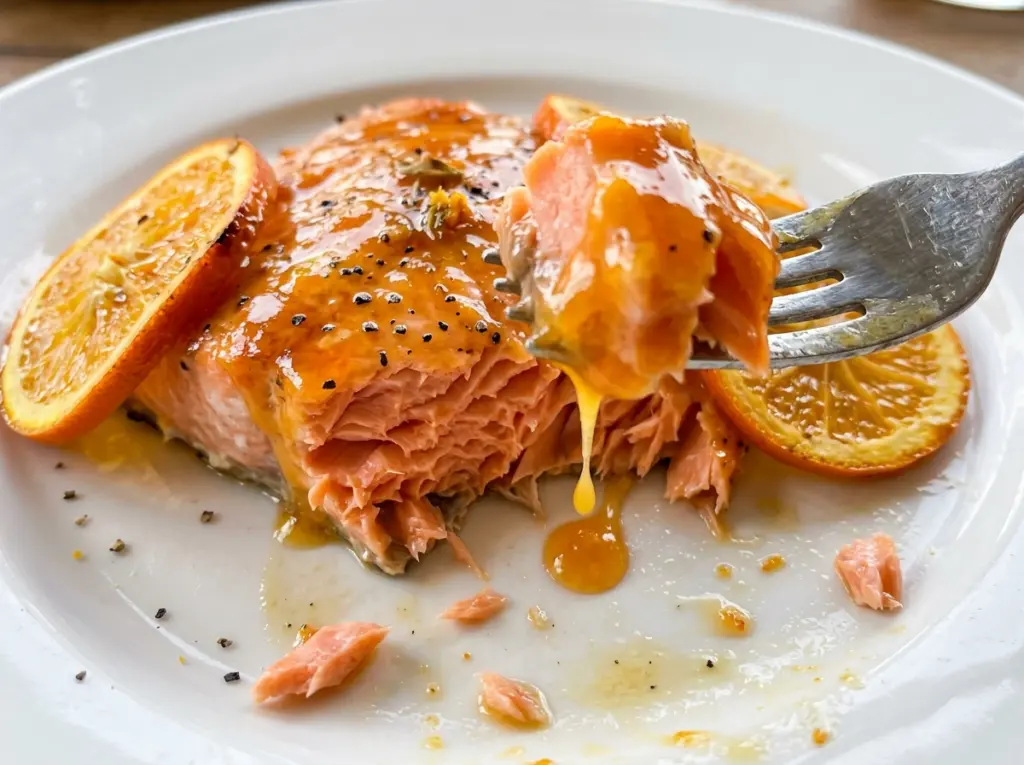
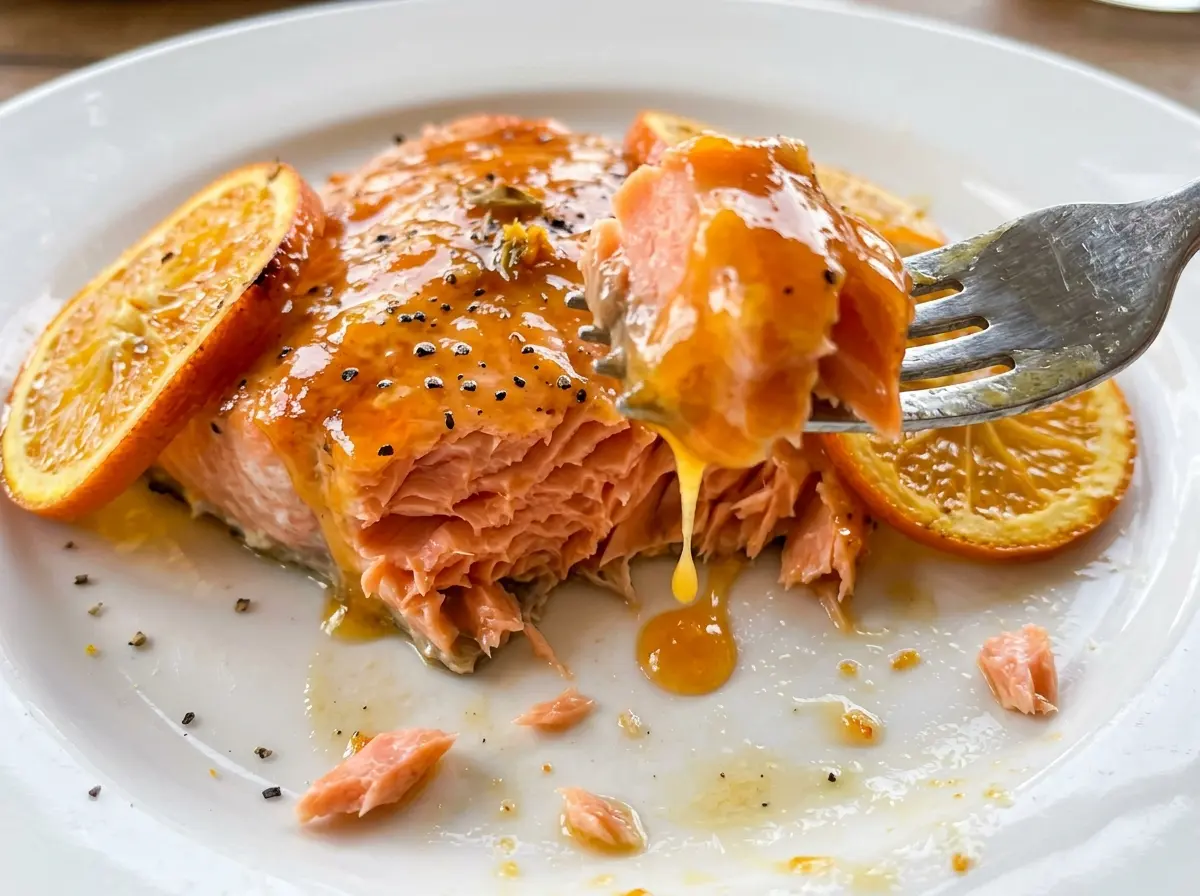
The glaze starts out thin in the saucepan, then turns shiny and clings to a spoon as the orange juice simmers down. That change matters: brush it on too early and it runs off the salmon before it can coat the top. Once I started reducing it until it looked glossy, these 4-Ingredient Orange Salmon fillets came together with a bright, sweet-savory glaze and almost no fuss.
Skin-on fillets go into a parchment-lined baking dish with the skin against the pan, so there’s no flipping or juggling delicate fish in a skillet. The glaze takes a few minutes on the stove, and the salmon bakes while it coats the fish with orange and honey. Use fillets close to the same size so they finish at nearly the same time, and you’ll have tender salmon with a gently sticky top.
Kitchen Note
Don’t brush on the glaze while it’s still watery. Let it simmer until it’s reduced to about a third of a cup and coats the back of a spoon; then it stays on the salmon instead of pooling in the dish.
Save these 4-Ingredient Orange Salmon fillets for a quick dinner with a glossy orange-honey glaze and tender baked fish.
Why the Salmon Goes Skin-Side Down, Not Glaze-Side Down
With skin-on fillets, the skin belongs against the parchment and the glaze belongs on the flesh. That arrangement gives the salmon a stable base while it bakes, and it keeps the glaze exposed so it can turn glossy rather than getting trapped underneath the fish. There’s no need to turn the fillets halfway through; flipping can break apart fish that’s just beginning to soften.
Skin also helps protect the underside from the direct heat of the baking dish. The parchment keeps the skin from sticking, so you can lift each portion out more cleanly when it’s cooked. Even if you don’t plan to eat the skin, leave it attached for baking. Brush the glaze across the top of each fillet, not into the dish, where it would spread thin and lose its chance to coat the fish.
Fillet thickness matters more than the clock alone. A broad, thick piece needs longer than a thinner one, even if both weigh about the same. Check the thickest part of each portion rather than assuming all four are ready together.
How Orange Juice, Honey, and Soy Sauce Build the Glaze

- Orange juice — It supplies the glaze’s fruitiness and most of its liquid, then becomes more concentrated as it simmers. Fresh-squeezed juice tastes bright, while ordinary carton orange juice works well too. Choose juice without pulp if you want the smoothest-looking glaze; pulp is fine, but it can make the coating less even.
- Honey — Honey brings sweetness and helps the reduced glaze cling to the salmon. A mild honey lets the orange stay in front, while a strongly flavored honey will be more noticeable. Stir it into the juice and soy sauce before heating so it disperses evenly.
- Soy sauce — This adds salty, savory depth that keeps the glaze from tasting like syrup. Standard soy sauce is a good fit here; lower-sodium soy sauce will make the finished glaze less salty. For a gluten-free version, use certified gluten-free tamari in its place.
- Skin-on salmon — The skin helps the fillets stay intact as they bake and makes them easier to lift from the lined dish. Ask for four portions close to the same size, since evenly sized fillets are more likely to finish together. The recipe is written for skin-on pieces, though the flesh is what gets brushed with glaze.
Reduce the Glaze First, Then Bake the Salmon
Simmer Until the Glaze Coats a Spoon
Whisk the orange juice, honey, and soy sauce together in a small saucepan. Bring the mixture to a simmer over medium heat, then cook it for 6–9 minutes, stirring occasionally. It should reduce to about a third of a cup and leave a light coating on a spoon. If it still runs off the spoon like juice, give it more time rather than brushing it on thin.
Set Up the Fillets for Even Baking
Heat the oven to 400°F and line a 9×13-inch baking dish with parchment paper. Arrange the salmon skin-side down with a little space between the fillets, then brush the glaze over their tops. Keep the glaze on the exposed flesh so it forms a coating instead of spreading across the parchment. If the portions vary in thickness, position the thicker pieces where you can check them easily first.
Bake Until the Thickest Part Is Done
Bake the salmon for 10–15 minutes, checking the thickest part of each fillet for an internal temperature of 145°F. Start checking toward the early end of the range if the portions are thin; thick pieces need more time. A thermometer gives you a more reliable answer than the glaze’s color, which can look browned before the center is cooked through. Take care not to press down on the fillets when checking, since they’ll flake more readily as they finish.
Two Easy Ways to Change the Orange Salmon
Use Blood Orange for a More Floral Glaze
Replace the orange juice with the same amount of blood orange juice and keep the honey and soy sauce unchanged. The glaze keeps its citrus sweetness but takes on a deeper, slightly floral note. The reduction and baking method stay the same.
Make It Gluten-Free With Tamari
Swap the soy sauce for the same amount of certified gluten-free tamari. It keeps the savory, salty balance of the glaze, with a slightly rounder taste. The rest of the ingredients and cooking method don’t need to change.
Storage and Reheating
- Refrigerator: Store cooked salmon in an airtight container for 3–4 days. The glaze will lose some of its shine, and chilled salmon will be firmer.
- Freezer: It freezes well for best quality for 2–3 months. Cool the portions, wrap them tightly, and place them in a freezer-safe container.
- Reheating: Reheat covered in a low oven until the center reaches 165°F. Avoid high heat or long reheating; both can dry out the salmon before it warms through.
Questions I Get Asked About This Orange Salmon
4-Ingredient Orange Salmon
Ingredients
Equipment
Method
- Whisk the orange juice, honey, and soy sauce together in a small saucepan.
- Bring to a simmer over medium heat and cook for 6–9 minutes, stirring occasionally, until reduced to about 1/3 cup and thick enough to coat a spoon.
- Heat the oven to 400°F.
- Line a 9x13-inch baking dish with parchment paper.
- Arrange the salmon skin-side down in the dish and brush the glaze over the tops of the fillets.
- Bake for 10–15 minutes, until the thickest part of each fillet reaches 145°F.




