
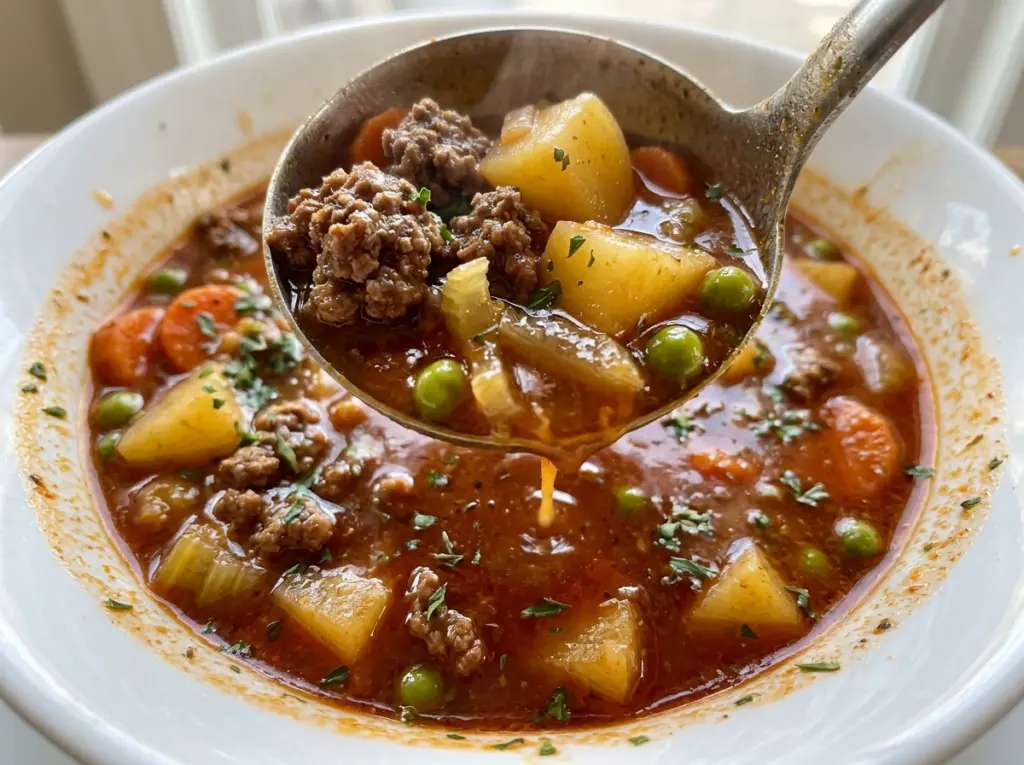
When the beef is browned and the broth first goes into the pot, Hamburger Stew can look more like soup than supper. The potatoes and carrots need their covered simmer to turn fork-tender, while flour stirred into the beef and vegetables gives the broth body along the way. I like that everything builds in one Dutch oven, with no separate pan or last-minute thickener. The ground beef makes each bowl hearty, and the vegetables keep the stew from feeling heavy.
Evenly cut Yukon Gold potatoes are a good fit here: they soften without disappearing into the broth. I keep the simmer gentle once the pot comes to a boil, so the vegetables cook through without the potatoes tumbling apart. A little Worcestershire and dried thyme round out the beefy tomato broth, and frozen peas go in at the end for a fresh, sweet bite. The finished stew is thick enough to cling to a spoon, with tender vegetables in every bowl.
Kitchen Note
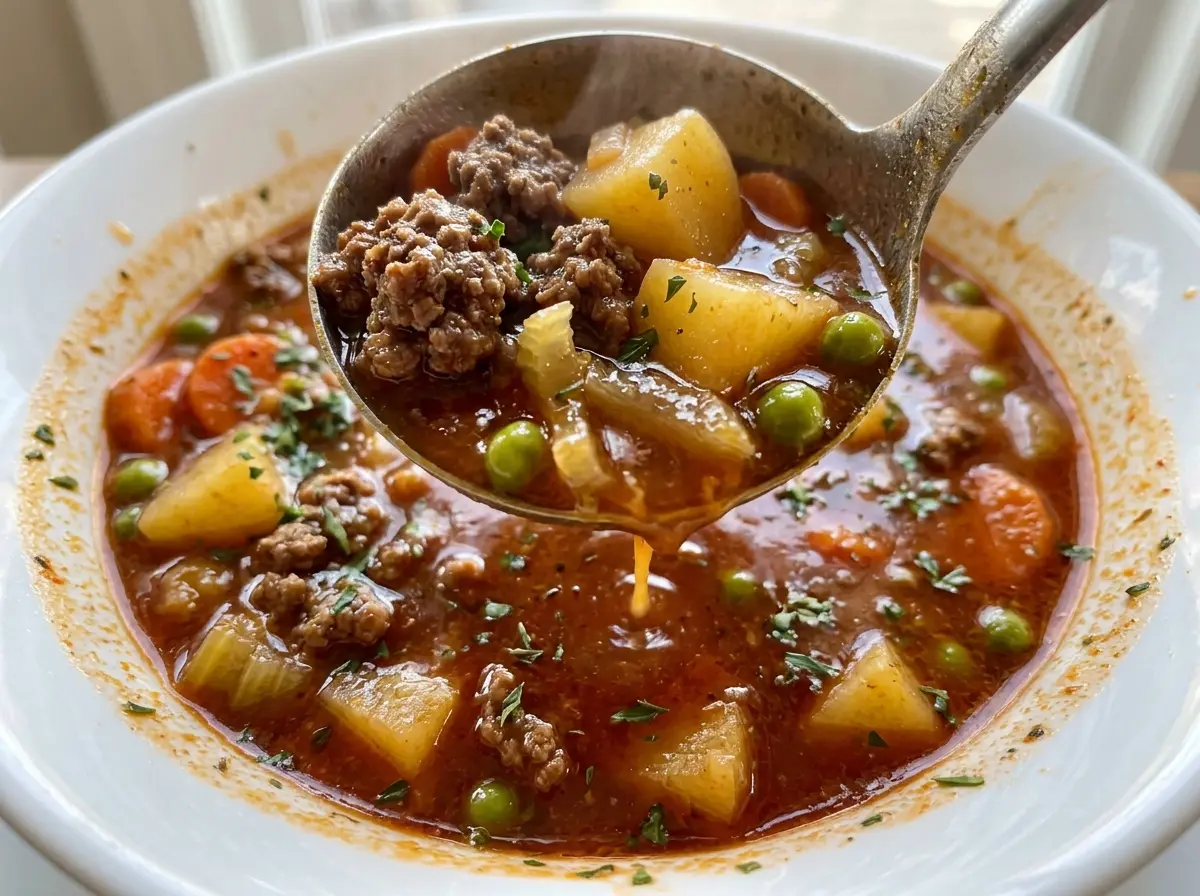
I let the finished stew rest for the full five minutes before serving. That short pause gives the broth a moment to settle around the vegetables, so it ladles neatly instead of rushing across the bowl.
Save Hamburger Stew for a one-pot dinner with browned beef, tender potatoes, and a savory tomato broth.
Why Hamburger Stew Thickens Better When Flour Hits the Beef First
The flour goes into the pot before the broth, where it can coat the browned beef and vegetables. Stirring it for a minute lets it blend with the little bit of fat left behind and cook briefly, rather than leaving raw flour to clump in the liquid. Then the broth goes in gradually, giving you a chance to stir it smooth as the pot fills.
If you pour in all the broth at once, flour can gather into small lumps that are harder to work out. A late flour slurry can thicken stew, but it won’t build the same base as flour stirred into the beef and vegetables. This order also gives the broth time to take on the flavor from the browned beef, onion, celery, and garlic. Once the tomatoes and potatoes are in, a gentle covered simmer lets everything cook together while that flour-thickened broth turns savory and spoon-coating.
What Each Hamburger Stew Ingredient Brings to the Pot

- Ground beef — The 85% lean beef brings a full beef flavor without leaving as much fat to drain as a fattier grind. Store-brand ground beef works well; breaking it into small pieces helps it brown evenly.
- Onion, celery, carrots, and garlic — This vegetable base gives the broth savory depth and a little sweetness. Fresh, firm vegetables are useful for even cooking, but there’s no need to buy anything fancy; dice the onion and celery and slice the carrots to cook at the same pace.
- All-purpose flour — Flour helps the broth thicken as the stew simmers. Regular all-purpose flour is inexpensive and does the job; for a gluten-free version, use the one-to-one flour swap described below.
- Beef broth — Broth supplies the stew’s savory backbone, so a familiar, reasonably priced brand is fine. A lower-sodium beef broth is a practical option if you prefer to control the saltiness yourself.
- Diced tomatoes — A standard canned tomato is all you need. The tomatoes add acidity that keeps the beef broth from tasting flat, while fire-roasted tomatoes make a good smoky variation.
- Yukon Gold potatoes — Their creamy centers and ability to hold their shape suit a stew. Red potatoes are the closest swap; cut them into the same 1-inch pieces and expect a slightly firmer bite.
- Worcestershire sauce, thyme, and bay leaf — Worcestershire adds a concentrated savory note, while the dried thyme and whole bay leaf give the broth gentle herbal depth. The bay leaf is there to infuse the pot, not to serve in the bowl.
- Frozen peas — Frozen peas are convenient and keep their shape when added near the end. No need to thaw them first; the brief simmer warms them through without cooking away their fresh sweetness.
How to Build Hamburger Stew Without Tough Vegetables or a Greasy Broth
Brown the Beef Before Adding the Vegetables
Set a 6-quart Dutch oven over medium-high heat and cook the ground beef for 7 to 9 minutes, breaking it into small pieces as it cooks. Look for browned bits throughout, not just gray crumbles. The beef should reach 160°F, then drain off the excess fat. Leaving a pool of fat behind can make the broth feel greasy.
Soften the Aromatics Without Browning the Garlic
Add the diced onion, celery, and sliced carrots, then cook over medium heat for 5 to 6 minutes, stirring occasionally. The onion should soften and turn glossy, while the carrots remain firm. Stir in the minced garlic and cook for 30 seconds. Garlic can turn bitter if it browns, so keep it moving and move on as soon as it smells fragrant.
Coat the Beef and Bring the Broth Together
Sprinkle the flour over the beef and vegetables, stir for 1 minute, then stir in the salt and pepper. Add the beef broth gradually, stirring as you pour so it blends into the flour instead of forming lumps. Stir in the diced tomatoes, potatoes, Worcestershire sauce, and dried thyme, then tuck in the bay leaf. Bring the pot to a boil over medium-high heat.
Keep the Covered Simmer Gentle
Once the stew boils, reduce the heat until it holds a gentle simmer, then cover the pot. Cook for 25 to 30 minutes, stirring occasionally. The potatoes and carrots are ready when a fork slides into them easily; if they still feel firm in the center, give them a little more time rather than turning up the heat and letting the vegetables break apart.
Finish with Peas and Remove the Bay Leaf
Stir in the frozen peas and simmer uncovered for 3 to 5 minutes, just until they’re heated through. The peas should stay bright and intact, not dull and soft. Remove the bay leaf before serving, then give the pot its brief rest so the broth settles around the vegetables.
Three Swaps That Change Hamburger Stew Without Losing Its One-Pot Feel
Make It Gluten-Free
Use the same amount of a one-to-one gluten-free flour blend in place of the all-purpose flour. Choose gluten-free beef broth and gluten-free Worcestershire sauce as well. The stew keeps its familiar savory character, though the exact thickness can vary a little by flour blend.
Use Fire-Roasted Tomatoes
Replace the regular diced tomatoes with an equal-size can of fire-roasted diced tomatoes. Their lightly charred flavor makes the broth taste a little smokier without changing the cooking order or the stew’s texture.
Trade Thyme for Rosemary
For a more woodsy, piney note, use 1/2 teaspoon dried rosemary instead of the dried thyme. Keep the bay leaf, and stir the rosemary in with the tomatoes and potatoes so it has time to infuse the broth.
Storage and Reheating
- Refrigerator: Refrigerate in shallow airtight containers within 2 hours and use within 3 to 4 days. The potatoes absorb broth as the stew sits, so it will be thicker the next day.
- Freezer: Freeze in airtight, meal-size containers for up to 3 months. The potatoes may soften a little after thawing, but the stew remains hearty.
- Reheating: Warm on the stovetop over medium-low heat, stirring, until the stew reaches 165°F throughout. Add a splash of beef broth if it has thickened; avoid a hard boil, which can break up the potatoes.
Questions That Come Up While Hamburger Stew Simmer
Hamburger Stew
Ingredients
Equipment
Method
- In a 6-quart Dutch oven over medium-high heat, cook the ground beef for 7 to 9 minutes, breaking it into small pieces, until browned and it reaches 160°F; drain excess fat.
- Add the onion, celery, and carrots and cook over medium heat for 5 to 6 minutes, stirring occasionally, until the onion softens; stir in the garlic and cook for 30 seconds.
- Sprinkle the flour over the beef and vegetables and stir for 1 minute, then stir in the salt and pepper.
- Gradually stir in the beef broth, then add the diced tomatoes, potatoes, Worcestershire sauce, thyme, and bay leaf; bring to a boil over medium-high heat.
- Reduce the heat to maintain a gentle simmer, cover, and cook for 25 to 30 minutes, stirring occasionally, until the potatoes and carrots are fork-tender.
- Stir in the frozen peas and simmer uncovered for 3 to 5 minutes, until heated through; remove the bay leaf and let the stew rest for 5 minutes before serving.