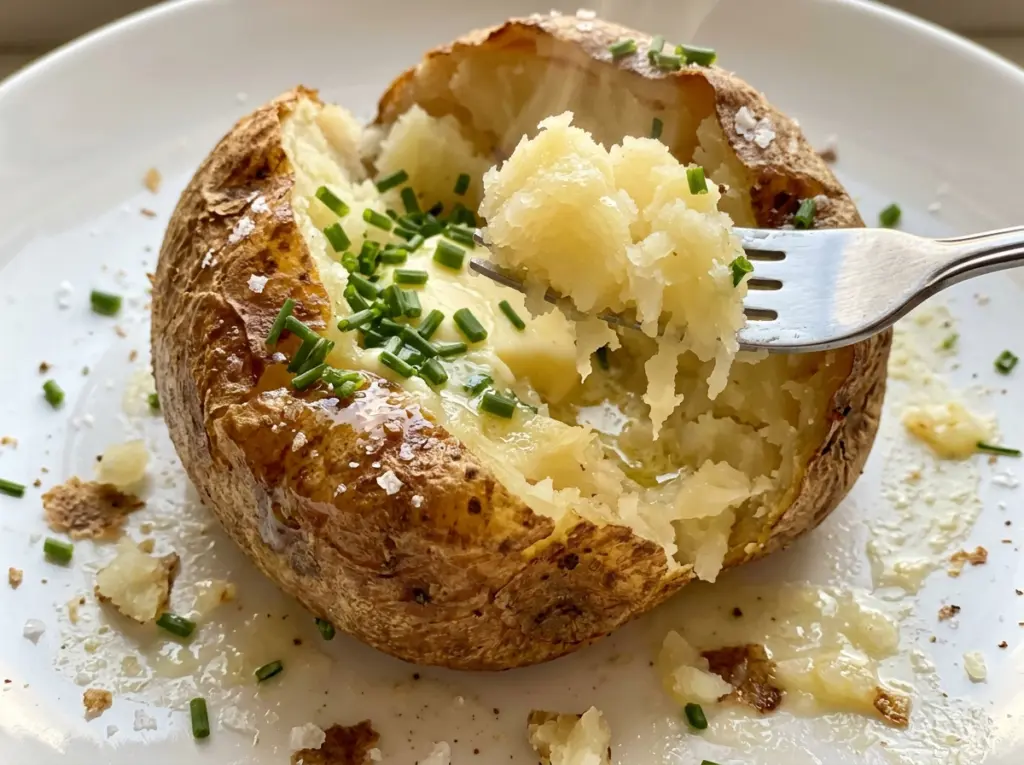
A russet’s skin can look crisp while the center is still stubbornly firm, so I judge these by what happens when a knife reaches the middle—not by the color of the outside. In a 5- to 6-quart air fryer, four medium potatoes cook in one layer with room for hot air to move around them, giving you a tender, fluffy center and a dry, lightly crisp skin without heating the oven.
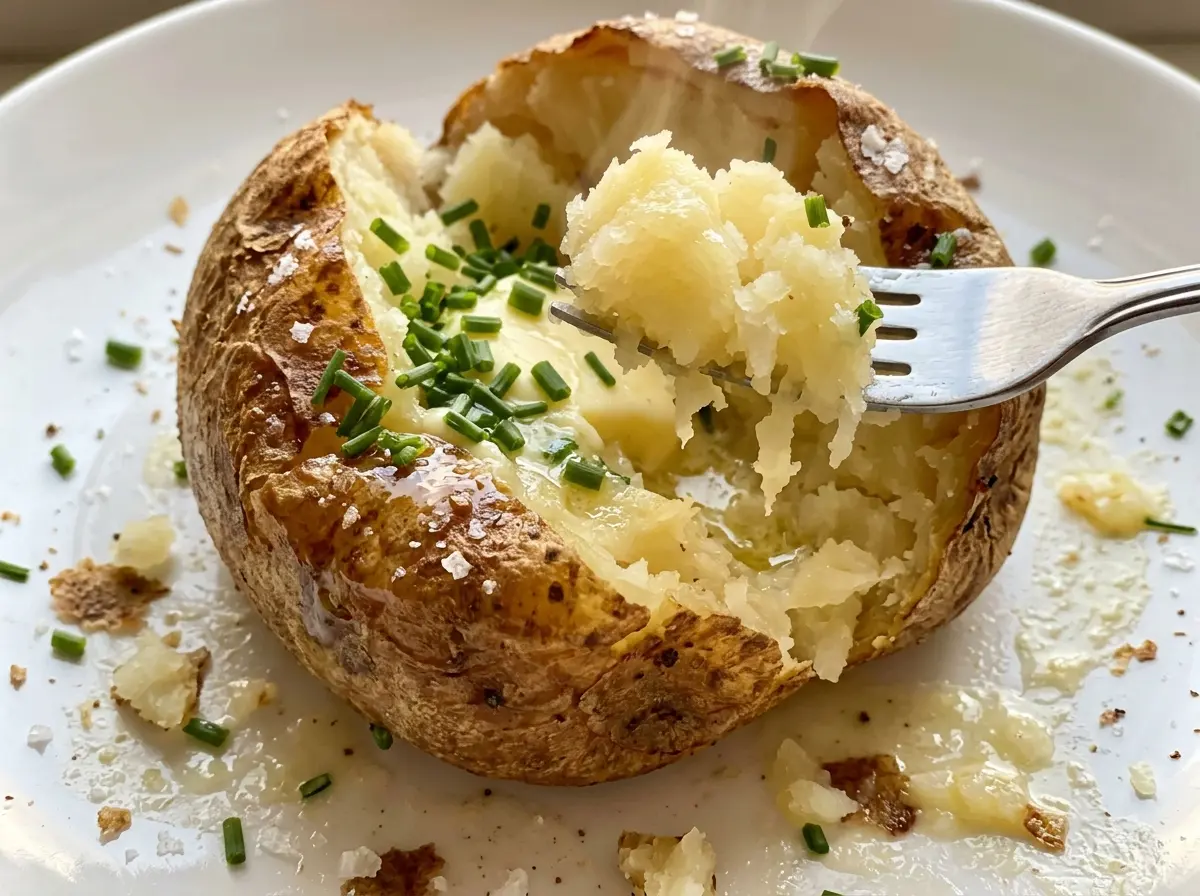
I keep the prep simple: scrub the potatoes, dry them well, prick them all over, then rub them with olive oil and kosher salt. The part I don’t rush is choosing potatoes of similar size. When they’re all close to 8 ounces, they’re much more likely to finish in the same window, and dinner doesn’t turn into a mix of soft potatoes and one dense holdout. These air fryer baked potatoes are ready to split after a short rest, with steam rising from the fluffy centers.
Kitchen Note
Give the potatoes their full 5-minute rest before splitting them. Cutting in right away releases a rush of steam; that short pause lets the centers settle while they’re still piping hot.
Save these air fryer baked potatoes for a fluffy center and crisp-edged skin, cooked four at a time in one simple batch.
Why Potato Size Matters More Than a Dark, Crisp Skin
An air fryer cooks by moving hot air around the food, so both the potato’s size and its position in the basket affect how evenly it cooks. Four medium russets, about 8 ounces each, make a practical batch for a 5- to 6-quart basket. Potatoes that vary a lot in size won’t necessarily finish together: a smaller one may be tender while a much larger one still has a firm center.
Keep the potatoes in a single layer rather than stacking them. Crowding blocks the airflow that helps the skins dry and brown, and it can leave the sides pressed against neighboring potatoes softer. Turning them halfway through gives the basket-facing side a chance to cook evenly, too. If your air fryer can’t hold four with space around them, cook in batches instead of piling them up. The potatoes need room on all sides, not a packed basket.
What Russets, Olive Oil, and Kosher Salt Each Bring

- Russet potatoes — Their starchy flesh turns fluffy when cooked through, which is the contrast you want beneath the skin. Choose potatoes that feel firm and have no soft spots; the recipe is built around medium russets, not waxy potatoes that stay denser. Scrub away any soil and dry the skins thoroughly before adding oil.
- Olive oil — A thin coating helps the salt cling and gives the potato skins an evenly oiled surface in the hot air fryer. A basic olive oil is fine here; there’s no need to use a delicate, expensive bottle because the amount is modest and the oil isn’t the main flavor. Rub it over the entire surface rather than leaving an oily patch.
- Kosher salt — The coarse crystals are easy to scatter over the rounded skins, where they add a clean, savory bite. Use kosher salt for the measured version so the seasoning stays consistent; different salts vary in crystal size and can taste more or less salty by volume. Sprinkle it evenly after the oil so it adheres instead of falling off.
The Air Fryer Timing That Gets the Center Tender
Preheat the Basket Before the Potatoes Go In
Set a 5- to 6-quart air fryer to 400°F and preheat it for 3 minutes. Starting with a hot basket helps the potatoes begin cooking as soon as you add them. Use that short preheat to finish preparing the potatoes, but don’t leave them sitting in the basket while it heats.
Scrub, Dry, and Prick the Russets
Scrub each potato clean under running water, then dry it well with a clean towel. Damp skin won’t take the oil as evenly, so check around the ends and any shallow dents. Prick each potato all over with a fork before seasoning; keep the punctures spread across the surface rather than stopping after a few on top.
Coat the Skins and Arrange One Layer
Rub the olive oil over each potato, then sprinkle the kosher salt evenly across the skins. The surface should have a light coating rather than visible puddles of oil. Set the potatoes in the basket in a single layer, leaving space between them so the hot air can circulate.
Turn Halfway and Rest Before Splitting
Cook at 400°F for 40 to 50 minutes, turning the potatoes halfway through. The exact point within that range depends on the potatoes and the air fryer, so test the center rather than relying on the skin color. They’re ready when a knife slides easily into the centers; if it meets resistance, keep cooking until the centers are tender. Rest the potatoes for 5 minutes, then split and serve.
Two Simple Ways to Adjust the Potatoes
Lower-Sodium Potatoes
For a lower-sodium version, leave out the kosher salt and keep the potatoes, olive oil, and cooking method the same. The skins won’t have the same salty bite, but the oil still gives them an even coating.
Oil-Free Skins
Skip the olive oil if you need an oil-free potato, then cook the russets in the same single layer. The potatoes will still cook through, but the skins won’t have the same lightly oiled finish, and the salt won’t cling as well.
Storage and Reheating
- Refrigerator: Refrigerate leftovers within 2 hours in a covered container and use them within 3 to 4 days. The skin softens as the potatoes chill.
- Freezer: They can be frozen, though the thawed centers may be drier and grainier. Once cool, store them in an airtight freezer-safe container and thaw in the refrigerator.
- Reheating: Reheat in the air fryer until hot all the way through. A microwave warms the potato, but it softens the skin, so use it only if crispness isn’t important.
Questions That Come Up With Air Fryer Baked Potatoes
Air Fryer Baked Potatoes
Ingredients
Equipment
Method
- Preheat a 5- to 6-quart air fryer to 400°F for 3 minutes.
- Scrub the potatoes clean, dry them well, and prick each potato all over with a fork.
- Rub the potatoes with the olive oil and sprinkle evenly with the kosher salt.
- Arrange the potatoes in the air fryer basket in a single layer and cook at 400°F for 40 to 50 minutes, turning halfway through, until a knife slides easily into the centers.
- Let the potatoes rest for 5 minutes before splitting and serving.