
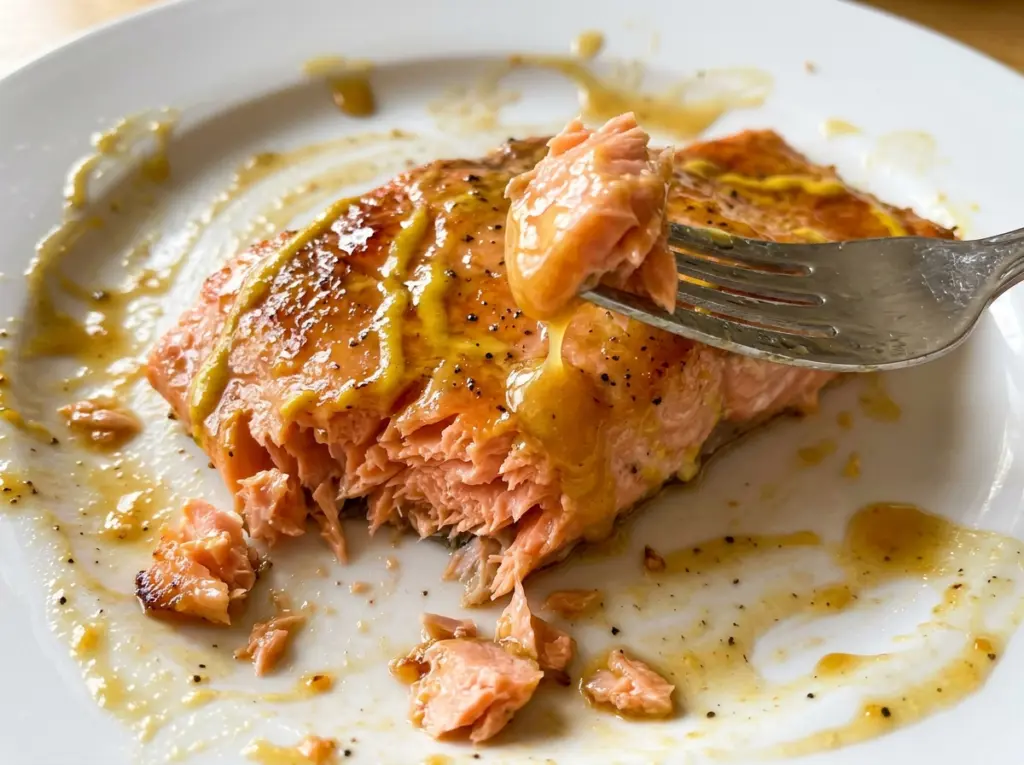
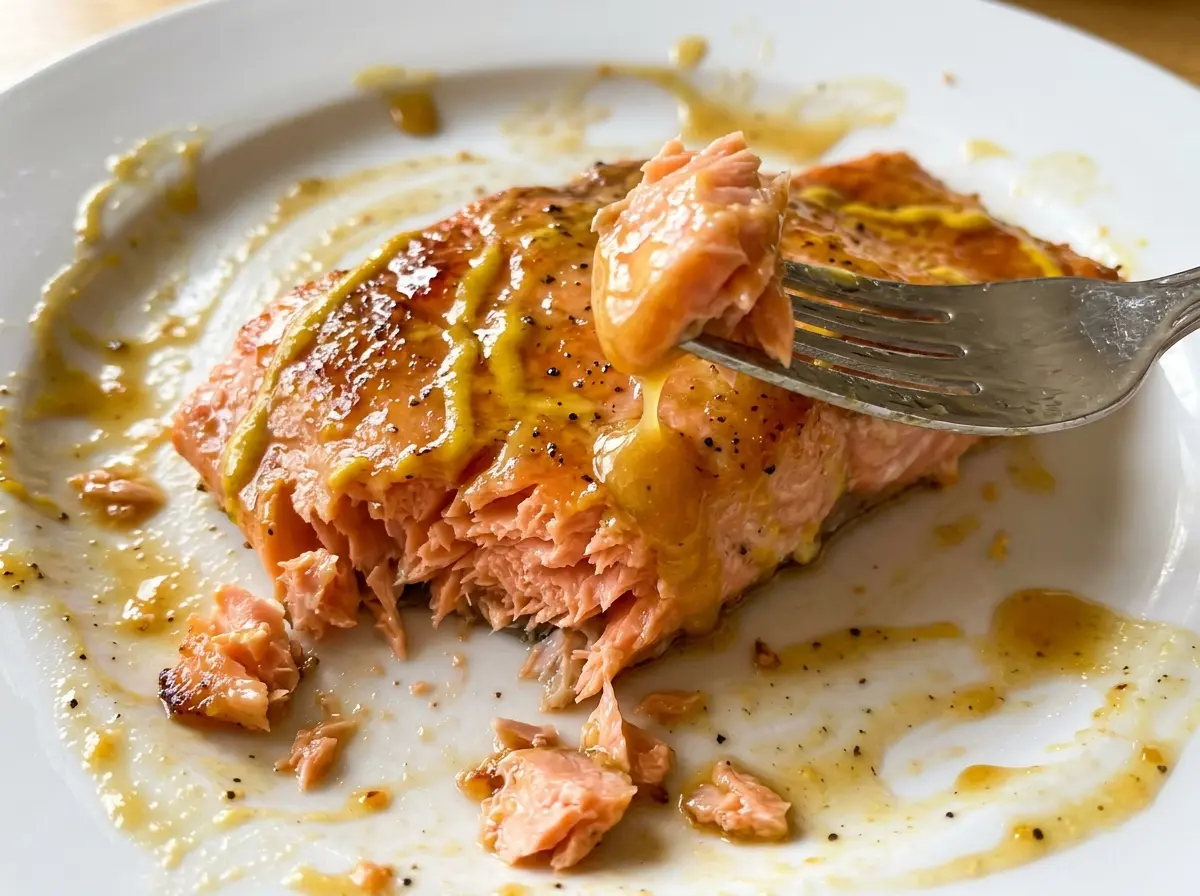
The glaze turns glossy as it hits the warm air, and the first thing I watch is the honey around the thinner edges. Salmon cooks quickly in an air fryer, which is handy, but a minute too long can take it from tender to dry before you’ve had time to set the table. These honey mustard salmon fillets solve that weeknight timing problem with a short cook and a temperature check at the thickest part.
I whisk the glaze until the mustard, honey, lemon, oil, and finely grated garlic come together smoothly, then brush it over the fish before it goes into the basket. The skin stays underneath the fillet, and the glazed top and sides pick up the sweet-tangy coating as the salmon cooks. Keep the fillets in one layer, and let the thickest part—not the clock alone—tell you when dinner is ready.
Kitchen Note
Grate the garlic finely, right into the glaze, so it disperses instead of leaving a strong bite in one spot. Give the mixture a thorough whisk before brushing it over the salmon.
Save these air fryer honey mustard salmon fillets for a quick dinner with a tangy-sweet glaze and tender centers.
Why the Thickest Part Matters More Than the Air Fryer Timer
Four fillets that look nearly alike can finish at different times. A piece that’s a little thicker in the center needs longer than one with a tapered end, even if they went into the basket together. That’s why the cook time is a range rather than a promise that every fillet will be ready at the same minute.
For this batch, the fillets are about an inch thick, and the doneness check belongs in the thickest part of the fish. Insert the thermometer from the side toward the center for a useful reading; checking near the thin tail end won’t tell you whether the middle is ready. If the fillets vary, check each one and remove any that have reached the target while the thicker pieces finish. This keeps the timing focused on the fish you actually have, rather than asking every piece to follow the same minute on the clock.
The honey in the glaze also means the surface can look richly colored before the center is cooked through. Color is a useful cue for the coating, but it can’t replace the temperature reading. Trust the reading at the thickest point, and you’ll avoid stopping early just because the glaze looks finished.
What the Mustard, Honey, and Salmon Each Bring to the Glaze

- Dijon mustard — Dijon gives the glaze its sharp mustard flavor and helps the oil and honey blend into a brushable mixture. Choose a Dijon you like the taste of; a whole-grain mustard works as a swap, but leaves a more textured, less smooth coating.
- Honey — Honey rounds off the mustard’s bite and helps the glaze turn glossy as it cooks. Maple syrup can replace it in the same amount for a woodsy sweetness, though the result won’t taste quite as distinctly honeyed.
- Lemon juice and olive oil — Lemon brightens the sweet mustard mixture, while a little olive oil softens its texture so it spreads across the fish. Fresh lemon juice is a good choice here; bottled juice will work, though its flavor is less lively.
- Garlic — A small clove adds savory depth without turning the glaze into a garlic sauce. Finely grate it so the flavor is distributed through the coating; larger pieces are more likely to clump on the salmon.
- Skin-on salmon fillets — The skin gives you a helpful base when placing the fillets skin-side down and keeps the underside distinct from the glazed surface. Pick fillets with a similar thickness so they finish at roughly the same pace. Skinless salmon also works, but the delicate underside has less protection from the hot basket.
From Smooth Glaze to Salmon That Flakes at the Center
Whisk the glaze until it comes together
Put the Dijon, honey, lemon juice, olive oil, and finely grated garlic in a small bowl. Whisk until the mixture looks smooth and evenly blended, with no streaks of oil sitting apart from the mustard. If honey is clinging to the spoon, keep whisking until it loosens into the glaze. Set the bowl beside your fish so the coating is ready when the fillets are seasoned.
Dry, season, and coat the fillets
Pat the salmon dry before adding the kosher salt and black pepper. This gives the seasoning a dry surface to cling to and keeps extra moisture from diluting the glaze. Brush the glaze evenly over the tops and sides, taking care to cover the edges rather than leaving bare patches. The skin side stays unglazed and will face down in the basket.
Oil the basket and preheat
Brush the air fryer basket lightly with canola oil, then preheat the air fryer to 390°F for 3 minutes. Use a light coating rather than leaving visible pools of oil in the basket. Preheating gives the salmon a hot cooking environment from the start, so have the fillets coated and ready to place once the air fryer is heated.
Arrange skin-side down and check the center
Set the fillets in a single layer with the skin facing down, working in batches if they won’t fit without crowding. Air fry at 390°F for 7 to 10 minutes, then check the thickest part of a fillet with a thermometer. The finished center should reach 145°F. If a thicker piece needs more time, continue cooking it and check again rather than pulling every fillet out together.
Three Practical Ways to Adapt the Honey Mustard Salmon
Use whole-grain mustard for a textured glaze
Swap the Dijon for the same amount of whole-grain mustard. The glaze will have visible mustard seeds and a gentler, more rustic texture, rather than the smooth, sharp finish of Dijon.
Trade honey for maple syrup
Use the same amount of maple syrup in place of the honey. It keeps the glaze sweet and brushable, with a deeper maple note and a little less of honey’s floral character.
Choose skinless fillets
Skinless salmon is an option if that’s what you have. Brush the basket lightly as usual, handle the fillets gently when arranging them, and use the thermometer to judge doneness because the skinless surface can be more delicate.
Storage and Reheating
- Refrigerator: Refrigerate leftover salmon in a covered container within 2 hours and eat it within 3 to 4 days. The glaze will lose some of its fresh shine, and chilled salmon will feel firmer.
- Freezer: Freeze cooled portions in an airtight freezer container for up to 2 to 3 months. Thaw them in the refrigerator before reheating; the texture may be a little softer after thawing.
- Reheating: Warm portions in a 300°F air fryer until they reach 165°F in the center. Check early and avoid leaving them in longer than needed, since reheated salmon dries out quickly.
Questions That Come Up When Air Frying Salmon
Air Fryer Honey Mustard Salmon
Ingredients
Equipment
Method
- Whisk the Dijon mustard, honey, lemon juice, olive oil, and garlic in a small bowl until smooth.
- Brush the air fryer basket lightly with the canola oil.
- Preheat the air fryer to 390°F for 3 minutes.
- Pat the salmon dry.
- Season the salmon with the salt and pepper.
- Brush the glaze evenly over the tops and sides of the salmon.
- Arrange the fillets skin-side down in a single layer in the basket, working in batches if needed.
- Air fry at 390°F for 7 to 10 minutes, until the thickest part reaches 145°F.




