
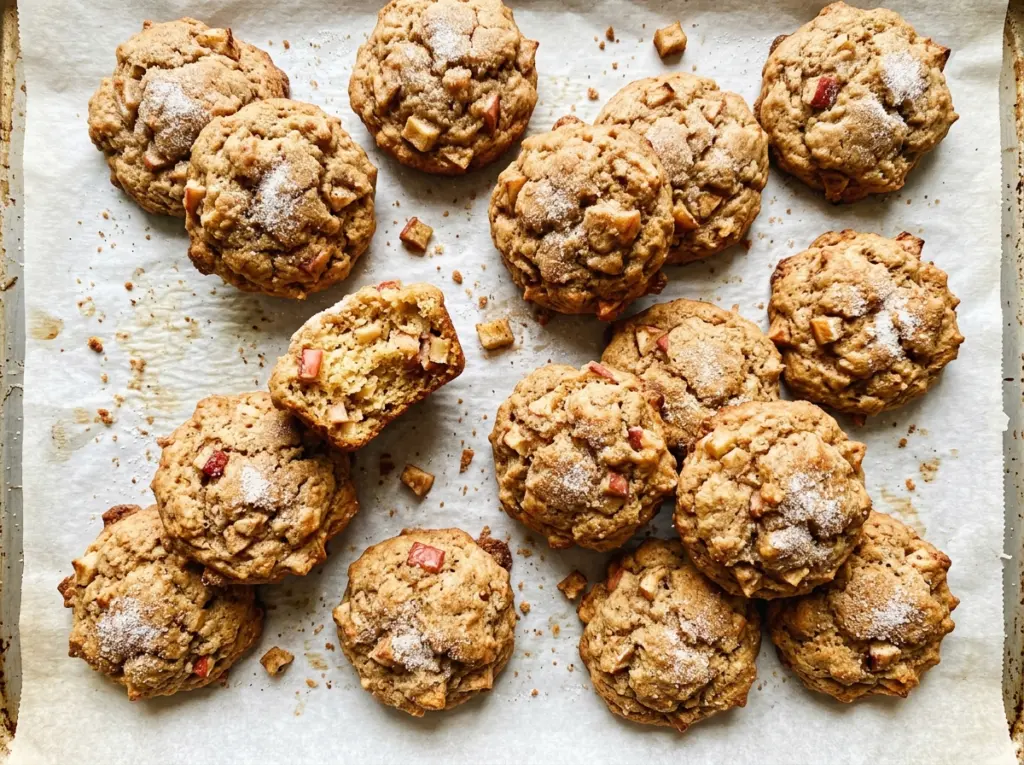
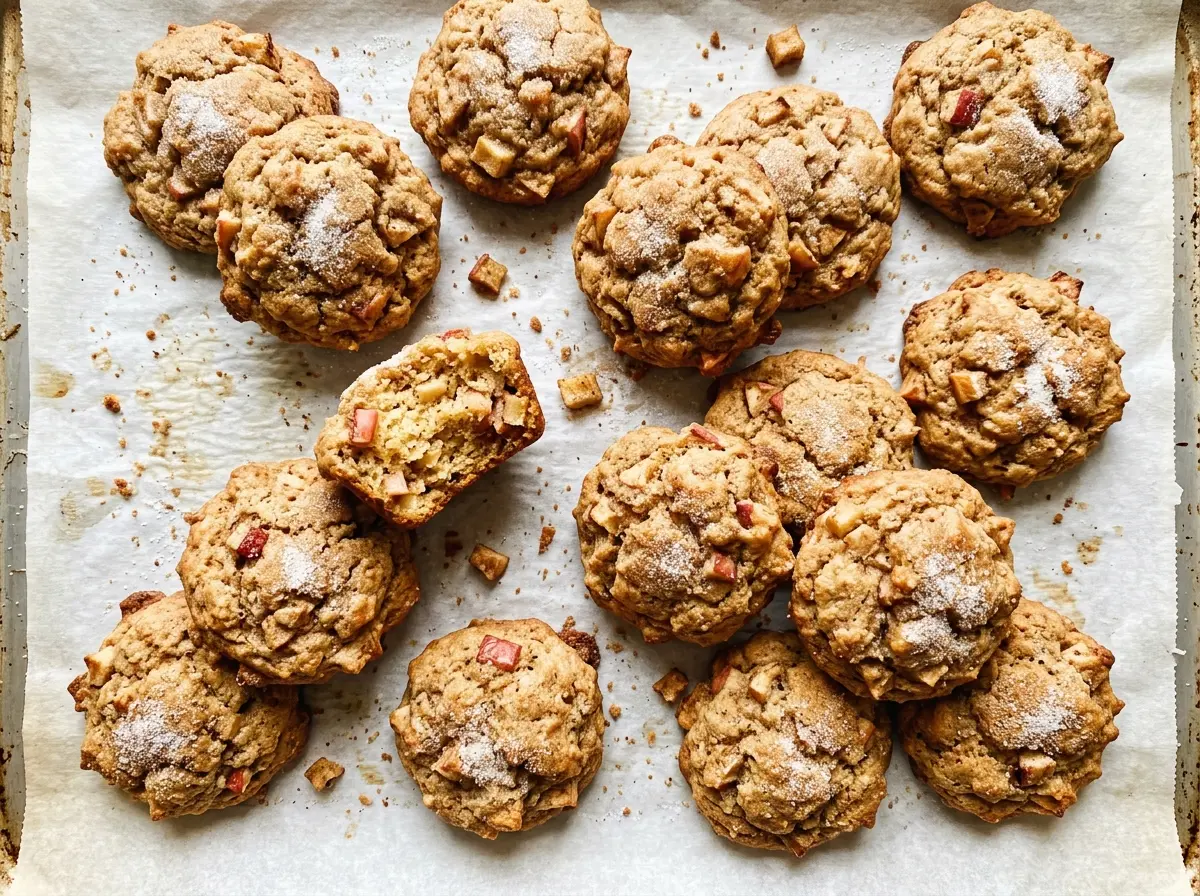
While the butter and sugars are creaming, the dough for these Apple Cinnamon Muffin Cookies starts to smell like cinnamon before the apple even goes in. Once the fruit is folded through, the mixture is softer and more textured than standard drop-cookie dough, with little pieces of apple visible in every scoop. On the baking sheet, the portions spread into cookies with lightly golden edges and centers that look set.
They have the cozy cinnamon-apple feel of a muffin, but you can pick one up like a cookie. I like that the dough comes together in a bowl with familiar pantry ingredients, and the fresh apple gives each bite little pockets of fruit. The cookies are best when the apple is evenly distributed and the edges have just started to color, so each one stays tender without tasting underbaked.
Kitchen Note
Give the dough the full 30 minutes in the refrigerator before scooping. The softened butter firms up, which makes the portions easier to handle and helps them hold their shape on the baking sheet.
Save these Apple Cinnamon Muffin Cookies for a cozy bake: tender centers, golden edges, and bits of fresh apple in every cookie.
Why You Shouldn’t Add Extra Apple to the Dough
It’s easy to look at the dough and think a little more apple would make these cookies even better. Here, though, the fruit brings moisture as well as flavor. Add more than the dough can hold and the balance shifts: the mixture gets wetter, the portions are harder to shape, and the cookies may bake up heavier around the apple pieces.
Stick close to the recipe’s one cup of finely diced apple. That amount gives you fruit throughout the batch without overwhelming the flour and butter mixture. If your apple is larger than expected, measure the diced pieces rather than adding the whole apple automatically. It’s a small check, but it keeps the dough consistent from the first scoop to the last.
How the Apple, Butter, and Sugars Shape These Cookies

- All-purpose flour — It gives the dough enough structure to hold the apple pieces. Spoon it into the measuring cup and level the top; packing flour into the cup can leave the cookies dry. The standard grocery-store bag works well here.
- Baking powder and baking soda — Both help the cookies rise and set, while the baking soda supports browning. Fresh containers matter more than an expensive brand; old leaveners can leave the cookies flatter than expected.
- Unsalted butter — Butter carries the dough’s richness and helps create a tender bite. A regular supermarket butter is fine; use it softened so it creams smoothly with the sugars rather than leaving hard bits in the bowl.
- Brown and granulated sugar — Brown sugar brings a deeper, more molasses-like sweetness, while granulated sugar keeps the dough from relying on brown sugar alone. Pack the brown sugar when measuring it, and use ordinary granulated sugar.
- Egg and vanilla — The egg helps bind the dough, and vanilla rounds out the cinnamon and apple. A large egg is important for keeping the dough’s proportions steady; standard vanilla extract is a good fit.
- Apple — Choose an apple that’s crisp enough to dice neatly. Peeling and coring it keeps the pieces tender in the baked cookies, and finely cutting the fruit helps distribute it without leaving oversized chunks.
Mixing and Baking the Cookies Without Guesswork
Whisk the Dry Ingredients Evenly
Heat the oven to 350°F and line an 18×13-inch baking sheet with parchment paper. In a medium bowl, whisk the flour, baking powder, baking soda, cinnamon, and salt until the cinnamon is distributed throughout. Break up any small flour clumps with the whisk. An even mix helps prevent a bite that tastes strongly of cinnamon or catches a lump of leavener.
Cream the Butter and Sugars
Beat the softened butter with both sugars in a large bowl until creamy, about 2 minutes. Scrape down the bowl if butter or sugar sticks to the sides, then beat in the egg and vanilla. The mixture should look smooth and cohesive before the flour goes in. If the butter is still cold and lumpy, keep mixing until it blends rather than trying to fix it after the dry ingredients are added.
Fold in the Apple and Chill
Mix the dry ingredients into the butter mixture just until no dry streaks remain. Fold in the peeled, cored, finely diced apple with a spatula, stopping once the pieces look evenly spread through the dough. Chill the dough for 30 minutes, then scoop 24 portions of about 2 tablespoons each. Set them about 2 inches apart on the prepared baking sheet so they have room to spread.
Bake Until the Edges Turn Lightly Golden
Bake in batches at 350°F for 12–15 minutes, watching for lightly golden edges and centers that look set. The cookies shouldn’t need dark brown edges to be finished; waiting for that color can dry them out. Let each batch cool on the baking sheet for 5 minutes, then move the cookies to a wire rack. Let the sheet cool completely before baking the next batch, or the dough can start spreading before it reaches the oven.
Two Apple Choices That Change the Cookie’s Sweet-Tart Balance
Choose Granny Smith for a Tart Bite
A firm, tart apple such as Granny Smith gives the cookies a sharper fruit note against the brown sugar and cinnamon. Peel and finely dice it just as you would any other apple; the cookie keeps its familiar texture, but the sweetness feels less pronounced.
Pick a Sweeter Apple for a Milder Cinnamon Cookie
A sweet, crisp apple such as Fuji makes the fruit taste softer and less tart beside the cinnamon. Keep the same fine dice and use the same amount of apple; changing the variety adjusts the flavor without changing how you mix or bake the dough.
Storage and Reheating
- Refrigerator: Store in an airtight container for up to 4 days; the cookies may feel firmer when chilled.
- Freezer: Freeze fully cooled cookies in an airtight container, with parchment between layers, for up to 2 months. Thaw at room temperature.
- Reheating: Warm briefly in a low oven until just warmed through. Avoid extended microwave heating, which can make the apple pieces hot before the cookie warms evenly.
Questions That Come Up With Apple Cinnamon Muffin Cookies
Apple Cinnamon Muffin Cookies
Ingredients
Equipment
Method
- Heat the oven to 350°F.
- Line an 18x13-inch baking sheet with parchment paper.
- Whisk the flour, baking powder, baking soda, cinnamon, and salt together in a medium bowl.
- Beat the butter, brown sugar, and granulated sugar in a large bowl until creamy, about 2 minutes.
- Beat in the egg and vanilla.
- Mix the dry ingredients into the butter mixture just until combined.
- Fold in the diced apple.
- Chill the dough for 30 minutes.
- Scoop the dough into 24 portions of about 2 tablespoons each, spacing them about 2 inches apart on the baking sheet.
- Bake the cookies in batches at 350°F for 12–15 minutes, until the edges are lightly golden and the centers look set.
- Cool the cookies on the baking sheet for 5 minutes.
- Transfer the cookies to a wire rack.
- Let the baking sheet cool completely before baking the next batch.