
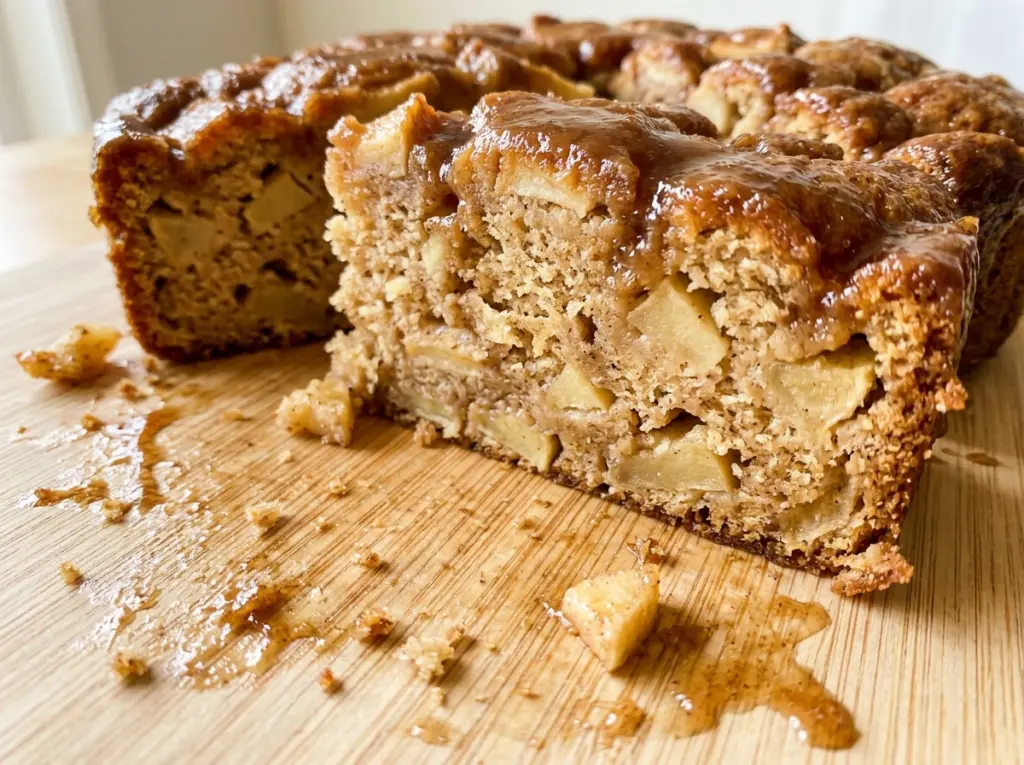
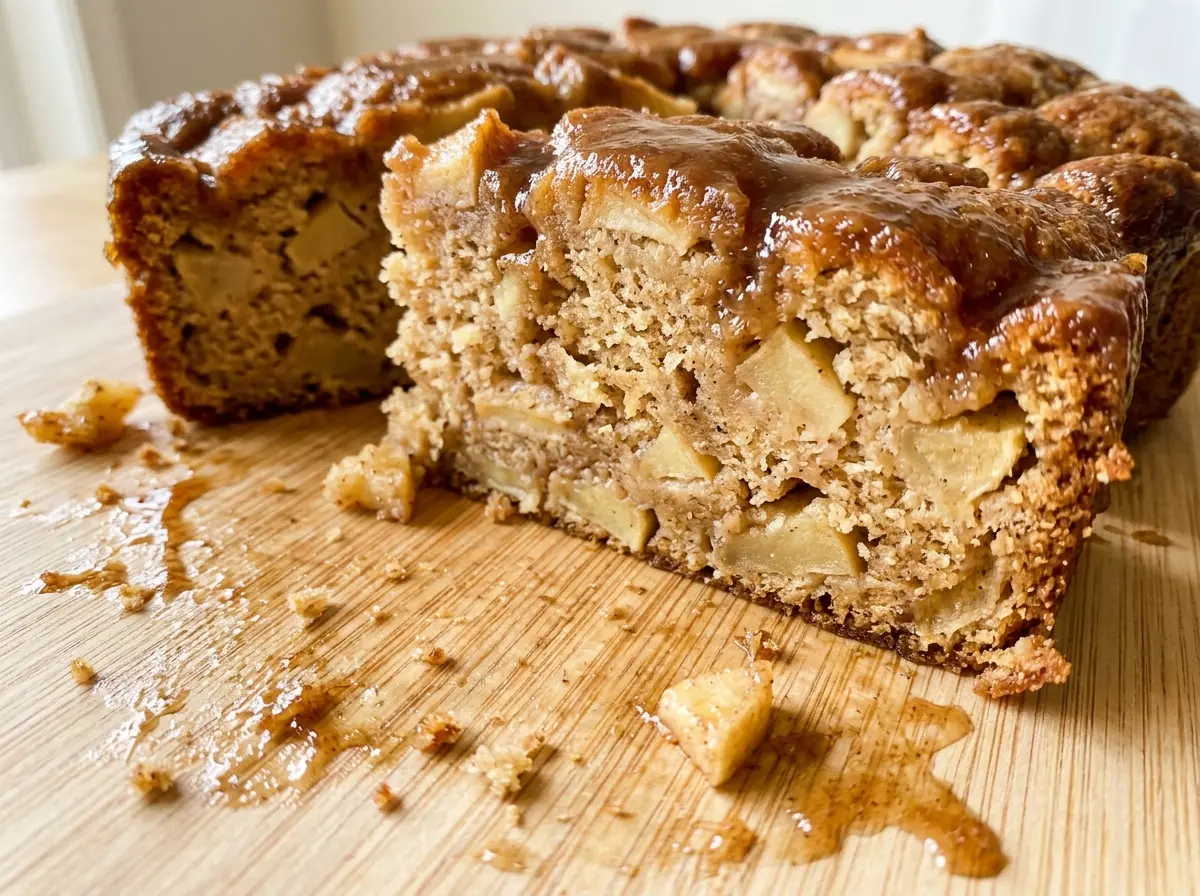
When I fold the chopped apples into this batter, it can look as though the fruit is taking over. That’s exactly what gives Apple Dapple Cake its tender, apple-studded crumb: the pieces soften as the cake bakes, but they don’t disappear. Pecans add a little crunch in each slice.
This cake skips the usual creaming step. You whisk the oil and sugar together, add the eggs, then stir in the dry ingredients just until the flour disappears. It’s a straightforward approach, but it rewards a light hand once the flour goes in; mixing longer than needed can make the crumb heavy.
The brown sugar glaze goes on while the cake is still hot, so it seeps into the little holes made with a skewer instead of sitting only on the surface. After a short rest in the Bundt pan, the cake turns out with a glossy, buttery finish and plenty of apple in every bite.
Kitchen Note
Give the Bundt pan a careful coat of shortening, including the center tube and every groove, then dust it with flour. Tapping out the loose flour keeps a gummy layer from marking the cake when you turn it out.
Save Apple Dapple Cake for a bake with tender apple pieces, crunchy pecans, and a warm brown sugar glaze.
Why This Oil-Based Cake Stays Tender Around Chunks of Apple
Apple pieces bring moisture to a cake, but they also interrupt the crumb. Here, vegetable oil helps keep the cake tender without asking you to cream butter and sugar first. The oil and sugar are whisked together, then the eggs go in one at a time before the dry ingredients are added. That order makes a batter that can hold the apples and pecans without needing extra mixing to become smooth.
Once the flour is in, stop stirring as soon as the dry streaks disappear. The batter doesn’t need to look silky; the apples and pecans make it uneven, and that’s expected. Keep folding until the fruit is spread through the bowl, then get the batter into the pan. Working gently at this point keeps the cake from turning dense, while firm apple pieces remain distinct in the baked slices. A few moist crumbs on the toothpick are the right cue at the end; waiting for it to come out completely dry risks baking away the tenderness this cake is meant to have.
Firm Apples Keep the Crumb from Turning to Applesauce
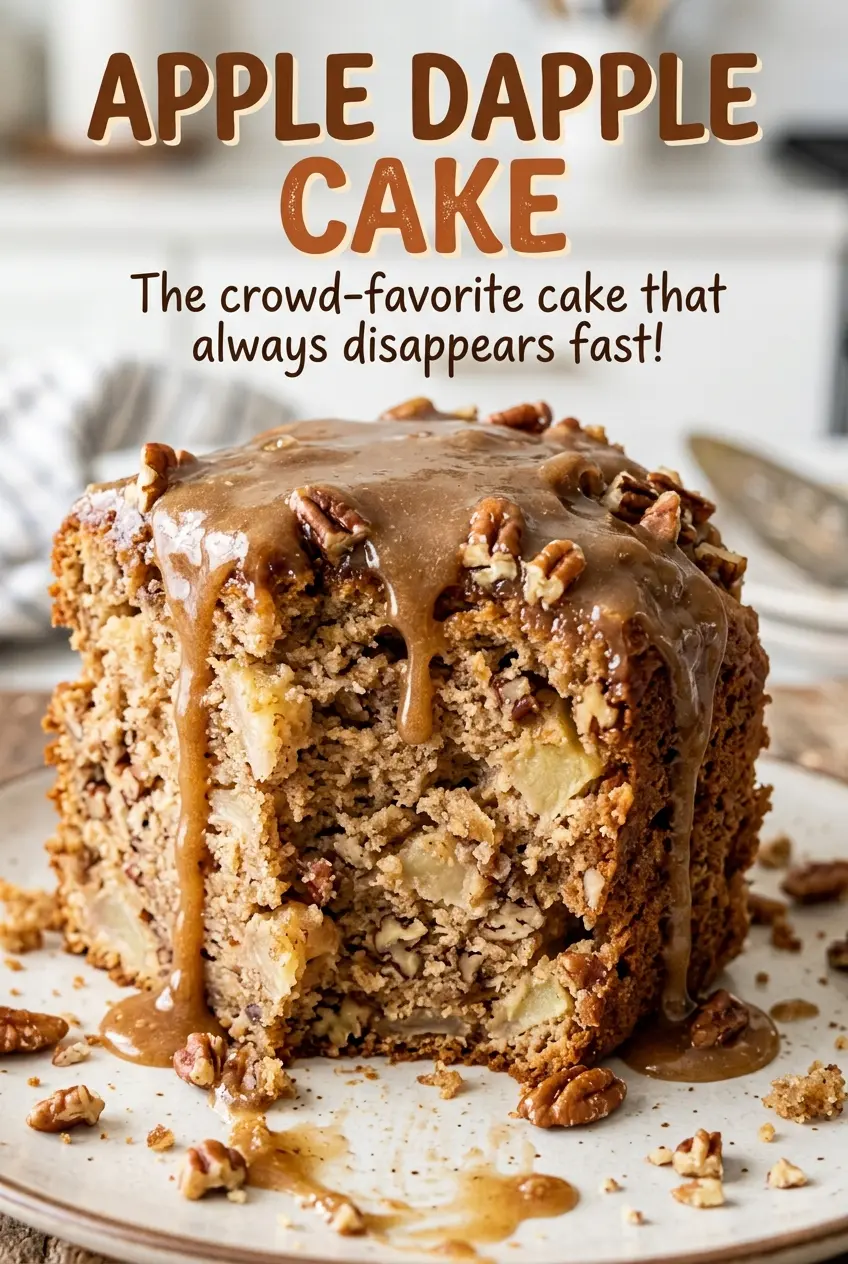
- Firm apples — They keep their shape better as the cake bakes, so you get tender pieces rather than apple puree throughout the crumb. Choose apples that feel firm and hold up well when chopped; peel, core, and chop them before folding them in. A tart firm variety gives a sharper contrast to the sweet cake, while a sweeter firm variety makes the apple flavor rounder.
- Vegetable oil — Oil is what keeps this cake moist and tender without a creaming step. A neutral vegetable oil is a good fit because it won’t compete with the apples, pecans, or brown sugar glaze. Butter isn’t a direct swap here: it changes both the mixing method and the texture.
- Pecans — Chopped pecans bring a distinct crunch and a mellow, toasted-nut flavor. Fresh-tasting pecans matter more than a premium label; if they smell stale or bitter, they’ll carry that taste into the cake. For a nut-free version, leave them out rather than replacing them with another ingredient.
- All-purpose flour — It gives the cake enough structure to support the fruit. Measure it without packing it into the cup, and keep the flour reserved for the pan separate from the flour that goes into the batter. A different flour can change the crumb, so all-purpose flour is the reliable choice here.
- Light brown sugar — Packed brown sugar gives the glaze its caramel-like flavor and helps it coat the cake. The light variety keeps the glaze sweet and buttery without overpowering the apples; dark brown sugar makes a deeper, more pronounced molasses note if you prefer that taste.
From an Apple-Flecked Batter to a Glazed Bundt That Releases
Coat Every Curve of the Bundt Pan
Heat the oven to 325°F. Generously grease a 12-cup Bundt pan with softened vegetable shortening, including the center tube, then dust it with the reserved tablespoon of flour. Turn the pan so the flour coats the greased surfaces, and tap out whatever doesn’t cling. Any bare patch can encourage sticking, especially around the detailed ridges.
Whisk the Oil Base, Then Fold in the Fruit
In a medium bowl, whisk the remaining flour with the baking soda and salt. In a large bowl, whisk the oil and granulated sugar, then whisk in the eggs one at a time and the vanilla. Stir the flour mixture into the oil mixture only until no dry streaks remain. Fold in the peeled, cored, chopped apples and pecans, stopping once they’re distributed through the batter.
Bake Until the Center Leaves Moist Crumbs
Scrape the batter into the prepared Bundt pan and spread it evenly. Bake for 60 to 70 minutes, checking near the center with a toothpick. A few moist crumbs clinging to it mean the cake is ready; wet batter means it needs longer. Don’t wait for the toothpick to look bone-dry, or the outer crumb may overbake before the fruit-filled center is set.
Simmer the Glaze and Pour It Over the Hot Cake
While the cake bakes, combine the butter, light brown sugar, and whole milk in a small saucepan over medium heat. Stir until the butter melts and the sugar dissolves, bring the mixture to a simmer, and cook it for 2 minutes. As soon as the cake comes out of the oven, pierce it all over with a skewer and slowly pour the hot glaze over the top. Let it stand in the pan for 15 minutes, then invert it onto a serving plate.
Three Small Changes That Give Apple Dapple Cake a Different Character
Leave Out the Pecans for a Nut-Free Cake
Omit the pecans and fold the apples into the batter on their own. The cake stays tender and apple-forward, but you’ll lose the nutty flavor and crunchy contrast. No replacement is needed.
Choose Tart Apples for a Brighter Bite
Use a firm, tart apple such as Granny Smith in place of a sweeter firm apple. The same amount works in the batter, with a sharper apple flavor that balances the sweet cake and glaze. Keep the pieces chopped so they fold through evenly.
Use Dark Brown Sugar for a Deeper Glaze
Swap dark brown sugar for the light brown sugar in the glaze, keeping the same packed measure. It brings a stronger molasses note and a darker color, so the glaze tastes richer and less delicate against the apples.
Storage and Reheating
- Refrigerator: Store the covered cake or slices in an airtight container for up to 5 days. The crumb firms when cold, while the glaze stays moist.
- Freezer: Freeze fully cooled slices, wrapped individually and sealed in an airtight container, for up to 2 months. Thaw in the refrigerator before serving.
- Reheating: Warm an individual slice in the microwave in short bursts, just until it’s no longer cold. Heating it too long can dry the crumb and make the glaze overly hot.
Questions That Come Up When Baking Apple Dapple Cake
Apple Dapple Cake
Ingredients
Equipment
Method
- Heat the oven to 325°F.
- Generously grease a 12-cup Bundt pan with the shortening, dust with 1 tablespoon flour, and tap out the excess.
- In a medium bowl, whisk the remaining 3 cups flour with the baking soda and salt.
- In a large bowl, whisk the oil and granulated sugar.
- Whisk in the eggs one at a time and the vanilla.
- Stir the flour mixture into the oil mixture just until no dry streaks remain.
- Fold in the apples and pecans.
- Scrape the batter into the prepared pan.
- Bake for 60 to 70 minutes, until a toothpick inserted near the center comes out with a few moist crumbs.
- While the cake bakes, combine the butter, brown sugar, and milk in a small saucepan over medium heat, stirring until the butter melts and the sugar dissolves.
- Bring to a simmer and cook for 2 minutes.
- As soon as the cake comes out of the oven, pierce it all over with a skewer.
- Slowly pour the hot glaze over the cake.
- Let the cake stand in the pan for 15 minutes.
- Invert the cake onto a serving plate.




