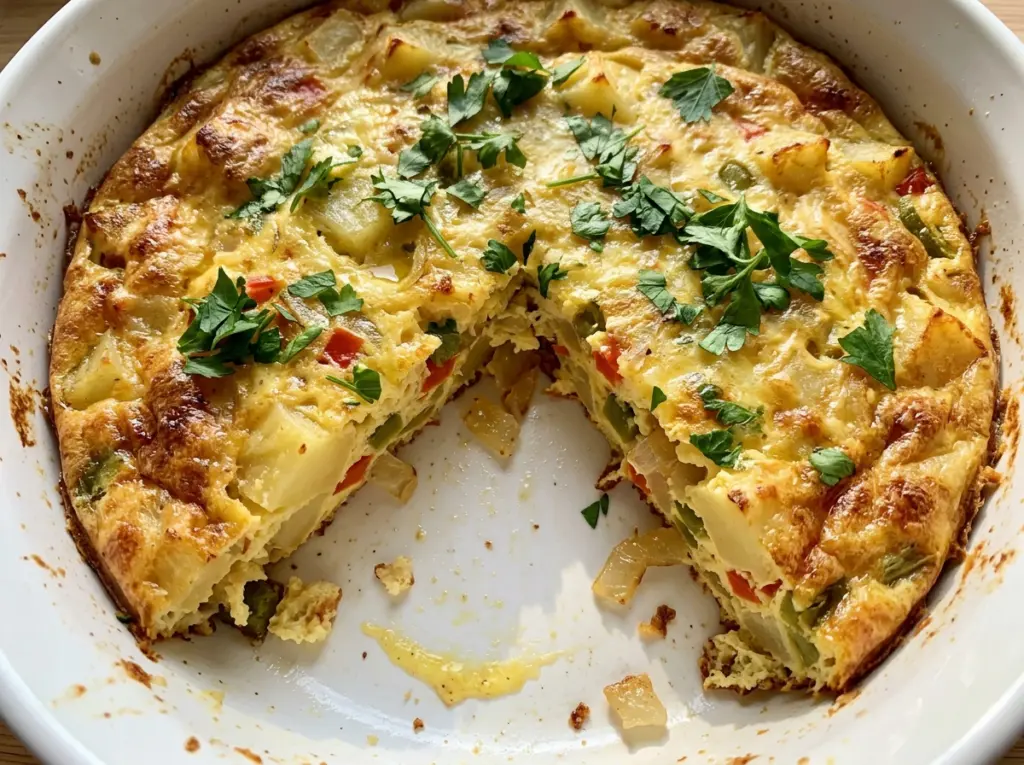
The potatoes need more time than the eggs, and that timing makes all the difference here. I cook the Yukon Gold cubes under a lid until a fork slips through easily, then let the pepper and onion soften uncovered before the eggs go in. That order keeps the vegetables tender without asking the frittata to stay in the oven long enough to dry out.
This Bell Pepper and Potato Frittata is a one-skillet meal with a soft egg center, cheddar folded through, and potato in every slice. The vegetables cook right in the skillet that goes into the oven, so their flavor stays in the frittata instead of being left behind in another pan. I watch the vegetables as they cook: letting steam escape before adding the eggs keeps the finished center from turning damp. Each wedge comes out hearty, savory, and easy to serve for breakfast, brunch, or a simple dinner.
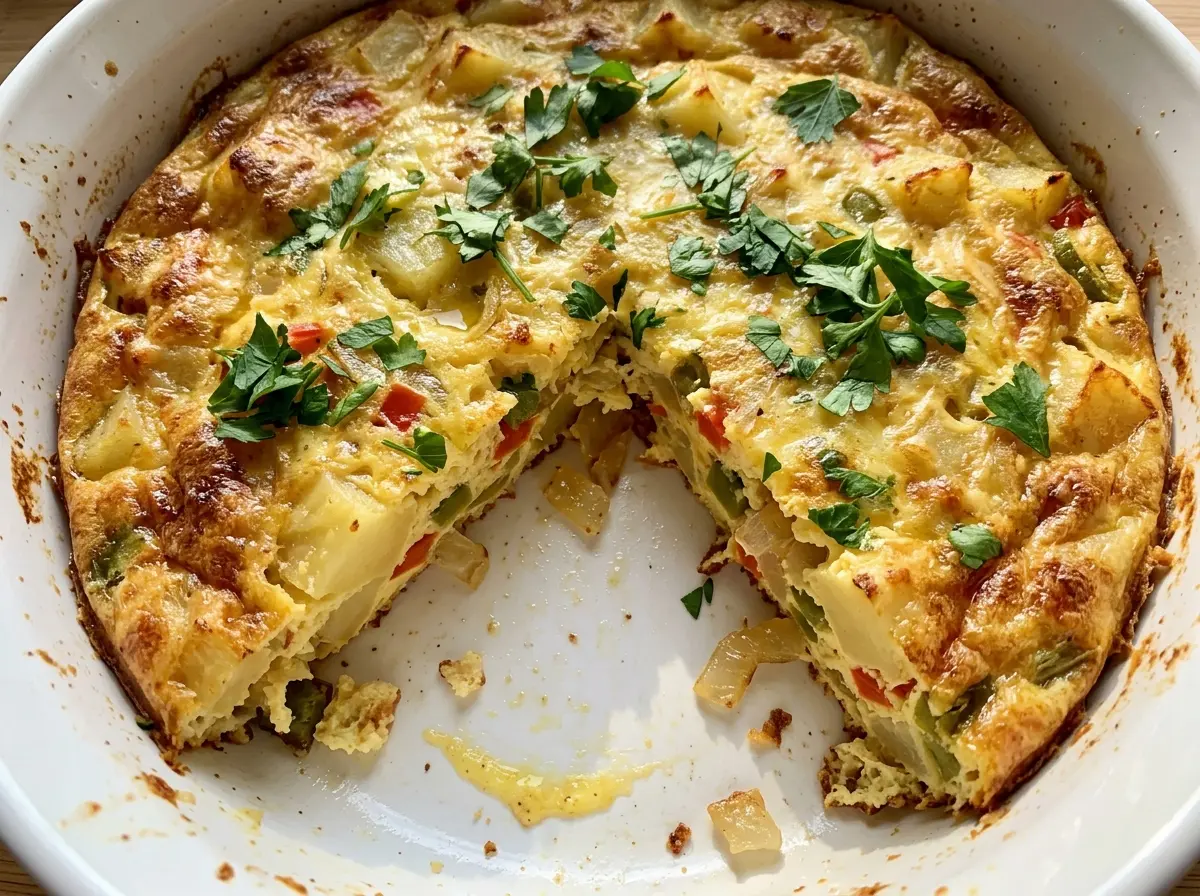
Kitchen Note
Stick with a 10-inch ovenproof skillet. A different diameter changes the depth of the egg mixture, which can change how quickly the edges and center cook.
Save this Bell Pepper and Potato Frittata for a savory, cheddar-filled slice with tender potatoes in every bite.
Why the Vegetables Need Their Own Time Before the Eggs
A frittata can look set on top while hiding vegetables that are still firm or watery underneath. Potatoes are dense, so they need a covered stretch in the skillet before the eggs arrive. The lid holds in heat and helps the cubes soften; stirring every few minutes keeps the ones touching the pan from browning too quickly while the middle stays hard.
Bell pepper and onion need a different treatment. After the potatoes are tender, they cook uncovered, giving their moisture a chance to escape instead of getting trapped beneath the eggs. That small change helps the filling taste concentrated rather than steamed. Once the vegetables are softened, the eggs need only enough time on the stovetop for the edges to begin setting before the skillet moves to the oven. That sequence gives the potatoes a head start and the eggs a shorter, gentler finish.
What the Potatoes, Pepper, and Cheddar Each Bring

- Yukon Gold potatoes — They turn tender but still hold their shape, so the slices have distinct pieces of potato rather than a soft, broken-up filling. Cut the cubes evenly; bigger pieces take longer to soften. Another waxy potato can work, but the texture may differ from Yukon Gold.
- Bell pepper and yellow onion — The pepper brings sweetness and color, while onion gives the filling a savory base. Any color of bell pepper works; red tastes sweeter, while green has a more vegetal edge. Dice both so they soften at a similar pace, and leave either one out if needed, knowing the frittata will have a simpler flavor.
- Eggs and whole milk — Eggs hold the vegetables together, and milk makes the set egg tender rather than dense. Reduced-fat milk can stand in for whole milk, though the result will be a little less rich. Whisk until the yolks and whites are fully blended so there aren’t streaks of white in the finished slices.
- Sharp cheddar — Its pronounced taste comes through alongside the potatoes instead of disappearing into the eggs. Freshly shredded cheese melts smoothly; pre-shredded cheddar is convenient and still works, though it may not melt quite as evenly. You can leave the cheese out, but the frittata will taste less savory and rich.
- Olive oil — It coats the skillet and gives the potatoes enough fat to cook without sticking as they soften. Keep the heat at medium-low; turning it up to hurry the potatoes can brown the outside before the centers are tender.
From Tender Potatoes to a Just-Set Center
Soften the Potatoes Under a Lid
Heat the oven to 375°F, then warm the olive oil in a 10-inch ovenproof skillet over medium-low heat. Add the half-inch potato cubes, cover, and cook for 12–15 minutes, stirring every 4–5 minutes. Check a few cubes with a fork; they should be tender when pierced, not merely browned on the outside. If the fork meets a firm center, keep cooking until the potatoes are tender before adding the other vegetables.
Let the Pepper and Onion Soften Uncovered
Add the diced bell pepper and yellow onion to the skillet and cook uncovered for 5–7 minutes, stirring occasionally. The vegetables should soften, and the sharp raw smell of onion should mellow. Keep the pan uncovered so steam can escape. If the vegetables still look firm, give them time rather than pouring the eggs over them early.
Whisk the Cheddar Into the Eggs
In a medium bowl, whisk the eggs with the whole milk, kosher salt, and black pepper until the mixture looks even. Stir in the shredded sharp cheddar so it’s distributed through the eggs instead of sitting in one heavy layer. Pour the egg mixture over the softened vegetables. Keep the skillet over medium-low heat for 3–5 minutes, watching for the edges to begin setting while the center remains loose.
Finish in the Oven and Rest Before Slicing
Transfer the skillet to the 375°F oven and bake for 10–15 minutes. The center should be set and register 160°F; if it still looks liquid in the middle, it needs more oven time. Take care with the hot skillet handle when moving or serving it. Let the frittata rest in the skillet for 5 minutes before slicing and serving.
Three Easy Ways to Change the Bell Pepper and Potato Frittata
Choose a sweeter or greener pepper
Use a red bell pepper for a sweeter note, or a green one for a more pronounced vegetal taste. Keep the amount and dice the same so it cooks alongside the onion without changing the balance of the filling.
Make it dairy-free
Leave out both the whole milk and cheddar. The eggs will still bind the vegetables, but the finished frittata will be firmer and less rich, with no cheesy flavor.
Make a potato-and-onion version
Skip the bell pepper and keep the potatoes, onion, eggs, milk, and cheddar. The filling will be less sweet and colorful, with the potato and sharp cheddar taking the lead.
Storage and Reheating
- Refrigerator: Refrigerate within 2 hours in a covered container and keep for 3–4 days. The potatoes will soften a little as the frittata sits.
- Freezer: It freezes, though the eggs may be a touch less tender after thawing. Cool completely, cut into slices, wrap them individually, and freeze in an airtight container for up to 2 months for best quality.
- Reheating: Thaw frozen slices in the refrigerator, then microwave a slice in short intervals until hot throughout. Avoid long bursts of high power, which can make the eggs rubbery.
Questions That Come Up While Making This Frittata
Bell Pepper and Potato Frittata
Ingredients
Equipment
Method
- Preheat the oven to 375°F.
- Heat the olive oil in a 10-inch ovenproof skillet over medium-low heat, add the potatoes, cover, and cook for 12–15 minutes, stirring every 4–5 minutes, until the potatoes are tender when pierced with a fork.
- Add the bell pepper and onion and cook uncovered for 5–7 minutes, stirring occasionally, until softened.
- Whisk the eggs, milk, salt, and black pepper in a medium bowl.
- Stir the cheddar cheese into the egg mixture.
- Pour the egg mixture over the vegetables and cook over medium-low heat for 3–5 minutes, until the edges begin to set.
- Transfer the skillet to the oven and bake for 10–15 minutes, until the center is set and registers 160°F.
- Let the frittata rest in the skillet for 5 minutes before slicing and serving.