
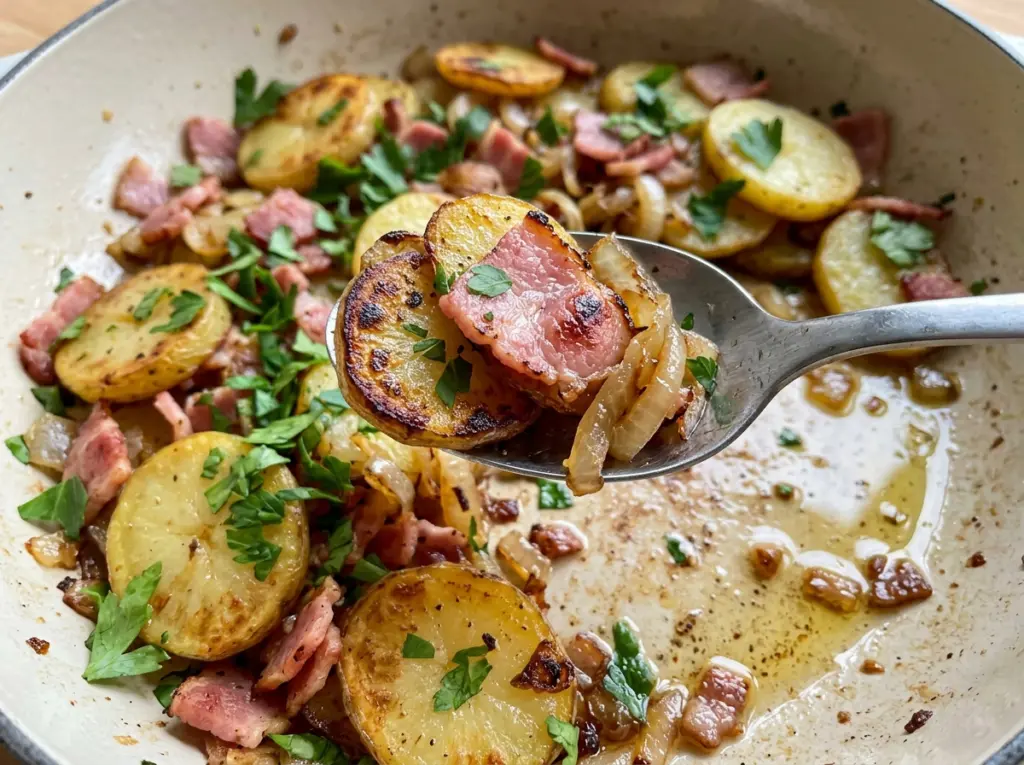
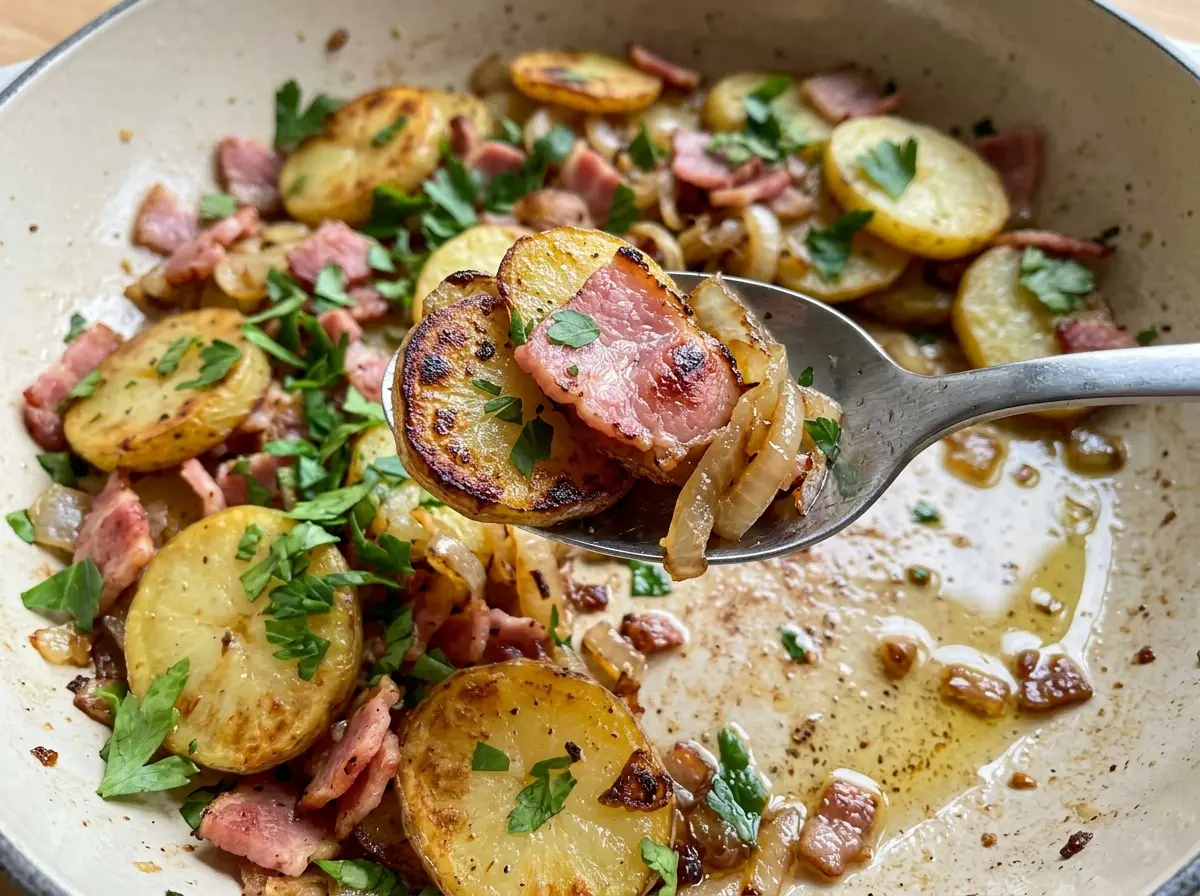
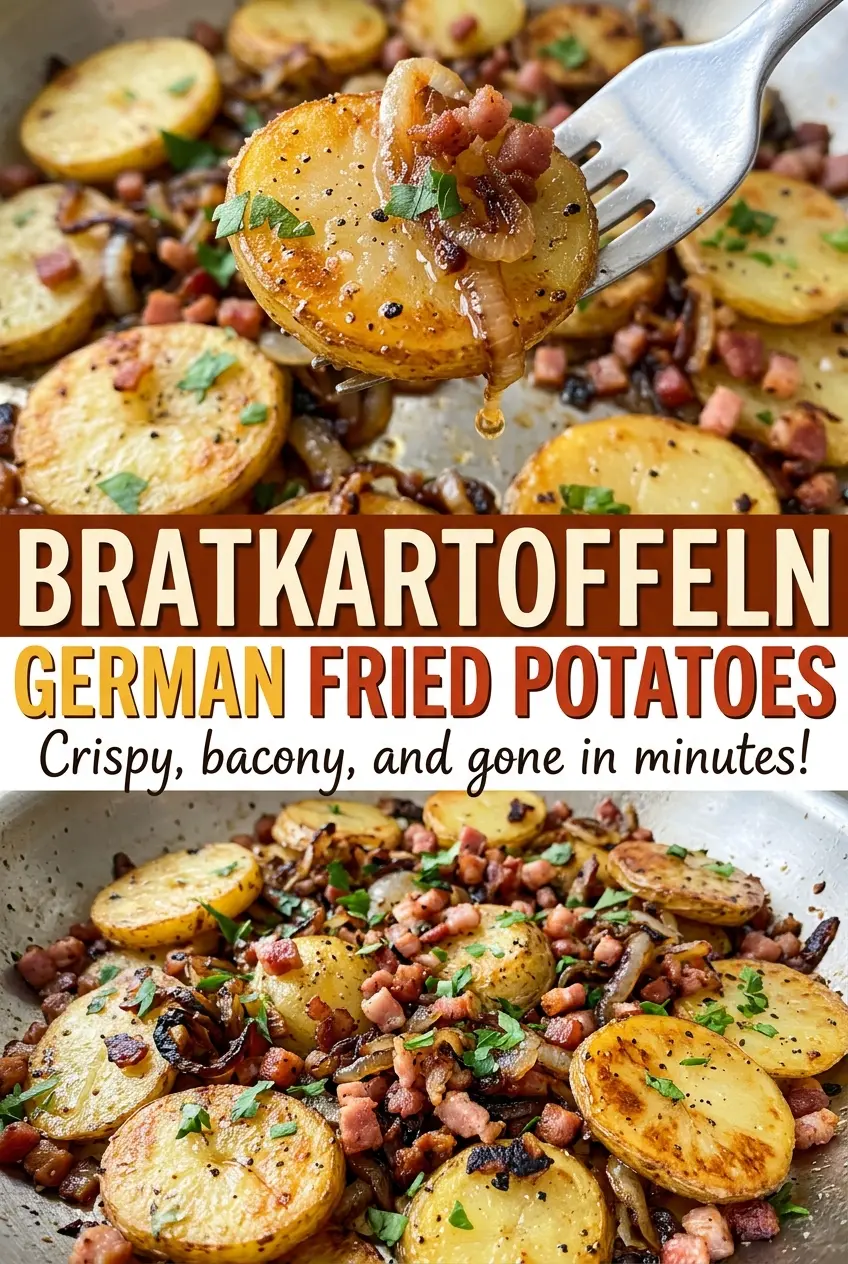
The first potato slices hit the hot skillet with a soft sizzle, then nothing dramatic happens for several minutes. That’s exactly what I want: a browned underside before I turn them. I learned to stop nudging them around, because an early stir can break the slices and leave pale sides. These Bratkartoffeln German Fried Potatoes have crisp edges around tender centers, with bacon and softened onion in every forkful.
The potatoes get boiled ahead, then cooled completely before I peel and slice them. That pause gives the rounds enough firmness to handle the hot skillet without crumbling. Once they’re ready, the bacon fat and a little neutral oil help each batch brown, while the onion goes in at the end so it softens without taking over the pan. The result is a skillet of golden potatoes with crisp bacon and fresh parsley.
Kitchen Note
Stop boiling when a knife pierces a potato easily but the potato still holds its shape. If the potatoes are soft enough to split in the pot, the slices are much harder to handle later.
Save these Bratkartoffeln for a crisp-edged potato supper, with bacon, onion, and parsley in every batch.
Why Bratkartoffeln Need a Crowded-Free Skillet, Not More Heat
It’s easy to think a hotter pan will make these potatoes crisp faster, but room to breathe matters more. When too many slices cover the skillet, they release moisture into a crowded layer instead of browning against the pan. The result is soft, pale potatoes, even if the heat is high. Frying half the potatoes at a time gives the slices more direct contact with the skillet and leaves space to turn them without crushing their edges.
The bacon fat and neutral oil work together, but they can’t compensate for an overloaded pan. Keep the first batch in a single layer as much as you can, then repeat with the remaining potatoes and oil. The slices need several uninterrupted minutes to develop a brown underside; turning them early trades that crust for a softer surface. This is why the recipe takes a little longer than tossing everything together at once, but each batch comes out with the browned edges that make the dish worth cooking.
What Yukon Golds, Bacon, and Oil Each Bring to the Skillet
- Yukon Gold potatoes — Their creamy texture and ability to hold their shape make them a good fit for boiling, chilling, and slicing. Yellow potatoes are the closest swap; use the same knife cue for doneness because size can affect how quickly they cook.
- Bacon — Diced bacon renders fat that adds savory flavor to the potato batches. Regular bacon is fine; a leaner bacon leaves less fat in the skillet. For a meat-free alternative, browned mushrooms bring savory depth, though they won’t reproduce bacon’s smoky saltiness.
- Neutral oil — A mild oil lets the browned potato and bacon flavors come through without adding its own strong taste. Canola or vegetable oil works in its place, divided between the batches just as you would the neutral oil.
- Yellow onion — Thin slices soften quickly and turn lightly golden in the skillet. A white onion works as a swap with the same thin-slicing and cooking approach; it gives the finished dish a slightly sharper onion flavor.
- Fresh parsley — Chopped parsley adds a fresh finish after the skillet comes off the heat. Chopped chives can stand in, bringing a mild onion note instead; add them at the same point, just before serving.
From Firm Boiled Potatoes to Crisp, Golden Slices
Simmer the Potatoes Until They Hold Together
Put the potatoes in a 4-quart pot with 8 cups cold water and 1 tablespoon kosher salt. Bring the pot to a boil over high heat, then reduce the heat and simmer for 15–25 minutes. Check with a knife: it should pierce a potato easily, while the potato still holds its shape.
Cool Them Completely Before Slicing
Drain the potatoes and spread them on a tray to cool for 20 minutes. Refrigerate them until completely cold, at least 2 hours; this is not the moment to rush straight to the skillet. Peel the cold potatoes and cut them into 1/4-inch-thick slices. Keep the slices as even as you can so they brown at a similar pace.
Render the Bacon in the Skillet
Set a 12-inch skillet over medium heat and add the diced bacon. Cook for 6–8 minutes, stirring occasionally, until it’s browned and crisp. Lift it out with a slotted spoon and transfer it to a plate, leaving the rendered fat in the skillet for the potatoes.
Brown the Potatoes in Two Batches
Raise the heat to medium-high and add 1 tablespoon of the neutral oil and half the potatoes. Fry for 5–7 minutes without moving the slices, then turn them and cook for 4–5 minutes more, until browned and crisp. Transfer the first batch to a plate, then repeat with the remaining oil and potatoes. If you move the slices before they’ve browned, they’re more likely to tear and won’t develop as much color.
Soften the Onion and Bring It All Together
Reduce the heat to medium and add the thinly sliced onion to the skillet. Cook for 4–6 minutes, stirring, until softened and lightly golden. Return the potatoes and bacon to the pan, then add the remaining 1/2 teaspoon kosher salt and the black pepper. Gently toss over medium heat for 1–2 minutes, until hot, and sprinkle with chopped parsley before serving.
Three Ways to Adapt This Bacon-and-Potato Skillet
Make a vegetarian mushroom version
Leave out the bacon and brown 6 ounces of sliced cremini mushrooms in 1 tablespoon of neutral oil in the skillet. Transfer them to a plate, then use the original 2 tablespoons of oil for the potato batches. Return the mushrooms to the pan with the potatoes and onion; you’ll get a hearty, savory skillet without bacon’s smoky flavor.
Use red onion for a sweeter finish
Swap the yellow onion for one medium red onion, sliced thinly. Cook it in the skillet the same way until softened and lightly golden. Its color will mellow as it cooks, and the finished potatoes will have a slightly sweeter onion note.
Finish with chives instead of parsley
Use chopped fresh chives in place of the parsley and scatter them over the skillet just before serving. They add a gentle onion flavor that pairs naturally with the softened onion already in the pan.
Storage and Reheating
- Refrigerator: Store leftovers in a covered container for 3–4 days. The potatoes soften in the refrigerator and won’t keep their freshly fried edges.
- Freezer: Freezing isn’t recommended; cooked potatoes can become mealy after thawing, and the crisp texture won’t return well.
- Reheating: Warm leftovers in a skillet over medium heat, turning gently until hot throughout. A microwave heats them quickly but leaves the potato edges softer.
Questions That Come Up When Frying Bratkartoffeln
Bratkartoffeln German Fried Potatoes
Ingredients
Equipment
Method
- Put the potatoes in a 4-quart pot with the cold water and 1 tablespoon of the salt.
- Bring to a boil over high heat.
- Reduce the heat and simmer for 15–25 minutes, until a knife pierces a potato easily but it still holds its shape.
- Drain the potatoes and spread them on a tray.
- Let the potatoes cool for 20 minutes, then refrigerate until completely cold, at least 2 hours.
- Peel the cold potatoes and cut them into 1/4-inch-thick slices.
- Cook the bacon in a 12-inch skillet over medium heat for 6–8 minutes, stirring occasionally, until browned and crisp.
- Transfer the bacon to a plate with a slotted spoon, leaving the rendered fat in the skillet.
- Raise the heat to medium-high and add 1 tablespoon of the oil and half the potatoes to the skillet.
- Fry for 5–7 minutes without moving them, then turn and cook for 4–5 minutes more, until browned and crisp.
- Transfer the potatoes to a plate.
- Repeat with the remaining oil and potatoes.
- Reduce the heat to medium, add the onion to the skillet, and cook for 4–6 minutes, stirring, until softened and lightly golden.
- Return the potatoes and bacon to the skillet, add the remaining 1/2 teaspoon salt and the pepper, and gently toss over medium heat for 1–2 minutes, until hot.
- Sprinkle with the parsley before serving.




