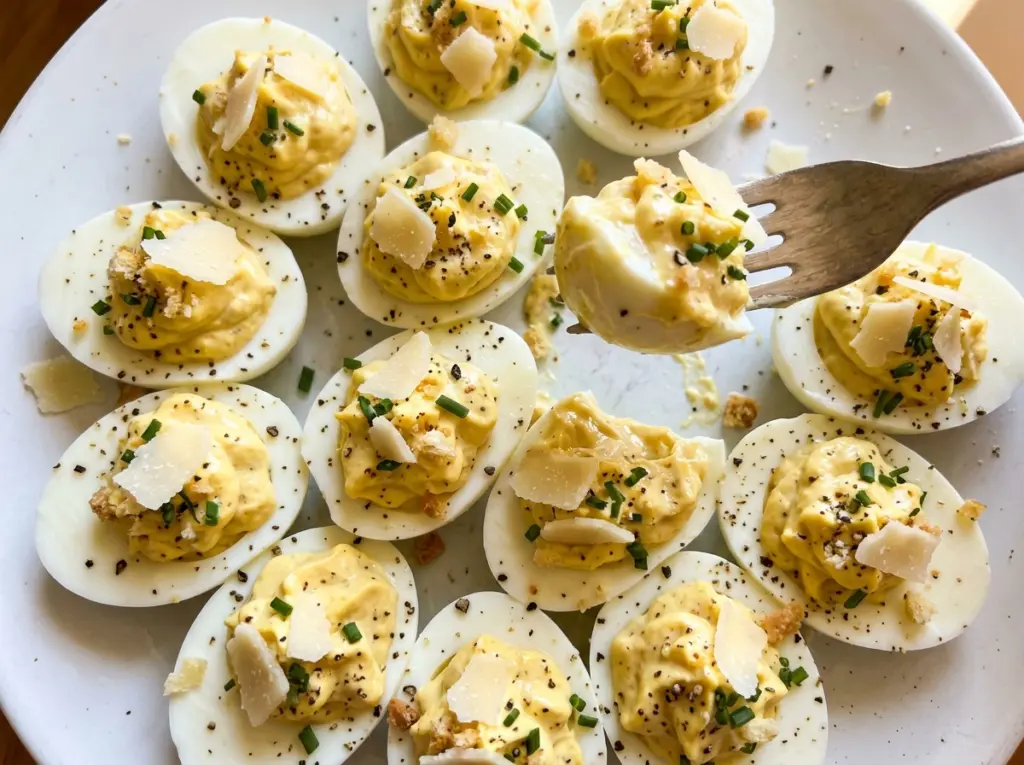
The yolks are still warm enough to mash easily, and the first squeeze of lemon cuts through the richness before the filling even reaches the egg whites. That little bit of brightness is what keeps Caesar deviled eggs from tasting like plain deviled eggs with Parmesan on top.
I like this version because the Caesar notes stay savory without taking over. Anchovy paste and Worcestershire bring depth, while Dijon and lemon keep the filling lively; a shower of finely grated Parmesan finishes each bite with a salty, nutty edge.
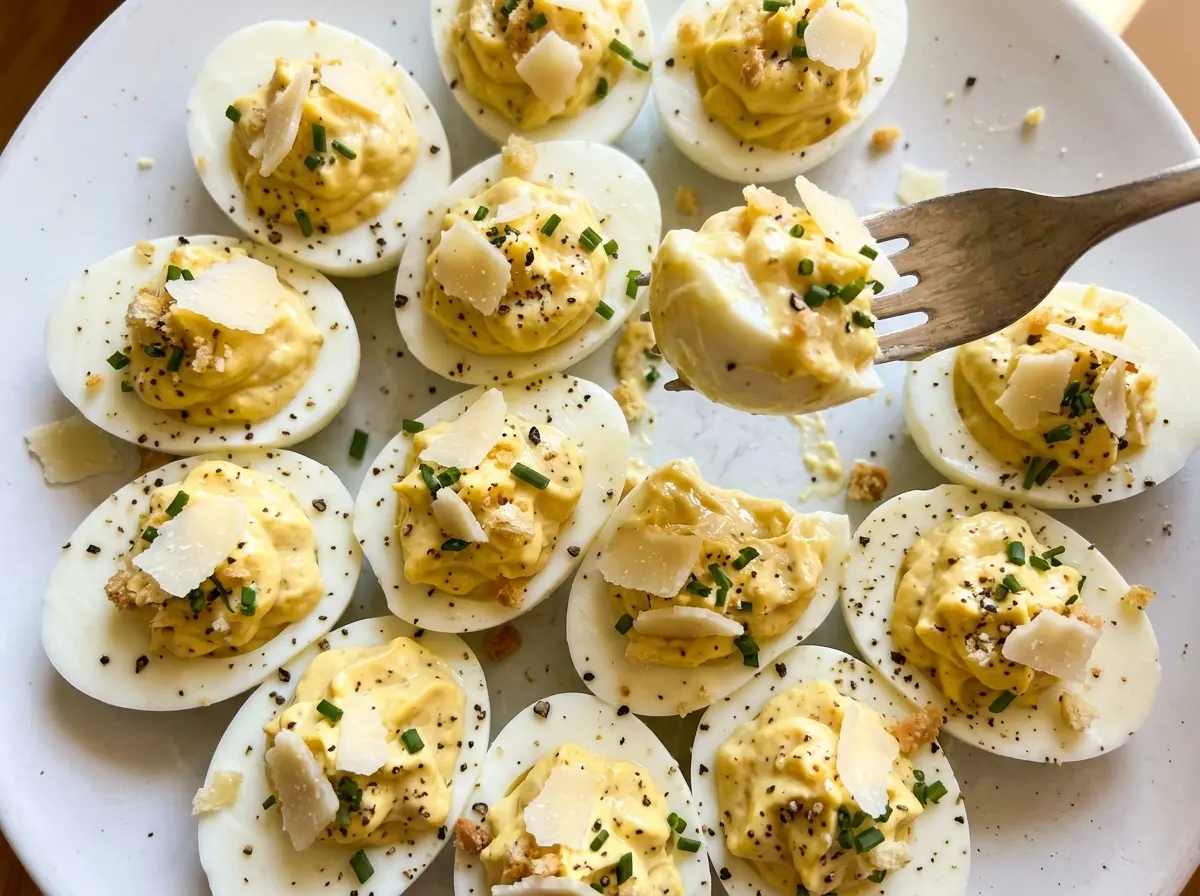
The filling should be smooth enough to spoon neatly, but sturdy enough to sit in the whites without sliding around. Once chilled, these Caesar deviled eggs are creamy, peppery, and easy to serve cold.
Kitchen Note
Once the water reaches a full boil, take the pan off the heat and leave it covered for the full 12 minutes. The eggs cook gently in the hot water, so keep the lid on rather than bringing them back to a boil.
Save these Caesar deviled eggs for a make-ahead platter with creamy yolk filling, a bright lemon finish, and Parmesan on top.
Why Parmesan Alone Doesn’t Make These Taste Like Caesar
Parmesan gives the garnish its familiar salty, nutty finish, but the Caesar character comes from the savory seasoning mixed into the yolks. Anchovy paste and Worcestershire sauce add a deep, rounded savoriness in small amounts. Neither should make the filling taste fishy or sharp; they should make the other ingredients taste more complete.
Dijon and lemon do a different job. They cut through the mayonnaise so the filling stays bright rather than heavy, and black pepper adds the gentle bite you expect from a Caesar-style dressing. Garlic powder brings garlic flavor without raw pieces interrupting the smooth texture. The balance matters more than any one ingredient: too much lemon can make the filling seem thin and tart, while too little acid leaves the yolks tasting flat.
That balance is also why I keep the Parmesan as a garnish instead of mixing a large amount into the filling. The top gets a distinct salty finish, while the yolk mixture stays creamy and easy to spoon. Each part has a clear role, so the eggs taste seasoned all the way through instead of simply cheesy.
What Each Caesar Egg Ingredient Brings to the Filling

- Large eggs — Large eggs give you a consistent size for the stated cooking time and leave enough white to hold a generous spoonful of filling. Keep them in a single layer in the saucepan so they cook evenly. Fresh eggs work, though eggs that aren’t brand-new are often easier to peel.
- Mayonnaise — Mayo makes the yolks creamy and helps the filling hold its shape. A standard store brand works well; there’s no need for a specialty mayonnaise here. For a tangier, lighter filling, replace half the mayonnaise with plain Greek yogurt, knowing the result will be softer and less rich.
- Dijon and lemon — Dijon adds a mild mustard sharpness without the coarse seeds of whole-grain mustard, which would change the smooth texture. Fresh lemon juice gives the cleanest brightness; bottled juice works in the same amount, though its flavor is less lively.
- Anchovy paste and Worcestershire sauce — These supply the savory backbone, and a tube of anchovy paste is convenient because you can measure a small amount without opening a tin. If you don’t have paste, use one finely mashed anchovy fillet in its place. Worcestershire varies by brand, so choose one you already like in dressings and marinades.
- Garlic powder and black pepper — Powder distributes evenly through the filling, while freshly ground black pepper has a more fragrant bite than pepper that’s been sitting in a shaker. If using pre-ground pepper, check that it’s still aromatic when you open the container.
- Parmesan — Finely grated Parmesan clings to the tops instead of falling off in large shavings. A wedge grated just before serving has the best texture, but packaged finely grated Parmesan is convenient and works for this garnish. Pecorino Romano can replace it in the same amount for a sharper, saltier finish.
How to Cook, Fill, and Chill the Eggs Without Guesswork
Cook the eggs gently off the heat
Arrange the eggs in a single layer in a 3-quart saucepan and cover them with cold water by 1 inch. Bring the water to a full boil over medium-high heat, then remove the pan from the burner, cover it, and let the eggs stand for 12 minutes. Transfer them to a bowl of ice water and cool for 10 minutes. Don’t skip the cold-water start or the covered rest; both are part of the timing that gives the yolks time to set without continuing to boil.
Separate the whites and yolks
Peel the cooled eggs, then halve each one lengthwise with a clean knife. Set the whites cut-side up on a serving platter and transfer the yolks to a medium bowl. If a white tears while peeling, keep it for the platter anyway; the filling can cover small imperfections, and the egg will still taste the same. Wipe the knife between cuts if yolk sticks to the blade and leaves ragged edges.
Mash until the Caesar filling is smooth
Add the mayonnaise, Dijon, lemon juice, anchovy paste, Worcestershire sauce, garlic powder, and black pepper to the yolks. Mash everything together until the mixture looks creamy and no large dry chunks of yolk remain. Press the yolks against the side of the bowl as you mash so the mixture smooths out rather than staying lumpy. Taste a small dab before filling; the pepper and savory seasonings should be noticeable, but the lemon should keep the finish bright.
Fill, garnish, and let the flavors settle
Spoon the filling into the egg whites, dividing it among the halves. Sprinkle the finely grated Parmesan over the top so each piece gets a little cheese. Cover the platter and refrigerate for at least 20 minutes before serving. That short chill firms the filling and gives the seasoned yolks time to settle into a cohesive bite.
Easy Ways to Change the Caesar Flavor or Presentation
Make a vegetarian Caesar-style filling
Use vegetarian Worcestershire sauce in place of the regular kind, leave out the anchovy paste, and mash in finely chopped capers for a salty, briny note. The filling won’t have quite the same anchovy depth, but it keeps a savory Caesar-inspired taste without fish.
Give the filling a gentle kick
Stir a small pinch of cayenne into the yolk mixture for warmth that builds after the first bite. Keep the black pepper, too; cayenne adds heat, while black pepper provides the familiar Caesar-style bite.
Pipe a tidy swirl for a party platter
For a more polished look, spoon the finished filling into a piping bag or a sturdy zip-top bag and snip off a small corner. Pipe it into the whites in a steady spiral, then add the Parmesan. This changes the presentation, not the flavor, and works best when the filling is smooth.
Make-Ahead and Serving
- Refrigerator: Cover the filled eggs and refrigerate for up to 2 days. The whites may release a little moisture as they sit.
- Freezer: Freezing isn’t a good fit; thawed egg whites turn rubbery and the mayonnaise-based filling can separate.
- Serving: Chill for at least 20 minutes before serving, and keep the platter refrigerated when it isn’t being served. Don’t leave egg dishes at room temperature for more than 2 hours.
Questions That Come Up When Making Caesar Deviled Eggs
Caesar Deviled Eggs
Ingredients
Equipment
Method
- Place the eggs in a 3-quart saucepan in a single layer and cover with cold water by 1 inch.
- Bring to a full boil over medium-high heat.
- Remove the pan from the heat and cover.
- Let stand for 12 minutes.
- Transfer the eggs to a bowl of ice water and cool for 10 minutes.
- Peel the eggs and halve them lengthwise.
- Arrange the whites cut-side up on a serving platter.
- Transfer the yolks to a medium bowl.
- Mash the yolks with the mayonnaise, Dijon mustard, lemon juice, anchovy paste, Worcestershire sauce, garlic powder, and black pepper until smooth.
- Spoon the filling into the egg whites.
- Sprinkle with the Parmesan.
- Cover and refrigerate for at least 20 minutes before serving.