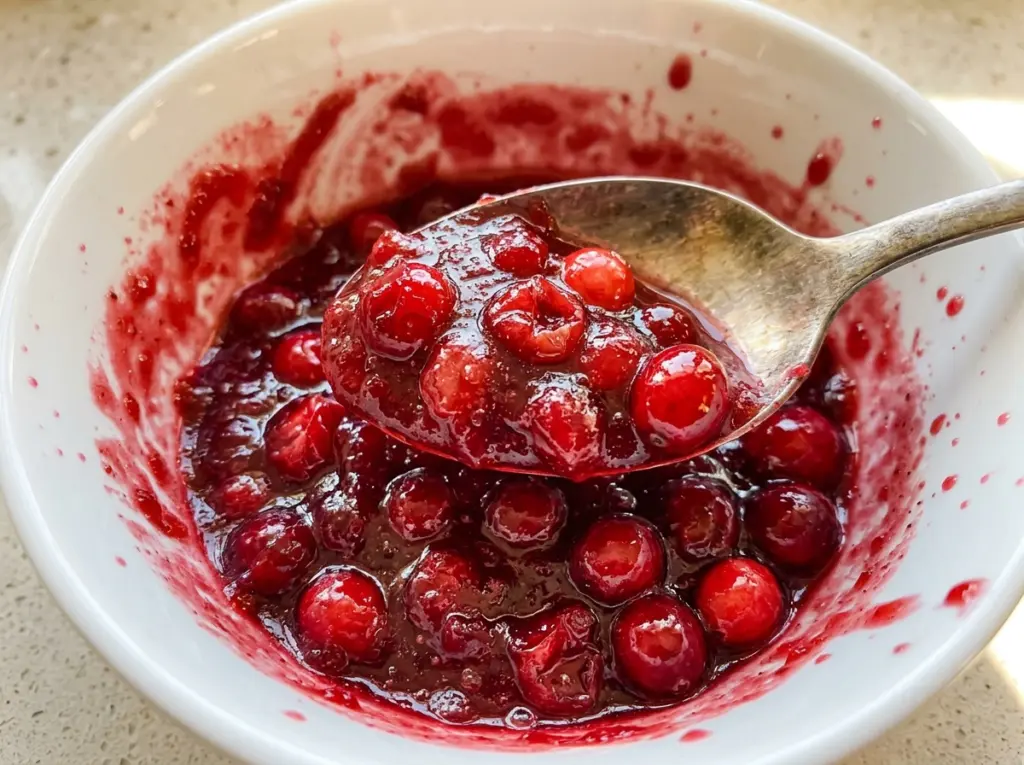
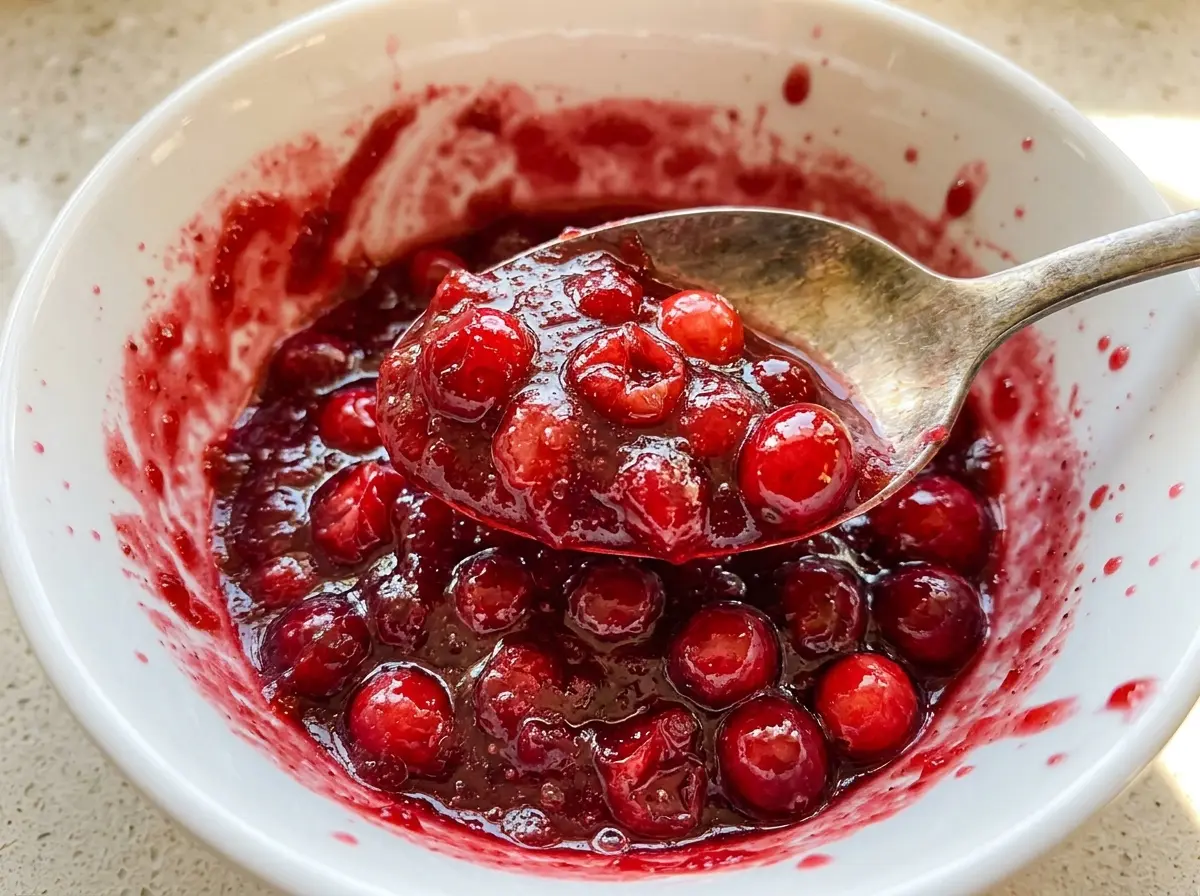
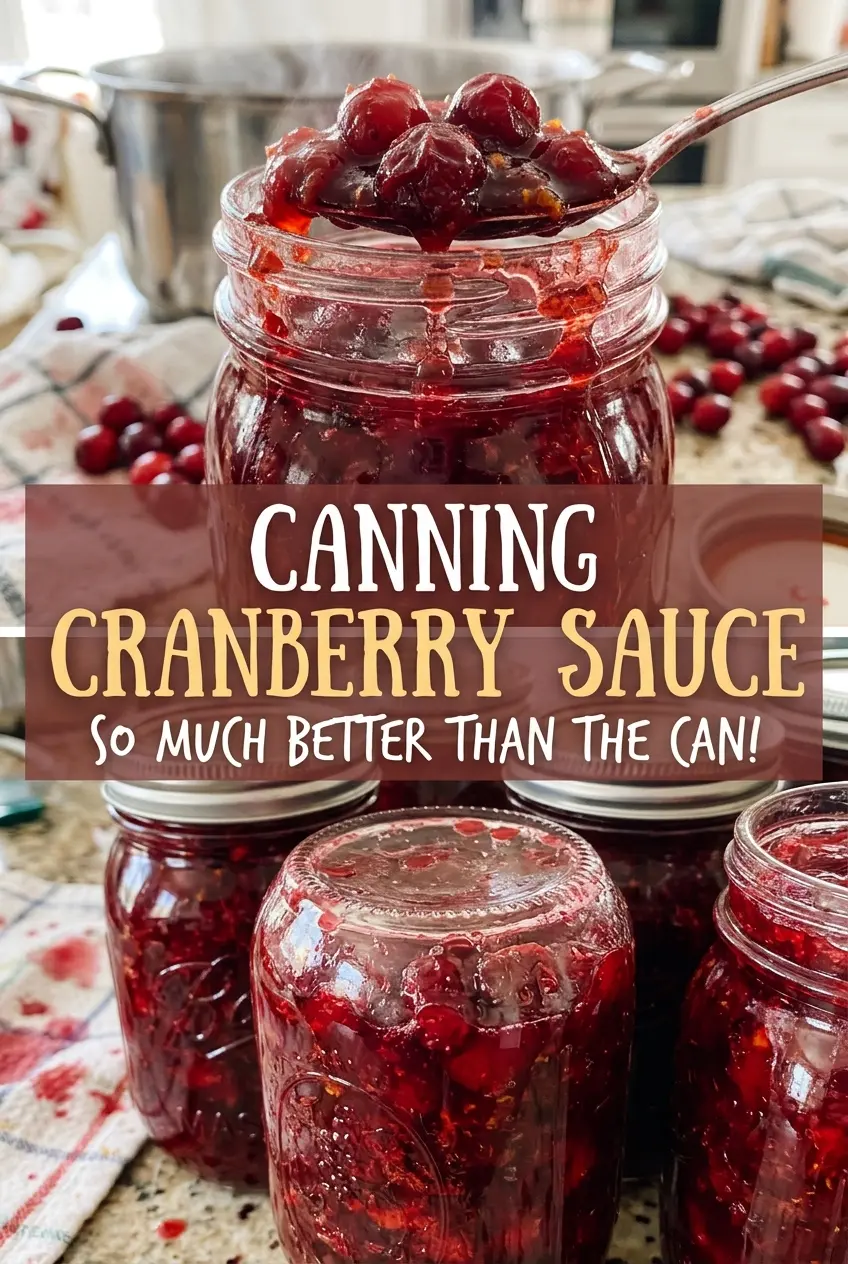
The sugar syrup turns clear before the cranberries go in, and then the berries start popping one by one. I keep the spoon moving as the pan fills with ruby-red sauce; the change from separate berries to a glossy, slightly thickened mixture happens quickly near the end. This is the simple rhythm behind canning cranberry sauce at home.
Fresh cranberries bring plenty of tartness, so the sugar and water cook into a syrup before the fruit is added. That order gives the berries a hot, even start and keeps undissolved sugar from clinging to the bottom of the pan.
I like this batch because it makes two pint jars without asking you to guess when the fruit is ready. Most of the berries burst, the sauce thickens a little, and the boiling-water canner does the preserving work. The finished sauce is bright, tangy, and full of cranberry flavor.
Kitchen Note
I let the filled jars sit in the canner for five minutes after I turn off the heat. That pause makes it easier to lift them out without the abrupt shift from boiling water to cool air.
Save this canning cranberry sauce for a batch with tart berries, a glossy finish, and just three ingredients.
Why This Sauce Should Thicken Slightly, Not Cook Down Like Jam
It’s easy to keep cooking cranberry sauce until it looks thick in the pan, but this batch is meant to thicken only slightly before it goes into the jars. Most berries should have burst, while a few whole berries and their skins still give the sauce texture. If you wait for a dense, jam-like consistency, you’ll cook away more liquid than this recipe needs.
The bubbling fruit can also make the sauce look looser than it will once it’s off the heat. Watch the berries rather than waiting for a heavy coating on the spoon: the change you’re looking for is a mixture that has thickened a little and contains mostly burst fruit. The canning process preserves the hot sauce; it isn’t a second chance to reduce it.
Keeping the batch at this stage gives you cranberry sauce that’s easy to spoon after opening. It also leaves room for the sauce to settle as it cools in the jars. A slightly loose texture in the saucepan is a better cue than a thick, sticky one.
Fresh Cranberries, Sugar, and Water: Why This Formula Stays Simple
- Fresh cranberries — Pick through the berries and rinse them before cooking, as the recipe specifies. Choose fruit that looks firm and whole; discard any berries that are shriveled or damaged. Fresh berries give you the expected burst-and-thicken texture, while adding fruit with very different moisture can change how the pan cooks.
- Granulated sugar — Regular granulated sugar dissolves cleanly into the water and balances the fruit’s tartness. There’s no need for a specialty sugar here. Keep the amount in this canning batch unchanged; reducing or replacing it changes the finished sauce, and this formula is written around this exact balance.
- Water — Water gives the sugar a liquid base to dissolve into before the cranberries are added. Measure it rather than pouring by eye, since too much liquid takes longer to cook down and can leave the sauce thinner. No extra liquid is needed once the berries go into the saucepan.
From Clear Syrup to Sealed Pint Jars
Get the Jars and Canner Ready
Wash two pint canning jars and keep them hot while you work. Prepare new lids according to the manufacturer’s directions, then set a rack in the boiling-water canner and add enough water to cover the filled jars by one inch. Bring the water to a simmer so the jars can go into hot water when the sauce is ready.
Dissolve the Sugar Before Adding Fruit
In a 4-quart saucepan, bring the sugar and water to a boil, stirring until the sugar dissolves. The syrup should look clear, without visible grains collecting on the bottom of the pan. Stirring now helps the sugar dissolve evenly before the berries release their juice.
Cook Until Most Berries Have Burst
Stir in the cranberries and bring the mixture back to a boil. Cook over medium heat for 10 to 15 minutes, stirring often; the berries pop and soften as the syrup turns into sauce. Stop when most berries have burst and the mixture has thickened slightly, rather than waiting for every berry to disappear.
Fill, Process, and Cool Without Disturbing
Ladle the hot sauce into the hot jars, leaving 1/2 inch of headspace. Remove air bubbles, wipe the rims clean, center the lids, and screw on the bands fingertip-tight. Set the jars upright on the canner rack with at least one inch of water covering them, bring the canner to a full rolling boil, and process for 15 minutes at 0 to 1,000 feet, 20 minutes at 1,001 to 3,000 feet, 25 minutes at 3,001 to 6,000 feet, or 30 minutes above 6,000 feet. After the canner rest, lift the jars upright onto a towel and leave them undisturbed for 12 to 24 hours before checking the seals; refrigerate any unsealed jar and remove the bands from sealed jars before storage.
Three Ways to Change the Sauce After Opening
Add a Little Orange Zest
For a citrus note, stir finely grated orange zest into an individual portion after opening. The bright aroma lifts the tart berry flavor without changing the ingredients or processing for the shelf-stable jars.
Bring In Warm Ginger
Stir a small amount of finely grated fresh ginger into sauce after opening. It adds a gentle warmth and a little bite, while keeping the canned batch itself exactly as prepared.
Make a Smoother Spoonful
If you prefer less berry texture, mash a portion with a fork after opening. The sauce becomes smoother and easier to spread, though it won’t have the distinct whole-berry look of the jarred batch.
Storage and Reheating
- Refrigerator: Refrigerate any unsealed jar promptly and use it within 3 to 4 days. Once a sealed jar is opened, keep it covered in the refrigerator and use it within 3 to 4 days.
- Freezer: The sauce freezes well after opening. Transfer it to a freezer-safe container, leave room for expansion, and thaw it in the refrigerator; the berries may soften further.
- Reheating: The sauce can be served cold or gently warmed in a saucepan over low heat. Stir as it warms and avoid a hard boil, which can make it splatter.
Questions That Come Up When Canning Cranberry Sauce
Canning Cranberry Sauce
Ingredients
Equipment
Method
- Wash two pint canning jars and keep them hot.
- Prepare new lids according to the manufacturer’s directions.
- Set a rack in a boiling-water canner, add enough water to cover the filled jars by 1 inch, and bring the water to a simmer.
- In a 4-quart saucepan, bring the granulated sugar and 1 cup water to a boil, stirring until the sugar dissolves.
- Stir in the fresh cranberries and return the mixture to a boil.
- Cook over medium heat, stirring often, for 10 to 15 minutes, until most berries have burst and the sauce has thickened slightly.
- Ladle the hot sauce into the hot jars, leaving 1/2 inch headspace.
- Remove air bubbles and wipe the rims clean.
- Center the lids and screw on the bands fingertip-tight.
- Place the jars on the canner rack, ensuring they are covered by at least 1 inch of water, and bring the water to a full rolling boil.
- Process for 15 minutes at 0 to 1,000 feet, 20 minutes at 1,001 to 3,000 feet, 25 minutes at 3,001 to 6,000 feet, or 30 minutes above 6,000 feet.
- Turn off the heat and remove the canner lid.
- Let the jars stand in the canner for 5 minutes.
- Lift the jars upright onto a towel and cool undisturbed for 12 to 24 hours.
- Check that the lids have sealed and refrigerate any unsealed jars.
- Remove the bands from sealed jars before storing them in a cool, dark place.