
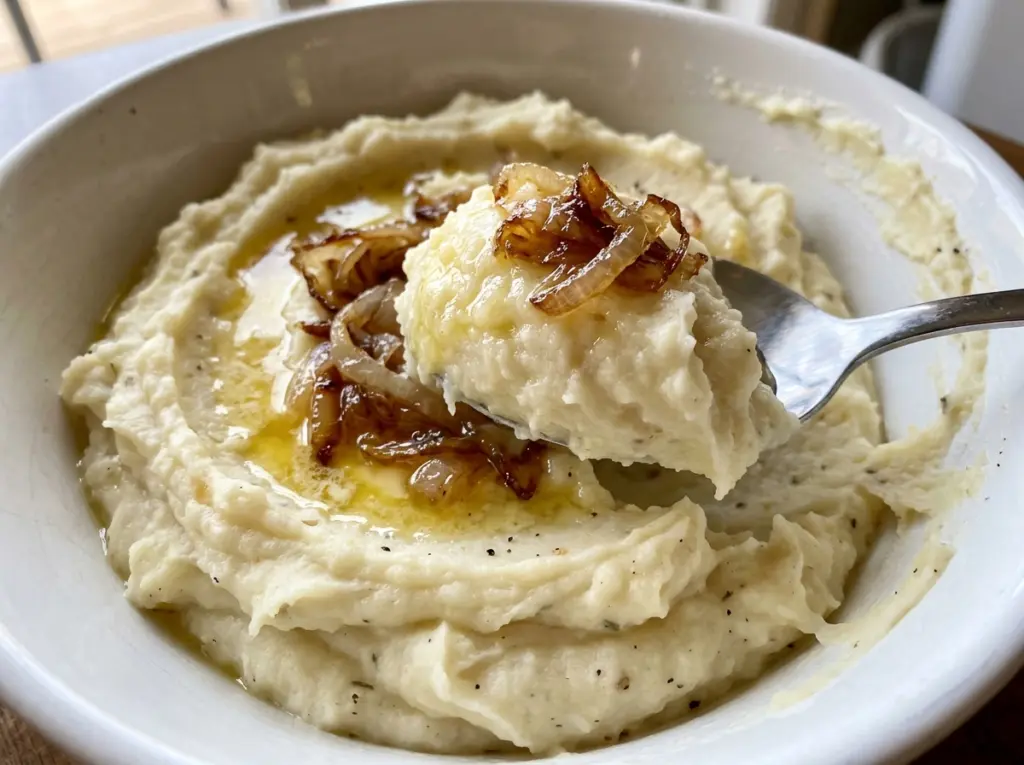
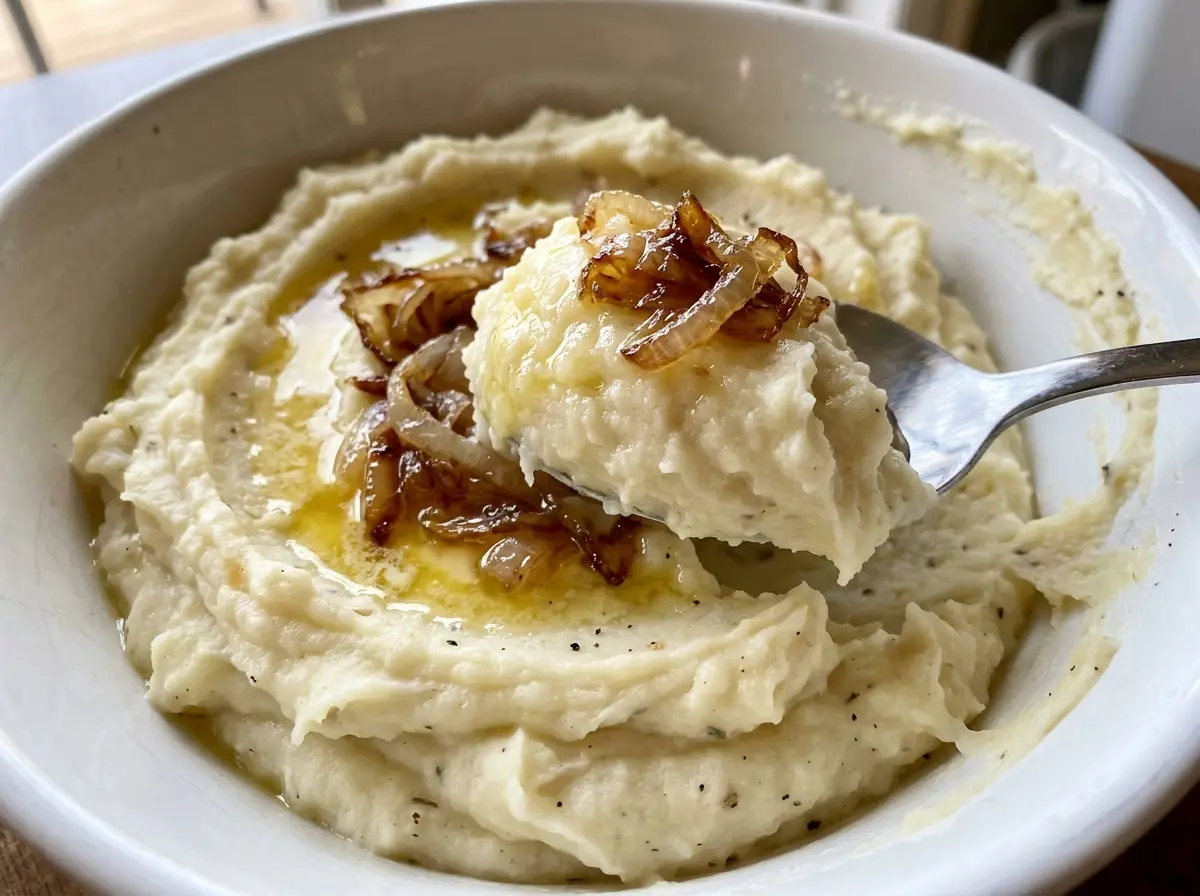
The shallots start out piled high in the skillet, then slowly collapse into soft, deep-gold ribbons. That change takes longer than a quick sauté, but it’s what gives these caramelized shallot mashed potatoes their sweet, savory depth instead of a sharp onion bite. I keep the heat at medium and stir often; if the edges race ahead and turn dark, I lower the heat before they burn.
Yukon gold potatoes give this mash a naturally buttery texture, while warmed milk and sour cream bring the cooked potatoes together without cooling them down. I also take a minute to steam excess water off the drained potatoes before adding the dairy. The mash stays creamy rather than loose, with tender shallots folded through every serving.
Kitchen Note
After draining, return the potatoes to the warm pot and stir them gently over low heat for a minute or two. That brief steam-dry makes a noticeable difference: the butter, warm milk, and sour cream cling to the potatoes instead of pooling at the bottom.
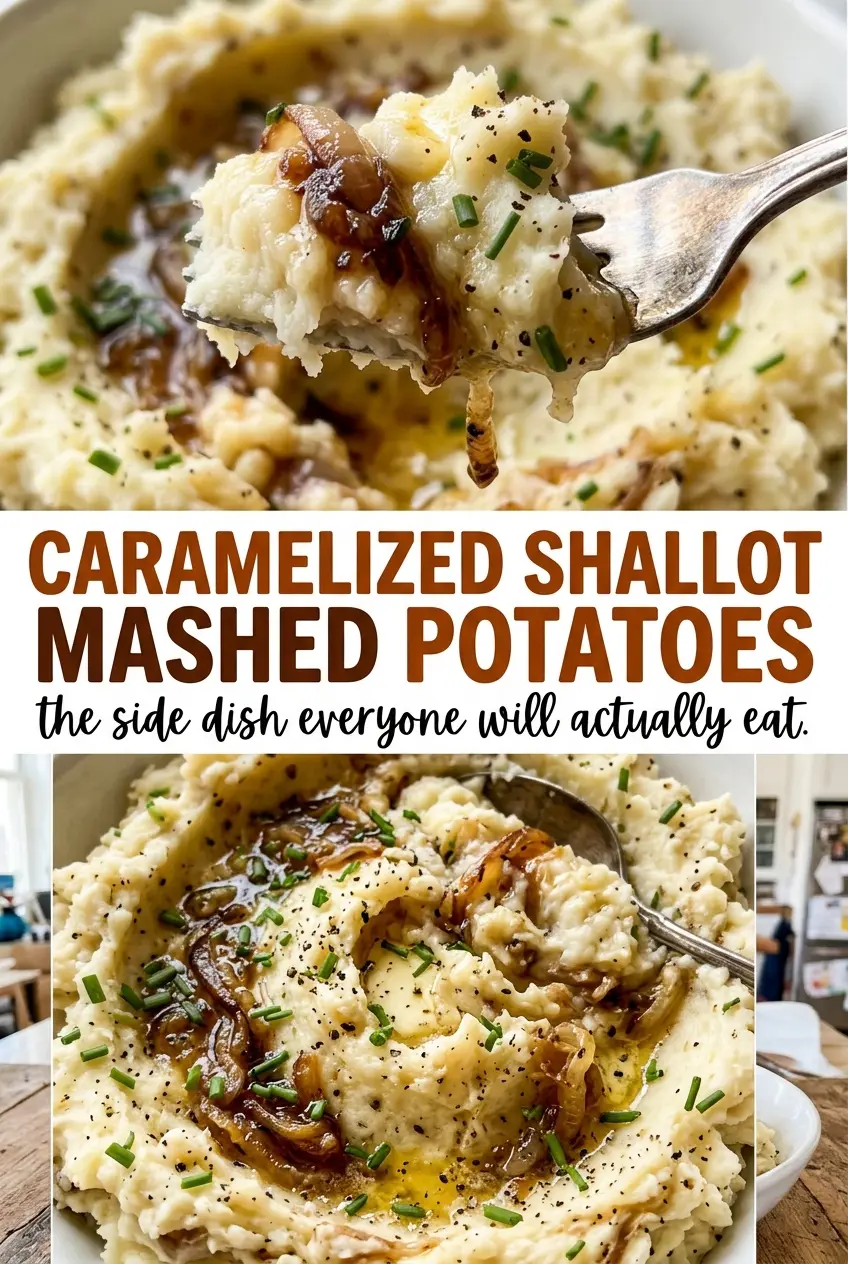
Save these caramelized shallot mashed potatoes for a holiday table or a cozy dinner—the golden shallots bring a sweet, savory finish to every creamy scoop.
Why the Shallots Need a Slow, Gentle Cook
Shallots are smaller and more delicate than many onions, so high heat can take them from pale to scorched before their sweetness has time to develop. Give them room to soften gradually in the skillet. Stirring often helps the slices cook evenly, and lowering the heat when they begin coloring too quickly keeps the browned bits from turning bitter.
Look for shallots that have reduced substantially and turned deeply golden all the way through. They should be soft enough to bend easily, not crisp around the edges. The 25-to-35-minute window allows for differences in the skillet and the thickness of the slices, so use color and tenderness alongside the clock. Don’t rush them to match the potatoes; you can cook the shallots while the potatoes simmer, but the shallots need their own steady attention.
That slow cook also gives the finished mash a more balanced flavor. Instead of tasting like raw onion mixed into potatoes, the shallots become mellow and sweet, with enough savory depth to stand up to the butter and sour cream.
How Yukon Golds, Warm Milk, and Sour Cream Shape the Mash
- Yukon gold potatoes — Their naturally creamy, buttery texture suits a mash that’s meant to be smooth and rich. Choose firm potatoes without soft spots; russets can stand in, but they’ll give you a fluffier, less buttery result.
- Shallots — Their mild sweetness is central to the flavor, and slow cooking softens their sharper edge. Peel and slice them thinly so they soften evenly in the skillet. There isn’t a perfect swap for their distinct mellow flavor.
- Whole milk — Warming the milk helps it blend into the hot potatoes without cooling the mash. Whole milk contributes richness; lower-fat milk works, but the finished potatoes will be less rich.
- Sour cream — It adds a gentle tang that keeps the butter and potatoes from tasting one-note. Use fresh sour cream for the cleanest flavor; leaving it out makes the mash less tangy and a little less lush.
- Unsalted butter — Unsalted butter lets you control the seasoning alongside the divided kosher salt. If you only have salted butter, hold back some of the added salt and taste before serving.
Building the Mash Without Losing the Shallot Flavor
Soften the Shallots Until Deeply Golden
Heat the olive oil in a 12-inch skillet over medium heat, then add the thinly sliced shallots and 1/2 teaspoon of the salt. Cook for 25 to 35 minutes, stirring often, until the shallots are deeply golden and soft. If they start to brown too quickly, lower the heat rather than letting the edges scorch. The finished slices should look collapsed and tender, not crisp.
Simmer the Potatoes Until a Knife Slides In
Put the peeled, 1 1/2-inch potato pieces in a 5- to 6-quart pot with the water and 1 tablespoon of salt. Bring the pot to a boil over high heat, then reduce the heat and simmer for 15 to 20 minutes. Check the largest pieces with a knife; it should slide in easily without the potato crumbling apart. Keep the pieces similar in size so they finish cooking at about the same time.
Drain Well and Steam Off Extra Moisture
Drain the potatoes thoroughly, then return them to the pot. Set the pot over low heat and stir gently for 1 to 2 minutes to let excess moisture evaporate. Keep the potatoes moving gently rather than beating them at this stage. The surfaces should look dry and steamy, not wet or shiny with water.
Mash the Dairy In, Then Fold in the Shallots
Add the butter, warmed milk, sour cream, remaining 1 teaspoon of salt, and black pepper to the potatoes. Mash until creamy, stopping when the mixture is smooth and cohesive rather than continuing to work it. Fold in the caramelized shallots so their soft ribbons stay visible throughout the potatoes. Serve the mash hot.
Three Small Changes for a Different Shallot-Potato Finish
Keep a few shallots on top
Set aside a small portion of the cooked shallots before folding the rest into the potatoes, then scatter that portion over the top at serving. You’ll get the same mellow flavor throughout, with a more distinct sweet shallot bite in the first spoonful.
Leave the mash a little rustic
For a more textured bowl, stop mashing as soon as the butter, milk, and sour cream are incorporated, while a few small potato pieces remain. The result is less polished than a fully creamy mash, but it gives the soft shallot pieces a more substantial contrast.
Cut the shallots slightly thicker
A slightly thicker slice leaves more noticeable, tender pieces in the finished mash instead of fine ribbons. Cook them over steady, moderate heat until deeply golden and soft; the thicker pieces may need attention toward the longer end of the cooking window.
Storage and Reheating
- Refrigerator: Store leftovers in an airtight container for 3 to 4 days. The mash will firm up as it chills.
- Freezer: These potatoes can be frozen in an airtight container for up to 1 month, though thawed potatoes may be less silky. Thaw overnight in the refrigerator.
- Reheating: Warm gently in a covered pot over low heat, stirring now and then, until hot throughout. A splash of warm milk helps loosen the chilled mash; high heat can scorch the bottom before the center is hot.
Questions I Get Asked About These Shallot Mashed Potatoes
Caramelized Shallot Mashed Potatoes
Ingredients
Equipment
Method
- Heat the olive oil in a 12-inch skillet over medium heat, then add the shallots and 1/2 teaspoon salt.
- Cook, stirring often, for 25 to 35 minutes until deeply golden and soft; lower the heat if they begin to brown too quickly.
- Put the potatoes in a 5- to 6-quart pot and add the water and 1 tablespoon salt.
- Bring to a boil over high heat, then reduce the heat and simmer for 15 to 20 minutes until a knife slides easily into the largest pieces.
- Drain the potatoes well and return them to the pot.
- Cook over low heat for 1 to 2 minutes, stirring gently, to steam off excess moisture.
- Add the butter, warmed milk, sour cream, remaining 1 teaspoon salt, and pepper, then mash until creamy.
- Fold in the caramelized shallots and serve hot.




