
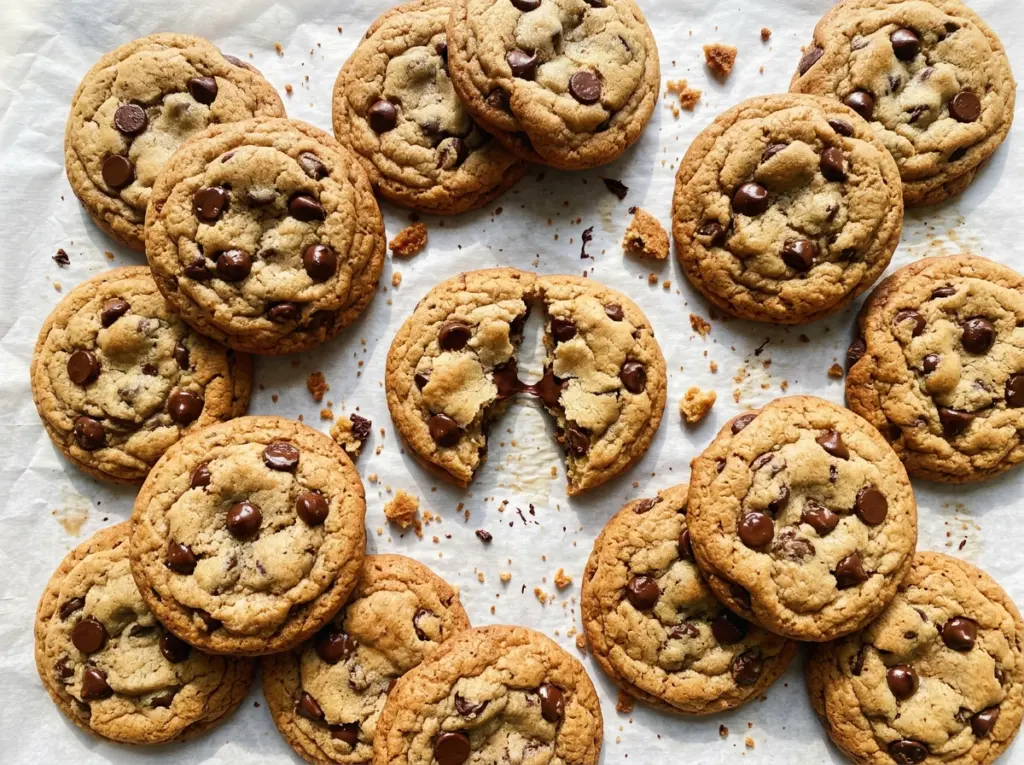
The butter and sugar should look creamy and a shade lighter before the eggs go in; that small visual cue makes it easier to tell when the base is ready. I wanted chocolate chip cookies that didn’t rely on brown sugar, and these come together with the granulated sugar already in the pantry. They bake up with golden edges and centers that look just set, without needing a special ingredient or a complicated technique.
Brown sugar brings a little molasses flavor and extra moisture, so leaving it out changes the cookie’s character. Here, room-temperature eggs blend smoothly into the creamed butter, and a short rest in the refrigerator firms the dough before it goes onto the pans. The result is a classic chocolate chip cookie with a cleaner, straightforward sweetness and plenty of semisweet chocolate in each bite.
Give the cookies a few minutes on the baking sheet before moving them; they’re delicate while hot, then settle into tender centers and crisp-edged rounds as they cool.
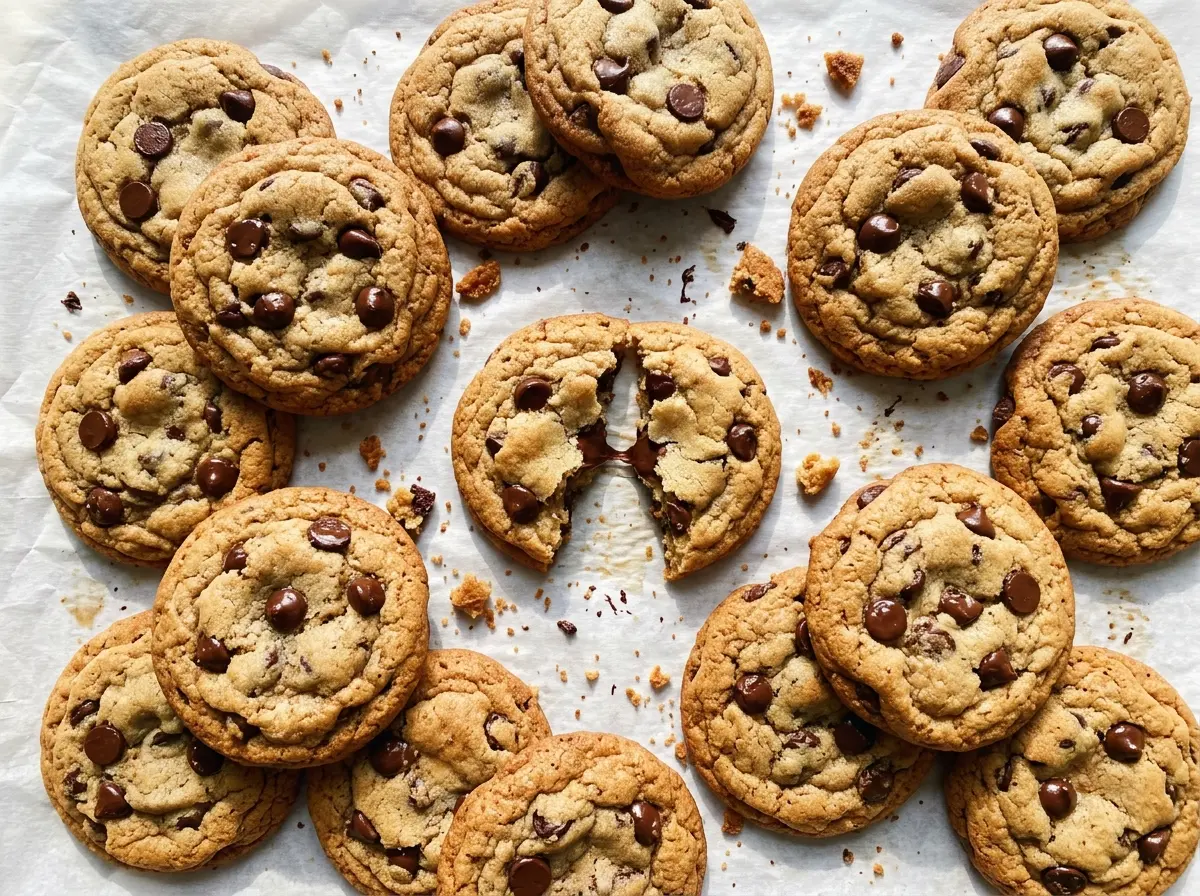
Kitchen Note
Let the cookies sit on the baking sheet for the full five minutes before transferring them. They’re still soft when they first come out, and moving them too soon can break the warm centers.
Save these chocolate chip cookies without brown sugar for a classic bake with golden edges and a generous amount of semisweet chocolate.
What Brown Sugar Usually Adds—and What These Cookies Get Instead
Brown sugar does more than sweeten chocolate chip cookies. Its molasses brings a deeper, almost toffee-like taste, and its moisture tends to make the centers chewier. Granulated sugar gives these cookies a cleaner sweetness and helps the edges turn golden, so they won’t taste exactly like a brown-sugar batch. That difference is the point, not a problem to cover up.
Butter and eggs still give the dough richness and structure, while the short refrigerator rest helps it firm up before baking. Don’t expect a dark, extra-chewy cookie; look for a balanced bite with lightly crisp edges and a softer middle. The centers should look just set when the pan comes out, because they’ll continue to settle as the cookies cool. If you’re baking these because brown sugar is missing from the cupboard, there’s no need to try to recreate its flavor with an unrelated substitute.
Why Each Ingredient Matters in a Brown-Sugar-Free Cookie

- All-purpose flour — It gives the dough enough structure to hold the chocolate chips and bake into neat cookies. Spoon flour into the measuring cup rather than packing it down; too much flour can leave the cookies dry and thick. All-purpose flour is the right everyday choice here, and I wouldn’t swap in a different flour without adjusting the formula.
- Baking soda — This helps the cookies spread and brown. Check that an old box is still fresh; baking soda that has lost its strength can leave the cookies pale and dense. There isn’t a direct one-for-one replacement that keeps the same result.
- Unsalted butter — Softened butter creams with the sugar and gives the dough its richness. A standard grocery-store butter works well; the important detail is that it’s softened, not melted, so it can hold air as it’s beaten. Stick with unsalted butter to keep the salt level predictable rather than swapping in a spread with a different water content.
- Granulated sugar — This is the only sugar in the dough, so it defines the sweetness and the crispness of the edges. Regular granulated sugar is exactly what you want; there’s no need for a specialty brand. Replacing it with a liquid sweetener would change the dough’s moisture and texture.
- Room-temperature eggs — Eggs bind the dough and help it bake into a tender cookie. Let them lose their chill before mixing so they incorporate more evenly into the butter mixture. Large eggs are important for keeping the dough’s proportions consistent.
- Vanilla extract — Vanilla rounds out the sweetness and makes the chocolate taste fuller. Pure extract is lovely, but a standard imitation vanilla works here too. Leaving it out won’t stop the cookies from baking, though the flavor will be less aromatic.
- Semisweet chocolate chips — Their sweetness balances the plain granulated-sugar dough, and chips hold their shape as they bake. A familiar grocery-store brand is fine. For softer, irregular chocolate pockets, use chopped semisweet chocolate in place of the chips.
From Creamed Butter to Cookies With Set Centers
Whisk the dry ingredients evenly
Heat the oven to 350°F and line two baking sheets with parchment paper. Whisk the flour, baking soda, and fine salt together in a medium bowl so the leavener isn’t left in one concentrated spot. A few seconds of whisking now makes it easier to mix the flour into the dough without overworking it later.
Cream the butter and sugar, then add the eggs
Beat the softened butter and granulated sugar with an electric mixer on medium speed for 2 to 3 minutes. The mixture should look creamy and lighter in color, not like separate bits of butter and sugar. Beat in the eggs one at a time, then mix in the vanilla. Adding the eggs individually gives each one a chance to blend into the butter before the next goes in.
Bring the dough together without overmixing
Add the flour mixture and mix on low only until no dry streaks remain. If you keep beating after the flour disappears, the cookies can turn tougher than you want. Fold in the chocolate chips until they’re evenly distributed; scrape the bottom of the bowl so you don’t leave a pocket of plain dough behind.
Chill and portion the dough
Cover the bowl and refrigerate the dough for 30 minutes. This short chill firms the butter and makes the dough easier to portion neatly. Scoop level 2-tablespoon portions and arrange them about 2 inches apart on the prepared sheets. Keeping the portions level gives you cookies that bake at a similar pace.
Bake one sheet at a time
Bake one sheet at a time for 10 to 12 minutes, watching for golden edges and centers that look just set. Don’t wait for the centers to look fully firm in the oven; they continue to settle while the cookies rest on the hot sheet. Leave them there for 5 minutes, then transfer them to a wire rack to cool completely.
Two Simple Ways to Change the Chocolate
Use chopped semisweet chocolate
Swap the chips for chopped semisweet chocolate, keeping the same volume. The irregular pieces make some bites more chocolatey than others, with little streaks and puddles where the finer shards melt into the dough.
Put a few chips on top
Before folding in the chocolate, set aside a small handful from the measured chips. Press those reserved chips onto the tops of the scooped dough portions, then bake as usual. You’ll get visible chocolate on the surface without changing the dough or adding another ingredient.
Storage and Reheating
- Room temperature: Once completely cool, keep the cookies in an airtight container for up to 4 days. They’ll soften a little as they sit.
- Freezer: Freeze completely cooled cookies in an airtight container for up to 2 months. Thaw them at room temperature before serving.
- Reheating: For a warm cookie, microwave one for about 5 seconds. Avoid longer bursts, which can make the chocolate too hot and the cookie tough.
Questions That Come Up While Baking These Cookies
Chocolate Chip Cookies Without Brown Sugar
Ingredients
Equipment
Method
- Heat the oven to 350°F.
- Line two baking sheets with parchment paper.
- Whisk the flour, baking soda, and salt together in a medium bowl.
- Beat the butter and sugar in a large bowl with an electric mixer on medium speed for 2 to 3 minutes, until creamy and lighter in color.
- Beat in the eggs one at a time.
- Mix in the vanilla.
- Add the flour mixture and mix on low just until no dry streaks remain.
- Fold in the chocolate chips until evenly distributed.
- Cover and refrigerate the dough for 30 minutes.
- Scoop the dough into level 2-tablespoon portions.
- Arrange the portions about 2 inches apart on the prepared baking sheets.
- Bake one sheet at a time for 10 to 12 minutes, until the edges are golden and the centers look just set.
- Let the cookies cool on the baking sheet for 5 minutes.
- Transfer them to a wire rack to cool completely.