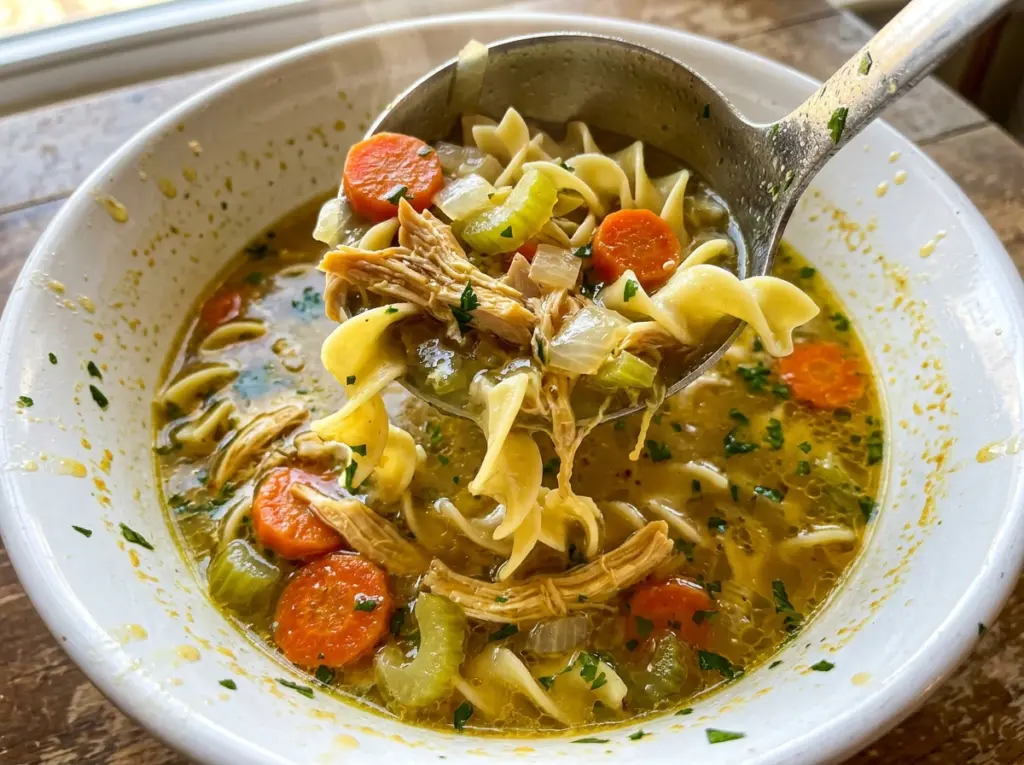
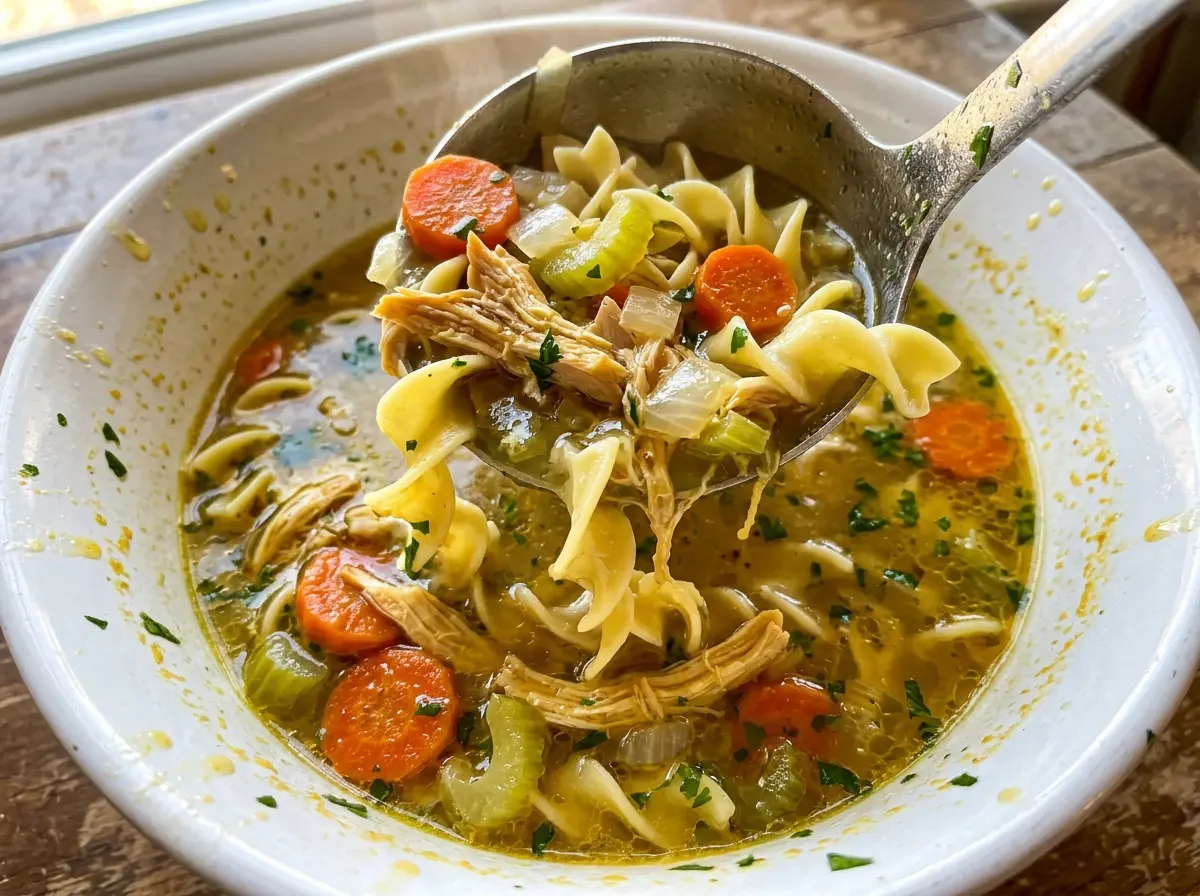
The onion, carrots, and celery start to soften in the Dutch oven before the garlic and ginger hit the warm oil. That quick fragrant moment is what makes this pot of Cold Fighting Chicken Noodle Soup smell like a proper bowl of comfort, not just broth with noodles in it. I like that the chicken cooks right in the soup, so it stays tender and gives the broth a chance to pick up more flavor as it simmers.
Fresh ginger brings a gentle, bright warmth, while lemon juice and parsley go in at the end to keep the broth from tasting heavy. The order matters: the chicken comes out before the noodles go in, and the noodles cook only until tender. That keeps the chicken easy to shred and gives you a soup with soft vegetables, wide noodles, and a clean, savory finish.
Kitchen Note
Add the lemon juice and parsley right at the end, then let the soup simmer just long enough to heat through. That short finish keeps the broth bright instead of cooking away the fresh, citrusy lift.
Save this Cold Fighting Chicken Noodle Soup for a cozy bowl with tender chicken, wide noodles, and a bright lemon finish.
Why the Chicken Comes Out Before the Noodles Go In
Cooking the chicken breasts in the broth builds flavor without needing a separate pan, but the noodles need a shorter, more precise window. If they went in at the same time as the chicken, they would sit in hot liquid for the full poaching time and turn overly soft. Taking the chicken out first gives the noodles their own 6-to-8-minute cook, while the broth stays at a gentle simmer.
There’s another useful payoff: the chicken is much easier to shred on a cutting board than in a pot of steaming broth. You can pull it into bite-size pieces without chasing it around with a fork, then stir it back in once the noodles are tender. If the soup is meant to stretch across more than one meal, remember that noodles continue soaking up broth as they sit. The separate cooking stages make it easier to get the texture right now and easier to adjust how you handle leftovers later.
How Ginger, Low-Sodium Broth, and Wide Noodles Shape the Bowl

- Fresh ginger and garlic — Together, they give the broth a lively aromatic base. Fresh ginger is worth using here because grating it lets the flavor disperse through the soup; choose firm ginger without shriveled or soft spots. Mince the garlic finely so it cooks quickly during its brief turn in the pot.
- Low-sodium chicken broth — This gives you room to season the soup without the broth deciding the salt level for you. A basic store-brand broth works well; the vegetables, chicken, thyme, and bay leaves add their own flavor as the pot simmers. If you use regular broth, hold back the added salt at first and taste before serving.
- Boneless, skinless chicken breasts — They poach directly in the broth and shred into the tender pieces that make each spoonful hearty. Choose breasts of similar thickness so they cook at a similar pace; there’s no need to buy an especially premium brand for this soup.
- Wide egg noodles — Their broad shape catches broth and gives the soup a classic noodle bite. Use the noodles you enjoy eating plain, since their texture is noticeable in every bowl. If you choose a different noodle, follow its package timing rather than assuming it will match the egg noodles.
- Carrots, celery, and yellow onion — These form the savory-sweet base before the broth goes in. Slice the carrots and celery into reasonably even pieces so they soften together. Ordinary fresh produce is all you need; the vegetables don’t have to be perfectly uniform.
- Lemon juice and parsley — They brighten the finished broth after the longer simmer. Fresh lemon juice tastes clearer than bottled here, and fresh parsley adds a greener finish than dried herbs would. Chop the parsley shortly before using so it keeps its fresh color.
- Dried thyme and bay leaves — Thyme gives the broth a gentle herbal note, while bay leaves add a background savoriness as the chicken cooks. Either is fine from an everyday pantry; remove the bay leaves before adding the noodles so they don’t end up in anyone’s bowl.
The Gentle Simmer and Short Noodle Window
Soften the vegetables before the aromatics
Warm the olive oil in a 6-quart Dutch oven over medium heat, then add the diced onion, sliced carrots, and sliced celery. Cook for 5 to 7 minutes, stirring occasionally, until the vegetables begin to soften. They don’t need browning; you’re looking for onion that’s turning translucent and carrots and celery that have lost their raw stiffness. Add the garlic and grated ginger and stir for 30 seconds, just until fragrant, so the garlic has time to release its aroma without scorching.
Poach the chicken gently in the broth
Pour in the chicken broth, then add the chicken breasts, thyme, bay leaves, salt, and black pepper. Bring the pot to a boil, then lower the heat so the broth settles into a gentle simmer rather than a hard, rolling boil. Simmer for 15 to 20 minutes, checking the thickest part of each breast with a thermometer. The chicken is ready when each one reaches 165°F; breast size affects the timing, so use the temperature as your cue.
Give the noodles their own cooking time
Transfer the cooked chicken to a cutting board and take the bay leaves out of the pot. Keep the broth simmering, add the wide egg noodles, and cook them for 6 to 8 minutes, until tender. Start checking near the shorter end of that window because noodle brands can vary. The broth should bubble gently around the noodles; a vigorous boil can make them cook unevenly and leave the edges too soft.
Shred and finish the soup
Shred the chicken into bite-size pieces while the noodles finish cooking, then return it to the pot. Stir in the lemon juice and chopped parsley and simmer for 1 to 2 minutes, just until everything is heated through. The chicken should be in small, easy-to-eat pieces, and the noodles should be tender without falling apart. Taste a spoonful before serving, especially if you used a broth with more salt than usual.
Easy Swaps for a Different Bowl
Make it gluten-free with wide gluten-free noodles
Replace the egg noodles with an equal weight of wide gluten-free noodles, and use the package timing as your guide because brands vary. Some gluten-free noodles soften faster or shed more starch into the broth, so check early and expect the soup to look a little cloudier.
Use cooked chicken when time is tight
Replace the raw chicken breasts with an equal amount of cooked, shredded chicken. Skip poaching the chicken in the broth; simmer the vegetables and seasonings in the broth, cook the noodles until tender, then stir in the cooked chicken with the lemon and parsley and heat through. The soup won’t get quite the same chicken flavor from the poaching step, but this version comes together faster.
Storage and Reheating
- Refrigerator: Keep leftovers in a covered container for 3 to 4 days. The noodles will absorb broth and become softer as they sit.
- Freezer: The soup can be frozen, though the noodles will be softer after thawing. Freeze in airtight portions for up to 2 to 3 months, thaw in the refrigerator, and add a splash of broth when reheating if the soup has thickened.
- Reheating: Warm gently in a saucepan over medium-low heat, stirring occasionally, until steaming throughout. Avoid a hard boil, which can break down the noodles and leave the chicken stringy.
Questions That Come Up When Making This Chicken Noodle Soup
Cold Fighting Chicken Noodle Soup
Ingredients
Equipment
Method
- Heat the olive oil in a 6-quart Dutch oven over medium heat, then add the onion, carrots, and celery and cook for 5-7 minutes, stirring occasionally, until the vegetables begin to soften.
- Stir in the garlic and ginger and cook for 30 seconds, until fragrant.
- Add the broth, chicken, thyme, bay leaves, salt, and black pepper; bring to a boil, then reduce the heat and simmer gently for 15-20 minutes, until the thickest part of each chicken breast reaches 165°F.
- Transfer the chicken to a cutting board.
- Remove the bay leaves from the pot.
- Add the egg noodles to the simmering broth and cook for 6-8 minutes, until tender.
- Shred the chicken into bite-size pieces.
- Return the chicken to the pot.
- Stir in the lemon juice and parsley and simmer for 1-2 minutes, until heated through.