
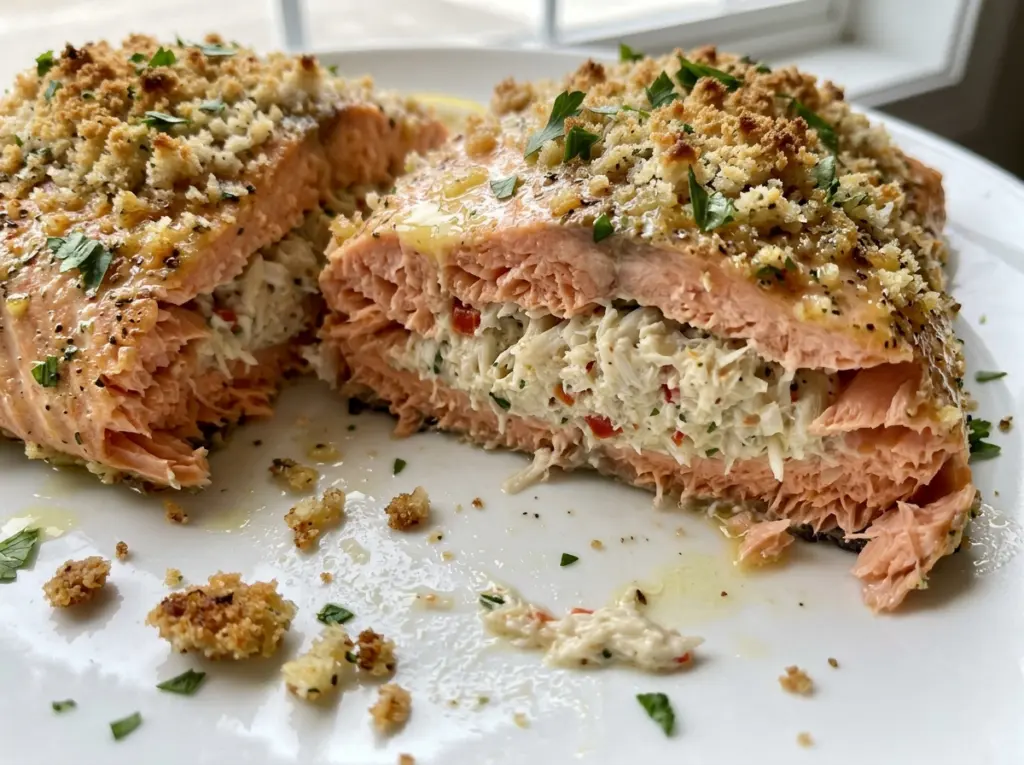
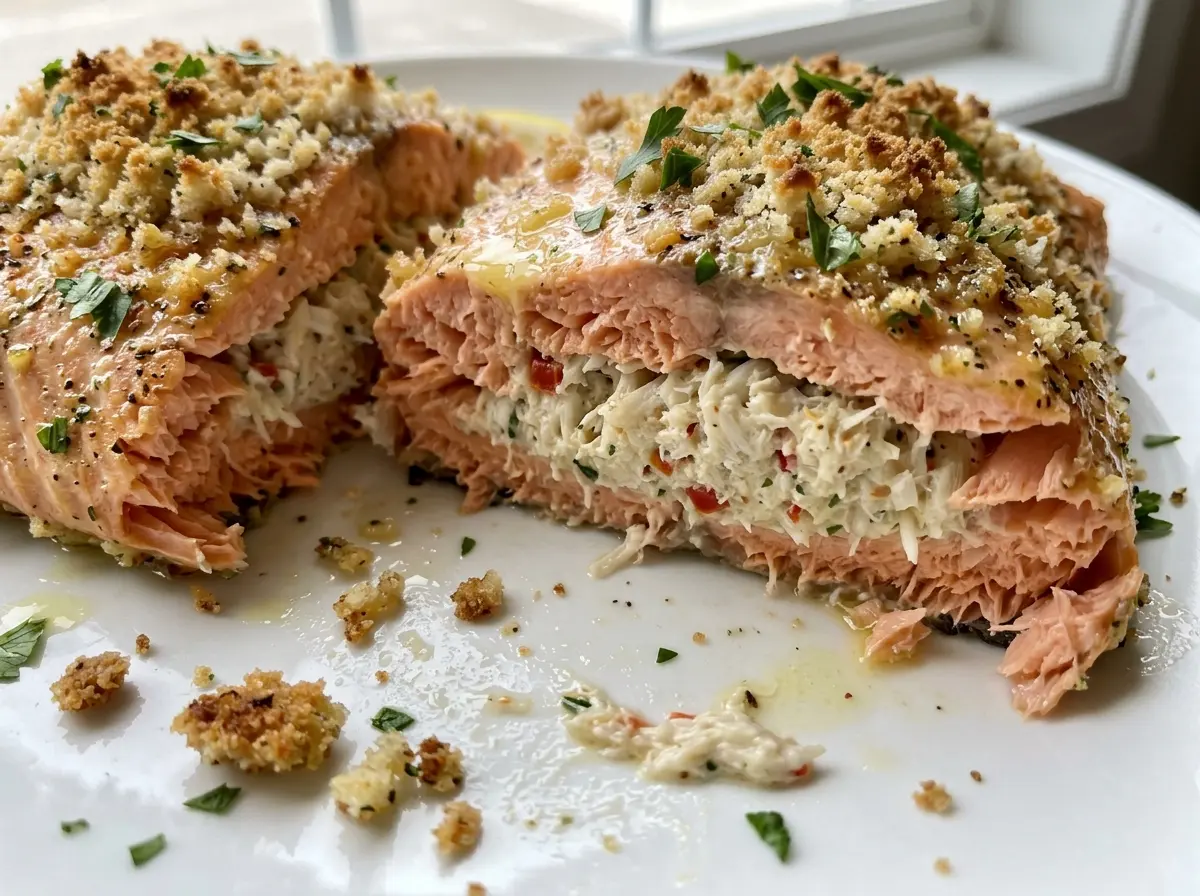
The first clue that stuffed salmon is built right is the cut: it opens like a pocket, not a flap, and the crab stays tucked inside while the fish bakes. That’s what I’m after with this crab stuffed salmon—tender, flaky fish with a savory crab center that feels special without turning dinner into a project.
I fold the filling just until it comes together, rather than mashing the crab into a paste. The panko gives the mixture a little structure, and the mayonnaise helps it hold together as it warms. A hint of lemon and Dijon keeps the crab bright, while the salmon stays moist and rich around it. Each fillet comes out with a generous, creamy middle and clean flakes of fish.
Kitchen Note
Drain the crab well before it goes into the bowl. Extra liquid loosens the filling, and it’s more likely to seep out of the salmon instead of staying nestled inside.
Save this crab stuffed salmon for a dinner that pairs flaky fish with a tender, savory crab center.
Why a Side Pocket Keeps the Crab Inside the Salmon
A slit across the top can look like the easiest way to stuff a fillet, but it leaves the filling exposed. As the salmon cooks and firms, crab can slide out through that open top. A pocket cut into the side gives the filling a more enclosed place to sit, with the salmon acting like a little cover over it.
That approach works especially well with center-cut fillets about 1 1/2 inches thick. They have enough depth to hold the crab mixture and enough salmon around it to cook into distinct, tender flakes. Cutting all the way through defeats the point: the filling has nowhere to stay. Keep the opening on one side and stop before the knife reaches the opposite edge. Then divide the mixture across the four pockets rather than crowding it into one or two; each portion should sit inside the fish, not tower over the opening.
What Gives the Crab Filling Its Tender Texture
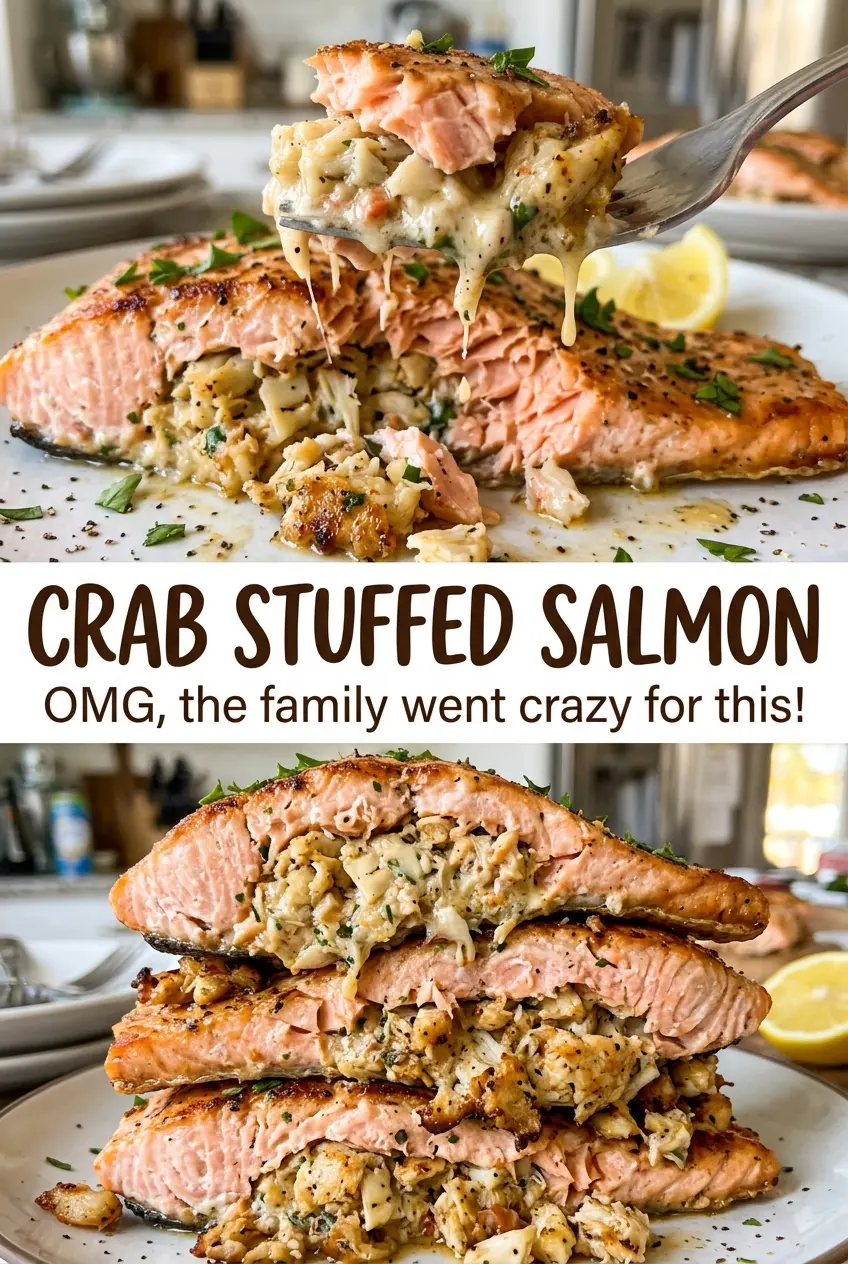
- Lump crabmeat — Its large, sweet flakes give the filling its recognizable crab texture. Pick through it carefully and drain it well; refrigerated pasteurized lump crab works, while smaller claw pieces give a less distinct, more compact filling.
- Panko and mayonnaise — Panko absorbs a little moisture and helps the mixture hold together without becoming heavy. Mayonnaise binds the crumbs and crab; regular store-brand mayonnaise works just fine here. For a gluten-free version, use gluten-free panko in its place.
- Scallions, parsley, Dijon, lemon, and Old Bay — These bring freshness, gentle tang, and familiar seafood seasoning without covering up the crab. Fresh parsley gives the cleanest herbal note, but there’s no need for a specialty Dijon or premium bottled lemon juice.
- Center-cut salmon — Choose skinless fillets that are thick and fairly even, so you can make a pocket and give the fish enough time to cook alongside the filling. The source of the salmon matters less than its freshness and thickness; uneven, thin pieces are harder to stuff neatly.
How to Stuff the Fillets Without Losing the Filling
Fold the Crab Mixture Together
Put the crab, mayonnaise, panko, scallions, parsley, Dijon, lemon juice, and Old Bay in a medium bowl. Fold gently until the ingredients are combined, using a light hand so the crab stays in pieces. The mixture should hold together when spooned, not look soupy. Set it aside while you prepare the fish.
Make the Pockets and Fill the Salmon
Heat the oven to 400°F and lightly coat a 9×13-inch baking dish with nonstick cooking spray. Pat the salmon dry, then use a sharp knife to cut into the side of each fillet without cutting through to the other side. Rub the fillets with olive oil and season with kosher salt and black pepper. Divide the crab mixture among the pockets and arrange the fillets in the baking dish.
Bake Until the Fish and Filling Are Ready
Bake for 18 to 22 minutes. Start checking near the earlier end of that range, since fillets can vary slightly even when they’re cut to a similar thickness. The salmon should reach 145°F in its thickest part, and the filling should be hot. If a fillet needs more time, return the dish to the oven and check again rather than relying on color alone.
Let the Stuffed Salmon Set
Take the baking dish out and let the salmon rest for 5 minutes before serving. The filling is hot when it first comes out, and a short rest makes each fillet easier to lift without disturbing the crab inside. Move the fish gently with a thin spatula, supporting it from underneath.
Three Easy Ways to Change the Crab Filling
Make It Gluten-Free With Gluten-Free Panko
Replace the regular panko with gluten-free panko in the same amount. It keeps the filling’s light, crumbly structure; check that the seasoning and other packaged ingredients you use are also suitable for your needs.
Trade the Parsley for Chives
Use the same amount of thinly sliced fresh chives instead of parsley. The filling takes on a mild onion note that works naturally with the scallions, with no change to how it binds or bakes.
Use Cooked Shrimp Instead of Crab
Replace the crab with an equal weight of cooked shrimp, chopped into small pieces. The filling will be firmer and less sweet than the lump-crab version, but it still tucks neatly into the salmon pockets.
Storage and Reheating
- Refrigerator: Refrigerate leftovers in a covered container within 2 hours and use them within 3 to 4 days. The salmon may be a little firmer after chilling.
- Freezer: I don’t recommend freezing the cooked stuffed fillets; the salmon and creamy crab filling can turn soft and watery after thawing.
- Reheating: Cover and warm in a 325°F oven until the center reaches 165°F. Avoid prolonged high heat, which dries out the salmon before the filling warms through.
Questions That Come Up When Making Crab Stuffed Salmon
Crab Stuffed Salmon
Ingredients
Equipment
Method
- Gently fold the crab, mayonnaise, panko, scallions, parsley, Dijon, lemon juice, and Old Bay together in a medium bowl until combined.
- Heat the oven to 400°F.
- Lightly coat a 9x13-inch baking dish with nonstick cooking spray.
- Pat the salmon dry.
- Cut a pocket into the side of each fillet without cutting through.
- Rub the fillets with olive oil and season with the salt and pepper.
- Divide the crab mixture among the pockets.
- Arrange the fillets in the baking dish.
- Bake for 18 to 22 minutes, until the salmon reaches 145°F in the thickest part and the filling is hot.
- Let the salmon rest for 5 minutes before serving.




