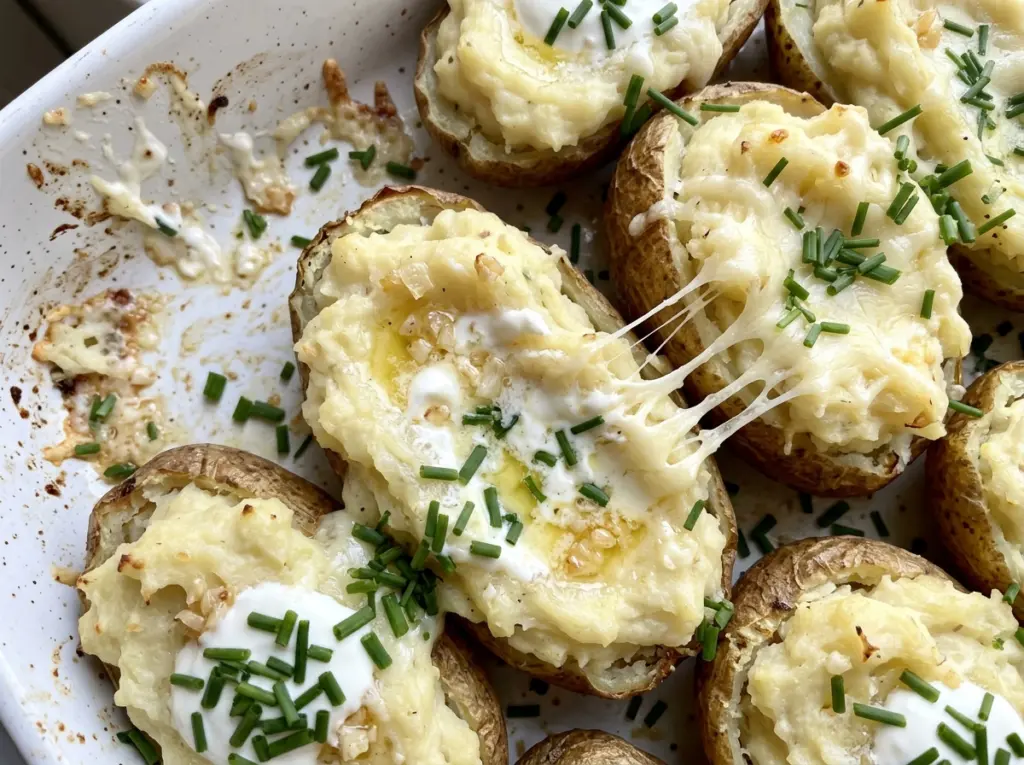
The first time I scooped these potatoes, I left the skins too thin and a couple folded under the filling. Now I leave a sturdy layer of potato inside each shell, and the halves hold their shape all the way to the table. These creamy garlic twice baked potatoes have soft, fluffy centers with a little sharp cheddar in every bite and a browned layer on top.
Russets are the right fit here because their fluffy flesh mashes easily, while the sturdy skins make natural little serving boats. I warm the garlic gently in butter, then mash that mixture into the potato with cream, sour cream, and cheddar. Stop as soon as the filling turns creamy; a little texture is welcome.
Give the finished potatoes five minutes to rest before serving. The cheese settles, the filling holds together, and each shell is easier to lift without losing its golden top.
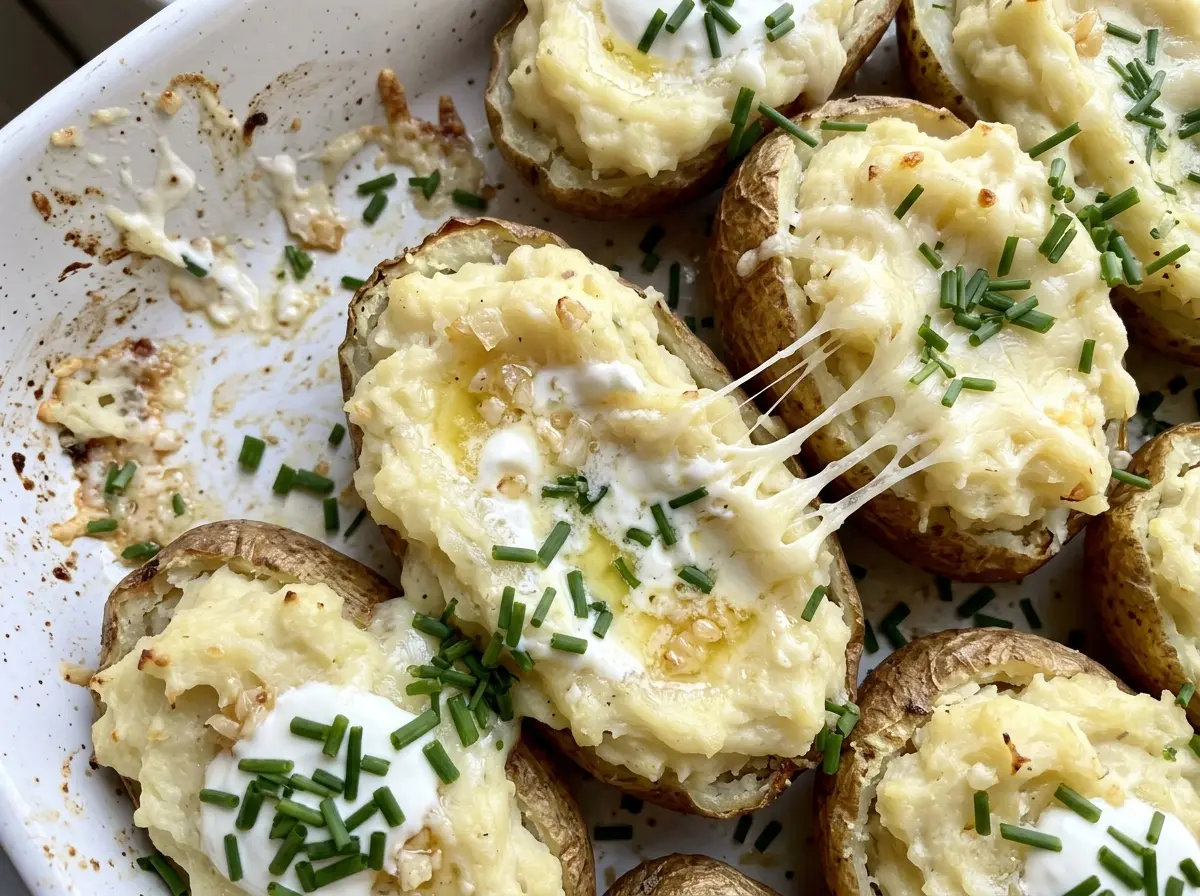
Kitchen Note
I give the potatoes five minutes out of the oven before serving. That short pause lets the filling settle, so it stays in the shells when you lift them onto plates.
Save these creamy garlic twice baked potatoes for a cozy dinner with fluffy centers and golden cheddar on top.
Why Russets Make Better Potato Boats Than Waxy Potatoes
A twice baked potato needs to do two jobs: give you a fluffy filling and keep that filling inside an intact skin. Russets handle both. Their starchy interior breaks down readily when mashed, so the butter and dairy blend in without needing a lot of force. Their skins are also sturdy enough to hold the scooped potato and cheese through the second bake.
Waxy potatoes tend to stay firmer and denser when cooked. That’s useful in a potato salad, but here it can leave the filling heavy rather than soft and spoonable. Starting with large russets also gives you room to scoop out a generous amount of flesh while keeping each shell stable. The olive oil and salt on the skins season the outside as they bake, so you don’t end up with a bland shell around a well-seasoned center.
There’s no need to chase a perfectly smooth purée. A few tiny bits of potato give the filling a homemade texture, while mashing aggressively can make it pasty. Let the dairy do the work: warm butter, garlic, and cream combine easily with the hot potato, and the sour cream brings a gentle tang that balances the cheddar.
What the Garlic, Dairy, and Cheddar Each Bring to the Filling

- Russet potatoes — Choose large potatoes that feel firm, with unbroken skins. Similar-sized potatoes cook more evenly, and the broad halves are easier to fill. If russets aren’t available, large Yukon Gold potatoes can work, but their flesh is naturally creamier and less fluffy.
- Olive oil and kosher salt — Rub the potatoes all over so the skins bake with a light coating rather than dry patches. Kosher salt clings well to the oiled surface; divide it between the skins and filling so the seasoning reaches both parts.
- Butter, garlic, and heavy cream — Butter carries the garlic through the filling, while the cream loosens the potato and helps it mash smoothly. Mince the garlic finely so it disperses instead of leaving concentrated pieces. Use unsalted butter so the salt in the dish stays adjustable.
- Sour cream — This gives the filling its characteristic tang and a creamy finish. Full-fat plain Greek yogurt can stand in at the same volume if needed; the result will be a little tangier and less rich.
- Sharp cheddar — Sharp cheddar brings a savory bite that mild cheese won’t match as closely. Buy a good block and shred it yourself if you want the best melting texture; pre-shredded cheddar is convenient and still works here. Keep the cheese divided so some melts into the filling and the rest forms the top.
- Black pepper — Freshly ground pepper adds a little warmth against the rich dairy. If you’re using pre-ground pepper, measure it as listed rather than adding more by instinct.
Getting the Filling Creamy Without Losing the Potato Texture
Bake the russets until a knife slides through
Heat the oven to 400°F and scrub and dry the potatoes. Prick each one several times with a fork, rub it with olive oil, and sprinkle on half of the kosher salt. Bake the potatoes on a rimmed baking sheet for 60 to 75 minutes; a knife should slide easily into the center, with no firm spot resisting the blade.
Warm the garlic gently in butter
While the potatoes bake, melt the butter in a small saucepan over medium-low heat. Add the minced garlic and cook for about 30 seconds, just until fragrant. Stir in the heavy cream and warm it gently without letting it boil. If the garlic starts to brown, lower the heat; browned garlic can taste bitter in the mild potato filling.
Scoop the potatoes while keeping the shells sturdy
Halve each baked potato lengthwise and scoop the flesh into a large bowl. Leave a sturdy 1/4-inch layer inside each skin so the shells can support the filling instead of collapsing under it. Set the shells cut side up on the baking sheet. If a skin tears, keep it on the sheet and support it with the neighboring halves as you fill.
Mash, fill, and bake until the cheese melts
Mash the potato flesh with the warm garlic-butter mixture, sour cream, 3/4 cup of the cheddar, the remaining salt, and black pepper. Stop as soon as the mixture looks creamy; continued mashing can make potato filling dense. Spoon it into the shells, sprinkle the remaining 1/4 cup cheddar over the tops, and bake at 400°F for 15 to 20 minutes. They’re ready when hot throughout, with melted cheese lightly browned on top.
Easy Ways to Shift the Garlic and Cheddar Balance
A gentler garlic note
Use two garlic cloves instead of three for a milder filling that lets the potato and cheddar come forward. Keep the rest of the method the same, including the brief, gentle cook in butter; the garlic should smell fragrant, not toasted.
A more pronounced cheddar top
Keep the same cup of cheddar, but reserve more of it for the topping and stir less into the filling. The potatoes will have a stronger browned-cheese layer, with a little less cheddar woven through the center.
Storage and Reheating
- Refrigerator: Refrigerate leftovers in a covered container within 2 hours and use them within 4 days. The potato filling firms up as it chills.
- Freezer: Freeze the cooled potatoes individually, wrapped airtight, for up to 2 months. Thaw them in the refrigerator before reheating; the filling may be a little softer after freezing.
- Reheating: Warm thawed potatoes in a 350°F oven until the center reaches 165°F. Cover loosely at first to keep the tops from overbrowning, then uncover near the end. Avoid overheating, which dries the potato filling.
Questions That Come Up When Making Twice Baked Potatoes
Creamy Garlic Twice Baked Potatoes
Ingredients
Equipment
Method
- Heat the oven to 400°F.
- Scrub and dry the potatoes.
- Prick each potato several times with a fork, rub with the olive oil, and sprinkle with 1/2 teaspoon of the salt.
- Bake the potatoes on a rimmed baking sheet for 60 to 75 minutes, until a knife slides easily into the centers.
- Melt the butter in a small saucepan over medium-low heat.
- Add the garlic and cook for about 30 seconds, until fragrant.
- Stir in the heavy cream and warm it gently without boiling.
- Halve the potatoes lengthwise and scoop the flesh into a large bowl, leaving a sturdy 1/4-inch layer inside each skin.
- Arrange the shells cut side up on the baking sheet.
- Mash the potato flesh with the warm garlic-butter mixture, sour cream, 3/4 cup of the cheddar, the remaining 1/2 teaspoon salt, and the black pepper, just until creamy.
- Spoon the filling into the potato skins and top with the remaining 1/4 cup cheddar.
- Bake at 400°F for 15 to 20 minutes, until hot throughout and the cheese is melted and lightly browned.
- Let the potatoes rest for 5 minutes before serving.